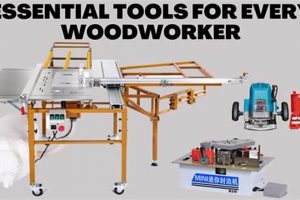
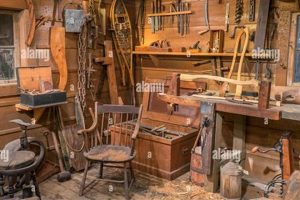
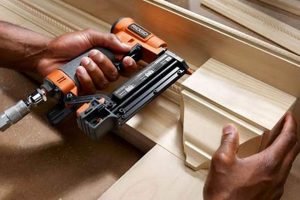
Devices employed to shape wood by separating material are essential for joinery, carving, and construction. These implements, powered manually or by machine, encompass a wide array of designs, each optimized for specific tasks such as sawing, planing, chiseling, or routing. A handsaw, for instance, uses muscle power to create a kerf, while a powered router employs a rotating bit to hollow out areas.
The precision and efficiency afforded by these instruments are paramount to achieving quality craftsmanship. Their use facilitates complex designs, accurate dimensions, and smooth finishes. Throughout history, the development of these implements has directly influenced architectural styles and furniture making, reflecting advances in metallurgy and engineering that enabled more effective material removal.
Understanding the characteristics of various implementsincluding their blade materials, geometries, and power sourcesis critical for selecting the appropriate device for a given task. The subsequent sections will delve into specific types, maintenance practices, and safety protocols associated with these essential workshop components, providing a comprehensive overview for both novice and experienced practitioners.
Optimizing Woodworking Cutting Tools Performance
Employing best practices in the selection, maintenance, and utilization of devices designed to separate wood fibers significantly enhances project outcomes and user safety.
Tip 1: Select Appropriate Implements. Matching the device to the wood species and intended cut is critical. Hardwoods require blades with finer teeth and greater durability than softwoods. For example, a dovetail saw with a high tooth count is better suited for creating precise joints in oak than a coarser rip saw.
Tip 2: Maintain Sharp Cutting Edges. Dull blades increase the risk of kickback and splintering, while also requiring more force. Regular honing and sharpening, using techniques appropriate for each type of blade, are essential. For instance, a chisel should be honed on a fine grit water stone after each use to maintain its edge.
Tip 3: Employ Correct Cutting Techniques. Proper stance, grip, and feed rate optimize control and minimize strain. When using a hand plane, ensure consistent pressure and blade angle for a uniform surface. With power saws, avoid forcing the cut, allowing the blade to work at its intended speed.
Tip 4: Implement Dust Extraction Systems. Wood dust poses a significant respiratory hazard. Effective dust collection systems, attached to power tools or deployed as standalone units, mitigate airborne particles. Additionally, wearing a respirator while working protects the user from inhaling particulate matter.
Tip 5: Inspect Implements Before Use. Before commencing work, carefully examine the implements for signs of damage, such as cracks, loose handles, or worn parts. Replace or repair compromised components to prevent accidents. A cracked saw blade, for example, should be immediately replaced.
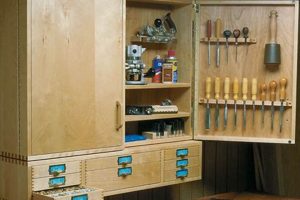
Tip 6: Store Devices Properly. Storing implements in a clean, dry environment protects them from corrosion and damage. Hanging saws and chisels vertically or placing them in dedicated storage racks prevents contact with other tools and preserves their edges.
Adherence to these guidelines promotes safety, precision, and longevity in woodworking projects. Diligent application of these strategies yields improved efficiency and superior results.
The subsequent sections will further explore the applications and safety considerations related to the various types of these devices.
1. Sharpness

The inherent ability of woodworking cutting implements to sever wood fibers cleanly rests upon the keenness of their cutting edges. A honed edge minimizes tearing and crushing, resulting in smoother surfaces and more accurate dimensions. Without adequate sharpness, the required force increases, elevating the risk of slippage and injury. Furthermore, excessive force often leads to wood deformation, negating the purpose of precise material removal.
The selection of abrasive mediums is critical for maintaining effective edges. Grinding wheels, sharpening stones, and strops, when used in a progressive sequence, can restore and refine the cutting surface. For instance, a dull chisel, initially ground to remove imperfections, is then refined on progressively finer water stones to achieve a razor-sharp edge. This process is essential for controlled paring and mortise work. The absence of sharpness necessitates repeated passes, generating friction and heat that can alter the steel’s temper, ultimately compromising its structural integrity.
The direct consequence of inadequate cutting edge acuity is manifested in compromised project quality and heightened risk of injury. The presence of tear-out, splintering, and irregular surfaces directly correlate with dull devices. The economic implications are significant; wasted material, increased project time, and potential medical expenses arising from accidents underscore the importance of proper maintenance. Sharpness, therefore, is not merely a desirable attribute but a fundamental requirement for responsible and effective woodworking practices.
2. Material

The composition of woodworking cutting devices dictates their durability, edge retention, and suitability for different wood species. Various alloys and treatments are employed to optimize specific characteristics. High-carbon steel, for example, is frequently selected for its ability to achieve and maintain a sharp cutting edge, making it suitable for hand tools such as chisels and planes. However, it is susceptible to corrosion and requires diligent maintenance.
Conversely, high-speed steel (HSS) offers superior heat resistance, making it ideal for power tools like drill bits and router bits that generate significant friction. Its increased hardness allows it to retain its edge at higher operating temperatures, preventing premature dulling. Carbide-tipped blades, often used in circular saws, provide exceptional wear resistance when working with abrasive materials like plywood and composites. The presence of tungsten carbide significantly extends the blade’s lifespan compared to steel alternatives, albeit at a higher initial cost.
Ultimately, the selection of a device’s constituent elements depends on the intended application and the user’s priorities. Factors such as the type of wood being worked, the required precision, and the expected frequency of use all influence the ideal choice. Understanding the material properties of each element is essential for maximizing performance and minimizing the risk of premature failure, while ensuring a prolonged tool life.
3. Ergonomics

Ergonomics, the science of designing and arranging workplaces, products, and systems so that they fit the people who use them, plays a crucial role in woodworking, directly impacting safety, efficiency, and long-term physical well-being. The selection and utilization of appropriately designed implements are paramount to mitigating strain and preventing musculoskeletal disorders.
- Handle Design and Grip
The geometry and material of a handle influence grip strength and reduce the risk of repetitive strain injuries. A well-designed handle distributes pressure evenly across the hand, minimizing localized stress. Handles crafted from materials like hardwood or textured polymers offer a secure grip, even with sweaty hands. In contrast, handles that are too small, too large, or poorly shaped can lead to fatigue and increase the likelihood of slippage, potentially resulting in accidents.
- Tool Weight and Balance
The weight and balance of a device affect the force required for its operation and the stability maintained during cutting. A tool that is excessively heavy demands greater exertion, leading to fatigue and compromised control. Proper balance ensures that the tool feels natural in the hand and reduces the tendency for it to tip or rotate unexpectedly. For instance, a well-balanced hand plane requires less downward pressure to maintain consistent contact with the wood surface.
- Cutting Angle and Posture
The angle at which a device is presented to the workpiece and the posture adopted by the user directly influence musculoskeletal strain. Maintaining a neutral wrist position and avoiding awkward reaching or bending minimizes stress on joints and ligaments. Elevated workbenches or adjustable stands can facilitate a comfortable working height. Using devices that allow for a natural cutting motion, such as push saws versus pull saws for certain tasks, can also improve comfort and reduce fatigue.
- Vibration Dampening
Power-driven implements generate vibration, which can contribute to hand-arm vibration syndrome (HAVS) over prolonged exposure. Ergonomically designed implements incorporate vibration-dampening materials in their handles to minimize the transmission of these vibrations to the user’s hands and arms. Anti-vibration gloves can provide an additional layer of protection, further reducing the risk of HAVS and related conditions.
The cumulative effect of ergonomic considerations profoundly influences the woodworking experience. Prioritizing these elements leads to reduced fatigue, improved accuracy, and a decreased risk of long-term physical ailments. It reinforces the notion that the interaction between the artisan and the implement should be seamless and contribute to both the quality of the work and the well-being of the individual.
4. Precision
Attaining accurate dimensions and exacting joinery in woodworking hinges directly on the degree of accuracy inherent in the implements employed. Precision, in this context, refers to the ability of these devices to consistently produce cuts that conform to specified measurements, angles, and profiles. The pursuit of fine woodworking is inextricably linked to the capabilities of these implements to achieve and maintain such exactitude.
- Blade Geometry and Calibration
The physical characteristics of a blade, including its thickness, tooth configuration, and flatness, significantly affect the accuracy of the resulting cut. A saw blade with minimal set and consistent tooth spacing produces a narrower kerf and reduces the likelihood of wandering. Calibration of power saw fences and miter gauges ensures repeatable cuts at precise angles, minimizing cumulative error. The absence of proper blade geometry and calibration leads to inaccuracies that propagate throughout the project.
- Measurement and Marking Systems
Integrated measurement systems, such as laser guides on power saws or etched scales on hand planes, provide visual references for achieving precise cuts. Accurate marking tools, including precision squares and marking gauges, enable the transfer of dimensions from plans to the workpiece. The use of such tools ensures that cuts are made to the intended specifications, minimizing deviations from the design.
- Feed Rate and Control
The rate at which a device is advanced through the material directly influences the precision of the cut. A consistent and controlled feed rate prevents chipping, tear-out, and uneven surfaces. Utilizing appropriate clamping and support systems maintains workpiece stability during cutting, reducing the risk of vibration and misalignment. Manipulating the feed rate with finesse enhances the smoothness and accuracy of the resulting surface.
- Tool Maintenance and Adjustment
Regular maintenance, including sharpening, alignment, and adjustment, is essential for preserving accuracy. A dull or misaligned implement produces inaccurate cuts and requires increased force, leading to greater potential for error. Fine-tuning mechanisms on hand planes and power saws allow for precise adjustments to blade depth and parallelism, ensuring consistent performance and minimizing deviations from the intended cut.
These multifaceted aspects of precision underscore the importance of selecting, maintaining, and utilizing these instruments with meticulous attention to detail. The ability to achieve accurate and repeatable results directly correlates with the quality of the final product and reflects the skill and dedication of the woodworker.
5. Maintenance

Sustained performance of devices designed to separate wood fibers is directly contingent upon diligent and consistent maintenance. Neglect of these practices precipitates diminished cutting efficiency, increased potential for material damage, and elevated risks of user injury. Regular attention to cleaning, sharpening, and component integrity constitutes an essential element of responsible woodworking practice. A dull saw blade, for example, requires significantly more force to operate, increasing the likelihood of kickback and producing rough, uneven cuts. Similarly, a chisel with a chipped edge cannot execute precise paring operations, leading to inaccurate joinery.
Specific maintenance procedures vary depending on the type and construction of the device. Hand tools typically necessitate frequent sharpening using stones or honing steels to preserve edge acuity. Power tools require periodic lubrication, blade alignment, and inspection of electrical components. Failure to adhere to manufacturer-recommended maintenance schedules can void warranties and accelerate tool degradation. For example, neglecting to clean resin buildup from a router bit can cause overheating and premature bearing failure. Furthermore, improper storage can contribute to corrosion and damage, rendering implements unusable or unsafe. A handsaw left exposed to moisture may develop rust, compromising its cutting performance and structural integrity.
Ultimately, the investment in time and resources dedicated to proper care yields significant returns in terms of tool longevity, operational efficiency, and user safety. Adhering to established maintenance protocols is not merely a perfunctory task but rather an integral aspect of skilled woodworking. The conscientious application of these practices ensures that devices remain capable of performing their intended functions effectively and reliably, contributing to high-quality craftsmanship and a safe working environment.
6. Safety

The responsible and competent application of implements designed to separate wood fibers demands a paramount focus on safety protocols. The inherent potential for injury necessitates strict adherence to established guidelines and the consistent use of appropriate protective equipment. A lapse in concentration or a disregard for safety measures can result in severe lacerations, amputations, or other debilitating injuries.
- Personal Protective Equipment (PPE)
The utilization of appropriate PPE constitutes the first line of defense against potential hazards. Eye protection, such as safety glasses or goggles, shields against flying debris and wood particles. Hearing protection, in the form of earplugs or earmuffs, mitigates the risk of hearing damage from prolonged exposure to loud machinery. Respiratory protection, such as dust masks or respirators, prevents the inhalation of harmful wood dust. The consistent and correct use of PPE significantly reduces the likelihood and severity of workplace injuries.
- Machine Guarding and Operational Procedures
Power tools are equipped with guards designed to prevent accidental contact with moving blades or cutting surfaces. These guards must be properly installed and maintained to ensure their effectiveness. Adhering to established operational procedures, such as never reaching over a running saw blade or forcing a cut, minimizes the risk of kickback or other hazardous situations. A thorough understanding of machine operation and safety protocols is essential for preventing accidents.
- Tool Condition and Maintenance
The state of repair of an implement directly impacts its safe operation. Dull blades require increased force, increasing the risk of slippage and loss of control. Loose handles or damaged power cords pose significant electrical and mechanical hazards. Regular inspection and maintenance, including sharpening, lubrication, and component replacement, are critical for ensuring that implements function safely and reliably. A properly maintained tool is less likely to malfunction and cause injury.
- Workplace Organization and Awareness
Maintaining a clean and organized workspace minimizes the risk of slips, trips, and falls. Adequate lighting improves visibility and reduces the likelihood of misjudgments. Remaining attentive to the task at hand and avoiding distractions are paramount for preventing accidents. A well-organized and focused work environment promotes safe and efficient operations. Clear pathways and designated storage areas contribute to a safer and more productive workspace.
The integration of these safety measures into every aspect of woodworking practice is not merely a recommendation but a fundamental responsibility. A commitment to safety safeguards the well-being of the artisan, promotes responsible tool usage, and contributes to a culture of professionalism and excellence within the craft. The consistent application of these principles fosters a safe and productive working environment.
Frequently Asked Questions
This section addresses common inquiries and clarifies prevailing misconceptions regarding implements employed to separate wood fibers, emphasizing operational considerations and safety protocols.
Question 1: What distinguishes a rip saw from a crosscut saw, and which is appropriate for a given task?
A rip saw is designed to cut along the grain of wood, featuring teeth configured to chisel away material efficiently in this direction. A crosscut saw, conversely, is optimized for cutting perpendicular to the grain, possessing teeth designed to sever wood fibers rather than chisel them. Selecting the correct saw type is crucial for achieving a clean, efficient cut and minimizing the risk of splintering.
Question 2: What constitutes a “sharp” cutting edge, and how is it assessed?
A sharp edge exhibits minimal resistance when applied to wood, cleanly severing fibers without tearing or crushing. Sharpness can be assessed visually by examining the edge under magnification for imperfections or dullness. Tactile assessment involves carefully testing the edge on a piece of softwood; a sharp edge will bite cleanly, while a dull edge will slide or skip.
Question 3: What are the implications of using dull implements?
Using dull implements increases the force required to effect a cut, elevating the risk of slippage, kickback, and injury. Dull edges also produce rough, uneven surfaces, necessitating additional sanding and finishing. Furthermore, excessive force can damage the wood, rendering it unusable for the intended purpose.
Question 4: How frequently should cutting edges be sharpened?
Sharpening frequency depends on the type of wood being worked, the intensity of use, and the quality of the implement. As a general guideline, edges should be sharpened whenever cutting performance diminishes or resistance increases. Consistent honing between sharpening sessions can prolong edge life and maintain optimal cutting efficiency.
Question 5: What safety precautions are paramount when operating power-driven devices?
Essential safety precautions include wearing appropriate personal protective equipment, such as eye and ear protection, ensuring proper machine guarding, and adhering to recommended operational procedures. Maintaining a clean and organized workspace, avoiding distractions, and thoroughly inspecting implements before use are also critical for preventing accidents.
Question 6: What are the common causes of premature tool failure, and how can they be mitigated?
Premature tool failure often results from improper use, inadequate maintenance, or exposure to corrosive environments. Mitigation strategies include selecting implements appropriate for the task, implementing regular cleaning and lubrication schedules, storing tools in a dry and protected environment, and adhering to manufacturer-recommended maintenance procedures.
The principles outlined above underscore the significance of informed selection, diligent maintenance, and unwavering adherence to safety protocols in the realm of woodworking.
The subsequent section will explore advanced techniques and specialized applications for various types of implements.
Conclusion
The comprehensive exploration of woodworking cutting tools reveals their fundamental role in shaping the physical world through skilled craftsmanship. From selecting the correct tool for a task to maintaining its sharpness and ensuring safe operation, each step demands precision and awareness. Factors such as material composition, ergonomic design, and consistent maintenance directly impact the quality of the final product and the longevity of the implement itself. This discussion has demonstrated that the mastery of woodworking is deeply intertwined with understanding and respecting the tools that make it possible.
Therefore, continuous learning and adherence to best practices are vital for anyone engaging with these instruments. A commitment to safety, combined with a dedication to maintaining and properly utilizing woodworking cutting tools, not only ensures professional results but also preserves the rich legacy of this craft for generations to come. Further research and practical experience will continue to refine skills and contribute to the ongoing evolution of woodworking techniques.