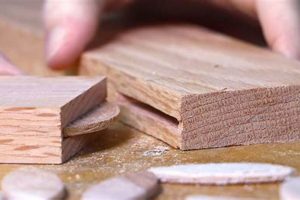
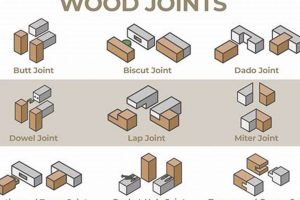
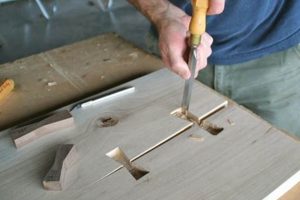
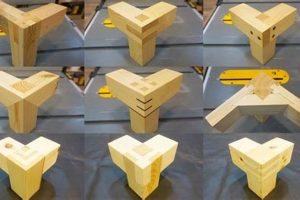
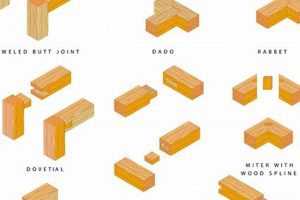
The intersection where a table’s vertical support meets the horizontal surface requires a strong and aesthetically pleasing connection. These connections, commonly achieved through joinery techniques, are essential for the structural integrity and longevity of the furniture piece. Examples include mortise and tenon, dovetail, and various types of bracket or apron joinery, each offering unique advantages in terms of strength, visual appeal, and ease of construction.
The effectiveness of these structural unions is paramount. Properly executed, they ensure stability, prevent wobble, and distribute weight effectively. Historically, the choice of technique has reflected both functional needs and prevailing design aesthetics. A well-chosen and meticulously crafted joint can enhance the overall value and durability of a table, becoming a hallmark of quality craftsmanship.
The subsequent sections will delve into specific techniques, outlining their strengths and weaknesses, appropriate applications, and step-by-step instructions for their execution. Detailed consideration will be given to wood selection, tool requirements, and the crucial factors influencing joint performance.
Essential Considerations for Robust Table Leg Attachment
This section provides practical recommendations to optimize the selection and execution of techniques for attaching table legs. Adherence to these guidelines contributes to a stable, durable, and aesthetically refined end product.
Tip 1: Wood Species Compatibility: Select wood species with similar expansion and contraction rates for both the table top and legs to minimize stress on the joint during seasonal changes. For example, pairing hardwoods like maple and oak is generally preferable to combining a hardwood with a softwood like pine.
Tip 2: Precision in Measurement and Cutting: Accuracy is paramount. Employ precise measuring tools and techniques to ensure tight-fitting joints. Inaccurate measurements can lead to weak connections and visual imperfections. Consider using marking gauges and sharp chisels for enhanced accuracy.
Tip 3: Glue Selection and Application: Use a high-quality wood glue appropriate for the wood species and intended use. Apply glue liberally to all mating surfaces, ensuring complete coverage. Clamping pressure is essential for a strong bond; excess glue squeeze-out indicates sufficient application.
Tip 4: Reinforcement Strategies: For heavier tables or those subjected to significant stress, consider reinforcing techniques such as corner blocks, aprons, or metal fasteners. These additions provide supplemental support and distribute weight more effectively.
Tip 5: Joint Design Considerations: Select a joint design that aligns with the table’s overall style and the structural demands placed upon it. Mortise and tenon joints offer exceptional strength, while simpler techniques may suffice for smaller, lighter tables. Analyze the aesthetic impact of each design choice.
Tip 6: Clamping Technique: Utilize appropriate clamping techniques to ensure even pressure distribution during glue-up. Uneven clamping can distort the joint and compromise its integrity. Use cauls to protect the wood surface from clamp marks.
Tip 7: Moisture Content Management: Ensure that the wood used for the table top and legs has been properly dried to a stable moisture content level before assembly. Fluctuations in moisture content after construction can lead to joint failure and warping.
Proper attention to material selection, accurate execution, and appropriate reinforcement will result in table leg attachments that are both structurally sound and visually appealing. These considerations are essential for creating enduring and functional furniture.
The subsequent section will address common problems encountered during the joinery process and provide solutions for their rectification.
1. Joint Strength

Joint strength constitutes a fundamental criterion in the selection and execution of woodworking joints for table legs. The ability of a joint to withstand applied forces directly influences the stability and longevity of the table. A weak joint, regardless of aesthetic appeal or ease of construction, compromises the furniture’s structural integrity. For example, a poorly executed dovetail joint, despite its visual intricacy, is prone to failure under stress, potentially leading to leg detachment and table instability. Conversely, a robust mortise and tenon joint, carefully fitted and glued, provides exceptional resistance to racking forces, ensuring the table’s continued service. The relationship underscores the primacy of strength in determining the suitability of any connection method.
Real-world applications highlight the consequences of neglecting joint strength. Tables intended for heavy use, such as those in dining environments or workshops, demand joints capable of bearing substantial weight and repeated stress. Failure to adequately assess these requirements often results in premature joint failure, necessitating costly repairs or complete replacement. Furthermore, the type of wood employed impacts joint strength; softer woods require larger or more complex joints to achieve comparable strength to hardwoods. The understanding of these principles is crucial for optimizing table design and ensuring its durability.
In summary, joint strength directly determines the practical lifespan and reliability of a table. By prioritizing strength considerations in the selection and execution of woodworking joints for table legs, woodworkers can create furniture that withstands the test of time. Overlooking this aspect invites potential structural failures and undermines the overall value of the crafted piece. A robust connection is the linchpin of a stable and enduring table.
2. Material Compatibility

Material compatibility plays a critical role in the long-term performance of woodworking joints for table legs. Differential expansion and contraction rates among dissimilar materials can induce significant stress within the joint, ultimately leading to failure. For instance, combining a hardwood table top with softwood legs introduces inherent instability, as the softer wood will deform more readily under changing humidity levels. This disparity can cause joints to loosen, crack, or even separate completely over time. The proper selection of compatible materials is thus essential to ensuring joint integrity.
A practical example of material compatibility considerations lies in the use of solid wood versus engineered wood products. Solid wood exhibits anisotropic behavior, meaning its dimensional changes vary significantly depending on the grain orientation. Conversely, engineered wood products, such as plywood or MDF, are more dimensionally stable due to their layered construction. Consequently, attaching solid wood legs to an MDF table top requires careful consideration of the joint design to accommodate the differential movement of the materials. Techniques such as floating tenons or slotted screw holes can allow for independent expansion and contraction, minimizing stress on the joint.
In summary, the selection of compatible materials is a fundamental aspect of successful woodworking joint design for table legs. Failure to account for differential expansion and contraction rates can lead to premature joint failure and reduced table lifespan. By prioritizing material compatibility, woodworkers can create furniture that is both structurally sound and aesthetically pleasing, capable of withstanding the test of time. Understanding these material properties is crucial to crafting enduring and functional furniture.
3. Precision Fit

Precision fit is a non-negotiable attribute for the success of connection methods. Deviations from exact dimensions can result in joints that are either too tight, preventing proper assembly and potentially damaging the wood, or too loose, sacrificing structural integrity and creating instability. A mortise and tenon joint, for instance, requires meticulously sized mortise and tenon to ensure a snug fit that maximizes glue surface area and resists racking forces. Likewise, a dovetail joint relies on the precise interlocking of tails and pins for its inherent strength; gaps in the joint compromise its ability to resist pull-out forces. Without precision, the intended benefits of even the most sophisticated joint designs are negated, leading to substandard results and diminished longevity.
The practical ramifications of neglecting precision fit are readily apparent. A table leg attached with a loosely fitting mortise and tenon joint will exhibit wobble and instability, rendering the table functionally compromised. Similarly, a dovetail joint with poorly fitted tails and pins is susceptible to separation under load, reducing the table’s overall strength and durability. Furthermore, achieving a high-quality finish is significantly hindered by imprecise joinery. Gaps and misalignments necessitate the use of fillers and other corrective measures, detracting from the aesthetic appeal of the piece. Precision fit, therefore, directly influences not only the structural performance but also the visual quality of the finished table.
In conclusion, precision fit forms the bedrock of sound table construction. Its absence invariably leads to compromised structural integrity, diminished aesthetic appeal, and reduced longevity. The careful application of accurate measuring tools, meticulous cutting techniques, and unwavering attention to detail are essential for achieving the precision necessary to create enduring and functional furniture. Only through a commitment to accurate execution can woodworkers realize the full potential of these connecting methods and construct tables that stand the test of time.
4. Load Distribution

Load distribution is a critical engineering principle directly influencing the structural integrity of tables. The design and execution of these attachment methods determine how effectively weight and stress are transferred from the table surface to the supporting legs. Proper distribution minimizes stress concentration and prevents premature failure of the joint or surrounding wood.
- Joint Geometry and Surface Area
The geometry of a joint significantly impacts its capacity to distribute load. Larger surface areas, such as those found in mortise and tenon joints, provide more contact area for adhesive bonding and weight transfer, effectively spreading stress across a wider region. Conversely, smaller or less complex joints may concentrate load in a localized area, increasing the risk of failure under heavy weight or impact.
- Material Properties and Grain Orientation
The inherent strength of the wood and its grain orientation relative to the applied load are crucial factors. Aligning the grain direction of the leg with the primary direction of the load maximizes the wood’s compressive strength. Different wood species possess varying load-bearing capacities; selecting appropriate materials ensures the joint can withstand the anticipated forces without deformation or fracture.
- Fastener Placement and Type
When mechanical fasteners, such as screws or bolts, are used in conjunction with these methods, their placement and type directly influence load distribution. Evenly spaced fasteners distribute stress more uniformly across the joint. The selection of appropriate fasteners, with sufficient shear and tensile strength, is essential for preventing premature failure under load.
- Apron and Support Structures
The inclusion of aprons or other support structures beneath the tabletop plays a vital role in load distribution. Aprons act as horizontal beams, transferring weight from the table surface to the legs and reducing stress on the individual connections. These additional elements significantly enhance the overall stability and weight-bearing capacity of the table.
The effectiveness of load distribution within table leg connections directly correlates with the table’s structural integrity and longevity. By carefully considering joint geometry, material properties, fastener placement, and support structures, woodworkers can create tables capable of withstanding substantial weight and prolonged use without compromising stability or aesthetics. Proper execution of these connection strategies is paramount for ensuring the enduring performance of the finished piece.
5. Aesthetic Integration

Aesthetic integration, in the context of woodworking joints for table legs, refers to the harmonious blending of structural requirements with visual design elements. The joint is not merely a functional necessity but also an integral part of the table’s overall aesthetic. Consequently, the choice of technique should reflect the desired style and visual language of the finished piece. A deliberately exposed dovetail joint, for instance, can serve as a decorative feature, showcasing craftsmanship and adding visual interest. Conversely, a hidden mortise and tenon joint promotes a clean, minimalist aesthetic, emphasizing the table’s form rather than its construction. The selection thus carries a direct cause-and-effect relationship with the perceived quality and style of the furniture.
The importance of aesthetic integration is evident in various design movements. Traditional furniture often features elaborate joinery details as a hallmark of quality and artistry. Conversely, modern designs frequently prioritize seamless surfaces and concealed connections to achieve a sleek, contemporary look. Shaker furniture, with its emphasis on simplicity and functionality, often employs straightforward mortise and tenon joints that are both structurally sound and visually understated. Each style demonstrates how the conscious choice of connection method contributes to a cohesive and intentional aesthetic. In real-life examples, one observes that period furniture is often valued for the unique expression of the exposed joinery, further substantiating that the method of connection and aesthetic integration are inherently linked and must be addressed as such to garner value for the table design.
In summary, aesthetic integration is an indispensable consideration in woodworking joint design for table legs. The selection of a technique should be driven not only by structural requirements but also by a conscious desire to enhance the table’s visual appeal. By carefully balancing form and function, woodworkers can create furniture that is both structurally sound and aesthetically pleasing, fulfilling both practical and artistic goals. The challenge lies in understanding the stylistic implications of each method and applying that knowledge to achieve a cohesive and visually compelling result. Ignoring this element risks creating furniture that appears disjointed or poorly conceived, ultimately detracting from its overall value.
6. Construction Complexity
The level of intricacy involved in executing woodworking joints for table legs directly impacts the feasibility, cost, and overall quality of the finished product. Simpler joints, such as butt joints reinforced with screws, require minimal skill and tooling, making them suitable for beginner woodworkers and budget-conscious projects. Conversely, complex joints, such as intricate dovetails or compound-angled mortise and tenons, demand advanced skills, specialized tools, and significantly more time to execute properly. Increased complexity often correlates with enhanced strength and aesthetic appeal, but also necessitates a higher investment in both resources and expertise. A poorly executed complex joint can be weaker and less visually appealing than a well-executed simpler joint; thus, careful assessment of skill level and available resources is crucial before selecting a particular method. The cause-and-effect is clear: increased intricacy, if poorly implemented, reduces the quality of woodworking joints for table legs.
Real-world examples underscore the practical implications of construction complexity. A mass-produced table, designed for affordability, typically employs simpler joints that can be quickly and efficiently assembled using automated machinery. In contrast, a custom-built table, crafted by a skilled artisan, may feature more elaborate joints that showcase the woodworker’s expertise and add value to the piece. The choice of joint also affects repairability. Simpler joints are often easier to disassemble and repair, while complex joints may require specialized knowledge and techniques to restore to their original condition. Furthermore, designs incorporating multiple joint types, each with varying levels of complexity, must be carefully planned to ensure a cohesive and structurally sound final product.
In summary, construction complexity is a key consideration in the selection of woodworking joints for table legs. The optimal choice balances structural requirements, aesthetic goals, available resources, and skill level. Overly complex joints, if poorly executed, can compromise the table’s integrity and appearance, while overly simplistic joints may lack the necessary strength or visual appeal. A thorough understanding of the trade-offs between complexity and practicality is essential for creating durable, functional, and aesthetically pleasing tables that meet the specific needs and constraints of the project. The aim is to select the optimal complexity to enhance, not detract from, the quality and longevity of the woodworking joints for table legs.
7. Long-Term Stability

The ability of a table to maintain its structural integrity and intended form over an extended period is paramount. This characteristic is directly dependent on the choice and execution of woodworking joints used to connect the table legs to the tabletop and frame. Inadequate joint design or flawed construction will inevitably lead to instability, compromising the table’s functionality and aesthetic appeal.
- Wood Movement Accommodation
Wood is a hygroscopic material, meaning it expands and contracts with changes in humidity. Joints must be designed to accommodate this natural movement without creating stress or weakening the connection. Examples include mortise and tenon joints with elongated mortises or floating tenons that allow the wood to expand and contract across its width without compromising the joint’s integrity. Failure to account for wood movement will result in cracks, gaps, and eventual joint failure.
- Resistance to Racking Forces
Tables are subjected to lateral forces that can cause them to wobble or rack. Joints must be strong enough to resist these forces and maintain the table’s stability. Diagonal bracing, aprons with robust joinery, and well-fitted mortise and tenon joints are effective strategies for enhancing racking resistance. Insufficient resistance to racking forces will lead to a table that is unstable and prone to tipping.
- Glue Bond Integrity
The adhesive used to bond joint surfaces plays a critical role in long-term stability. The glue must be appropriate for the wood species, environmental conditions, and intended use. Proper surface preparation and clamping pressure are essential for achieving a strong and durable glue bond. A weak or deteriorated glue bond will compromise the joint’s strength and lead to eventual failure.
- Joint Design and Stress Distribution
The geometry of the joint itself influences its ability to distribute stress and resist failure. Joints with larger surface areas and interlocking features, such as dovetails or mortise and tenons, are generally more resistant to stress concentration. The design should minimize stress points and distribute the load evenly across the joint. Poorly designed joints may concentrate stress in specific areas, leading to premature failure.
In summary, long-term stability in tables is inextricably linked to the selection and execution of their structural connections. Accommodation of wood movement, resistance to racking forces, glue bond integrity, and joint design all contribute to a table’s ability to maintain its structural integrity over time. Ignoring these factors will inevitably lead to diminished performance and a shortened lifespan, underscoring the importance of careful planning and meticulous execution in all aspects of woodworking.
Frequently Asked Questions
This section addresses common inquiries concerning the connection of table legs to tabletops and associated structures. The aim is to clarify best practices and address potential points of confusion.
Question 1: What factors determine the most appropriate connection method for table legs?
The selection hinges upon several factors, including the table’s intended use, aesthetic requirements, load-bearing capacity, wood species, and the skill level of the woodworker. A thorough assessment of these variables is essential for informed decision-making.
Question 2: How does wood movement affect the longevity of these attachment methods?
Wood undergoes dimensional changes with fluctuations in humidity. These changes exert stress on joints. Effective joint designs accommodate this movement to prevent cracking or separation. Techniques such as floating tenons are employed for this purpose.
Question 3: What are the risks associated with using mismatched wood species in table construction?
Combining wood species with significantly different expansion coefficients can lead to joint failure. Uneven expansion and contraction create internal stresses, weakening the joint over time. Selecting compatible species mitigates this risk.
Question 4: How important is clamping pressure during glue-up?
Adequate clamping pressure is critical for achieving a strong and durable glue bond. Pressure ensures intimate contact between the joint surfaces, maximizing the effectiveness of the adhesive. Insufficient pressure results in a weak and unreliable bond.
Question 5: What are common signs of a failing table leg connection?
Indicators include wobbling, looseness in the joints, visible cracks or gaps, and evidence of glue failure. Addressing these issues promptly prevents further damage and potential structural collapse.
Question 6: Can metal fasteners replace traditional woodworking joints?
While metal fasteners can provide supplemental strength, they do not inherently replicate the load-bearing and aesthetic qualities of well-executed woodworking joints. Fasteners are often used in conjunction with joinery techniques for enhanced stability.
Selecting appropriate joinery methods and carefully addressing environmental considerations results in sturdy, long-lasting tables.
The next section provides resources for additional study and practical application.
Conclusion
The preceding discussion has underscored the critical role of woodworking joints for table legs in ensuring structural integrity and longevity. Key considerations include joint strength, material compatibility, precision fit, load distribution, aesthetic integration, construction complexity, and long-term stability. Each element contributes to the overall performance and enduring quality of the finished piece.
Mastery of these joinery techniques represents a commitment to craftsmanship and a profound understanding of material properties. The meticulous application of these principles results in tables that not only serve their intended function but also stand as testaments to the enduring value of skilled woodworking. Continued exploration and refinement of these essential skills are paramount for upholding the traditions of quality furniture construction.