The practice of crafting with timber, employing a limited set of implements, focuses on efficiency and skill development. This approach emphasizes understanding the material’s properties and utilizing fundamental techniques. Examples include projects completed with a saw, chisel, and smoothing plane, showcasing joinery and shaping achieved with minimal equipment.
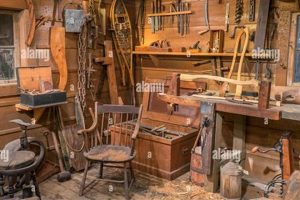
Adopting a reduced-tool philosophy fosters resourcefulness, improves hand-eye coordination, and promotes a deeper connection with the craft. Historically, woodworking relied on essential implements before the advent of power machinery, necessitating mastery of basic tools. This foundational knowledge enhances overall woodworking proficiency and reduces reliance on specialized equipment.
The subsequent sections will examine specific essential implements, their proper maintenance, and fundamental techniques applicable when embracing this focused approach to fabrication. Furthermore, project examples will demonstrate the capabilities achievable with a carefully curated selection of woodworking instruments.
Tips for Efficient Woodworking
This section provides guidance on maximizing efficiency and achieving quality results when operating with a restricted set of instruments.
Tip 1: Tool Selection is Paramount. Prioritize quality over quantity. Invest in robust, well-made implements that will withstand prolonged use and maintain their edge. A high-carbon steel hand saw, for instance, will outperform a less expensive alternative in terms of cutting efficiency and longevity.
Tip 2: Sharpening is Essential. Maintain a keen edge on all cutting instruments. A dull blade requires more force, leading to inaccurate cuts and increased fatigue. Employ a sharpening regimen using whetstones or a honing guide for consistent results.
Tip 3: Master Fundamental Joinery. Focus on learning strong, reliable joints such as dovetails, mortise and tenon, and rabbets. These joints can be executed with basic instruments and provide structural integrity to projects.
Tip 4: Accurate Layout is Crucial. Precise marking and measuring are critical when only using basic tools. Utilize a marking gauge, combination square, and sharp knife to ensure accurate transfer of dimensions and minimize errors.
Tip 5: Practice Proper Body Mechanics. Employ efficient posture and movement to reduce strain and improve control. Using body weight effectively during sawing and planing will increase power and reduce fatigue.
Tip 6: Grain Direction Matters. Understanding wood grain orientation is imperative to prevent tear-out and ensure smooth cuts. Always cut with the grain whenever possible, especially when using hand planes and chisels.
Tip 7: Secure Workholding is Vital. A stable workpiece is essential for accurate and safe operation. Utilize clamps, vices, and bench dogs to firmly secure the material during all stages of the process.
These insights facilitate efficient and precise timber crafting using minimal equipment. Mastery of these strategies leads to superior results and a deeper appreciation for the craft.
The following conclusion will summarize the key benefits and enduring appeal of a focused methodology.
1. Tool quality

In the context of woodworking with a minimal set of implements, the characteristic of individual tools is magnified in importance. Reliance on a reduced number of instruments necessitates that each item perform optimally and reliably. The subsequent analysis details several facets of implement characteristics crucial for success.
- Material Composition and Durability
The materials used in construction and overall durability directly impact the tool’s lifespan and performance. For instance, a hand saw crafted from high-carbon steel retains its sharpness longer and withstands more rigorous use than one made from inferior alloys. Similarly, a chisel with a properly hardened and tempered blade resists chipping and deformation under stress, delivering cleaner and more accurate cuts. Selection of instruments with robust construction and durable materials is essential.
- Precision of Manufacture
Accuracy in manufacturing processes is critical. A poorly cast plane body, for example, will be difficult to adjust and may not hold its setting, leading to inconsistent planing. Likewise, a marking gauge with imprecise graduation marks introduces errors in layout and joinery. Precise manufacturing ensures that tools function predictably and reliably, reducing the likelihood of mistakes and improving the overall quality of work.
- Ergonomics and User Comfort
Ergonomic design enhances user comfort and reduces fatigue during extended use. A well-shaped handle on a hand plane or chisel allows for a secure grip and efficient transfer of force, minimizing strain on the hand and wrist. Conversely, poorly designed handles can lead to discomfort and reduced control, increasing the risk of errors and injuries. Prioritizing tools with ergonomic features improves efficiency and promotes safe operation.
- Edge Retention and Sharpening Characteristics
The ability of a cutting instrument to retain its sharpness significantly affects its performance and the amount of effort required for upkeep. High-quality steel, properly heat-treated, will hold an edge longer than softer alloys. Furthermore, the ease with which a tool can be sharpened is an important consideration. Some steels respond well to sharpening with simple whetstones, while others require more specialized equipment and techniques. Selecting instruments with superior edge retention and manageable sharpening requirements minimizes downtime and ensures consistent cutting performance.
Collectively, these facets of instrument characteristics underscore the critical nature of careful selection when employing a reduced equipment methodology. Investing in high-performance implements facilitates efficient and accurate work, mitigating the challenges associated with a limited toolkit. This focus on implements translates directly to enhanced project outcomes and increased efficiency.
2. Sharpening frequency
The regularity with which edged instruments are honed directly influences the effectiveness of woodworking, particularly when employing a minimal toolset. Maintaining sharp cutting edges is not merely a matter of convenience but a prerequisite for accurate work and efficient material removal. A dull implement necessitates increased force, leading to potential errors and reduced control.
- Material Removal Efficiency
Sharp cutting edges facilitate efficient material removal. A well-honed plane blade, for example, slices cleanly through wood fibers, producing smooth surfaces with minimal effort. Conversely, a dull blade tears and crushes the material, requiring more force and resulting in rougher finishes. The reduced effort associated with sharp implements conserves energy and improves the overall pace of woodworking.
- Precision and Accuracy
Sharp edges contribute directly to precision and accuracy. A keen chisel edge allows for precise paring and shaping of joinery components, ensuring tight-fitting and structurally sound assemblies. A dull chisel, on the other hand, is prone to wandering and crushing fibers, compromising the accuracy of cuts and the integrity of the joint. Consistent edge maintenance is critical for achieving precise results.
- Tool Control and Safety
Sharp tools enhance control and reduce the risk of accidents. A sharp knife requires less force to initiate a cut, minimizing the chance of slippage and injury. A dull knife, however, necessitates increased pressure, increasing the likelihood of uncontrolled movements and potential harm. Maintaining sharp edges promotes safe and controlled operation.
- Reduced Tool Wear
Counterintuitively, frequent sharpening can extend the lifespan of tools. Regular honing removes small imperfections and maintains the optimal cutting angle, preventing excessive wear and tear. Neglecting sharpening allows damage to accumulate, potentially requiring more aggressive grinding to restore the edge, thereby shortening the tool’s overall lifespan. Proactive edge maintenance preserves the implement’s condition.
Collectively, these facets highlight the critical importance of consistent sharpening in woodworking, particularly when relying on a reduced set of implements. Sharpening frequency directly influences efficiency, precision, safety, and tool longevity. A commitment to edge maintenance is thus paramount for achieving quality results and maximizing the effectiveness of a minimal toolkit. This proactive approach allows for efficient use of the woodworking equipment.
3. Joinery proficiency

The ability to create strong and aesthetically pleasing connections between wood components assumes paramount importance when limiting the number of available implements. Mastery of joinery techniques mitigates the reliance on fasteners and specialized equipment, forming robust structures using primarily hand tools.
- Structural Integrity and Stability
Proficiency in creating joints such as dovetails, mortise and tenon, and rabbets provides the structural backbone of a project. These joints, executed skillfully, interlock components mechanically, distributing stress and preventing racking. Examples include traditional timber-framed buildings relying almost exclusively on mortise and tenon joinery for enduring stability, demonstrating the inherent strength achievable without modern fasteners. The application of joinery techniques significantly reduces the need for nails, screws, or adhesives, aligning directly with a reduced instrumentarium approach.
- Material Efficiency and Resourcefulness
Well-designed joinery minimizes material waste and optimizes the use of available timber. By strategically interlocking components, joints can eliminate the need for redundant structural elements or reinforcing members. For instance, a meticulously crafted dovetail joint can join two boards end-to-end, creating a longer component without requiring additional supports. Such efficiency is crucial when resources are limited or when striving for minimal environmental impact, both of which resonate with the principles of woodworking with a minimal toolset.
- Aesthetic Enhancement and Craftsmanship
Beyond structural considerations, joinery provides an opportunity to showcase craftsmanship and enhance the aesthetic appeal of a project. Exposed joints, such as through dovetails or pegged mortise and tenon, can become decorative elements, adding visual interest and character. The careful execution of these joints demonstrates a commitment to precision and artistry, elevating the overall quality of the finished product. The intentional integration of joinery as a design element differentiates hand-crafted pieces from mass-produced items and underscores the value of skill-based woodworking.
- Adaptability and Repairability
Projects constructed with traditional joinery techniques tend to be more adaptable and repairable than those relying solely on fasteners. Individual components can be replaced or repaired without compromising the structural integrity of the entire assembly. The disassembly and reassembly of joined components allows for modifications or adjustments as needed, extending the lifespan of the project. This inherent adaptability aligns with a sustainable approach to woodworking, reducing the need for replacements and promoting long-term use.
Collectively, these aspects of joinery proficiency underscore its central role in woodworking with a minimal toolkit. The ability to create strong, efficient, aesthetically pleasing, and adaptable connections between wood components is essential for achieving success in this context. The mastery of joinery techniques allows the artisan to overcome the limitations of a reduced instrumentarium, creating enduring and meaningful objects.
4. Layout accuracy
Precise marking and dimension transfer constitute the foundation of successful woodworking, particularly when employing a limited instrumentarium. With fewer tools available to correct errors or compensate for inaccuracies, meticulous layout becomes paramount. Errors introduced during the layout phase propagate throughout the project, magnifying the difficulty of achieving desired results. Real-world examples abound: A bookcase with shelves unevenly spaced due to inaccurate layout will lack aesthetic appeal and potentially structural integrity. Similarly, a table with legs improperly positioned will be unstable and unusable. The scarcity of corrective measures available within a minimal toolset underscores the significance of precision from the outset.
Achieving accurate layouts requires a combination of appropriate instruments and diligent technique. A sharp marking knife, a well-calibrated square, and a precise measuring tool are essential. Technique dictates careful attention to detail: Lines should be drawn finely and accurately, measurements should be double-checked, and surfaces should be properly prepared to receive markings. Consider the construction of a dovetailed drawer using solely hand tools. Inaccurate marking of the dovetail pins and tails renders proper joint assembly virtually impossible. The lack of power tools to refine these shapes necessitates exacting initial layout.
The practical significance of this understanding lies in the increased efficiency and reduced waste associated with precise work. Accurate layout minimizes the need for corrective measures, saving time and resources. A commitment to meticulous layout, therefore, becomes an integral component of proficient timber crafting when operating with reduced equipment. While demanding initial focus, it translates to a higher quality finished product, less material wastage, and greater satisfaction for the woodworker. The investment in accurate layout tools and techniques provides the best return when working with minimal tools.
5. Material knowledge

An understanding of wood properties constitutes a foundational element in woodworking, its importance amplified when employing a limited set of implements. Material knowledge informs the selection of appropriate wood species for specific applications, predicts behavior during machining, and guides the application of finishing techniques. When resources are constrained, the ability to make informed decisions regarding material selection becomes paramount, minimizing waste and maximizing the utilization of each piece.
The correlation between understanding material properties and efficient woodworking is directly proportional when using a smaller toolset. For instance, recognizing the tendency of certain hardwoods to split during mortising necessitates precise chisel work and potentially the selection of a more pliable wood. Recognizing grain direction and adapting cutting techniques avoids tear-out when using hand planes, thereby avoiding unnecessary waste. Selecting the proper wood becomes essential for project success. Likewise, knowing the moisture content of lumber informs joinery design, preventing the wood’s expansion or contraction from compromising the joint’s integrity. Lack of material information increases chances of errors and waste.
In summary, the application of material knowledge allows the woodworker to mitigate the limitations imposed by a minimal instrumentarium. It informs tool selection, technique adaptation, and joinery design, increasing efficiency and reducing the risk of errors. Proficiency in the craft, supported by experience with multiple wood types, provides the best outcome when relying on limited tools. This focus on the material, alongside technique, improves quality and results.
Frequently Asked Questions
This section addresses common inquiries regarding woodworking practices employing a limited set of instruments. The focus is on providing clear, concise information to enhance understanding and promote successful project completion.
Question 1: Is it possible to create structurally sound furniture using only hand tools?
Yes. Traditional woodworking techniques, such as mortise and tenon, dovetail, and rabbet joinery, provide exceptional structural integrity when executed correctly. These methods, often employed before the advent of power tools, demonstrate the inherent strength achievable with hand-crafted connections. Skill in joinery is key.
Question 2: What are the essential instruments for beginning in woodworking with a limited toolset?
A sharp hand saw, a versatile chisel set, a smoothing plane, a marking gauge, a combination square, and sharpening equipment constitute a foundational toolkit. These instruments enable basic shaping, joinery, and surface preparation.
Question 3: How important is sharpening when operating with minimal instruments?
Maintaining keen edges is paramount. A dull blade necessitates increased force, leading to inaccurate cuts and elevated risk. Frequent sharpening ensures efficient material removal and improves control.
Question 4: What are some common mistakes to avoid when starting out?
Neglecting sharpening, disregarding grain direction, and failing to secure workpieces adequately are common errors. These oversights can compromise the quality of work and increase the risk of injury. Accurate layouts prevent problems.
Question 5: Can complex projects be undertaken with a limited toolset?
Yes, but complexity requires careful planning and advanced skill. Breaking down projects into manageable steps and mastering fundamental techniques are essential for success. Some elements are better left for experts.
Question 6: Where can one find reliable resources for learning woodworking techniques suitable for minimal toolsets?
Books, online tutorials, and woodworking communities offer valuable information and guidance. Seek resources that emphasize hand tool techniques and traditional joinery methods. Instruction is crucial.
In summary, woodworking with minimal implements demands meticulousness, patience, and a commitment to mastering fundamental skills. The rewards include enhanced craftsmanship, resourcefulness, and a deeper connection to the craft.
The following section will present illustrative examples of projects achievable with a reduced instrumentarium.
Conclusion
The preceding analysis has delineated the essential elements inherent in the practice of woodworking minimal tools. Considerations of tool quality, sharpening frequency, joinery proficiency, layout accuracy, and material knowledge collectively govern the efficacy of this focused approach. Mastery of these areas enables the artisan to overcome equipment limitations and produce work of substantial quality and enduring value.
The disciplined application of these principles fosters a deeper understanding of the craft and promotes resourcefulness in the face of constraints. Embracing this methodology not only reduces material waste and environmental impact but also cultivates a more intimate relationship between the artisan and the medium. Continued dedication to honing skills within this framework will yield increasingly refined results and a more profound appreciation for the art of woodworking.