



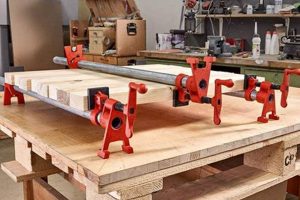
These essential tools, commonly found in workshops, consist of a threaded pipe and two clamping heads. These heads, one fixed and one adjustable, slide along the pipe’s length to apply pressure. For example, these are used to hold together the components of a table top while the adhesive cures.
Their importance stems from the robust and consistent pressure they provide, ensuring strong and accurate bonds. Their versatility is also significant, accommodating various project sizes and shapes. Historically, they have allowed woodworkers to construct larger, more complex pieces than would be possible with other clamping methods.
The subsequent sections will delve into selection criteria, optimal usage techniques, maintenance procedures, and explore alternative clamping solutions available to woodworkers.
Essential Guidance for Utilizing Pipe Clamping Systems
The following guidelines are designed to optimize the effectiveness and longevity of pipe clamping systems in woodworking applications.
Tip 1: Select Appropriate Pipe Diameter and Length: Consider the dimensions of typical projects. Thicker pipe diameters resist bending under pressure. Longer pipes accommodate larger assemblies, but manageability should also be considered.
Tip 2: Inspect Threads Regularly: Damaged threads compromise clamping force and can lead to slippage. Use a wire brush to remove debris and consider applying a dry lubricant periodically.
Tip 3: Utilize Protective Pads: Direct contact between metal components and wood surfaces can cause indentations. Implement wooden or cork pads to distribute pressure evenly and prevent marring.
Tip 4: Stagger Clamp Placement: When assembling large panels, stagger the placement of these tools to distribute pressure evenly across the entire surface, minimizing bowing or warping.
Tip 5: Avoid Over-Tightening: Excessive force can damage the wood fibers or strip the threads on the clamping mechanism. Apply sufficient pressure to ensure a tight bond, but avoid overtightening. Monitor glue squeeze-out as an indicator.
Tip 6: Clean Glue Squeeze-Out Promptly: Dried adhesive can be difficult to remove and may interfere with finishing. Wipe away excess glue with a damp cloth before it hardens. This prevents adhesion to the tool.
Tip 7: Store Properly: When not in use, store these tools in a dry environment to prevent rust. Hanging them vertically helps conserve space and prevents pipe distortion.
By adhering to these recommendations, the user can maximize the performance and lifespan of these tools, ensuring consistent and reliable clamping for a wide range of woodworking tasks.
The subsequent section addresses maintenance and repair procedures.
1. Pipe Diameter
The diameter of the pipe used in these clamping systems directly affects the tool’s rigidity and resistance to bending forces. A larger diameter pipe exhibits greater resistance to deflection under load. This characteristic is paramount when clamping large or heavy workpieces, where significant pressure is required to maintain proper alignment and adhesion. Conversely, a smaller diameter pipe may bend or flex, leading to uneven pressure distribution and potentially compromising the integrity of the joint. For instance, when assembling a large tabletop, undersized pipe is prone to bowing, resulting in a surface that is not perfectly flat. The choice of pipe diameter, therefore, is a critical factor in determining the clamping system’s suitability for various woodworking tasks.
The standard diameters typically encountered range from 1/2 inch to 3/4 inch. The 1/2-inch variant is often sufficient for smaller projects and lighter clamping duties, such as assembling small boxes or frames. The 3/4-inch variant, however, provides enhanced stability and is better suited for larger projects or those involving denser materials. The increased diameter reduces the likelihood of bending, ensuring uniform pressure distribution across the entire clamping surface. Furthermore, the thicker pipe walls associated with larger diameters contribute to increased durability and a longer lifespan for the tool, especially under repeated or heavy use. Improper selection will compromise the work-piece result.
In summary, the pipe diameter is an essential consideration when selecting the appropriate tool. An informed decision, based on the scale and nature of typical projects, ensures optimal performance and prevents potential structural deficiencies in the finished product. Understanding the relationship between pipe diameter and clamping force is crucial for achieving precise and reliable results in woodworking applications. Selecting the incorrect pipe diameter is cause effect related to weak bonds.
2. Thread Quality

Thread quality in these clamping systems directly influences their overall performance, durability, and safety. Substandard threads can compromise clamping force, leading to project failures and potential hazards. A thorough understanding of thread characteristics is, therefore, essential for selecting and maintaining effective clamping tools.
- Material Composition and Hardness
The material used and its hardness level significantly affect the thread’s resistance to wear and deformation. Threads constructed from hardened steel maintain their integrity longer than those made from softer metals, resisting stripping and ensuring consistent clamping pressure. For example, threads subjected to high clamping forces benefit from a robust steel composition, preventing premature failure and maintaining accurate alignment of the clamping jaws.
- Thread Pitch and Accuracy
Thread pitch, or the distance between threads, determines the clamping force applied per rotation. Fine threads provide greater adjustability and more precise clamping force, while coarse threads allow for faster adjustments but may offer less precision. Accurate thread machining is crucial for consistent clamping pressure along the entire length of the pipe. Inaccurate threads can result in uneven force distribution, potentially damaging the workpiece or causing slippage.
- Surface Finish and Lubrication
A smooth surface finish reduces friction and wear, facilitating easier adjustment and extending the lifespan of the threads. Lubrication further minimizes friction, preventing galling and seizing. For instance, applying a dry lubricant to the threads can significantly improve the ease of adjustment and prevent corrosion, ensuring smooth operation over time.
- Manufacturing Tolerances and Inspection
Tight manufacturing tolerances ensure consistent thread dimensions and prevent variations that could compromise clamping force. Regular inspection of the threads for damage, wear, or corrosion is essential for maintaining the tool’s performance and safety. Damaged or worn threads should be addressed promptly to prevent further deterioration and potential failure during use.
In conclusion, thread quality is a critical factor influencing the reliability and longevity of these clamping systems. Selecting tools with high-quality threads, maintaining proper lubrication, and conducting regular inspections are essential practices for ensuring safe and effective clamping performance. Neglecting these considerations can lead to diminished clamping force, project failures, and potential safety hazards.
3. Clamping Pressure
Clamping pressure, exerted by woodworking pipe clamps, is paramount in achieving strong and durable bonded joints. Consistent and appropriate force is required for optimal adhesion and structural integrity.
- Optimal Pressure Range
Different wood species and adhesives require specific pressure ranges. Excessive pressure can crush wood fibers, while insufficient pressure results in weak bonds. For instance, softwood requires less pressure than hardwood to achieve adequate glue adhesion. Exceeding the wood’s compressive strength leads to joint failure, evidenced by glue-starved joints.
- Pressure Distribution
Uneven pressure distribution can lead to warped assemblies and weakened joints. Proper placement and alignment of the clamps ensure uniform force across the entire joint surface. For example, failing to stagger these clamping systems on a wide panel may result in bowing at the center. Consistent surface contact is essential.
- Impact of Clamp Spacing
The distance between these clamping systems influences pressure consistency. Wider spacing can cause deflection between the clamps, reducing pressure in those areas. Closer spacing provides more uniform pressure but requires additional tools. An example is a long, thin strip of wood where excessive spacing leads to bowing between the points of contact. Proper spacing supports uniform adhesion.
- Gauge Monitoring and Adjustment
While most of these tools lack integrated pressure gauges, awareness of applied force is vital. Adjustments are made based on observing glue squeeze-out and wood deformation. An example is using visual cues to determine if the adhesive is adequately compressed, indicating sufficient clamping pressure. Experienced users develop a feel for optimal tightness.
These facets highlight the significance of controlling clamping pressure for strong woodworking joints. Understanding the nuances of pressure optimization, distribution, clamp spacing, and monitoring contribute to successful project outcomes and longevity of the final product.
4. Jaw Design
Jaw design within woodworking pipe clamps directly influences the effectiveness and efficiency of pressure application. The jaws, the points of contact between the clamp and the workpiece, determine the distribution of force and the stability of the assembly during the curing process. Poor jaw design can lead to uneven pressure, marring of the wood surface, and ultimately, a compromised joint. A well-designed jaw, conversely, ensures uniform force distribution, protecting the wood and promoting a strong, lasting bond. For instance, jaws that lack sufficient surface area may concentrate pressure on small areas, leading to indentations, particularly on softer wood species. Jaws with angled or contoured surfaces are better suited for accommodating complex shapes and preventing slippage.
Specific features contribute to optimal jaw performance. Swiveling jaws adjust to angled surfaces, ensuring even pressure distribution regardless of the workpiece geometry. Integrated pads, often made of non-marring materials such as rubber or cork, protect the wood surface from direct contact with the metal jaw. Jaw depth, referring to the distance from the pipe to the clamping surface, determines the tool’s reach and its ability to clamp objects of varying thickness. Consider a scenario involving the assembly of a picture frame: jaws with a shallow depth may be insufficient for clamping the corners securely, whereas deep jaws may prove cumbersome and unnecessary. Selecting jaws with appropriate depth and features is critical for achieving secure and damage-free clamping.
In summary, jaw design is an integral component of woodworking pipe clamps, significantly impacting the quality and durability of the final product. Careful consideration of jaw features, such as surface area, swivel capability, padding, and depth, allows the woodworker to optimize pressure distribution, protect the workpiece, and achieve strong, reliable bonds. Understanding the nuances of jaw design is, therefore, essential for effective utilization of pipe clamps and successful completion of woodworking projects. Failing to select proper jaw design is cause and effect related to the wood deformation.
5. Material Compatibility

Material compatibility, in the context of woodworking pipe clamps, refers to the chemical and physical interactions between the clamp components (typically steel, iron, or treated metals) and the wood or adhesives used in woodworking projects. Adverse reactions can compromise the integrity of the wood, weaken the adhesive bond, or damage the clamp itself, ultimately affecting the quality and longevity of the finished product. Attention to material compatibility mitigates potential issues and ensures reliable clamping.
- Galvanic Corrosion
Galvanic corrosion occurs when dissimilar metals are in contact in the presence of an electrolyte, such as moisture. In woodworking, this can manifest when a steel clamp is used on wood treated with certain preservatives containing copper or other reactive metals. The resulting electrochemical reaction corrodes the less noble metal (typically the clamp), weakening it and potentially leaving stains on the wood. Using clamps with compatible coatings or inserts, such as zinc plating or rubber pads, can mitigate galvanic corrosion.
- Chemical Reactions with Wood Finishes
Certain metal clamps may react with specific wood finishes or adhesives, leading to discoloration or weakening of the bond. For example, some acidic wood species, such as oak, can corrode unprotected steel over time, leaving dark stains on the wood. Similarly, certain adhesives may contain solvents that can degrade the protective coatings on the clamps, leading to rust or other forms of corrosion. Selecting clamps with inert coatings or using barrier layers can prevent such reactions.
- Wood Discoloration
Direct contact between steel and certain woods, especially when moisture is present, can lead to discoloration. The tannins in some woods react with the iron in the clamp, resulting in dark staining. Using padded clamps or applying a protective coating to the clamp jaws can prevent this discoloration. For example, wrapping the jaws with wax paper provides a barrier that prevents direct contact and minimizes staining.
- Adhesive Compatibility
Some adhesives contain solvents or chemicals that can react with the metal components of pipe clamps, leading to corrosion or degradation of the adhesive itself. Using clamps with solvent-resistant coatings or selecting adhesives specifically formulated for use with metal can prevent these issues. For instance, epoxy adhesives are generally compatible with most metals used in clamps, while water-based adhesives may promote rust if the clamps are not properly protected.
Consideration of material compatibility is crucial for preserving the integrity of both the woodworking project and the clamps themselves. By selecting appropriate materials and implementing preventive measures, woodworkers can avoid adverse reactions, ensuring strong, durable joints and prolonging the lifespan of their tools. The proper selection of materials prevents weak bonds, damaged parts, and project failure.
6. Rust Prevention
Rust prevention is a crucial consideration in woodworking pipe clamps due to their frequent exposure to moisture and the inherent susceptibility of ferrous metals to corrosion. Rust weakens the metal, compromising the clamping force and potentially staining wood. Effective rust prevention strategies are essential for maintaining the tool’s performance and extending its lifespan.
- Protective Coatings
Applying protective coatings, such as zinc plating, powder coating, or rust-inhibiting paints, creates a barrier between the metal surface and environmental moisture. These coatings prevent oxidation and significantly reduce the risk of rust formation. For instance, zinc-plated clamps exhibit superior resistance to corrosion compared to uncoated steel, particularly in humid environments. The type of coating impacts long-term durability.
- Regular Cleaning and Drying
Regular cleaning removes accumulated sawdust, glue residue, and other contaminants that can trap moisture and accelerate rust formation. Thorough drying after use prevents moisture from lingering on the metal surface. An example is wiping down clamps with a dry cloth after each project to eliminate residual moisture and debris. Maintenance routines prolong the tool’s usefulness.
- Lubrication with Rust Inhibitors
Applying lubricants containing rust inhibitors creates a protective film on the metal surface, preventing moisture from reaching the underlying steel. These lubricants also reduce friction, facilitating smoother operation of the clamping mechanism. For example, spraying clamps with a light coat of WD-40 or similar rust inhibitor provides a barrier against corrosion and enhances usability. Frequency of application depends on environmental conditions.
- Proper Storage Practices
Storing woodworking pipe clamps in a dry, well-ventilated environment minimizes exposure to moisture and humidity, reducing the likelihood of rust formation. Avoiding storage in damp basements or unheated garages is essential. For example, hanging clamps on a wall rack in a climate-controlled workshop protects them from moisture and physical damage. Location of storage matters significantly.
These facets underscore the importance of proactive rust prevention measures in maintaining the functionality and longevity of these clamping systems. Implementing these strategies ensures reliable performance and protects both the tool and the woodworking project from potential damage caused by rust. The absence of rust prevention strategies invariably shortens the lifespan of the tool.
Frequently Asked Questions
The following questions address common inquiries regarding the proper selection, use, and maintenance of woodworking pipe clamps. These answers provide information to optimize performance and longevity.
Question 1: What pipe diameter is most suitable for general woodworking applications?
A pipe diameter of 3/4 inch is generally recommended for most woodworking tasks. This diameter provides a balance between rigidity and manageability, minimizing bending under pressure while remaining easy to handle. Smaller diameters may suffice for delicate projects, but the 3/4-inch option offers greater versatility.
Question 2: How frequently should woodworking pipe clamp threads be lubricated?
Woodworking pipe clamp threads should be lubricated every three to six months, depending on usage frequency and environmental conditions. A dry lubricant, such as graphite powder, is preferred to prevent dust accumulation and maintain smooth operation. More frequent lubrication may be necessary in humid environments or with heavy use.
Question 3: What type of wood is most susceptible to damage from excessive clamping pressure?
Softwoods, such as pine and cedar, are particularly susceptible to damage from excessive clamping pressure. Their lower density makes them more prone to compression and indentation. Careful monitoring of clamping force and the use of protective pads are essential when working with softwoods.
Question 4: How should glue squeeze-out be managed when using woodworking pipe clamps?
Glue squeeze-out should be removed promptly with a damp cloth or sponge. Allowing glue to dry on the wood surface can complicate finishing and may interfere with subsequent processes. Removing squeeze-out before it hardens ensures a clean and professional result.
Question 5: What are the signs of thread damage in woodworking pipe clamps?
Signs of thread damage include difficulty adjusting the clamp, slippage under pressure, and visible deformation or corrosion on the threads. Any of these signs indicates that the tool requires repair or replacement to ensure safe and effective operation.
Question 6: How can rust formation on woodworking pipe clamps be prevented?
Rust formation can be prevented by applying a rust-inhibiting coating, such as a specialized spray or wax, regularly cleaning the tool to remove debris, and storing it in a dry environment. These measures minimize exposure to moisture and prevent oxidation, extending the lifespan of the tool.
These answers address essential considerations for woodworking pipe clamp usage. Proper application and maintenance are imperative for achieving optimal results.
The subsequent section will address troubleshooting techniques for pipe clamp-related issues.
Conclusion
This exploration has comprehensively addressed the critical aspects of woodworking pipe clamps, from selection and utilization to maintenance and troubleshooting. Emphasis has been placed on optimal pipe diameter, thread quality, clamping pressure control, jaw design considerations, material compatibility, and proactive rust prevention strategies. A thorough understanding of these elements ensures reliable and effective clamping performance.
The informed application of the outlined principles is essential for achieving superior woodworking outcomes and preserving the functionality of these indispensable tools. Continued adherence to best practices will contribute to both the quality of craftmanship and the longevity of woodworking equipment.
![Top-Rated: Best Quick Clamps for Woodworking Projects [2024] | Step-by-Step Guides, Tools & Inspiration to Build Beautiful Wooden Decor on a Budget](https://woodfromhome.com/wp-content/uploads/2026/04/th-264-300x200.jpg "Top-Rated: Best Quick Clamps for Woodworking Projects [2024] Step-by-Step Guides, Tools & Inspiration to Build Beautiful Wooden Decor on a Budget")