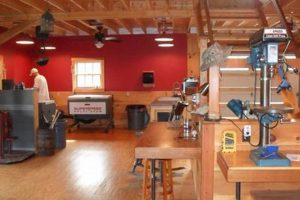
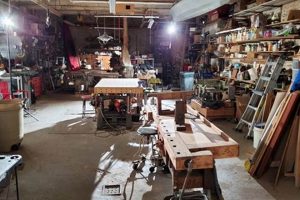
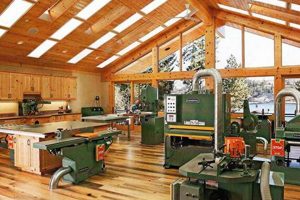
Fundamental components necessary for equipping a functional space dedicated to the craft of shaping wood are categorized as primary implements and resources. These encompass items such as saws, planes, chisels, measuring tools, and safety equipment, all vital for executing projects of varying complexity and scale. A comprehensive set allows for precision, efficiency, and adherence to safety protocols within the workshop.
The presence of a well-furnished crafting area accelerates project completion, enhances the quality of the final product, and minimizes potential hazards. Historically, the evolution of these tools has paralleled advancements in woodworking techniques, enabling more intricate designs and durable constructions. An adequate investment in reliable and appropriate instruments ensures longevity in the craft and fosters an environment conducive to creativity and skill development.
The subsequent sections will outline the critical categories of tools and equipment required to establish a fully operational woodworking environment, providing detailed information on selection criteria, maintenance practices, and safety considerations. This will facilitate informed decision-making when acquiring the means to pursue woodworking endeavors effectively.
Essential Guidance for Workshop Provisioning
The following recommendations aim to provide clear and actionable guidance for establishing a fully functional and safe woodworking area. Attention to these points ensures optimal workflow, enhances project quality, and mitigates potential risks.
Tip 1: Prioritize Safety Equipment. Invest in certified eye protection, hearing protection, and dust filtration systems. Consistent use of these items minimizes long-term health hazards associated with woodworking activities. For example, an N95 respirator is crucial during sanding or sawing operations.
Tip 2: Select Quality Hand Tools. Opt for durable, well-crafted hand tools made from high-carbon steel. Properly maintained, these tools provide superior performance and longevity compared to cheaper alternatives. A high-quality hand plane, for instance, will yield a smoother surface and require less effort.
Tip 3: Invest in a Robust Workbench. A stable and well-designed workbench is the foundation of any woodworking space. Choose a bench constructed from hardwood with a built-in vise system to facilitate secure workpiece clamping. Ensure the bench height is ergonomically appropriate to minimize strain during extended use.
Tip 4: Organize Storage Solutions. Implement a systematic storage system for tools and materials. Utilize wall-mounted cabinets, pegboards, and labeled containers to maintain order and facilitate quick access. This minimizes time spent searching for implements and enhances overall efficiency.
Tip 5: Properly Maintain Equipment. Establish a regular maintenance schedule for all tools and machinery. Sharpen blades, lubricate moving parts, and inspect power cords for damage. Consistent upkeep ensures optimal performance and extends the lifespan of the equipment.
Tip 6: Consider Dust Collection Systems. Implement a dust collection system to remove airborne particles generated during sanding, sawing, and routing. This improves air quality, reduces health risks, and simplifies cleanup. A dedicated dust collector connected to power tools is highly recommended.
Tip 7: Adequate Lighting is Crucial. Ensure sufficient and strategically placed lighting throughout the workspace. Use a combination of overhead lighting and task lighting to illuminate the work area effectively, reducing eye strain and improving accuracy.
Adherence to these recommendations contributes to a well-equipped and safe woodworking area, fostering efficiency, precision, and long-term engagement with the craft. Careful consideration of these aspects promotes a productive and enjoyable woodworking experience.
The concluding section will summarize the essential considerations for establishing a functional woodworking environment and emphasize the ongoing importance of safety, maintenance, and continuous skill development.
1. Basic Hand Tools

Basic hand tools represent a foundational component within the broader context of woodworking shop essentials. Their presence directly affects the quality, precision, and versatility of work undertaken. Saws, chisels, planes, and measuring devices, employed through manual manipulation, permit meticulous control over material removal and shaping. For instance, a properly sharpened hand plane enables the creation of exceptionally smooth surfaces unattainable through automated means. The absence of such tools can severely limit the scope of projects achievable, forcing reliance solely on power tools which may be unsuitable for intricate detailing.
The importance of basic hand tools extends beyond mere functionality. The acquisition and mastery of hand tool techniques fosters a deeper understanding of wood properties and grain direction. This knowledge, in turn, enhances the craftsman’s ability to predict material behavior and make informed decisions throughout the construction process. Consider the task of fitting a mortise and tenon joint: accurate chisel work is essential for achieving a tight, strong, and aesthetically pleasing connection. Furthermore, hand tools operate without electricity, granting independence from power sources and enabling work in remote locations or during power outages.
Ultimately, the integration of basic hand tools within a woodworking shop is non-negotiable for comprehensive capability. While power tools offer efficiency, hand tools provide finesse, control, and a profound connection to the craft. A balanced workshop, therefore, incorporates both categories, allowing the woodworker to select the most appropriate instrument for each specific task. This synergistic relationship between hand and power tools is a hallmark of a well-equipped and versatile woodworking environment.
2. Power Tool Inventory

An appropriately curated power tool inventory constitutes a critical component of woodworking shop essentials. The selection and arrangement of these tools directly influences the efficiency, capacity, and safety profile of the crafting environment. Disregard for careful planning in this area leads to limitations in project scope and potential safety compromises.
- Table Saw Functionality
The table saw represents a cornerstone of many woodworking operations, enabling precise ripping and crosscutting of stock. Its selection should prioritize safety features such as blade guards, riving knives, and anti-kickback pawls. The absence of a suitable table saw limits the ability to prepare raw materials efficiently and accurately, impacting the overall workflow.
- Routing Capabilities
Routers provide the means for shaping edges, creating grooves, and executing intricate joinery. Options include handheld routers and router tables, each offering specific advantages. Inadequate routing capabilities constrain design possibilities and increase the difficulty of achieving refined finishes.
- Sanding Equipment Effectiveness
Power sanders, including orbital, belt, and spindle sanders, facilitate the efficient smoothing and preparation of surfaces. Their effectiveness is contingent upon the availability of various grit levels and dust collection integration. Insufficient sanding equipment leads to increased manual labor and compromised surface quality.
- Drilling and Fastening Provisions
Drills and drivers enable the creation of pilot holes and the secure fastening of components. Options include corded and cordless models, each suited for different applications. Limitations in drilling and fastening provisions hinder assembly processes and may compromise structural integrity.
The effective integration of power tools into a woodworking shop extends beyond mere acquisition. Proper maintenance, safety training, and organized storage are equally crucial for maximizing their utility and minimizing potential hazards. The power tool inventory must be viewed as an interdependent system, where each component complements the others to facilitate efficient and safe woodworking practices.
3. Measurement Precision

Within the realm of woodworking shop essentials, measurement precision is paramount. It is the foundation upon which accuracy, quality, and structural integrity are built. Its significance extends from the initial layout of a project to the final fitting of components. The absence of accurate measurement practices compromises the entire woodworking process.
- Calibrated Measuring Instruments
The core of measurement precision lies in the utilization of calibrated instruments. These include rulers, tape measures, squares, and levels, each requiring periodic verification to ensure accuracy. An out-of-square framing square, for instance, will propagate errors throughout a project, resulting in ill-fitting joints and skewed assemblies. Maintaining calibration standards is, therefore, non-negotiable.
- Accurate Layout Techniques
Precise measurements must be translated into accurate layout markings on the workpiece. This requires the use of sharp pencils, marking knives, and appropriate templates. Sloppy layout techniques negate the value of precise measurements, leading to inaccuracies in cutting and shaping. The ability to accurately transfer dimensions and angles from drawings to the material is crucial.
- Incremental Measurement Approach
Employing an incremental measurement approach minimizes the accumulation of errors. Rather than relying on a single, long measurement, breaking down the process into smaller, verifiable segments enhances accuracy. For example, when cutting multiple pieces to the same length, measure and cut the first piece accurately, then use it as a template for subsequent pieces, ensuring uniformity.
- Environmental Considerations
Environmental factors, such as temperature and humidity, can influence the dimensions of wood. Awareness of these effects and the implementation of appropriate adjustments are essential for maintaining precision. Wood expands and contracts with changes in moisture content, potentially impacting joint tightness and overall dimensions. Careful acclimatization of wood to the shop environment minimizes dimensional instability.
The symbiotic relationship between calibrated instruments, accurate layout techniques, incremental measurement strategies, and awareness of environmental influences directly impacts the success of woodworking endeavors. Embracing these facets of measurement precision is not merely a matter of best practice; it is a fundamental requirement for achieving professional-grade results within a woodworking shop setting.
4. Effective Dust Control
Effective dust control represents an indispensable facet of woodworking shop essentials. The management and mitigation of airborne particulate matter directly affect worker health, equipment longevity, and overall shop cleanliness. The absence of adequate dust control measures leads to respiratory ailments, reduced visibility, and increased fire hazards, thereby undermining the functionality and safety of the woodworking environment.
- Source Capture Systems
Source capture systems involve the placement of collection points directly at the source of dust generation. Examples include dust hoods attached to saws, routers, and sanders. These systems minimize the dispersion of airborne particles by immediately capturing them at the point of origin. The efficacy of source capture hinges on proper hood design, adequate airflow, and consistent usage.
- Air Filtration Units
Air filtration units, typically suspended from the ceiling, circulate and filter the air within the workshop. These units remove fine dust particles that escape source capture systems, improving overall air quality. Air filtration units are particularly valuable in mitigating the accumulation of dust that settles on surfaces and equipment. Filter maintenance is crucial for sustained performance.
- Respiratory Protection
Respiratory protection, including respirators and dust masks, provides a personal defense against inhaled dust particles. While source capture and air filtration reduce ambient dust levels, respiratory protection offers an additional layer of security, particularly during tasks that generate significant amounts of dust. Respirator selection should align with established safety standards and guidelines.
- Shop Layout and Housekeeping
Shop layout and housekeeping practices play a significant role in dust control. Strategic placement of equipment, smooth floor surfaces, and regular cleaning routines minimize dust accumulation and facilitate efficient dust removal. Open spaces and designated pathways allow for easy maneuvering and prevent dust traps. Consistent adherence to housekeeping protocols is essential for maintaining a clean and safe workshop environment.
Integrating source capture systems, air filtration units, respiratory protection, and conscientious housekeeping practices creates a comprehensive dust control strategy. This multifaceted approach not only protects the health of woodworkers but also extends the lifespan of equipment, reduces fire risks, and promotes a cleaner, more productive work environment. Effective dust control is not merely a supplementary consideration; it is an integral element of woodworking shop essentials, contributing directly to the long-term viability and sustainability of the craft.
5. Sufficient Workspace
Within the framework of woodworking shop essentials, sufficient workspace is not merely a matter of convenience but a critical factor influencing safety, efficiency, and project quality. Adequate spatial allocation directly impacts the ability to maneuver materials, operate machinery, and organize tools effectively. Insufficient workspace introduces unnecessary hazards, impedes workflow, and limits the scope of achievable projects.
- Material Handling Capacity
Sufficient workspace facilitates the safe and efficient handling of raw materials and workpieces. The ability to maneuver lumber, sheet goods, and assembled components without obstruction is essential for preventing accidents and minimizing material damage. A cramped environment forces compromises in handling techniques, increasing the risk of injury and reducing precision. For example, attempting to rip a large sheet of plywood on a table saw in a confined space significantly elevates the potential for kickback and inaccurate cuts.
- Machinery Operational Clearance
Power tools require adequate clearance for safe and effective operation. Table saws, jointers, planers, and other machinery necessitate surrounding space for infeed, outfeed, and operator movement. Insufficient clearance restricts the ability to utilize these tools to their full potential and increases the likelihood of accidents. For instance, a table saw positioned too close to a wall restricts the ability to rip long boards safely and accurately.
- Assembly and Finishing Provisions
Assembly and finishing processes demand dedicated space for the application of glue, clamping, sanding, and finishing materials. Cramped conditions hinder the ability to properly prepare surfaces, apply finishes evenly, and allow for adequate drying time. For example, attempting to apply a finish to a large project in a confined space results in uneven coverage, dust contamination, and compromised results.
- Tool Storage and Accessibility
Sufficient workspace includes provisions for organized tool storage and accessibility. Tools must be stored in a manner that allows for easy retrieval and prevents clutter from impeding workflow. Inadequate storage space leads to disorganization, increased time spent searching for tools, and potential safety hazards. A well-organized workshop utilizes wall-mounted cabinets, rolling tool carts, and designated areas for specific tool categories, maximizing efficiency and safety.
In summary, sufficient workspace is an indispensable element of woodworking shop essentials. It directly influences the ability to handle materials safely, operate machinery effectively, perform assembly and finishing processes to a high standard, and maintain an organized and accessible tool inventory. Recognizing and addressing the spatial requirements of a woodworking environment is crucial for fostering a safe, efficient, and productive workspace.
6. Adherence to Safety
Within the context of woodworking shop essentials, adherence to safety protocols is paramount, representing a non-negotiable element for ensuring the well-being of personnel and the integrity of the workspace. This adherence directly influences the effectiveness, efficiency, and sustainability of all woodworking operations, rendering it a foundational principle rather than a mere afterthought.
- Personal Protective Equipment (PPE) Utilization
The consistent use of appropriate PPE, including eye protection, hearing protection, and respiratory protection, mitigates the risk of injury and long-term health complications. Eye protection prevents projectiles from damaging eyesight, hearing protection safeguards against noise-induced hearing loss, and respiratory protection filters airborne particles, preventing respiratory ailments. For example, failure to wear safety glasses while operating a lathe can result in severe eye injury from flying debris. Integrating PPE usage into standard operating procedures is crucial.
- Machine Guarding and Operational Protocols
Effective machine guarding and adherence to operational protocols minimize the risk of accidents associated with power tools. Machine guards, such as blade guards on table saws and shields on lathes, prevent accidental contact with moving parts. Adhering to operational protocols, including proper setup procedures and safe operating techniques, further reduces the likelihood of injury. Bypass of safety mechanisms or deviation from established protocols significantly elevates the risk of incidents, such as kickback on a table saw or entanglement on a lathe.
- Hazardous Material Management
Proper handling, storage, and disposal of hazardous materials, including solvents, finishes, and adhesives, prevent chemical exposures and environmental contamination. Material Safety Data Sheets (MSDS) provide critical information regarding the safe handling and disposal of these substances. Inadequate ventilation during the application of finishes or improper storage of flammable materials creates significant health and safety risks.
- Emergency Preparedness and Response
Establishing clear emergency procedures and maintaining readily accessible first aid supplies enable swift and effective responses to accidents or injuries. Designated emergency exits, fire extinguishers, and a well-stocked first aid kit are essential components of a comprehensive safety plan. Regular drills and training sessions ensure that personnel are familiar with emergency procedures and capable of responding appropriately in crisis situations. Neglecting emergency preparedness jeopardizes the well-being of individuals in the event of an accident.
The integration of these facets into the operational framework of a woodworking shop constitutes a holistic approach to safety. Adherence to safety protocols is not merely a regulatory requirement but a moral imperative, reflecting a commitment to the well-being of personnel and the responsible operation of the workshop. The sustained viability and success of any woodworking endeavor hinge upon a proactive and unwavering dedication to safety.
Frequently Asked Questions
This section addresses common inquiries regarding the necessary components for equipping a functional and safe woodworking space. The responses provided aim to offer clarity and guidance based on established best practices.
Question 1: What constitutes the minimum toolset required for basic woodworking projects?
The essential toolset includes a hand saw, chisels, a hand plane, a combination square, a measuring tape, a marking gauge, and a sharpening stone. This collection enables fundamental operations such as cutting, shaping, joining, and surface preparation.
Question 2: How does one determine the appropriate size for a woodworking shop?
The optimal shop size depends on the scale and nature of anticipated projects. Consider the dimensions of typical workpieces, the footprint of stationary machinery, and the space required for material storage and safe maneuverability. A minimum area of 200 square feet is recommended for basic operations.
Question 3: What are the primary safety considerations when equipping a woodworking shop?
Safety considerations encompass the implementation of dust collection systems, the provision of personal protective equipment (PPE), the establishment of clear operational protocols, and the adherence to fire safety regulations. Prioritizing safety minimizes the risk of injury and long-term health complications.
Question 4: What are the key factors to consider when selecting a workbench?
Workbench selection should prioritize stability, durability, and functionality. A solid hardwood construction, a robust vise system, and an ergonomically appropriate height are essential features. The workbench serves as the central hub of many woodworking operations.
Question 5: How frequently should woodworking tools be sharpened?
Tool sharpening frequency depends on usage intensity and material hardness. As a general guideline, tools should be sharpened whenever they exhibit a noticeable decline in cutting performance. Regular sharpening ensures efficient operation and reduces the risk of tool slippage.
Question 6: What is the rationale behind investing in high-quality woodworking tools?
High-quality tools offer superior precision, durability, and longevity compared to lower-grade alternatives. Investing in quality instruments translates to improved project outcomes, reduced maintenance requirements, and enhanced safety.
A comprehensive understanding of these frequently asked questions provides a solid foundation for establishing a well-equipped and safe woodworking shop. Continuous learning and adherence to best practices are essential for ongoing success.
The concluding section will summarize the essential considerations for establishing a functional woodworking environment and emphasize the ongoing importance of safety, maintenance, and continuous skill development.
Woodworking Shop Essentials
The preceding sections have systematically explored the indispensable elements that constitute woodworking shop essentials. From the fundamental hand tools to the power tool inventory, measurement precision, effective dust control, sufficient workspace, and unwavering adherence to safety protocols, each component contributes to the establishment of a functional and secure crafting environment. Neglecting any of these elements compromises the integrity of the shop and the quality of the work produced.
The acquisition and maintenance of woodworking shop essentials represent a significant investment in both resources and expertise. Continuous skill development, diligent adherence to safety regulations, and a commitment to ongoing maintenance are necessary to maximize the benefits derived from these essentials. The well-equipped woodworking shop serves not only as a space for creation but also as a testament to the dedication and craftsmanship of those who inhabit it. Diligence in these areas ensures a productive and safe environment for years to come.