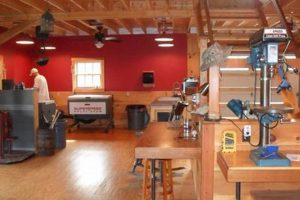
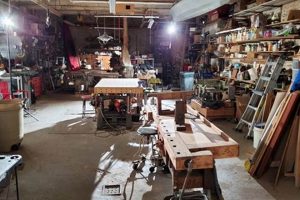
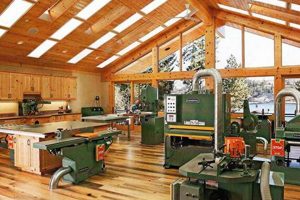
A dedicated space within a residential garage, equipped for crafting items primarily from wood. This localized area typically contains tools, machinery, and storage solutions essential for cutting, shaping, and assembling wooden components. Examples include constructing furniture, crafting decorative items, or executing home improvement projects using timber and related materials.
Establishing such an area provides a convenient and accessible venue for pursuing woodworking as a hobby or a profession. Benefits range from cost savings on home repairs and custom furniture to the satisfaction derived from creating tangible objects. Historically, these spaces evolved from simpler tool storage areas into specialized workshops as woodworking technology advanced and became more accessible to the general public.
The subsequent sections will delve into specific considerations for setting up an effective woodworking environment, including space optimization, tool selection, safety protocols, and ventilation strategies to ensure a productive and secure crafting experience.
Essential Tips for a Garage-Based Woodworking Shop
Maximizing efficiency and safety within a woodworking shop in garage settings requires careful planning and adherence to best practices. The following tips provide guidance on establishing a productive and secure crafting environment.
Tip 1: Optimize Space Utilization. Prioritize a layout that accommodates workflow. Consider wall-mounted storage, mobile workstations, and folding benches to maximize usable area. Employ vertical space to store lumber and tools effectively.
Tip 2: Invest in Dust Collection. Wood dust presents a significant health hazard. Implement a robust dust collection system, including a shop vacuum with a HEPA filter, and consider a dedicated dust collector for larger tools like table saws and sanders.
Tip 3: Ensure Adequate Lighting. Poor lighting compromises safety and precision. Supplement overhead garage lighting with task lighting focused on work surfaces. LED fixtures offer energy efficiency and bright, consistent illumination.
Tip 4: Prioritize Safety Equipment. Always wear appropriate personal protective equipment, including safety glasses, hearing protection, and a dust mask or respirator. Ensure a well-stocked first-aid kit is readily accessible.
Tip 5: Implement a Logical Tool Organization System. Categorize and store tools in a manner that facilitates easy access and prevents clutter. Utilize tool chests, pegboards, and French cleats to keep frequently used items within reach.
Tip 6: Control Noise Levels. Woodworking machinery can generate significant noise pollution. Consider soundproofing measures such as acoustic panels, insulation, and vibration-dampening mats to minimize disturbances to neighbors and protect hearing.
Tip 7: Manage Power Distribution. Ensure sufficient electrical capacity to handle the demands of woodworking equipment. Install dedicated circuits and consider a power conditioner to protect sensitive electronics from voltage fluctuations.
These tips, when implemented thoughtfully, contribute to a safer, more organized, and ultimately more productive experience within a woodworking shop in garage context. Efficient space utilization, rigorous dust control, and a commitment to safety are paramount.
The concluding section will further explore advanced strategies for optimizing this woodworking area, including considerations for temperature control and material storage.
1. Space Optimization

Space optimization is a critical consideration when establishing a woodworking shop in garage. The limited square footage typical of a garage necessitates strategic planning to maximize usable workspace while maintaining accessibility and safety.
- Vertical Storage Solutions
Employing vertical storage maximizes floor space. Wall-mounted cabinets, shelving units, and pegboards allow for efficient organization of tools, hardware, and lumber. This approach reduces clutter and ensures readily available access to essential items, improving workflow and safety within the limited confines of the garage workshop.
- Mobile Workstations and Tools
Mobile workstations offer flexibility within a constrained garage environment. Benches, tool carts, and power tool stands equipped with casters allow for easy repositioning to adapt to different project requirements. This adaptability is essential for optimizing the use of available space and accommodating larger projects within the confines of a typical garage workshop.
- Multi-Purpose Equipment
Selecting woodworking equipment with multiple functions is a strategic approach to space optimization. Combination machines that perform tasks such as sawing, jointing, and planing reduce the overall footprint of the workshop. This consolidation of functions is particularly valuable in garage settings where space is at a premium, allowing for a wider range of projects to be undertaken within a limited area.
- Layout Design and Workflow
Careful layout design is paramount for efficient space utilization. Establishing a logical workflow, from material storage to cutting, assembly, and finishing, minimizes unnecessary movement and wasted space. A well-planned layout promotes a safe and productive woodworking environment, even within the confines of a typical garage setting.
In summary, space optimization is fundamental to creating a functional woodworking shop in garage. By leveraging vertical storage, utilizing mobile workstations, investing in multi-purpose equipment, and carefully designing the layout, woodworkers can overcome the limitations of a confined space and establish a productive crafting area.
2. Tool Organization

In the context of a woodworking shop in garage, tool organization is not merely an aesthetic preference but a critical element influencing efficiency, safety, and the overall feasibility of woodworking activities within a confined space. A structured approach to tool management maximizes limited space and minimizes risks.
- Categorization and Zoning
Effective tool organization begins with categorizing tools by function and establishing designated zones within the shop. Grouping tools based on their purpose, such as cutting, shaping, or assembly, streamlines workflow and reduces search time. Assigning specific areas within the garage to these categories further enhances efficiency and minimizes clutter.
- Storage Systems and Accessibility
The selection and implementation of appropriate storage systems are paramount. Wall-mounted pegboards, tool chests with labeled drawers, and French cleat systems provide accessible and secure storage solutions. These systems allow for quick identification and retrieval of tools, minimizing disruption and maximizing productivity within the limited space of a garage woodworking shop.
- Inventory Management and Maintenance
Maintaining a tool inventory and implementing a regular maintenance schedule are essential for long-term efficiency. Regularly inspecting tools for damage, sharpening blades, and lubricating moving parts ensures optimal performance and extends tool lifespan. A well-maintained and inventoried tool collection contributes to a safer and more productive woodworking environment.
- Safety Considerations and Ergonomics
Tool organization directly impacts safety within a woodworking shop in garage. Properly storing tools reduces the risk of trips, falls, and accidental injuries. Ergonomic considerations, such as positioning frequently used tools within easy reach, minimize strain and fatigue, further enhancing safety and productivity during woodworking activities.
Therefore, the strategic organization of tools within a woodworking shop in garage is instrumental in maximizing limited space, promoting safety, and optimizing workflow. A systematic approach to categorization, storage, maintenance, and safety considerations transforms a potentially chaotic environment into a functional and productive workspace. This proactive organization directly translates into enhanced efficiency and a safer woodworking experience.
3. Dust Management
Dust management within a woodworking shop in garage environment is not merely a matter of cleanliness, but a critical factor influencing air quality, health, and overall operational efficiency. The confined nature of a garage amplifies the risks associated with wood dust exposure, necessitating a robust and well-considered dust management strategy.
- Source Capture Systems
Source capture systems represent the most effective method of controlling wood dust. These systems involve attaching collection devices directly to power tools such as sanders, saws, and routers. Shop vacuums equipped with HEPA filters or dedicated dust collectors are used to capture dust at the point of generation, preventing it from becoming airborne. The implementation of source capture minimizes operator exposure and reduces the accumulation of dust within the woodworking shop in garage.
- Air Filtration Units
Air filtration units play a crucial role in removing airborne dust particles that escape source capture systems. These units, typically mounted on the ceiling or walls of the garage, circulate air through filters to capture fine dust particles. Regular filter maintenance is essential to ensure optimal performance. Air filtration units provide an additional layer of protection, improving overall air quality within the woodworking shop in garage, especially during extended periods of tool use.
- Respirators and Personal Protective Equipment
While engineering controls such as source capture and air filtration are primary lines of defense, personal protective equipment (PPE) is indispensable for minimizing respiratory exposure. Respirators rated for fine dust particles, such as N95 or P100 masks, should be worn consistently when working with power tools or performing sanding operations. Eye protection is also crucial, as dust particles can cause irritation and injury. The use of PPE serves as a final barrier against dust inhalation within the woodworking shop in garage.
- Cleanup Procedures and Housekeeping
Regular cleanup procedures are essential for maintaining a dust-free environment. Sweeping, vacuuming, and wiping down surfaces with a damp cloth should be performed frequently to remove accumulated dust. Avoid using compressed air for cleanup, as this can redistribute dust into the air. Implementing rigorous housekeeping practices minimizes dust accumulation and promotes a cleaner, healthier workspace within the woodworking shop in garage.
The integration of source capture, air filtration, personal protective equipment, and diligent cleanup procedures forms a comprehensive dust management strategy vital for any woodworking shop in garage. The effective control of wood dust not only safeguards respiratory health but also contributes to a cleaner, safer, and more productive woodworking environment. Ignoring these principles can lead to long-term health consequences and a diminished ability to enjoy the craft.
4. Safety Protocols

The establishment of safety protocols within a woodworking shop in garage is paramount, given the inherent risks associated with woodworking machinery and materials within a confined space. The causal relationship between adherence to safety protocols and the prevention of injuries is direct. Neglecting these protocols increases the likelihood of accidents involving power tools, sharp objects, and hazardous substances. A woodworking shop, irrespective of its scale, necessitates strict adherence to established safety guidelines, and the compact environment of a garage workshop amplifies the importance of these measures.
Consider the implications of neglecting eye protection. Sawdust and flying debris pose a significant risk of eye injury. Similarly, failure to use hearing protection can result in long-term hearing damage due to the prolonged exposure to loud machinery. Real-world examples abound of woodworkers sustaining severe injuries because of neglecting basic safety precautions. In a woodworking shop in garage, the limited space can increase the severity of these injuries, as escape routes are often restricted and assistance may be delayed. The selection and use of appropriate respirators are crucial in mitigating the risks associated with wood dust inhalation, known to cause respiratory ailments. Furthermore, proper ventilation is essential to minimize the buildup of hazardous fumes from finishes and adhesives.
In conclusion, safety protocols are not merely suggested guidelines but essential components of a functional and safe woodworking shop in garage. A comprehensive understanding of these protocols, coupled with consistent adherence, minimizes the risk of injury and promotes a productive and enjoyable woodworking experience. The challenge lies in fostering a safety-conscious culture, where adherence to protocols is habitual and viewed as integral to the craft. The integration of safety training, regular equipment inspections, and the consistent use of personal protective equipment are necessary for maintaining a safe working environment within the confines of a garage-based woodworking shop.
5. Electrical Capacity

Adequate electrical capacity is a fundamental requirement for a functional woodworking shop in garage. Insufficient electrical capacity presents a significant limitation, restricting the use of power tools and potentially creating a fire hazard. The amperage and voltage demands of woodworking machinery, such as table saws, planers, and dust collectors, often exceed the standard electrical service available in a residential garage. Consequently, careful assessment and potential upgrades to the electrical system are essential before establishing a woodworking shop in such an environment.
The cause-and-effect relationship is straightforward: inadequate electrical capacity leads to tripped circuit breakers, unreliable tool operation, and potential damage to equipment. For example, attempting to run a 3 horsepower table saw on a 15-amp circuit will inevitably result in overload. The National Electrical Code (NEC) provides guidelines for determining the appropriate circuit sizing and wiring configurations for various power tools. Many home garages have existing 15-amp circuits; upgrading to 20-amp or even dedicated 30-amp or 50-amp circuits may be necessary to accommodate the power demands of a well-equipped woodworking shop. Failing to address these electrical considerations can lead to hazardous situations, including electrical fires.
In summary, electrical capacity is an indispensable component of a woodworking shop in garage. Accurate assessment, NEC compliance, and potential upgrades are crucial for ensuring safe and reliable operation of woodworking equipment. Addressing these electrical needs is not merely a matter of convenience but a prerequisite for establishing a viable and secure woodworking workspace within a residential garage. The financial investment in electrical upgrades is a cost-effective measure when weighed against the potential for equipment damage, fire hazards, and the disruption of woodworking activities.
6. Noise Mitigation

Noise mitigation is a critical consideration in the context of a woodworking shop in garage, stemming from the inherent sound generated by woodworking machinery. The confined space of a garage amplifies noise levels, potentially affecting the occupants of the residence, neighboring properties, and the woodworker’s auditory health. The causal link between uncontrolled noise and adverse effects necessitates a proactive approach to noise reduction. Elevated noise levels from saws, routers, and planers can lead to hearing loss with prolonged exposure. Furthermore, noise pollution negatively impacts residential quality of life, potentially creating strained relationships with neighbors and even violating local noise ordinances. Therefore, effective noise mitigation is not merely a courtesy but a practical necessity for the sustainable operation of a woodworking shop in garage.
Strategies for noise mitigation range from structural modifications to operational practices. Structural modifications involve soundproofing the garage through insulation, acoustic panels, and sealing gaps in walls and doors. Operational practices include using noise-dampening mats under machinery, selecting quieter tools when possible, and limiting the hours of operation during sensitive times. For example, installing fiberglass insulation in the garage walls and ceiling significantly reduces sound transmission. Similarly, replacing a universal motor table saw with an induction motor model results in quieter operation. Compliance with local noise ordinances provides a framework for responsible woodworking practices and prevents potential legal issues related to excessive noise. The effectiveness of these measures depends on the specific characteristics of the equipment used and the design of the garage, requiring a tailored approach.
In conclusion, noise mitigation is an indispensable component of a woodworking shop in garage. The proactive implementation of soundproofing measures, responsible operational practices, and adherence to local regulations are essential for minimizing noise pollution. Neglecting these considerations leads to potential health risks, strained community relations, and legal complications. Therefore, integrating noise mitigation strategies is not only a practical concern, but it’s also responsible and ethical woodworking practice.
Frequently Asked Questions
The following questions address common inquiries and misconceptions regarding establishing and operating a woodworking shop within a garage environment. The information presented aims to provide clarity and guidance for those considering this undertaking.
Question 1: What is the minimum garage size recommended for a functional woodworking shop?
While the ideal size varies depending on the scale of projects and equipment used, a two-car garage (approximately 20 feet x 20 feet) is generally considered the minimum for a moderately equipped shop. A smaller space necessitates careful planning and prioritization of essential tools and equipment.
Question 2: Are building permits required to convert a garage into a woodworking shop?
Building permit requirements vary significantly depending on local regulations. Consult with the local building department to determine if permits are required for structural modifications, electrical upgrades, or changes in occupancy. Failure to obtain necessary permits can result in fines and legal complications.
Question 3: What are the essential power tools for a beginner’s woodworking shop in a garage?
A basic set of essential power tools includes a table saw, miter saw, drill press, random orbital sander, and a router. This selection provides the foundation for performing a wide range of woodworking tasks. As skills and project requirements evolve, additional tools can be added to the shop.
Question 4: How can the risk of fire be minimized in a woodworking shop in a garage?
Implementing a fire safety plan is crucial. This includes installing smoke detectors, keeping a fire extinguisher readily accessible, storing flammable materials properly, and maintaining a clean and dust-free environment. Regularly inspect electrical wiring and equipment for damage or wear.
Question 5: What are the best practices for safely disposing of wood scraps and sawdust?
Wood scraps can be used for kindling or small projects. Sawdust should be collected and disposed of in a sealed container to prevent it from becoming airborne. Contact local waste management services for guidelines on disposing of large quantities of sawdust and wood scraps.
Question 6: How can the impact of a woodworking shop on neighbors be minimized?
Implementing noise mitigation strategies, such as soundproofing the garage and limiting operating hours, is essential. Communicate with neighbors about potential noise and dust concerns, and address any complaints promptly and respectfully.
In summary, a successful woodworking shop in garage requires careful planning, adherence to safety protocols, and consideration for the impact on the surrounding environment. Addressing these questions proactively minimizes risks and maximizes the enjoyment of woodworking.
The subsequent section will explore case studies of successful woodworking shops in garages, providing practical examples of implementation and best practices.
Conclusion
The establishment of a woodworking shop in garage necessitates diligent planning and comprehensive execution. Critical aspects encompass space optimization, tool organization, rigorous dust management, adherence to safety protocols, adequate electrical capacity, and effective noise mitigation. Success hinges on prioritizing safety, regulatory compliance, and environmental responsibility.
The creation of a functional and safe woodworking shop in garage represents a significant investment in both time and resources. However, the potential returns, including the ability to pursue woodworking as a hobby or profession, justify the effort. The future of woodworking in residential settings depends on a commitment to best practices and continuous improvement in safety and efficiency.