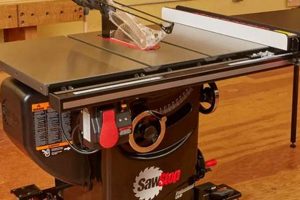
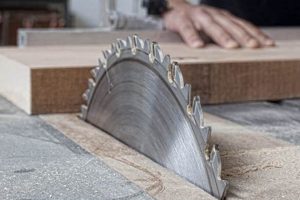
This shop-made auxiliary tool enhances the functionality of a table saw, enabling precise and safe crosscutting of materials. It typically consists of a platform that slides within the saw’s miter slots, guiding workpieces past the blade at a consistent angle. A common application involves creating accurate, repeatable square cuts on lumber.
The use of this device significantly improves accuracy and safety compared to freehand crosscutting. It provides inherent support for the material, minimizing tear-out and reducing the risk of kickback. Historically, craftsmen developed variations of this tool to address specific needs in furniture making, cabinetry, and other woodworking disciplines, leading to numerous design iterations focused on precision and efficiency.
The ensuing discussion will delve into different designs, construction techniques, calibration methods, and specialized uses that allow woodworkers to maximize the benefits of this valuable shop addition.
Tips for Optimizing its Use
The following guidance aims to improve the effectiveness and safety of using the auxiliary tool in various woodworking applications.
Tip 1: Miter Slot Compatibility: Ensure that the runners fit snugly within the table saw’s miter slots, minimizing play while allowing for smooth movement. Loose runners lead to inaccuracies, while overly tight runners impede operation.
Tip 2: Squaring the Fence: The fence must be perfectly square to the blade. Utilize a precision square and shims, if necessary, during construction to guarantee accurate 90-degree cuts. Regularly check for squareness after prolonged use.
Tip 3: Blade Clearance: The blade slot should be only as wide as necessary to accommodate the saw blade’s kerf. Excessive blade clearance presents a potential hazard and may lead to splintering on the workpiece.
Tip 4: Material Support: When cutting large or heavy workpieces, provide adequate support to prevent sagging. Sagging can introduce errors in the cut and potentially damage the device or the saw.
Tip 5: Controlled Feed Rate: Maintain a consistent and controlled feed rate when moving the platform through the blade. Rushing the cut can result in rough edges and increased risk of kickback.
Tip 6: Zero-Clearance Insert: Implement a zero-clearance insert to minimize tear-out, especially when working with delicate materials. The insert should fit tightly around the blade, providing support right up to the cutting edge.
Tip 7: Incorporating Hold-Downs: Clamping systems or integrated hold-downs secure the workpiece firmly to the platform. This prevents movement during the cut, further enhancing safety and accuracy.
These suggestions help ensure safe, accurate, and repeatable cuts, maximizing the value of this essential shop-made tool.
The subsequent sections will address specific design considerations and advanced techniques that can further refine its utility.
1. Accuracy

Accuracy is a foundational requirement in woodworking, and this shop-made auxiliary tool serves as a primary means of achieving it. Deviations from precise measurements can compromise joinery, aesthetics, and structural integrity. The device enhances the precision obtainable with a table saw.
- Miter Slot Alignment
The runners must be perfectly aligned with the table saw’s miter slots to guarantee consistent travel along a predictable path. Misalignment results in angular deviations, translating to inaccurate cuts. Even minute discrepancies accumulate over the length of the cut, impacting the final dimensions.
- Fence Squareness
The fence of the device must be exactly perpendicular to the blade’s path to ensure square cuts. Any deviation from 90 degrees introduces angled cuts, rendering joinery difficult or impossible. Precise calibration and periodic verification are crucial.
- Blade Deflection Minimization
The tool, when properly constructed, supports the workpiece close to the blade, minimizing lateral deflection. This is especially important when cutting thin or flexible materials, where blade wander can significantly reduce accuracy. Stiff construction is, therefore, essential.
- Precise Measurement and Calibration
The effectiveness depends on accurate measurement during construction and calibration. Using precision measuring tools like digital calipers and squares is important. Periodic recalibration ensures the device continues to deliver precise results over time, accounting for wear and tear.
The interplay of these aspects dictates the level of precision attainable with this tool. By addressing each of these elements meticulously, woodworkers can significantly improve the accuracy of their cuts, resulting in higher-quality woodworking projects.
2. Safety

Safety is a paramount concern in woodworking, and using a shop-made auxiliary tool enhances user protection compared to freehand operations on a table saw. This device mitigates several inherent risks by providing a controlled and stable platform for material processing.
- Hand Proximity Mitigation
The tool allows the operator to keep hands further from the spinning blade. This is particularly important when making small or intricate cuts, where the risk of accidental contact is elevated. The distance provided by the device’s platform reduces the likelihood of injury.
- Kickback Prevention
Kickback, a sudden and forceful ejection of the workpiece, is a significant hazard on table saws. The sled helps prevent kickback by maintaining consistent material contact with the fence and blade, eliminating opportunities for the wood to bind or lift. Securely clamping the workpiece to the sled further minimizes this risk.
- Material Support and Stability
The large, flat surface of the sled provides ample support for the workpiece. This stability is crucial when cutting larger boards or thin sheet goods, preventing flexing or vibration that could lead to inaccurate cuts or dangerous situations. Consistent support minimizes the chance of the material catching on the blade.
- Dust and Debris Control
While not a direct safety feature, many sled designs can be modified to incorporate dust collection ports. Reducing airborne dust improves visibility and minimizes respiratory hazards. Clear visibility of the cutting area contributes significantly to overall operational safety.
These facets underscore the significant role a correctly constructed and operated device plays in enhancing safety in woodworking. By minimizing hand proximity, preventing kickback, providing stable material support, and facilitating dust control, it offers a safer alternative to many freehand table saw operations.
3. Repeatability

This shop-made auxiliary tool significantly enhances repeatability in woodworking tasks, allowing for the consistent production of identical components. The inherent design features of the device provide a reliable method for replicating cuts, minimizing variations that would otherwise arise from manual positioning and freehand techniques. A direct result of this consistency is improved efficiency in projects requiring multiple pieces with identical dimensions. Consider, for example, the construction of cabinet doors: using a sled, rails and stiles can be cut to the same length repeatedly, ensuring a uniform appearance and ease of assembly.
The precision afforded by the device’s miter slot guidance and fixed fence contributes directly to this improved repeatability. Once the fence is accurately set and the workpiece is securely clamped, subsequent cuts will consistently mirror the initial cut’s dimensions and angle. This reduces the need for iterative adjustments and minimizes material waste caused by errors. The construction of multiple drawer boxes, where accurate sizing is essential for proper fit and function, exemplifies this benefit. Further enhancing repeatability, stops can be integrated into the design, allowing for quick and precise positioning of workpieces for identical cuts.
In summary, the device’s inherent design elements, combined with careful setup and operation, result in a substantial increase in repeatability compared to freehand table saw operations. The ability to accurately and consistently produce identical components streamlines workflow, minimizes errors, and contributes to higher-quality finished products. While variations in wood density and blade sharpness may introduce minor inconsistencies, the repeatable nature of this tool mitigates many common sources of error, resulting in improved project outcomes.
4. Adjustability

Adjustability is a key attribute of a woodworking table saw sled, permitting accommodation of varying workpiece dimensions and the execution of diverse cutting operations. This capability enhances its versatility, making it a valuable tool in woodworking.
- Fence Positioning
Adjustable fences allow the user to modify the distance between the blade and the fence. This feature is crucial for accurately setting the width of the cut. An example is cutting multiple pieces to identical widths, wherein precise fence adjustment ensures consistency across all pieces. Inaccurate fence positioning compromises the accuracy of the cuts.
- Miter Angle Adjustment
Some advanced designs incorporate an adjustable miter gauge. This allows for precise angled cuts beyond the standard 90 degrees. Creating angled pieces for picture frames or polygonal structures requires the ability to set specific miter angles. Inability to adjust the miter angle restricts the range of possible cuts.
- Stop Block Integration
Adjustable stop blocks on the device facilitate repeatable cuts of the same length. The stop block is positioned at a specific distance from the blade, and the workpiece is brought into contact with it before the cut. This is valuable for batch-producing identical pieces, such as drawer components. Absence of adjustable stop blocks necessitates manual measurement for each cut, reducing efficiency.
- Blade Height Accommodation
The sled’s construction must allow for sufficient blade height clearance. The ability to adjust the table saw blade height is necessary to accommodate varying material thicknesses. The sled’s design must not impede the blade’s movement when cutting thicker workpieces. Inadequate clearance can lead to damage to the sled or workpiece.
The aforementioned adjustable facets of the auxiliary tool underscore its adaptability. This adaptability permits the execution of a broad array of woodworking tasks with enhanced precision and repeatability. The proper integration and utilization of these adjustable features contribute significantly to the overall utility of the device.
5. Stability

The stability of a woodworking table saw sled is a critical factor influencing both the accuracy and safety of cuts performed on a table saw. Instability, manifested as wobbling, flexing, or inconsistent movement, introduces errors and elevates the risk of kickback or other hazardous situations. A stable sled provides a consistent and reliable platform, ensuring the workpiece maintains its intended position relative to the saw blade throughout the cutting process. For example, when cutting a long, thin piece of stock, an unstable sled might flex during the cut, resulting in a curved or uneven edge. This highlights the cause-and-effect relationship between stability and cut quality.
Several design and construction factors directly contribute to the stability of the device. These include the rigidity of the base, the precision of the runners that interface with the table saw’s miter slots, and the integrity of the fence. A base constructed from a thick, dimensionally stable material, such as Baltic birch plywood or a solid hardwood, minimizes flexing. Precisely fitted runners ensure smooth, consistent movement within the miter slots, preventing lateral play. A securely attached and perfectly square fence provides a reliable reference surface, preventing the workpiece from shifting during the cut. Consider the case of building a frame with precisely angled corners; instability in the sled would result in misaligned corners and a compromised final product.
In conclusion, the stability of the sled is not merely a desirable attribute but a fundamental requirement for accurate and safe operation. Addressing stability concerns through careful design, material selection, and construction practices is essential for realizing the full potential of this shop-made auxiliary tool. Addressing challenges to its stability, such as material warping or runner wear, through routine inspection and maintenance ensures consistent and reliable performance over time, contributing to improved project outcomes and enhanced operator safety.
6. Material Compatibility
The selection of materials for constructing a woodworking table saw sled directly influences its performance, durability, and suitability for specific woodworking applications. The chosen materials must withstand the stresses of repeated use, resist deformation, and maintain dimensional stability to ensure accurate and safe operation.
- Base Material Selection
The base of the sled, typically constructed from plywood or solid wood, requires resistance to warping and bending. Baltic birch plywood, known for its stability and void-free construction, is a common choice. Solid hardwoods, when properly seasoned and selected for grain orientation, can also provide a stable base. An unsuitable material, such as low-grade plywood prone to delamination, will compromise the sled’s accuracy and longevity.
- Runner Material Considerations
The runners, which slide within the table saw’s miter slots, necessitate a material with low friction and resistance to wear. Hardwoods like maple or UHMW (Ultra High Molecular Weight) plastic are often employed. Metal runners, while durable, can introduce friction and potentially damage the miter slots. Improper runner material selection can lead to jerky movement, reduced accuracy, and accelerated wear.
- Fastener Compatibility
The fasteners used to assemble the sled must be compatible with the chosen base and runner materials. Screws, for example, should be of appropriate length and thread pattern to provide secure fastening without causing splitting or damage. The use of inappropriate fasteners can compromise the structural integrity of the sled and create safety hazards.
- Environmental Factors
The intended operating environment influences material selection. High humidity levels can cause wood to swell, affecting the sled’s dimensions and potentially binding within the miter slots. Similarly, extreme temperature fluctuations can induce expansion and contraction. Understanding the environmental conditions is essential for selecting materials that will maintain their stability and performance over time.
Therefore, careful consideration of material compatibility is essential for constructing a durable, accurate, and safe woodworking table saw sled. The selection of appropriate materials, based on their physical properties and resistance to environmental factors, ensures optimal performance and longevity of the device. Overlooking material compatibility can lead to compromised accuracy, reduced lifespan, and potential safety risks.
Frequently Asked Questions
This section addresses common inquiries regarding the construction, usage, and maintenance of this essential shop-made tool.
Question 1: What are the primary advantages of using a device over freehand cutting on a table saw?
This auxiliary tool enhances safety by keeping hands further from the blade and reducing kickback potential. It also improves accuracy by providing a stable and consistent cutting platform.
Question 2: What materials are best suited for constructing the base of this shop-made tool?
Baltic birch plywood and well-seasoned hardwoods are optimal choices due to their dimensional stability and resistance to warping. Lower-grade plywoods may compromise the sled’s accuracy.
Question 3: How does one ensure the fence is perfectly square to the blade?
Employ a precision square and shims, if necessary, during construction to achieve a 90-degree angle. Regular verification using a square is essential for maintaining accuracy.
Question 4: What steps are involved in calibrating the device for optimal performance?
Calibration includes ensuring the runners fit snugly in the miter slots, verifying the fence’s squareness, and adjusting any stops for precise repeatability. Precision measuring tools are crucial.
Question 5: How can tear-out be minimized when using the table saw with this device?
A zero-clearance insert, which supports the workpiece close to the blade, is effective in reducing tear-out, particularly when working with delicate materials. The insert should fit tightly around the blade.
Question 6: What safety precautions should be observed when operating a table saw with this shop-made tool?
Ensure the workpiece is securely clamped, maintain a controlled feed rate, and never reach over the blade. Implement dust collection measures to improve visibility and minimize respiratory hazards.
In summary, understanding the proper construction, calibration, and safety protocols associated with this tool is essential for achieving accurate and safe woodworking outcomes.
The subsequent section will examine advanced applications and design modifications for specialized woodworking tasks.
Conclusion
The preceding discussion has illuminated the multifaceted nature of this shop-made auxiliary tool, emphasizing its pivotal role in enhancing accuracy, safety, and repeatability in table saw operations. From design considerations to calibration techniques and advanced applications, a comprehensive understanding of its construction and utilization is essential for woodworkers seeking to maximize its benefits.
Continued exploration and refinement of this invaluable tool will undoubtedly lead to further innovations in woodworking practices. The enduring importance of precision and safety underscores the ongoing relevance of the woodworking table saw sled as a fundamental component of the well-equipped woodworking shop. Careful attention to detail in its construction and conscientious adherence to safe operating procedures will ensure its continued contribution to the craft.