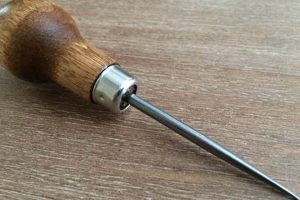
Essential implements in shaping, cutting, and joining wood, along with the knowledge of their proper application, form the bedrock of woodworking. Proficiency relies not only on possessing the instruments but also on understanding the techniques necessary for achieving desired results safely and effectively. This combination of equipment and skill enables the creation of functional and aesthetically pleasing wooden objects.
Mastery provides individuals with the capacity to produce bespoke items, perform repairs, and realize creative visions. Historically, expertise in this field was vital for constructing dwellings, furniture, and tools. Even with advancements in manufacturing, the ability to manipulate wood remains a valuable asset, fostering resourcefulness and enabling unique craftsmanship.
This article will explore the categories of instruments used in this craft, common methods employed, and safety considerations paramount to successful execution. Understanding these elements is fundamental to anyone seeking to engage in woodworking projects, from simple tasks to complex constructions.
Essential Guidance for Woodworking Activities
The following recommendations are designed to optimize the application of equipment and techniques, leading to improved project outcomes and enhanced safety.
Tip 1: Prioritize Sharpness. Dull blades are a primary cause of accidents and imprecise cuts. Regular sharpening or replacement of cutting edges ensures efficient operation and minimizes the force required, enhancing control and reducing the risk of slippage.
Tip 2: Emphasize Work Holding. Securely clamping the workpiece is crucial for stability and accuracy. Utilizing vices, clamps, or other appropriate work-holding devices prevents movement during cutting or shaping, resulting in cleaner lines and increased precision.
Tip 3: Master Grain Direction. Understanding the orientation of wood fibers is essential for achieving smooth surfaces and preventing tear-out. Always cut or plane with the grain to avoid splintering and ensure a clean, professional finish.
Tip 4: Implement Dust Collection. Wood dust poses a significant health hazard. A dedicated dust collection system, or at minimum a dust mask and ventilation, is critical for protecting respiratory health and maintaining a clean workspace.
Tip 5: Adhere to Safety Protocols. Always wear appropriate personal protective equipment, including eye protection, hearing protection, and gloves. Familiarize oneself with the operating procedures and safety features of each tool before use.
Tip 6: Practice Before Committing. Before executing a critical cut or joinery technique on the final workpiece, practice on scrap material. This allows for refinement of technique and minimization of errors on the finished piece.
Tip 7: Choose Appropriate Fasteners. Select screws, nails, or adhesives appropriate for the type of wood and the intended application. Consider factors such as wood density, moisture content, and the structural requirements of the project to ensure a durable and lasting assembly.
Adherence to these guidelines promotes accuracy, efficiency, and safety in woodworking endeavors, enhancing the quality and longevity of finished projects.
These recommendations provide a foundation for safe and effective practice. Further exploration of specific equipment and techniques is crucial for developing mastery in the field.
1. Selection

Appropriate instrument procurement is foundational to successful woodworking. The choice of a specific tool dictates the potential effectiveness and safety of the desired outcome. For instance, selecting a coping saw for intricate curved cuts, as opposed to a circular saw, is necessary for achieving the required precision without compromising material integrity. Similarly, when joining hardwoods, selecting a high-quality wood glue formulated for that material is vital for a strong and lasting bond. Erroneous instrument choice frequently leads to substandard results, increased effort, and heightened risk of injury.
The interplay between selecting the proper instrument and proficiency influences project efficiency. Consider the task of smoothing a large tabletop. While a hand plane is effective, using a power planer expedites the process significantly, given appropriate skill. The selection process is informed by factors such as project complexity, available resources, and the worker’s skill level. Over-reliance on automated systems, without understanding underlying techniques, can lead to dependence and an inability to adapt to non-standard tasks. Conversely, skilled individuals can often achieve comparable results with basic implements.
Careful procurement is essential for maximizing potential while minimizing risks. This aspect is critical for project success. The correct instrument, in conjunction with adequate training and technique, contributes significantly to achieving professional results. Ignorance in this area is a major factor in project failure.
2. Maintenance

The operational effectiveness and longevity of woodworking tools are directly contingent upon consistent and thorough maintenance practices. Neglecting maintenance not only diminishes performance but also elevates the risk of accidents and premature tool failure.
- Sharpening Cutting Edges
Maintaining sharp blades on saws, chisels, and planes is paramount for efficient material removal and clean cuts. Dull edges necessitate increased force, leading to reduced control and a greater likelihood of slippage, which can result in injury or damage to the workpiece. Routine honing and sharpening are therefore essential components of tool upkeep.
- Lubricating Moving Parts
Regular lubrication of moving components in tools such as planers, sanders, and jointers minimizes friction, preventing overheating and wear. Proper lubrication ensures smooth operation and extends the lifespan of the tool. Failure to lubricate adequately can lead to increased strain on the motor, decreased performance, and eventual mechanical failure.
- Cleaning and Protecting Surfaces
Removing accumulated dust, debris, and rust from tool surfaces is crucial for maintaining both functionality and appearance. Applying protective coatings such as wax or oil helps prevent corrosion and ensures smooth gliding over the wood surface. Neglecting cleaning and protection can lead to reduced precision and increased effort required during use.
- Proper Storage
Storing tools in a clean, dry environment protects them from moisture, dust, and physical damage. Organizing tools in designated locations prevents misplacement and facilitates easy access. Improper storage can result in corrosion, dulling of edges, and accidental damage, ultimately reducing tool effectiveness and longevity.
The commitment to a structured maintenance regime is integral to maximizing the utility of woodworking tools. Proper upkeep preserves the tools’ integrity and directly contributes to enhanced precision, safety, and overall quality in woodworking projects.
3. Technique

Proficient use hinges significantly on refined application methods. Optimal results are not attainable without mastery of these specialized skills. Emphasis is placed on the symbiotic relationship between equipment and established methods.
- Stance and Posture
Body positioning directly impacts control and precision. A stable stance, with balanced weight distribution, enables smoother movements and reduces fatigue. Leaning into cuts or maintaining poor posture can lead to inaccuracies and increased risk of injury. Proper ergonomic practices enhance comfort and efficiency during prolonged periods of operation.
- Blade Control
The ability to guide cutting edges accurately is fundamental. Consistent pressure, coupled with controlled speed, ensures clean and predictable cuts. Jerky or erratic movements result in splintering, uneven surfaces, and potential kickback. Practice and repetition are essential for developing the necessary muscle memory and coordination.
- Material Support
Securely supporting the workpiece prevents movement and vibration, leading to more accurate cuts and joints. Utilizing clamps, vices, or jigs ensures stability and reduces the risk of material slippage. Inadequate support can compromise the integrity of the finished product and increase the likelihood of accidents.
- Finishing Application
The application of stains, paints, or varnishes requires specific methods for achieving professional results. Consistent coverage, even distribution, and proper drying times are crucial for protecting the wood and enhancing its aesthetic appeal. Improper application leads to blotching, streaking, and diminished durability.
These elements collectively contribute to efficient and safe project completion. Mastery of specific procedures complements the selection and maintenance of equipment. The ability to execute tasks with precision and control distinguishes experienced practitioners from novices.
4. Precision

The relationship between accuracy and the employment of specific equipment is fundamental to successful woodworking endeavors. Precision in woodworking directly correlates with the appropriate selection, maintenance, and skillful use of implements. Each stage of a woodworking project, from initial dimensioning to final finishing, necessitates accuracy measured in millimeters, if not fractions thereof. The tools selected and how they are applied dictate the degree of accuracy achievable.
Consider the creation of a dovetail joint, a hallmark of fine woodworking. Achieving tight-fitting, aesthetically pleasing dovetails requires sharp chisels, accurate saws, and a meticulous approach to marking and cutting. The use of dull tools, imprecise marking, or hasty cuts invariably results in gaps, misalignments, and a structurally unsound joint. Similarly, the construction of a cabinet requires precise measurements and cuts to ensure that doors and drawers fit properly within the frame. Errors in dimensioning or cutting can lead to functional problems and an overall reduction in the quality of the finished product. The use of measuring tools like calipers and precision squares is thus integral.
Therefore, the degree of accuracy in woodworking projects directly reflects the operator’s proficiency and the suitability of implements. Mastery of precision woodworking techniques translates directly to functional integrity, aesthetic appeal, and ultimately, the longevity of crafted items. Emphasis on correct utilization leads to refined quality, while neglecting accurate application causes a reduction in the overall value of the endeavor.
5. Safety

The integration of safety protocols within woodworking operations is paramount, directly affecting operational outcomes and the well-being of practitioners. Strict adherence to established safety guidelines mitigates hazards inherent in the manipulation of equipment. A commitment to safety principles is essential for ensuring minimal risk exposure.
- Personal Protective Equipment (PPE)
Utilizing PPE such as safety glasses, hearing protection, and respirators is critical for safeguarding against potential injuries. Safety glasses protect against flying debris, hearing protection reduces noise exposure, and respirators filter out harmful wood dust. Failure to use appropriate PPE increases the risk of eye injuries, hearing damage, and respiratory problems. The provision and consistent use of PPE are fundamental to ensuring a secure work environment.
- Machine Guarding and Safety Features
Operational tools often incorporate safety mechanisms designed to prevent accidents. Blade guards on saws, anti-kickback devices on routers, and emergency stop switches are examples. Bypassing or disabling these features compromises safety. Periodic inspection and maintenance of safety devices ensure functionality and prevent malfunctions that could lead to injury. Properly functioning safety mechanisms are a non-negotiable aspect of safe operation.
- Safe Work Practices
Established procedures for tool operation, material handling, and workspace organization are essential. Clamping workpieces securely, maintaining a clear workspace, and avoiding distractions are critical for preventing accidents. Deviations from safe work practices, such as reaching over moving blades or using tools for unintended purposes, significantly elevate the risk of injury. Reinforcement of safe work habits is critical for cultivating a safety-conscious environment.
- Emergency Preparedness
Having readily available first-aid supplies and knowledge of emergency procedures is vital. Familiarity with the location of emergency exits, fire extinguishers, and eyewash stations is crucial in the event of an accident. Regular training on first-aid and emergency response enhances preparedness and reduces the potential for severe consequences in the event of an injury. A proactive approach to emergency preparedness is a critical component of a comprehensive safety strategy.
Integrating these considerations contributes significantly to a risk-minimized work environment. Consistent application of established principles, in conjunction with comprehensive training and diligent monitoring, forms the foundation for preserving individual well-being and preventing workplace accidents. Prioritizing safety is an investment in operational effectiveness and long-term preservation of health.
Frequently Asked Questions
This section addresses common inquiries regarding implements and their application, providing clarifying information.
Question 1: What is the most critical consideration when selecting a hand saw?
The saw’s intended purpose dictates the proper selection. Crosscut saws are designed for cutting against the grain, while rip saws are optimized for cutting along the grain. Choosing the correct type is fundamental for efficiency and quality.
Question 2: How frequently should a chisel be sharpened?
Chisel sharpness depends on usage and material. However, consistent honing after each use and professional sharpening when needed maintain optimal cutting ability. A dull chisel requires more force, increasing the risk of slippage.
Question 3: What are the primary safety precautions when operating a power router?
Essential safety measures include wearing eye and ear protection, securing the workpiece with clamps, and ensuring proper bit installation. Furthermore, the operator should be knowledgeable about the router’s safety features and potential hazards.
Question 4: How does humidity affect wood and, consequently, the precision of woodworking joints?
Wood is hygroscopic and absorbs moisture from the surrounding atmosphere. Changes in humidity cause expansion and contraction, impacting the tightness of joints. Allowing wood to acclimate to the workshop environment before construction minimizes dimensional instability.
Question 5: What is the significance of grain direction when planing wood?
Planing against the grain results in tear-out, creating a rough, uneven surface. Always plane with the grain to achieve a smooth, clean finish. Understanding grain direction is a critical skill for achieving professional-quality results.
Question 6: What is the appropriate method for storing woodworking tools to prevent rust?
Clean all implements thoroughly after use, removing dust and debris. Apply a thin coat of oil to metallic surfaces and store equipment in a dry environment. Humidity is a primary cause of corrosion.
These answers serve as an introductory overview, further research and practical experience are valuable for achieving proficiency.
This foundational knowledge will aid in further exploration of instrument usage and maintenance.
Woodworking Tools and How to Use Them
This exposition has addressed essential aspects of equipment and method. From the selection of appropriate saws and chisels to the nuances of maintenance, technique, precision, and safety, the discussed elements collectively underscore the depth and breadth of this skilled activity. The correct application of woodworking implements represents a cornerstone of successful craftsmanship.
Continued study and practical application remain essential for achieving proficiency. The pursuit of knowledge, coupled with a commitment to safety, will enable individuals to transform raw materials into functional and aesthetic creations. The enduring value of woodworking lies not only in the tangible results but also in the acquisition of a valuable, lifelong skill.