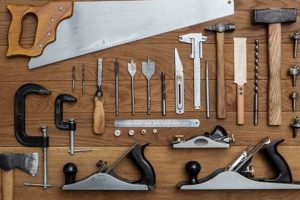
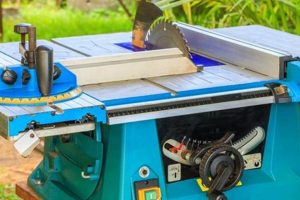
The sequence in which various implements are acquired and utilized within the craft of shaping wood is a critical consideration for both novice and experienced artisans. This prioritized arrangement dictates the efficiency and safety of project execution, ensuring fundamental techniques are mastered before more complex operations are attempted. A common example involves securing measuring and marking instruments prior to purchasing power saws, as accurate layout is foundational to precise cutting.
Adhering to a logical progression offers several advantages. It maximizes learning opportunities, reduces the likelihood of errors and accidents, and optimizes resource allocation by focusing investment on tools that provide the broadest utility early on. Historically, apprenticeships emphasized this structured approach, gradually introducing increasingly sophisticated instruments and techniques as foundational skills were honed. This system facilitated a deeper understanding of the material and the tools used to manipulate it, resulting in higher quality craftsmanship.
The subsequent discussion will delve into specific categories of equipment and outline a suggested procurement strategy. This aims to provide a roadmap for building a comprehensive workshop in a manner that aligns with skill development and project complexity.
Essential Guidance
The efficient establishment of a woodworking capability relies heavily on a deliberate approach to acquiring the necessary implements. Prioritizing purchases based on utility and skill development maximizes both initial investment and long-term productivity.
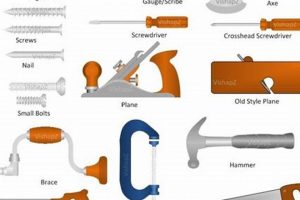
Tip 1: Prioritize Measurement and Marking Tools: Accurate dimensioning is the foundation of all woodworking projects. Invest in a high-quality measuring tape, combination square, marking gauge, and pencils before acquiring any cutting or shaping tools. This enables precise layout and reduces errors in subsequent operations.
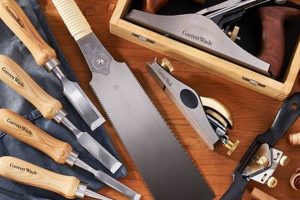
Tip 2: Secure a Reliable Hand Saw: While power saws offer speed and efficiency, proficiency with a hand saw is crucial for developing fundamental cutting skills and understanding wood grain behavior. A well-tuned hand saw provides control and accuracy for a variety of cuts.
Tip 3: Acquire Basic Sharpening Equipment: Sharp tools are safer and more efficient. Investing in sharpening stones and a honing guide ensures that edges are maintained, maximizing tool performance and minimizing the risk of accidents. Neglecting sharpness is a common oversight with detrimental consequences.
Tip 4: Focus on Workholding Solutions: A stable and secure workpiece is essential for safe and accurate woodworking. A solid workbench with vises, clamps, and bench dogs provides the necessary support for various operations. Prioritize workholding before investing in expensive power tools.
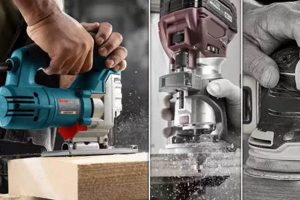
Tip 5: Gradually Introduce Power Tools: As skills progress and project complexity increases, consider adding power tools such as a drill, sander, and router. Choose tools with variable speed and dust collection capabilities to enhance versatility and safety.
Tip 6: Emphasize Safety Equipment: Eye protection, hearing protection, and dust masks are indispensable for safe woodworking. Invest in high-quality protective gear and make their use a consistent habit. Preventing injury is paramount.
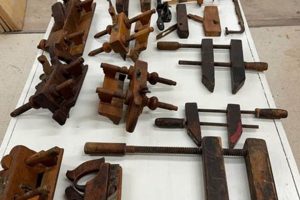
Tip 7: Consider Secondhand Options: Quality used tools can often be found at reasonable prices. Explore estate sales, flea markets, and online marketplaces for vintage hand tools or lightly used power tools. Inspect carefully before purchasing to ensure functionality and safety.
Strategic allocation of resources during the initial phases of woodworking development yields a more robust and versatile skill set. A deliberate approach to procurement facilitates efficient learning and minimizes potential hazards.
The following section will address common pitfalls and misconceptions regarding tool selection, further refining the process of building a functional and effective workshop.
1. Safety First

The principle of “Safety First” dictates a fundamental prerequisite in woodworking: the prioritization of protective measures prior to the acquisition and utilization of any tool. The sequence in which tools are introduced into a workshop should directly reflect the potential hazards associated with each, ensuring adequate safeguards are in place from the outset. This prevents accidents and promotes a responsible approach to the craft.
- Protective Gear Before Power Tools
The introduction of power tools into a woodworking environment represents a significant escalation in potential hazards. Prior to acquiring any such equipment, comprehensive protective gear must be obtained. This includes, at minimum, eye protection (safety glasses or face shield), hearing protection (earplugs or earmuffs), and respiratory protection (dust mask or respirator). These items mitigate the risks of flying debris, loud noise, and airborne particulate matter inherent to power tool operation. Failure to prioritize protective gear places the user at immediate and avoidable risk.
- Understanding Tool-Specific Hazards
Each woodworking tool, whether hand-powered or electric, presents unique safety challenges. A hand saw requires careful attention to cutting technique and blade sharpness to prevent binding and kickback. A power router demands a secure grip and awareness of cutter rotation to avoid loss of control. Before operating any tool, a thorough understanding of its specific hazards is paramount. This knowledge informs the selection of appropriate protective measures and safe operating procedures, contributing to a proactive safety culture.
- Workspace Safety Considerations
The physical environment in which woodworking takes place is integral to overall safety. Adequate lighting is essential for clear visibility and precise tool control. A clean and organized workspace minimizes the risk of trips and falls. Proper ventilation reduces exposure to harmful fumes and dust. The establishment of a safe workspace is not merely a matter of convenience; it is a critical component of hazard mitigation. Neglecting workspace safety compromises the effectiveness of individual protective measures.
- Emergency Preparedness
Even with diligent safety precautions, accidents can occur. Therefore, emergency preparedness is a vital aspect of “Safety First.” A well-stocked first-aid kit should be readily accessible. Knowledge of basic first-aid procedures is essential. Clear communication protocols for emergencies should be established. Proactive emergency preparedness minimizes the potential consequences of accidents and facilitates prompt response in critical situations. The presence of safety equipment is a necessity when doing anything with woodworking tools order of importance.
The relationship between “Safety First” and tool acquisition is symbiotic. Protective measures are not merely an afterthought; they are an integral component of the procurement process. The order in which tools are introduced should be dictated by the potential hazards they present, ensuring that adequate safeguards are in place from the outset. A proactive and informed approach to safety minimizes risks and promotes a sustainable and enjoyable woodworking experience.
2. Foundational Skills

The acquisition of fundamental woodworking skills directly influences the optimal sequencing of tool procurement. Mastery of basic hand tool operations serves as a prerequisite for the effective and safe utilization of more complex power equipment. This sequence reflects a logical progression, ensuring a thorough understanding of wood properties and tool behavior before advancing to mechanized processes. For instance, accurate sawing using a hand saw precedes the use of a table saw, allowing the craftsman to develop a feel for grain direction and cutting techniques that inform safer and more precise power tool operation. Similarly, proficiency in hand planing is critical before operating a powered jointer or planer, fostering an appreciation for achieving flatness and squareness. These skills learned through woodworking tools order of importance, are crucial for safe and efficient woodworking.
A common error involves the premature acquisition of sophisticated tools before establishing a solid foundation in fundamental techniques. This can lead to compromised accuracy, increased risk of injury, and a reduced appreciation for the nuances of the craft. For example, attempting to create complex joinery using a router without first mastering basic hand-cut joinery can result in imprecise and structurally unsound connections. Furthermore, the reliance on power tools without a prior understanding of hand tool methods often hinders the development of essential problem-solving skills. The craftsman may become overly dependent on mechanization, lacking the ability to address unexpected challenges or execute delicate tasks that require manual dexterity. In contrast, a craftsman with a robust set of foundational skills is able to adapt to varying project requirements, troubleshoot issues effectively, and produce higher quality work, and understanding the relationship between woodworking tools order of importance helps achieve that result.
In conclusion, the successful development of woodworking expertise hinges on a deliberate and progressive approach to both skill acquisition and tool procurement. Prioritizing foundational skills, such as hand sawing, planing, and joinery, provides a critical framework for safely and effectively utilizing more advanced tools. This approach not only enhances the quality of the finished product but also fosters a deeper understanding of the craft and promotes a more sustainable and rewarding woodworking practice. Adhering to a logical order of importance ensures that each tool acquisition builds upon established skills, leading to greater confidence and proficiency.
3. Project Complexity
The intricacy of a planned woodworking endeavor is a primary determinant in establishing an appropriate sequence for procuring implements. Projects characterized by simple joinery and basic shaping necessitate a limited array of fundamental tools. Conversely, undertakings involving complex joinery, intricate carving, or precise tolerances demand a more comprehensive and specialized toolkit. Therefore, the anticipated “Project Complexity” directly influences the “woodworking tools order of importance.” A cabinet build, for instance, requires a higher degree of precision and a wider range of tools (such as a router, dovetail saw, and various clamping systems) compared to a simple birdhouse construction, which might only necessitate a hand saw, drill, and basic fasteners. Failure to accurately assess the project’s demands can lead to inefficient workflow, compromised quality, or even project failure due to lack of appropriate tools. This assessment must precede any significant investment in equipment.
The relationship is further amplified by the interdependence of tools in complex projects. Certain operations require specific tools to be executed effectively and safely. For example, creating mortise-and-tenon joints for a table frame might involve a mortising machine or a router with a mortising jig, along with chisels for fine-tuning the fit. Attempting such a joint solely with rudimentary tools would be time-consuming, less accurate, and potentially hazardous. As project designs become more elaborate, specialized tools not only increase efficiency but also enable techniques that would be impractical or impossible with simpler equipment. The investment in these specialized tools must be justified by a recurring need within the anticipated scope of future projects. It’s important to consider the trade-off between manual techniques and automated processes, and choose tools that align with the desired level of precision, efficiency, and craftsmanship.
In summary, project complexity serves as a critical input in defining the optimal tool acquisition strategy. Thoroughly analyzing the design, joinery, and finishing requirements of a project allows for a prioritized and cost-effective approach to building a capable workshop. Understanding this link prevents premature investment in unnecessary tools while ensuring that the required equipment is available to execute the project safely and efficiently. Recognizing this interconnection between “Project Complexity” and the appropriate sequence for obtaining implements helps the project remain as a success.
4. Budget Allocation

Effective “Budget Allocation” is inextricably linked to a rational “woodworking tools order of importance.” The financial resources available dictate the sequence and scope of tool acquisition. Mismanagement of funds can lead to an unbalanced toolkit, hindering project execution and potentially compromising safety. For instance, investing heavily in a high-end table saw while neglecting essential measuring tools or safety equipment represents a flawed allocation strategy. A more prudent approach prioritizes foundational tools and safety gear, gradually expanding the toolkit as budget allows and project demands evolve. This ensures that core capabilities are established before pursuing specialized equipment, optimizing both financial investment and skill development. Therefore the understanding and relationship between woodworking tools order of importance helps to allocate the budget well.
The constraints of a limited budget often necessitate a phased approach to tool procurement. In such scenarios, versatility becomes a paramount consideration. Tools capable of performing multiple functions offer the greatest initial value. For example, a high-quality hand plane can serve as both a jointer and a smoothing plane, delaying the need for separate dedicated machines. Similarly, a combination square provides accurate measurements and serves as a marking gauge, reducing the initial investment in specialized marking tools. Prioritizing multi-functional tools maximizes the utility of each purchase, allowing the craftsman to undertake a broader range of projects within budgetary limitations. The effective allocation of funds to versatile tools ensures projects will be a success without buying unnecessary equipment, but with the necessary tools.
In conclusion, “Budget Allocation” exerts a significant influence on the “woodworking tools order of importance.” A strategic approach to financial management, prioritizing essential tools, safety equipment, and versatile implements, maximizes the value of each purchase and fosters sustainable skill development. Understanding this relationship enables both novice and experienced woodworkers to build capable workshops within their financial means, fostering both proficiency and responsible resource management.
5. Skill Development
Progressive “Skill Development” is fundamentally intertwined with a well-considered “woodworking tools order of importance.” The acquisition of implements should ideally mirror the craftsman’s increasing expertise, enabling the exploration of more complex techniques and projects as proficiency grows. This symbiotic relationship ensures tools are acquired when they can be most effectively utilized, maximizing learning opportunities and minimizing the potential for frustration or injury.
- Sequential Mastery
A logical progression of skills dictates the appropriate timing for tool acquisition. Foundational skills, such as accurate measurement and basic joinery, must be mastered before attempting more complex operations. Acquiring a sophisticated dovetail jig, for example, is premature without first developing proficiency in cutting dovetails by hand. The sequential mastery of skills ensures that tools are used effectively and safely, fostering a deeper understanding of the craft.
- Tool-Specific Expertise
Each woodworking tool requires a specific set of skills to operate effectively. A hand plane demands a keen understanding of blade sharpening, wood grain direction, and body mechanics. A power router requires familiarity with bit selection, feed rates, and safety procedures. Acquiring these tool-specific skills is an ongoing process that informs future tool acquisitions. As the craftsman gains expertise with existing tools, the need for specialized implements becomes clearer.
- Project-Driven Learning
The complexity of planned projects often drives the development of new skills and the acquisition of new tools. A desire to build a complex cabinet, for instance, might necessitate learning advanced joinery techniques and acquiring specialized tools such as a mortising machine or a router with a dovetail jig. Project-driven learning provides a practical context for skill development and ensures that tool acquisitions are aligned with specific goals.
- Iterative Refinement
Woodworking skills are honed through continuous practice and iterative refinement. Each project provides an opportunity to learn from mistakes, refine techniques, and identify areas for improvement. This iterative process often reveals the need for new tools or modifications to existing ones. For example, a craftsman might discover that a smoother cutting hand saw would improve the quality of dovetail joints, leading to the acquisition of a specialized saw.
In conclusion, the development of woodworking expertise is intrinsically linked to the strategic acquisition of tools. Prioritizing skill development and aligning tool purchases with increasing proficiency fosters a virtuous cycle of learning and growth. This approach maximizes the value of each tool and promotes a sustainable and rewarding woodworking practice. The “woodworking tools order of importance” should, therefore, be viewed as a dynamic and evolving process informed by the craftsman’s ongoing journey of skill development.
Frequently Asked Questions
This section addresses common inquiries and clarifies potential misconceptions regarding the strategic acquisition of woodworking implements.
Question 1: Is there a universally applicable sequence for acquiring woodworking tools?
While a rigid, one-size-fits-all sequence is impractical, a general guideline emphasizes foundational tools before specialized equipment. Individual needs and project interests influence specific procurement decisions. The “woodworking tools order of importance” will differ based on each situation.
Question 2: Why is safety equipment prioritized?
Safety equipment mitigates inherent risks associated with woodworking operations. Protective gear prevents injuries from projectiles, noise, and airborne particulates, fostering a safe working environment. Safety equipment’s importance is not to be overlooked when discussing woodworking tools order of importance.
Question 3: Should power tools be acquired immediately to enhance efficiency?
Premature reliance on power tools can hinder the development of fundamental skills and increase the risk of accidents. Mastering hand tool techniques provides a deeper understanding of wood properties and tool control. Safety is also important, so hand tools are ideal to start when discussing woodworking tools order of importance.
Question 4: How does project complexity influence tool selection?
Intricate projects necessitate specialized tools for accurate and efficient execution. Simple projects require a limited array of foundational implements. A thorough assessment of project requirements informs a prioritized and cost-effective procurement strategy. Project Complexity is critical when discussing woodworking tools order of importance.
Question 5: What is the role of budget constraints in tool acquisition?
Budget limitations necessitate a phased approach, prioritizing versatile tools capable of performing multiple functions. This maximizes the utility of each purchase while building a capable workshop within financial means. Budget must be planned effectively when discussing woodworking tools order of importance.
Question 6: How does skill development relate to tool procurement?
Tool acquisition should ideally mirror increasing expertise, enabling the exploration of more complex techniques as proficiency grows. This symbiotic relationship maximizes learning opportunities and minimizes the potential for frustration. Skill is important when planning out your woodworking tools order of importance.
Strategic and informed tool acquisition is crucial for successful woodworking. Careful consideration of safety, skills, project needs, and budget ensures an efficient and enjoyable experience.
This concludes the discussion on essential equipment. The following section will address specific tool categories and their relative importance within a woodworking context.
Woodworking Tools Order of Importance
The preceding analysis underscores the critical role of strategic sequencing in procuring woodworking implements. Effective allocation of resources, prioritization of safety, and alignment with skill development are paramount. A haphazard approach to tool acquisition can impede progress, compromise safety, and ultimately diminish the woodworking experience. The concept of “woodworking tools order of importance” transcends mere preference; it represents a foundational principle for both aspiring and seasoned craftsmen. Careful consideration of project complexity and budgetary constraints further refines the process, ensuring a capable and efficient workshop.
Adherence to a well-defined acquisition strategy yields tangible benefits: enhanced precision, reduced risk, and optimized resource utilization. Therefore, diligent planning and thoughtful execution are essential for maximizing productivity and achieving lasting satisfaction within the craft. Embracing this strategic imperative fosters a more sustainable and rewarding woodworking journey, where each tool contributes purposefully to the realization of creative endeavors.