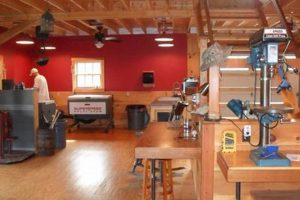
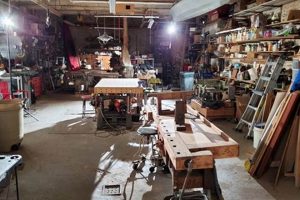
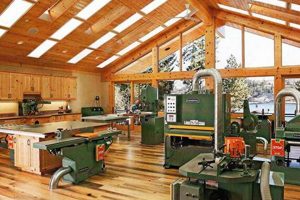
The arrangement of tools, equipment, and workspace within a single-vehicle residential parking structure to facilitate woodworking activities constitutes a specific organizational challenge. This arrangement necessitates careful consideration of available square footage and workflow optimization. An example includes positioning a workbench near a power outlet and designating specific areas for material storage and assembly.
Effective space utilization within a limited area offers significant benefits, including increased productivity, improved safety, and enhanced enjoyment of the woodworking hobby or profession. Historically, adapting garages for workshop purposes has been a common practice for individuals seeking dedicated creative spaces without the expense of a separate building. The careful design of such a space transforms underutilized square footage into a productive area.
The subsequent sections will delve into the key considerations for creating an efficient and functional woodworking environment in a confined space. These topics include space planning strategies, tool storage solutions, dust collection methods, and safety protocols applicable to small workshops.
Optimizing a Woodworking Area in a Single-Car Garage
The following recommendations offer guidance on maximizing the effectiveness of a small-scale woodworking environment. Careful planning and efficient resource management are critical for success in such a space.
Tip 1: Prioritize Space Planning: Begin with a detailed floor plan, noting the precise dimensions of the garage. Consider the placement of large equipment, such as a table saw or planer, and establish primary work zones before purchasing any materials or equipment. Scale models or digital renderings aid in visualizing the layout.
Tip 2: Vertical Storage Solutions: Maximize wall space by implementing shelving units, pegboards, and French cleats. These systems keep tools and materials organized and off the floor, preserving valuable workspace. Utilize the often-unused space above the garage door for long-term storage.
Tip 3: Mobile Workstations: Employ benches, tool stands, and carts equipped with casters. This allows for flexible rearrangement of the workspace depending on the task at hand. Mobile solutions enhance adaptability and accessibility within the limited area.
Tip 4: Dust Collection System: Implement a dust collection system to mitigate the health risks associated with wood dust. A portable dust collector with flexible hoses can connect to various tools as needed. Consider an overhead air filtration system for overall air quality improvement.
Tip 5: Optimize Lighting: Ensure adequate illumination through a combination of overhead and task lighting. LED fixtures provide bright, energy-efficient light. Proper lighting enhances visibility and reduces the risk of errors.
Tip 6: Noise Reduction Strategies: Address noise concerns by implementing noise-dampening materials. Consider acoustic panels, soundproof curtains, or strategically placed insulation. Minimizing noise pollution benefits both the user and surrounding neighbors.
Tip 7: Electrical Considerations: Ensure adequate electrical capacity and outlets to power all tools and equipment safely. Consider installing a dedicated circuit for high-draw machinery. Ground fault circuit interrupters (GFCIs) are essential for safety.
Effective implementation of these strategies will contribute to a safer, more productive, and enjoyable woodworking experience, even within the constraints of a smaller workspace.
The final section will provide advice on safety measures and maintenance essential in a garage-based woodworking shop.
1. Space Optimization

Space optimization is a critical determinant of functionality within a single-car garage woodworking shop. The limited square footage necessitates strategic planning to maximize available work and storage areas, affecting workflow and overall productivity.
- Vertical Space Utilization
Exploiting vertical space is crucial in confined areas. Shelving units, wall-mounted tool racks, and overhead storage systems effectively utilize unused airspace. For example, constructing a platform above the garage door rails offers storage without impeding vehicle access, directly enhancing the practical use of a limited footprint. Failure to capitalize on vertical space results in a cluttered and inefficient workspace.
- Multifunctional Equipment and Furniture
Employing tools and furniture designed for multiple purposes enhances space efficiency. A workbench with integrated storage drawers or a table saw that can be folded away when not in use reduces clutter. Such items allow for varied tasks to be performed in the same area, maximizing the utility of each square foot. In contrast, single-purpose, stationary equipment consumes space without providing flexible benefits.
- Workflow-Oriented Layout Design
Arranging tools and equipment based on the sequence of typical woodworking processes reduces unnecessary movement. Placing lumber storage near the initial cutting station and assembly areas adjacent to finishing zones streamlines production. A poorly planned layout causes wasted time and effort, hindering overall efficiency and increasing the risk of accidents in a cramped environment.
- Mobile Workstations and Storage
Implementing mobile workstations and storage solutions introduces flexibility to the workspace. Tool carts, rolling workbenches, and portable storage containers allow for easy rearrangement based on project needs. This dynamic adaptability compensates for the limited space, enabling efficient execution of diverse tasks. Fixed layouts restrict workflow and limit the versatility of the garage shop.
The preceding facets illustrate the direct impact of space optimization on the effectiveness of a woodworking shop housed within a single-car garage. Strategic planning and implementation of space-saving measures are essential to transforming a limited area into a functional and productive woodworking environment.
2. Tool Placement

In a single-car garage woodworking shop, tool placement is not merely a matter of convenience; it is a fundamental factor determining the space’s functionality, safety, and workflow efficiency. The limited area necessitates a strategic arrangement that minimizes wasted movement, maximizes usable workspace, and reduces the potential for accidents. Improper tool placement creates bottlenecks, increases the risk of injury, and diminishes the overall productivity of the shop.
Consider the placement of a frequently used tool like a miter saw. Placing it against a wall, without sufficient clearance for long workpieces, immediately restricts the saw’s utility and requires the operator to constantly adjust or reposition material. A better approach involves positioning the miter saw along a longer wall or incorporating outfeed supports to handle longer boards safely and efficiently. Another instance is the proximity of a jointer to a planer. Positioning these machines adjacently streamlines the process of preparing rough lumber. Conversely, separating them forces additional steps and increases the time spent on a basic milling operation. Tool placement directly governs the smooth execution of projects.
Effective tool placement is an iterative process of evaluation and adjustment. Observe workflows, identify bottlenecks, and rearrange tools accordingly. Prioritize safety by ensuring clear pathways and adequate space around each machine. Integrating tool placement into the overall design of the workshop transforms a cramped garage into a streamlined and functional woodworking environment. In sum, tool placement is not just a detail but a core component of a well-planned single-car garage woodworking shop layout.
3. Dust Management
Dust management within the confines of a single-car garage woodworking shop represents a critical factor affecting user health, equipment longevity, and overall workshop safety. The limited space concentrates airborne particulate matter, necessitating proactive strategies to mitigate potential hazards.
- Collection System Integration
Integrating a dedicated dust collection system directly into the shop layout is essential. This includes a central dust collector with ducting to stationary tools and portable units for handheld devices. Strategic placement minimizes hose lengths and optimizes suction efficiency. A poorly planned system leads to dust accumulation, impacting air quality and increasing fire risk.
- Air Filtration Implementation
Supplementary air filtration units, strategically positioned to capture ambient dust, enhance air quality. These systems circulate and filter the air, removing fine particles that escape the primary collection. Ignoring air filtration results in prolonged exposure to airborne contaminants, potentially affecting respiratory health. Such filtration is not a substitute for source capture but provides supplementary coverage.
- Material Selection and Containment
Choosing materials that generate less dust during processing and implementing containment measures are proactive dust management strategies. Examples include using plywood or MDF instead of solid wood for certain projects and employing shrouds or enclosures around dust-producing tools. The absence of material selection considerations results in higher dust levels throughout the shop environment.
- Regular Cleaning Protocols
Implementing a routine cleaning schedule is indispensable for controlling dust accumulation. This includes vacuuming floors, wiping down surfaces, and cleaning filters regularly. Neglecting regular cleaning allows dust to settle and become re-entrained into the air, negating the effectiveness of dust collection and filtration systems.
The convergence of these facets underscores the critical role of dust management in ensuring a safe and productive single-car garage woodworking environment. Effective dust control not only safeguards health but also prolongs the lifespan of tools and equipment by minimizing dust-related wear and tear.
4. Safety Protocols

The application of defined safety protocols within a single-car garage woodworking shop layout is paramount. Given the confined space and inherent risks associated with woodworking machinery, adherence to safety standards is not merely advisable but essential for preventing accidents and ensuring user well-being.
- Emergency Access and Egress
A clearly defined and unobstructed emergency exit path is critical. The layout must facilitate rapid evacuation in the event of an accident, fire, or other emergency. Tools and materials should not impede access to the exit, and the pathway should be well-lit. For instance, a workbench positioned directly in front of the garage door could hinder escape in an emergency scenario. Conversely, a layout with a dedicated, clear path ensures a swift exit.
- Machine Guarding and Operational Zones
Adherence to machine guarding principles and establishment of defined operational zones around woodworking equipment is vital. Guards prevent accidental contact with moving parts, and designated zones ensure adequate clearance for safe operation. An example is a table saw with a functioning blade guard and a clearly marked zone around the saw indicating the safe operating area. Failure to implement these measures increases the risk of injury during tool use.
- Electrical Safety and Grounding
Compliance with electrical safety standards and proper grounding of all power tools and equipment is imperative to prevent electrical shock. The layout must incorporate readily accessible outlets and appropriate circuit protection. For example, the use of ground fault circuit interrupters (GFCIs) in damp locations reduces the risk of electrocution. Neglecting electrical safety protocols creates a dangerous environment.
- Personal Protective Equipment (PPE) Usage and Storage
The consistent use of appropriate personal protective equipment (PPE) and designated storage locations are necessary to mitigate potential hazards. PPE includes safety glasses, hearing protection, dust masks, and appropriate footwear. The layout should incorporate storage for PPE near the entrance of the shop, promoting its consistent use. Failure to provide and utilize PPE increases the risk of eye injuries, hearing damage, and respiratory problems.
These facets demonstrate the integral relationship between safety protocols and the design of a woodworking shop within a limited garage space. A layout that prioritizes safety through clear access, machine guarding, electrical compliance, and PPE usage significantly reduces the risk of accidents and promotes a safer working environment.
5. Power Distribution

Power distribution within a single-car garage woodworking shop represents a critical infrastructure component. The safe and effective operation of woodworking equipment depends on a reliable and appropriately configured electrical system, making power distribution a primary consideration in the shop layout design.
- Circuit Capacity and Load Balancing
Accurately assessing circuit capacity and implementing load balancing strategies are essential for preventing overloads and potential electrical hazards. A woodworking shop often includes high-amperage tools such as table saws, planers, and dust collectors. Each circuit must be capable of handling the combined load of tools operating simultaneously, and the overall electrical load should be balanced across multiple circuits. Failure to adequately assess and balance the load may result in tripped breakers, equipment damage, and an increased risk of fire. An example includes dedicating separate circuits for lighting, general-purpose outlets, and high-draw machinery.
- Outlet Placement and Accessibility
Strategic placement of electrical outlets throughout the shop ensures accessibility and reduces the need for extension cords. Outlets should be positioned near workstations and machine locations, allowing for direct connections without creating tripping hazards. Considerations include both standard 120V outlets for smaller tools and 240V outlets for larger machinery. An insufficient number of outlets or poorly placed outlets necessitate the use of extension cords, increasing the risk of electrical shock and fire. A well-designed layout integrates an ample number of strategically positioned outlets to support all woodworking activities.
- Wiring Infrastructure and Conduit Protection
A robust wiring infrastructure, protected by conduit, safeguards against physical damage and ensures the long-term reliability of the electrical system. Exposed wiring is vulnerable to damage from tools, materials, and general shop activities. Conduit protects wiring from abrasion, impact, and moisture, minimizing the risk of electrical shorts and fires. Proper wiring and conduit contribute to a safer and more durable electrical system. Consider using metal conduit for areas with high foot traffic or potential for impact.
- Safety Devices and Grounding
Installation of appropriate safety devices, such as ground fault circuit interrupters (GFCIs) and surge protectors, and proper grounding of all electrical equipment are non-negotiable aspects of power distribution. GFCIs protect against electrical shock by detecting imbalances in current flow. Surge protectors safeguard sensitive electronic equipment from voltage spikes. Proper grounding provides a path for stray current, reducing the risk of electrocution. Omission of these safety devices significantly increases the risk of electrical accidents and equipment damage. Therefore, these elements must be integrated into the electrical system design.
The preceding discussion emphasizes the integral relationship between power distribution and the functional design of a woodworking shop within a limited garage space. Prioritizing electrical safety and implementing a well-planned power distribution system is essential for supporting the safe and efficient operation of woodworking equipment, transforming the confined space into a productive and secure workspace.
6. Material Storage

Material storage, within the context of a single-car garage woodworking shop layout, represents a significant constraint demanding thoughtful consideration. The limited square footage necessitates strategic planning to efficiently house raw materials, work-in-progress items, and finished projects, directly influencing workflow and accessibility.
- Vertical Storage Systems
The utilization of vertical storage solutions is crucial for maximizing available space. Installing shelving units, lumber racks, and wall-mounted cabinets allows for the consolidation of materials without encroaching on the primary work area. Lumber racks positioned along the walls or overhead storage platforms effectively utilize otherwise underutilized space. The alternative, stacking lumber directly on the floor, consumes valuable workspace and creates potential safety hazards.
- Mobile Storage Carts
Employing mobile storage carts offers flexibility in material organization. Carts equipped with casters allow for the easy relocation of materials based on project needs, optimizing workflow and accessibility. A cart dedicated to hardware or fasteners, for example, can be moved to the workbench during assembly, reducing unnecessary movement and improving efficiency. Fixed storage systems lack this adaptability, potentially hindering workflow in the confined space.
- Optimized Lumber Rack Design
The design of lumber racks should consider both the dimensions of typical lumber stock and the available space. Adjustable racks allow for accommodating different lengths and thicknesses of materials, maximizing storage capacity. A well-designed rack minimizes wasted space and facilitates easy access to individual boards. Inefficient rack designs may lead to wasted space and difficulties in retrieving specific materials, hindering project progress.
- Inventory Management and Labeling
Implementing an inventory management system and consistently labeling stored materials aids in organization and retrieval efficiency. Clear labeling of shelves, bins, and containers allows for the rapid identification and location of specific items. A simple spreadsheet or inventory list can track material quantities and dimensions, minimizing material waste and improving project planning. The absence of an organized inventory system results in wasted time searching for materials and increased risk of purchasing duplicate items.
The preceding discussion underscores the direct influence of material storage solutions on the functionality of a woodworking shop housed within a single-car garage. Efficiently managing material storage through strategic planning, vertical utilization, mobile solutions, and organized inventory systems is essential for transforming a limited area into a productive and well-organized woodworking environment.
7. Workflow Efficiency

Workflow efficiency within a single-car garage woodworking shop environment is a critical determinant of project completion rate, resource utilization, and overall productivity. The limited confines of the space necessitate careful consideration of process flow and spatial arrangement to minimize wasted movement and maximize output.
- Optimized Tool Sequencing and Placement
The strategic arrangement of tools based on process sequence directly impacts workflow. Placing tools in the order they are used for common tasks minimizes unnecessary movement and reduces project time. For instance, locating a lumber storage rack adjacent to a cutting station and then positioning an assembly area nearby streamlines the construction process. Disorganized tool placement disrupts this flow, leading to wasted steps and increased project duration. Prioritizing tool placement according to common workflow patterns is crucial.
- Clear and Unobstructed Pathways
Maintaining clear and unobstructed pathways throughout the workshop is essential for efficient movement of materials and personnel. Cluttered pathways increase the risk of accidents and slow down the workflow. Regularly clearing debris and ensuring sufficient space between workstations facilitates smoother transitions between tasks. In contrast, pathways blocked by tools, materials, or equipment create bottlenecks and increase project completion time. A well-designed layout prioritizes unimpeded movement throughout the space.
- Ergonomic Workstation Design
Ergonomic workstation design contributes to workflow efficiency by minimizing physical strain and fatigue. Adjusting workbench heights, providing adequate lighting, and ensuring comfortable access to tools and materials reduces the risk of injury and increases productivity. For example, a workbench that is too low forces the user to bend over, leading to back pain and reduced efficiency. Proper ergonomic considerations create a more comfortable and productive working environment. Ignoring such considerations increases the risk of physical strain and negatively impacts workflow.
- Modular and Adaptable Workspace
Incorporating modular and adaptable elements into the workspace layout allows for adjustments based on project requirements. Mobile workbenches, adjustable storage solutions, and reconfigurable layouts provide the flexibility needed to accommodate different project types and sizes. This adaptability ensures the workspace can be optimized for specific tasks, enhancing workflow efficiency. Fixed and inflexible layouts limit adaptability and may hinder workflow when dealing with diverse projects.
The facets discussed above highlight the symbiotic relationship between workflow efficiency and the layout of a woodworking shop in a limited space. By prioritizing tool sequencing, maintaining clear pathways, implementing ergonomic designs, and incorporating adaptable elements, individuals can optimize their workflow and maximize productivity within the constraints of a single-car garage.
Frequently Asked Questions Regarding Single-Car Garage Woodworking Shop Layouts
The following addresses common inquiries concerning the optimization and implementation of woodworking facilities within the spatial constraints of a single-car residential garage.
Question 1: What is the minimum ceiling height recommended for a single-car garage woodworking shop?
A minimum ceiling height of eight feet is generally recommended to accommodate both overhead storage solutions and the safe operation of machinery. Lower ceilings may impede maneuverability and restrict vertical storage options. Height limitations also need to consider required space for dust collection ducting.
Question 2: How can noise pollution be effectively mitigated in a garage woodworking shop located near residential areas?
Noise pollution can be mitigated through a combination of strategies, including the installation of soundproof insulation, the use of vibration-dampening pads under machinery, and the application of sound-absorbing materials on walls and ceilings. Limiting operational hours can also reduce disturbance to neighbors. Careful consideration should be given to machine selection, choosing quieter models when feasible.
Question 3: What are the key electrical considerations for setting up a woodworking shop in a garage?
Key electrical considerations include assessing the total power requirements of all tools and equipment, ensuring adequate circuit capacity, installing sufficient outlets, and implementing ground fault circuit interrupters (GFCIs) in damp locations. Adherence to local electrical codes is mandatory, and professional electrical assistance may be required for complex installations.
Question 4: How can dust collection be effectively managed in a small garage woodworking shop?
Effective dust collection involves a combination of strategies, including the use of a central dust collection system connected to stationary tools, portable dust collectors for handheld tools, air filtration units to capture ambient dust, and regular cleaning protocols. The objective is to minimize airborne dust particles and maintain a safe working environment. Respiratory protection is a necessary supplement to, not a replacement for, efficient dust control at the source.
Question 5: What are the best methods for storing lumber and sheet goods in a limited garage space?
Optimal storage methods include utilizing vertical storage racks, employing rolling carts for portability, and organizing materials by type and dimension. Overhead storage platforms can also maximize unused space. Careful inventory management and labeling are essential for efficient material retrieval. Space constraints may necessitate purchasing lumber in smaller quantities to minimize storage requirements.
Question 6: How can the workflow be optimized in a small garage woodworking shop?
Workflow optimization involves arranging tools and equipment according to the sequence of common tasks, maintaining clear and unobstructed pathways, and utilizing mobile workstations to adapt to different project requirements. Careful planning and spatial arrangement minimize unnecessary movement and improve overall efficiency. Ergonomic considerations are also important to reduce fatigue and strain during long work sessions.
In summary, the successful implementation of a woodworking shop in a single-car garage requires careful planning, strategic resource management, and unwavering attention to safety protocols. Adherence to these principles will facilitate the creation of a functional and productive workspace within the given constraints.
The subsequent section provides practical advice for maintaining and expanding a garage-based woodworking facility.
Optimizing the Single-Car Garage for Woodworking
The preceding exploration of the single-car garage woodworking shop layout has underscored critical elements impacting functionality, safety, and efficiency. Key areas of focus included strategic space utilization, optimized tool placement, effective dust management protocols, stringent safety adherence, reliable power distribution strategies, organized material storage solutions, and streamlined workflow designs. Successful implementation necessitates a holistic integration of these elements to create a productive and secure workspace within spatial constraints.
Effective adaptation of a single-car garage into a woodworking facility demands meticulous planning and consistent execution. The transformation represents a commitment to safety, efficiency, and the pursuit of craftsmanship within limited confines. Continuous assessment and refinement of the layout are crucial for maintaining a functional and productive workspace. The principles outlined herein serve as a foundation for both novice and experienced woodworkers seeking to optimize their garage-based operations, contributing to the advancement of woodworking skills and capabilities.