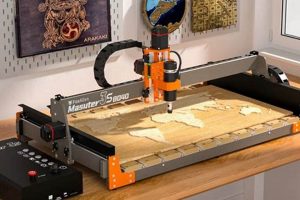
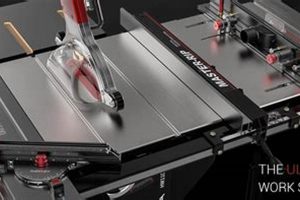
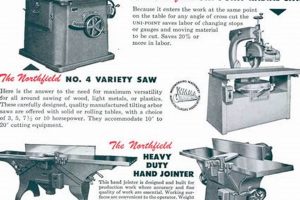
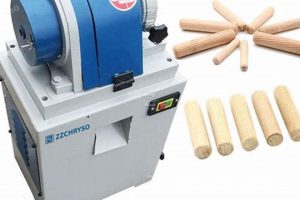
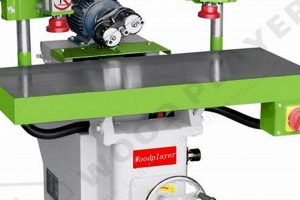
Equipment employing three-dimensional computer numerical control technology to execute intricate cutting, carving, and shaping operations on wood-based materials is increasingly prevalent. This equipment allows for the automated creation of complex designs that would be difficult or impossible to produce manually. For example, a furniture manufacturer might use such a machine to carve ornate legs for a table or to create intricate patterns on a cabinet door.
The adoption of this technology presents several advantages. Increased precision and repeatability reduce material waste and improve product consistency. These machines can also operate unattended for extended periods, increasing throughput and reducing labor costs. Historically, highly skilled artisans were required to produce complex wooden objects. This technology democratizes the process, enabling manufacturers with limited skilled labor to produce high-quality, complex wooden products.
Further discussion will cover the various types of these automated woodworking solutions, their operational principles, software considerations, maintenance requirements, and the diverse range of applications they serve within the woodworking industry.
Optimizing Operations with 3D Woodworking Machines
Effective utilization of automated woodworking equipment requires careful planning and execution. The following tips will aid in maximizing performance and longevity.
Tip 1: Material Selection: Employ wood types appropriate for the intended application and machine capabilities. Density and grain structure significantly impact cutting performance and finish quality. For instance, hardwoods such as oak require slower feed rates than softwoods like pine.
Tip 2: Toolpath Optimization: Utilize CAM software features to generate efficient toolpaths. Minimize unnecessary movements and rapid traverses to reduce machining time and tool wear. Climb milling can improve surface finish in certain applications.
Tip 3: Regular Maintenance: Adhere to a consistent maintenance schedule. Lubricate moving parts, clean the cutting area, and inspect tool holders for wear. This preventative approach minimizes downtime and extends equipment lifespan.
Tip 4: Cutting Tool Selection: Employ the appropriate cutting tools for the specific material and operation. Regularly sharpen or replace dull tools to maintain cut quality and prevent machine strain. Consider coated tools for increased lifespan and reduced friction.
Tip 5: Dust Extraction: Implement an effective dust extraction system. Excessive dust accumulation negatively affects machine performance, workpiece quality, and operator health. A dedicated dust collector is generally more effective than shop vacuums.
Tip 6: Software Proficiency: Invest in operator training to ensure proficiency with the machine’s control software. Understanding G-code and CAM programming is crucial for optimizing machine performance and creating complex designs.
Tip 7: Workholding Methods: Employ secure and stable workholding techniques. Vacuum fixtures, clamps, and jigs are essential for preventing workpiece movement during machining. Inadequate workholding can lead to inaccurate cuts and damage to the equipment.
By implementing these practices, users of automated woodworking systems can enhance efficiency, minimize errors, and extend the operational life of the machinery. These considerations ensure a return on investment and optimize the production process.
The following sections will delve deeper into specific aspects of troubleshooting common issues and exploring advanced techniques within the realm of automated woodworking.
1. Precision

In the realm of automated woodworking, precision is not merely a desirable attribute but a fundamental requirement. The ability of these systems to execute complex designs accurately and consistently hinges directly on their inherent precision capabilities.
- Calibration and Alignment
Precise calibration and alignment are essential for achieving dimensional accuracy. Any deviation from established parameters can lead to cumulative errors, resulting in finished products that deviate significantly from the intended design. Regular calibration checks using precision instruments are therefore critical.
- Cutting Tool Selection and Maintenance
The selection of appropriate cutting tools, combined with consistent maintenance, significantly impacts precision. Dull or improperly sized tools introduce inaccuracies and can damage the workpiece. Regularly sharpening or replacing tools is crucial for maintaining cut quality and dimensional control.
- Machine Rigidity and Stability
The structural rigidity and stability of the woodworking machinery are paramount for maintaining accuracy during high-speed operations. Vibrations or flexing of the machine frame can introduce errors, particularly when working with delicate materials or intricate designs. Robust machine construction is therefore a key factor.
- Software Compensation and Control
Advanced software compensates for inherent machine limitations and material variations. Sophisticated algorithms correct for tool deflection, thermal expansion, and other factors that can affect precision. Accurate control over toolpath generation and machine parameters is essential for achieving the desired results.
The interplay of these factors dictates the ultimate precision achievable with automated woodworking systems. Attention to calibration, tool maintenance, machine rigidity, and software control allows operators to leverage the full potential of these machines for creating high-quality, precisely crafted wooden objects.
2. Automation

Automation forms the core functionality of advanced woodworking machinery. The integration of computer numerical control (CNC) systems enables the precise and repeatable execution of complex designs with minimal human intervention. This automated process reduces the reliance on skilled manual labor, which is often time-consuming and prone to variability. The automated capabilities of these machines are directly responsible for the production of intricate architectural moldings or customized furniture components with a high degree of accuracy and efficiency.
Furthermore, automation extends beyond mere cutting and shaping. It includes automated material handling systems that load and unload workpieces, automated tool changers that select the appropriate cutting tools for each operation, and integrated monitoring systems that detect and correct deviations from the programmed parameters. This holistic approach to automation streamlines the entire manufacturing process, reducing cycle times, minimizing material waste, and improving overall productivity. Examples include automated sanding and finishing lines integrated with automated woodworking machinery to minimize labor and optimize the finishing process.
In conclusion, automation is not simply an add-on feature, but an integral component of modern woodworking machinery. It addresses the demands of increased productivity, improved precision, and reduced labor costs. The implementation of automation presents challenges, such as the initial capital investment and the need for skilled operators and maintenance personnel. However, the benefits of automation in the woodworking industry, including improved quality, increased output, and reduced costs, make it a crucial consideration for any woodworking business seeking to remain competitive.
3. Material compatibility

Material compatibility is a critical consideration in the operation of advanced woodworking machinery. The interaction between the chosen material and the equipment significantly influences the quality of the finished product, tool life, and the overall efficiency of the machining process. Understanding these interactions is paramount for successful and sustainable manufacturing.
- Density and Hardness
The density and hardness of the wood being processed directly impact the optimal cutting parameters. Hardwoods, such as maple or oak, require slower feed rates and specialized cutting tools compared to softwoods like pine or cedar. Failure to adjust parameters accordingly can result in tool wear, workpiece damage, or even machine failure. For instance, attempting to cut dense exotic wood with a tool designed for softwood can result in rapid tool dulling and a rough surface finish.
- Grain Orientation
Grain orientation influences the direction of the cut and the resulting surface finish. Machining against the grain can lead to tear-out, where wood fibers are pulled away from the surface, creating a rough and uneven finish. Careful consideration of grain direction and toolpath planning is essential for achieving a smooth and consistent surface. Intricate designs must account for grain direction to maintain structural integrity and aesthetic quality.
- Moisture Content
The moisture content of wood affects its stability and machinability. Wood that is too wet can be prone to warping and deformation during and after machining, while wood that is too dry can become brittle and prone to cracking. Maintaining consistent moisture content is crucial for dimensional accuracy and long-term stability of the finished product. Seasoning wood properly is necessary to balance the moisture content and prevent structural integrity issues.
- Resin and Oil Content
The presence of resins or oils within the wood can affect tool performance and surface finish. Resinous woods, such as pine, can cause resin buildup on cutting tools, reducing their efficiency and lifespan. Oily woods, such as teak, can interfere with the adhesion of finishes. Careful selection of cutting tools and appropriate surface preparation techniques are necessary to mitigate these issues. Cleaning blades of pitch or resin buildup after each use is recommended.
In conclusion, material compatibility is not a passive factor in automated woodworking but an active variable that demands careful management. Successful integration of advanced woodworking machinery requires a thorough understanding of the material’s properties and their interaction with the machine’s capabilities. This knowledge is essential for optimizing cutting parameters, tool selection, and surface preparation techniques, ultimately leading to improved product quality, reduced waste, and increased efficiency.
4. Software integration

Effective operation of three-dimensional woodworking machines hinges critically on seamless software integration. This integration encompasses the entire workflow, from initial design to machine execution, and directly influences precision, efficiency, and overall product quality.
- CAD/CAM Interoperability
Computer-Aided Design (CAD) and Computer-Aided Manufacturing (CAM) software must communicate effectively. CAD software generates the three-dimensional model, while CAM software translates this model into machine-readable instructions (G-code). Incompatible systems necessitate manual data conversion, introducing potential errors and inefficiencies. Integrated CAD/CAM solutions, on the other hand, allow for a fluid workflow, minimizing the risk of data loss and streamlining the design-to-production process. For example, a complex design created in a CAD program can be directly imported into the CAM software, automatically generating the necessary toolpaths and machine settings without manual intervention.
- Machine Control Software
Machine control software directly manages the operation of the woodworking machinery. This software interprets the G-code instructions and controls the movement of the cutting tools, spindle speed, and other machine parameters. Advanced machine control software incorporates features such as real-time toolpath visualization, collision detection, and adaptive feed rate control. These features enhance operator control, prevent errors, and optimize machining performance. Industrial machines often have proprietary software designed for specific functions and enhanced by specific features such as sensor integration.
- Simulation and Optimization
Software integration enables simulation and optimization of machining processes. Before physically cutting the material, users can simulate the machining process in a virtual environment. This allows for the identification and correction of potential errors, such as collisions or toolpath inefficiencies. Optimization tools can automatically adjust cutting parameters to minimize machining time, reduce tool wear, and improve surface finish. Simulation and optimization tools reduce material waste by ensuring the machining process is feasible before executing it physically.
- Data Management and Analytics
Integrated software systems facilitate data collection and analysis. Machine performance data, such as cutting times, tool usage, and material consumption, can be tracked and analyzed to identify areas for improvement. Data-driven insights can be used to optimize machining parameters, improve maintenance schedules, and reduce costs. For instance, analyzing tool wear data might reveal that a specific type of wood is causing premature tool dulling, prompting a change in material selection or cutting parameters.
In summary, software integration is not merely a convenience but a necessity for realizing the full potential of three-dimensional woodworking machines. It ensures efficient data flow, optimized machine control, and data-driven decision-making, ultimately contributing to enhanced productivity and improved product quality. The increasing sophistication of woodworking machinery relies on a corresponding advancement in software capabilities and integration.
5. Maintenance schedule
A well-defined maintenance schedule is indispensable for ensuring the consistent performance, longevity, and operational safety of three-dimensional woodworking machines. Neglecting scheduled maintenance can lead to diminished accuracy, increased downtime, and potential safety hazards, ultimately impacting productivity and profitability.
- Preventative Component Replacement
Regular replacement of wear-prone components, such as belts, bearings, and guide rails, is crucial. These components experience continuous stress during operation, leading to gradual degradation. Timely replacement prevents unexpected failures that can cause extensive damage to the machine or result in prolonged production delays. For example, worn bearings in a spindle can induce vibrations, reducing cutting accuracy and potentially damaging the spindle motor.
- Lubrication and Cleaning Regimen
Proper lubrication minimizes friction between moving parts, reducing wear and extending component lifespan. A consistent cleaning schedule removes dust, debris, and resin buildup that can impede machine performance and contribute to premature wear. Neglecting lubrication can cause overheating, leading to component failure and costly repairs. Likewise, dust accumulation can interfere with sensor accuracy and cooling efficiency.
- Software and Firmware Updates
Regular updates to the machine’s software and firmware are essential for maintaining optimal performance and security. Updates often include bug fixes, performance enhancements, and security patches that address vulnerabilities. Failing to update the software can expose the machine to security risks or prevent it from utilizing the latest features and optimizations. This also applies to compatible CAD/CAM programs.
- Calibration and Alignment Procedures
Periodic calibration and alignment ensure that the machine operates within its specified tolerances. Over time, mechanical components can shift or drift out of alignment, leading to inaccuracies in the finished product. Regular calibration procedures, using precision instruments, restore the machine to its optimal state, maintaining dimensional accuracy and surface finish quality. Consistent calibration is crucial for complex designs and tight-tolerance projects.
In conclusion, a comprehensive maintenance schedule is not merely a procedural formality but a critical investment in the long-term viability and operational efficiency of advanced woodworking machinery. Adhering to a structured maintenance program minimizes downtime, reduces repair costs, and ensures the consistent production of high-quality wooden products, maximizing the return on investment in these sophisticated systems.
6. Operational Safety

The integration of three-dimensional woodworking machines into manufacturing processes necessitates a rigorous focus on operational safety. The high-speed cutting tools and automated movements inherent in these machines present potential hazards that demand careful mitigation. Accidents involving this type of machinery can result in severe injuries, including lacerations, amputations, and even fatalities. Understanding the direct cause-and-effect relationship between safety protocols and risk reduction is therefore paramount. Operational safety is not an ancillary consideration but an intrinsic component of these systems; its absence directly increases the probability of accidents. For example, failure to properly secure a workpiece can result in the material being ejected at high speed, posing a significant risk to personnel in the vicinity. The practical significance of this understanding lies in the implementation of comprehensive safety measures, encompassing machine guarding, personal protective equipment (PPE), and thorough operator training.
Effective implementation of operational safety requires a multi-faceted approach. Machine guarding, such as interlocked safety barriers and light curtains, prevents unauthorized access to the cutting area during operation. PPE, including safety glasses, hearing protection, and appropriate clothing, minimizes the risk of injury from flying debris or machine noise. Comprehensive operator training ensures that personnel are thoroughly familiar with the machine’s operating procedures, safety protocols, and emergency shutdown procedures. Furthermore, regular safety audits and risk assessments identify potential hazards and ensure that safety measures are effectively implemented and maintained. These elements should be checked often to keep the staff healthy and safe. One notable example is the mandatory implementation of emergency stop buttons strategically located around the machine to enable immediate cessation of operation in the event of an anomaly.
In summary, operational safety is not merely a set of rules but a fundamental principle that guides the design, operation, and maintenance of three-dimensional woodworking machines. Addressing safety challenges requires a proactive and systematic approach, encompassing engineering controls, administrative procedures, and personal protective measures. By prioritizing safety, manufacturers can minimize the risk of accidents, protect their workforce, and ensure the sustainable and responsible utilization of this powerful technology. Adherence to established safety standards and continuous improvement in safety practices are crucial for fostering a safe and productive working environment.
7. Design Complexity

The capabilities of three-dimensional woodworking machines are directly correlated with the degree of design complexity they can accommodate. This relationship dictates the range of possible applications and the sophistication of finished products achievable through automated woodworking processes.
- Intricate Geometries
This facet concerns the ability to create non-standard shapes and forms beyond conventional woodworking techniques. Examples include complex curves, freeform surfaces, and interwoven patterns. Within the context of automated woodworking, this translates to the capacity to manufacture furniture components with elaborate carvings, architectural moldings with flowing lines, or artistic sculptures with organic shapes. The implications are significant, allowing manufacturers to differentiate their products through unique and visually appealing designs that would be impractical or impossible to produce manually.
- Multi-Axis Machining
Multi-axis machining refers to the ability of the woodworking machine to move the cutting tool and/or workpiece simultaneously along multiple axes. This allows for machining complex geometries in a single setup, reducing the need for repositioning and minimizing potential errors. Examples include undercuts, internal cavities, and intricate carvings on multiple faces of a workpiece. Multi-axis capabilities enable the creation of highly detailed and complex three-dimensional forms with improved accuracy and efficiency. This enables advanced architectural designs or extremely intricate designs for furniture.
- Parametric Modeling Integration
Parametric modeling allows designers to define designs based on parameters that can be easily modified, enabling rapid prototyping and customization. The integration of parametric modeling software with automated woodworking machines allows for the automated generation of toolpaths based on these parameters, facilitating the production of customized products with varying dimensions and features. For example, a furniture manufacturer could use parametric modeling to create a chair design that can be easily adapted to different seat heights, armrest widths, and backrest angles, catering to individual customer preferences. This type of mass customization is only achievable when integrating parametric modeling and automated wood-working.
- Assembly Considerations
Design complexity also extends to the integration of components designed for specific assembly methods. The machines can produce parts with integrated joinery, such as mortise-and-tenon joints or dovetail joints, which simplifies assembly and improves structural integrity. Complex designs can also incorporate features that facilitate the integration of hardware, such as threaded inserts or concealed fasteners. For example, parts can be designed with perfectly fitted parts for easy integration.
The interplay of these facets demonstrates how design complexity is inextricably linked to the capabilities of automated woodworking systems. The ability to execute intricate geometries, leverage multi-axis machining, integrate parametric modeling, and design for efficient assembly enables manufacturers to unlock new possibilities in woodworking, producing high-quality, customized products with increased efficiency and precision.
Frequently Asked Questions About 3D Woodworking Machines
This section addresses common inquiries regarding the capabilities, applications, and operational aspects of three-dimensional woodworking machinery.
Question 1: What types of woodworking operations can be performed?
Three-dimensional woodworking machines are capable of performing a diverse range of operations, including cutting, carving, shaping, drilling, and milling. The machines can handle both simple tasks, such as cutting boards to size, and complex tasks, such as creating intricate carvings or producing multi-faceted furniture components.
Question 2: What are the primary advantages?
The primary advantages of utilizing automated woodworking machines include increased precision, improved repeatability, reduced material waste, faster production times, and the ability to create complex designs that would be difficult or impossible to achieve manually. The operational labor time is also often reduced.
Question 3: What factors influence the selection of a system?
Several factors influence the selection of an appropriate automated woodworking system. These include the size and type of workpieces to be processed, the desired level of precision, the complexity of the designs, the available budget, and the technical expertise of the operators. Certain systems are designed for particular purposes or materials.
Question 4: How is operational safety ensured?
Operational safety is ensured through a combination of engineering controls, administrative procedures, and personal protective equipment. Engineering controls include machine guarding, interlocked safety barriers, and emergency stop buttons. Administrative procedures include comprehensive operator training and regular safety audits. Personal protective equipment includes safety glasses, hearing protection, and appropriate clothing. Following proper safety protocols and guidelines is important when operating machinery.
Question 5: What level of maintenance is required?
Automated woodworking machines require regular maintenance to ensure optimal performance and longevity. Maintenance tasks include lubrication of moving parts, cleaning of the machine, inspection and replacement of worn components, and calibration of the machine’s axes. Adherence to a structured maintenance schedule is essential.
Question 6: What software skills are needed to operate the machine?
Operating an automated woodworking machine typically requires proficiency in CAD/CAM software. CAD software is used to create the three-dimensional designs, while CAM software is used to translate these designs into machine-readable instructions (G-code). Familiarity with G-code programming can also be beneficial, especially for advanced applications.
These questions highlight the key considerations when exploring the world of automated woodworking. Proper evaluation and implementation of these machines are critical for reaping the potential benefits.
The following section will delve into case studies and applications of automated woodworking systems across diverse industries.
Conclusion
The preceding analysis has explored the multifaceted aspects of three-dimensional woodworking machinery. From its operational principles and material compatibility to its software integration and maintenance requirements, a comprehensive understanding of this technology is paramount for effective implementation. Critical considerations such as precision, automation, and operational safety are integral to maximizing the benefits and mitigating the risks associated with these systems.
The future trajectory of woodworking is inextricably linked to the continued advancement and adoption of automated solutions. Businesses seeking to remain competitive must embrace this technology and invest in the necessary training and infrastructure. Careful evaluation and strategic implementation will unlock new possibilities in woodworking, fostering innovation and driving efficiency within the industry. Further research and development will undoubtedly lead to even more sophisticated and versatile systems, solidifying the position of automated woodworking as a cornerstone of modern manufacturing.