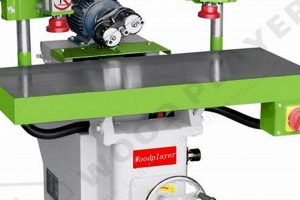
A specialized woodworking apparatus shapes lumber on all four sides in a single pass. This efficient device streamlines the production of intricate profiles and consistent dimensions in wood products. An example is the creation of detailed trim, flooring, or cabinet components, where precision and uniformity are paramount.
The advantage of utilizing this machinery lies in its ability to increase throughput, reduce labor costs, and maintain tight tolerances. Historically, achieving comparable results required multiple passes through different machines, consuming considerable time and resources. The integrated functionality of this single unit represents a significant advancement in woodworking technology.
The subsequent discussion will address specific machine components, operational principles, maintenance protocols, and considerations for selecting the appropriate model based on production needs and material types. Understanding these aspects is crucial for optimizing performance and maximizing the return on investment.
Operational Recommendations for Four-Sided Shaping Equipment
The following guidelines aim to optimize performance and longevity of the specified woodworking apparatus. Adherence to these principles promotes efficiency and reduces potential operational hazards.
Tip 1: Material Preparation: Lumber should be properly acclimated to the operating environment prior to processing. This reduces internal stresses and minimizes the risk of warping or dimensional instability during shaping. Ensure moisture content is within the recommended range for the specific wood species.
Tip 2: Cutterhead Selection: Employ cutterheads designed for the intended profile and wood type. Incorrect geometry or excessive feed rates can lead to tear-out, excessive heat generation, and premature tool wear. Regularly inspect cutterheads for sharpness and integrity.
Tip 3: Feed Rate Optimization: Determine the appropriate feed rate based on the wood species, cutterhead design, and desired finish quality. Overly aggressive feed rates compromise surface finish and can overload the machine. Conversely, excessively slow feed rates may lead to burning or glazing of the wood surface.
Tip 4: Dust Collection Efficiency: Maintain a robust dust collection system. Efficient removal of wood shavings and dust particles not only improves air quality but also prevents buildup that can interfere with machine operation and increase the risk of fire.
Tip 5: Lubrication Schedule: Adhere to the manufacturer’s recommended lubrication schedule. Proper lubrication of bearings, gears, and other moving components minimizes friction, reduces wear, and extends the lifespan of the machine.
Tip 6: Regular Calibration: Periodically calibrate the machine to ensure accurate alignment of spindles, fences, and pressure rollers. Misalignment can lead to dimensional inaccuracies and inconsistent profiles.
Tip 7: Safety Protocols: Enforce strict adherence to all safety protocols. Operators must wear appropriate personal protective equipment, including eye and ear protection. Ensure all safety guards and interlocks are functioning correctly.
Implementing these recommendations will contribute to improved productivity, enhanced workpiece quality, and a safer operating environment. Regular adherence to these principles is crucial for realizing the full potential of the shaping equipment.
The subsequent sections will delve into specific maintenance procedures and troubleshooting techniques to further enhance operational efficiency and address potential issues.
1. Precision Shaping

Precision shaping, as it relates to the four-sided woodworking apparatus, is the defining characteristic of this machinery. It dictates the quality, consistency, and ultimately, the value of the manufactured wood product. The inherent design allows for tight tolerances and complex profiles to be achieved in a single pass, a significant advantage over traditional multi-step processes.
- Simultaneous Machining
The capacity to machine all four sides of a workpiece concurrently eliminates cumulative error associated with sequential shaping. This feature is critical for applications requiring exacting dimensions, such as window and door components, where precise fit is paramount. The elimination of multiple setups also contributes to improved efficiency.
- Cutterhead Configuration
Interchangeable cutterheads permit a wide range of profiles to be produced, from simple rectangular shapes to intricate architectural moldings. The precision ground cutterheads are designed to maintain their shape and sharpness over extended periods, contributing to consistent results. Regular inspection and maintenance of the cutterheads are essential for achieving optimal precision.
- Material Feed System
A robust and accurately calibrated feed system ensures consistent material flow through the machine. This is vital for maintaining uniform dimensions and preventing defects such as snipe or tear-out. Factors such as feed roller pressure, feed rate, and the condition of the feed rollers themselves directly impact the precision of the shaping process.
- Machine Rigidity and Stability
The structural integrity of the apparatus directly affects its ability to maintain precision during operation. A rigid frame and stable base minimize vibration and deflection, which can compromise accuracy. Regular inspection and maintenance of the machine’s structural components are crucial for ensuring long-term precision.
The facets of simultaneous machining, cutterhead configuration, material feed system, and machine rigidity all converge to define the degree of precision achievable with this woodworking equipment. The integration of these features, combined with proper operation and maintenance, enables the consistent production of high-quality wood products with exacting specifications.
2. Profile Consistency
Profile consistency, in the context of four-sided woodworking apparatus operation, refers to the uniformity of the shape and dimensions produced across multiple workpieces. This aspect is paramount for applications demanding standardized components and aesthetically pleasing results. The equipment’s capabilities directly influence the attainment of this uniformity.
- Spindle Accuracy and Stability
The precision with which the spindles rotate and maintain their position is critical. Spindle runout, vibration, or deflection introduces inconsistencies in the profile. Properly maintained and calibrated spindles are essential for achieving and sustaining consistent profiles across production runs. For example, worn bearings can cause minute variations that, while perhaps undetectable to the naked eye on a single piece, become readily apparent when assembling multiple components.
- Precise Infeed and Outfeed Mechanisms
Consistent material handling throughout the shaping process is vital for preventing profile variations. Infeed and outfeed mechanisms, including rollers, fences, and pressure plates, must maintain consistent pressure and alignment. Any slippage, misalignment, or variation in pressure leads to dimensional inconsistencies and profile distortions. Consider the manufacturing of tongue-and-groove flooring; even slight variations in the tongue or groove profile can cause assembly problems and compromise the integrity of the floor.
- Cutterhead Design and Maintenance
The geometry of the cutterhead directly determines the shape of the profile. The sharpness and condition of the cutting edges are equally important for maintaining profile consistency. Dull or damaged cutting edges result in tear-out, dimensional inaccuracies, and a degraded surface finish, all of which compromise profile consistency. Consistent sharpening practices and regular inspection are essential. An instance includes the creation of decorative moldings where the intricacy of the profile demands precisely shaped and maintained cutterheads to avoid deviations in the final appearance.
- Material Density and Moisture Content Uniformity
Variations in wood density or moisture content affect how the material responds to the cutting process. Inconsistent density leads to uneven cutting, while variations in moisture content can cause warping or dimensional changes after shaping. Properly acclimatizing lumber to the operating environment and selecting stock with consistent density characteristics are crucial for ensuring profile consistency. Imagine producing cabinet doors from lumber with differing moisture levels; the resulting doors may warp or shrink unevenly after assembly, leading to gaps and aesthetic inconsistencies.
The interplay of spindle accuracy, precise material handling, cutterhead integrity, and material uniformity collectively defines the achievable level of profile consistency with this woodworking technology. Addressing these factors systematically optimizes the equipment’s performance and ensures the reliable production of consistently shaped components. These considerations extend beyond the machine itself, encompassing material selection and environmental control, highlighting the holistic approach required for achieving optimal results.
3. Material Feed Rate

Material feed rate, in the context of a four-side moulder woodworking machine, represents the speed at which lumber is advanced through the cutting heads. This parameter exerts a profound influence on both the quality of the finished product and the operational efficiency of the machinery. An excessively high feed rate, for example, can result in tear-out, chipping, or a rough surface finish, particularly when processing hardwoods or materials with complex grain patterns. Conversely, an excessively low feed rate can lead to burning or glazing of the wood surface due to prolonged exposure to the rotating cutters. The optimal feed rate is thus contingent upon factors such as wood species, cutterhead design, depth of cut, and desired surface finish. Failure to properly calibrate the feed rate can compromise the dimensional accuracy of the moulding and increase the risk of machine overload. As a specific instance, consider the production of intricate crown moulding. A slower feed rate is typically required to ensure the cutterheads can precisely shape the complex profile without inducing defects.
The selection and adjustment of the material feed rate involve consideration of the horsepower of the machine’s feeding mechanism, the number of cutting heads engaged, and the aggregate cutting load. Sophisticated moulders may incorporate variable frequency drives (VFDs) to precisely control the feed motor speed, allowing for fine-tuning based on real-time conditions. Furthermore, some machines are equipped with automatic feed rate adjustment systems that modulate the feed rate in response to changes in motor load or material characteristics. In practical applications, optimizing the material feed rate requires a balance between maximizing throughput and minimizing defects. Woodworking facilities often conduct test runs with different feed rates to determine the optimal setting for a particular combination of material, cutterhead, and desired finish quality. The data gathered from these tests informs the establishment of standard operating procedures for various production scenarios.
In summary, material feed rate constitutes a critical operational parameter in the utilization of four-side moulder woodworking machines. Improper selection or adjustment can result in diminished product quality, increased material waste, and potential damage to the machinery. The challenge lies in accurately balancing the need for efficient production with the demands of achieving a high-quality surface finish and dimensional accuracy. Continuous monitoring and refinement of feed rate settings, informed by empirical testing and operator experience, are essential for maximizing the benefits of this specialized woodworking technology.
4. Cutterhead Design

The design of cutterheads is intrinsically linked to the function and performance of four-side moulder woodworking machines. Cutterheads directly determine the shape and finish of the wood profile being produced, making their design a critical consideration in moulder operation. The following outlines key aspects of cutterhead design and their relevance to these machines.
- Profile Geometry
The geometry of the cutterhead blades dictates the shape imparted to the wood. Cutterheads are manufactured with various profiles ranging from simple squares and rounds to complex architectural moldings. Precision grinding of the blade profile is essential for achieving accurate and consistent results. For example, a cutterhead designed for producing crown molding will incorporate intricate curves and angles that define the shape of the molding. Any deviation from the intended geometry results in a flawed or inaccurate profile.
- Number of Knives
The number of knives (or blades) on a cutterhead influences the feed rate and surface finish. A higher number of knives typically allows for a faster feed rate while maintaining a smooth surface. However, increasing the number of knives also increases the complexity and cost of the cutterhead. Generally, more knives equates to a cleaner cut at higher speeds. Fewer knives are typically used with hard woods or unique profiles. The number of knives should be selected based on machine horsepower and the specific material to be moulded.
- Cutterhead Material and Hardness
The material composition and hardness of the cutterhead directly impact its durability and lifespan. High-speed steel (HSS) and carbide are commonly used materials, with carbide offering superior wear resistance, particularly when machining abrasive materials. The hardness of the cutterhead must be sufficient to withstand the forces exerted during cutting without deformation or premature wear. A cutterhead made from inferior material would require more frequent sharpening or replacement, significantly increasing operational costs and downtime. This impacts the quality of the shaping machine itself, as well as the precision of the cut it provides.
- Balancing and Vibration
A properly balanced cutterhead is crucial for minimizing vibration and ensuring smooth operation. Unbalanced cutterheads can cause chatter marks on the workpiece, reduce machine lifespan, and pose a safety hazard. Cutterheads are typically balanced dynamically to account for variations in blade weight and distribution. Regular inspection and balancing are essential to maintain optimal performance and extend machine life. An imbalance in the rotating cutterhead assembly can cause the four-side moulder woodworking machine to vibrate, creating an unsafe and inaccurate cut.
These factors underscore the significance of cutterhead design in the operation of four-side moulder woodworking machines. The selection of the appropriate cutterhead, based on profile requirements, material properties, and machine capabilities, is paramount for achieving high-quality results and maximizing the efficiency of the woodworking process. Each parameter must be thoroughly vetted before each usage, or set of usages.
5. Dust Extraction
The integration of dust extraction systems with four-side moulder woodworking machines is not merely an ancillary consideration; it is a fundamental requirement for safe, efficient, and high-quality operation. These machines generate substantial quantities of wood dust and shavings as they shape lumber on all four sides simultaneously. Without effective dust extraction, this airborne particulate matter poses significant health risks to operators, degrades machine performance, and compromises the finish quality of the wood products. The cause-and-effect relationship is direct: wood dust liberated by the shaping process becomes a hazardous inhalant and a pervasive contaminant if not captured at the source. The importance of dust extraction is amplified by the enclosed nature of many moulder cutting zones, which concentrates the airborne particulate matter.
Practical applications of robust dust extraction systems are evident in the reduction of respiratory illnesses among woodworking personnel and the minimization of fire hazards associated with accumulated dust. For example, compliant systems typically incorporate high-velocity, low-volume (HVLV) collection points strategically positioned near each cutterhead. These points draw dust and shavings into a network of ductwork leading to a central dust collector. This collector, often employing cyclones and filters, separates the particulate matter from the airstream. Properly sized ductwork and adequate airflow are critical to maintaining capture velocity and preventing dust from settling within the system. An undersized or poorly designed system will struggle to handle the volume of dust generated, leading to reduced efficiency and increased exposure.
In conclusion, effective dust extraction is an inseparable component of four-side moulder woodworking machine operation. It ensures a safer working environment, protects the machine from dust-related malfunctions, and contributes to a cleaner, more consistent finished product. Challenges associated with dust extraction include the complexity of designing systems that effectively capture dust from multiple cutting heads and the ongoing maintenance required to keep these systems operating at peak performance. Recognizing the practical significance of this connection is paramount for woodworking businesses seeking to optimize their production processes and uphold a commitment to worker safety and environmental responsibility.
6. Operational Safety

Operational safety is paramount when utilizing four-side moulder woodworking machines. The inherent design of these machines, with rapidly rotating cutterheads and powerful feed mechanisms, presents potential hazards that necessitate strict adherence to safety protocols and procedures. Neglecting safety considerations can lead to severe injuries, equipment damage, and significant production downtime.
- Guarding and Interlocks
Effective guarding and interlock systems are essential for preventing accidental contact with moving parts. Guards should fully enclose cutterheads and feed rollers, while interlocks should automatically shut down the machine if a guard is opened during operation. For example, if a cutterhead guard is removed, the machine must immediately cease operation to prevent potential injury to the operator. Regular inspection and maintenance of guards and interlocks are crucial for ensuring their proper functionality.
- Emergency Stop Mechanisms
Readily accessible emergency stop mechanisms are vital for quickly halting machine operation in the event of an unforeseen situation. These mechanisms should be strategically located around the machine to enable operators to react swiftly to hazards. Consistent testing of emergency stop functions is necessary to confirm their reliability and ensure that all operators are familiar with their location and operation. For instance, a large, mushroom-shaped button that cuts power to all motors upon activation.
- Personal Protective Equipment (PPE)
Mandatory use of appropriate personal protective equipment (PPE) is fundamental for minimizing the risk of injury. PPE should include, at minimum, eye protection (safety glasses or goggles), hearing protection (earplugs or earmuffs), and respiratory protection (dust mask or respirator). The specific type of respiratory protection required depends on the level of dust exposure. For example, when changing cutterheads, heavy-duty work gloves must be worn, to protect hands from lacerations or crushing injuries.
- Proper Training and Procedures
Comprehensive training and adherence to established operating procedures are critical for safe machine operation. Operators must be thoroughly trained on all aspects of machine setup, operation, maintenance, and troubleshooting. Clear and concise written procedures should be readily available and consistently followed. Routine training assessments should ensure that all staff are fully aware of safety protocols and emergency procedures. An example involves a detailed pre-operation checklist that includes verifying guard placement and the functionality of emergency stops before commencing work.
These safety measures are not merely recommendations but rather integral components of responsible four-side moulder woodworking machine operation. Diligent implementation and consistent enforcement of these protocols are essential for protecting operators, preserving equipment integrity, and maintaining a safe and productive work environment. The synthesis of guarding mechanisms, emergency stops, mandated PPE, and comprehensive training produces the best safety conditions in this kind of setting.
7. Machine Maintenance

The operational longevity and performance consistency of a four-side moulder woodworking machine are directly contingent upon diligent and comprehensive maintenance practices. Neglecting routine maintenance precipitates a cascade of adverse effects, ranging from diminished cutting precision to catastrophic mechanical failure. The intricate configuration of this machinery, characterized by multiple cutterheads, feed mechanisms, and drive systems, necessitates a structured maintenance regimen to preemptively address potential problems. For example, inadequate lubrication of spindle bearings leads to increased friction, elevated operating temperatures, and ultimately, bearing failure, disrupting production schedules and incurring substantial repair costs.
Practical instances of maintenance impacting performance are readily observable in woodworking facilities. Regular sharpening and alignment of cutterheads, for instance, are essential for maintaining profile accuracy and surface finish quality. A dull or misaligned cutterhead produces substandard mouldings, increasing material waste and necessitating rework. Likewise, the proper tensioning and alignment of feed rollers are crucial for consistent material feeding, preventing slippage or jamming. Failure to maintain these components results in dimensional inconsistencies and compromised output. Routine checks of pneumatic and hydraulic systems ensure consistent pressure and fluid levels, preventing erratic operation of clamping mechanisms and feed drives. Proper maintenance of dust extraction systems ensures efficient removal of wood particles, preventing accumulation that can damage machine components and create fire hazards.
In summary, machine maintenance is not an optional addendum but an integral component of four-side moulder woodworking machine operation. The challenges associated with maintaining these complex machines include the diverse range of components requiring attention and the specialized knowledge needed for effective troubleshooting. Adherence to a structured maintenance schedule, incorporating both preventative and corrective measures, is paramount for maximizing machine uptime, minimizing repair costs, and ensuring the consistent production of high-quality wood mouldings. This proactive approach ultimately contributes to the long-term profitability and competitiveness of woodworking operations.
Frequently Asked Questions
This section addresses common inquiries regarding the selection, operation, and maintenance of four-side moulder woodworking machines. The information provided is intended to offer clarity on key aspects of these specialized woodworking apparatuses.
Question 1: What are the primary advantages of using a four-side moulder woodworking machine compared to traditional methods?
The primary advantages lie in increased efficiency and precision. This apparatus shapes all four sides of a workpiece in a single pass, reducing labor costs and minimizing the potential for dimensional inaccuracies that can arise from multiple setups on separate machines.
Question 2: What factors should be considered when selecting a four-side moulder woodworking machine for a specific application?
Key factors include the required production volume, the size and complexity of the desired profiles, the types of wood species to be processed, and the available budget. Machine horsepower, spindle configuration, and feed rate capabilities should be evaluated in relation to these requirements.
Question 3: How often should the cutterheads on a four-side moulder woodworking machine be sharpened?
The frequency of cutterhead sharpening depends on the type of wood being processed, the volume of production, and the material of the cutterhead blades. Regular inspection of the cutting edges is essential, and sharpening should be performed when the quality of the cut begins to degrade.
Question 4: What are the critical safety precautions that must be observed when operating a four-side moulder woodworking machine?
Critical safety precautions include the use of appropriate personal protective equipment (PPE), such as safety glasses, hearing protection, and dust masks; ensuring that all guards and interlocks are functioning correctly; and adhering to established operating procedures. Lockout/tagout procedures must be followed during maintenance and repair.
Question 5: What are some common causes of profile inconsistencies when using a four-side moulder woodworking machine?
Common causes of profile inconsistencies include dull or misaligned cutterheads, variations in material density or moisture content, improper feed rate settings, and excessive machine vibration. Regular maintenance and careful monitoring of these factors are essential for achieving consistent results.
Question 6: What is the recommended procedure for cleaning and maintaining a four-side moulder woodworking machine?
The recommended procedure includes regular cleaning of dust and debris from all machine components, lubrication of moving parts according to the manufacturer’s recommendations, inspection of belts and pulleys for wear or damage, and periodic alignment checks to ensure proper machine operation. Maintaining efficient dust extraction is also paramount.
In summary, a thorough understanding of these frequently asked questions is essential for maximizing the benefits and minimizing the risks associated with four-side moulder woodworking machines. Addressing these considerations proactively contributes to improved productivity, enhanced product quality, and a safer working environment.
The subsequent section will provide a glossary of key terms related to these machines.
Concluding Remarks
This exposition has underscored the multifaceted nature of the 4 side moulder woodworking machine, encompassing its operational principles, maintenance requisites, and safety protocols. The capacity of this equipment to enhance production efficiency and achieve precise shaping is contingent upon a comprehensive understanding of its design features and the factors influencing its performance.
Effective implementation of the knowledge presented herein is crucial for maximizing the return on investment and upholding the standards of quality and safety within woodworking operations. Continued vigilance in maintenance practices and adherence to established safety guidelines will ensure the sustained functionality and optimal utilization of this specialized woodworking technology.