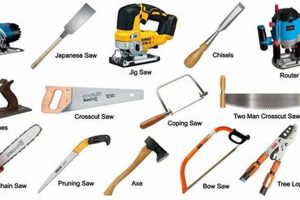
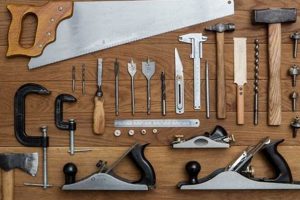
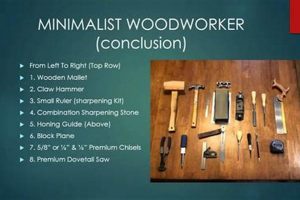
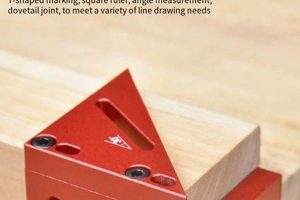
The fundamental implements required for initiating projects involving shaping wood are varied and depend on the complexity and scale of the intended work. These may range from simple hand-powered instruments used for cutting and shaping, to more complex power-driven machinery for precision and efficiency. For example, a beginner’s kit might include a hand saw, chisels, a measuring tape, and safety glasses.
Acquiring the basic set is a crucial first step for aspiring woodworkers. It provides the means to execute designs, develop skills, and realize creative visions. Historically, the craft relied heavily on manual skills and essential tools. This foundation remains valuable today, fostering a connection to the materials and an understanding of traditional techniques, while allowing for exploration of modern techniques.
Understanding the essential implements is key. Therefore, subsequent discussion will focus on the specific instruments suitable for beginners, considering factors such as budget, project scope, and safety, ensuring a smooth and rewarding entry into the craft.
Guidance on Essential Implements for Beginning Woodworkers
The following are recommended considerations when building an initial set of woodworking instruments, intended to promote safety, efficiency, and successful project outcomes.
Tip 1: Prioritize Safety Equipment. Eye protection, hearing protection, and dust masks are paramount. Failure to utilize these items can lead to irreversible harm. Invest in quality safety gear before acquiring any cutting or shaping implements.
Tip 2: Start with Hand Tools. Hand saws, chisels, and hand planes provide a foundational understanding of woodworking principles. Working with these requires more physical engagement, thereby enhancing sensitivity to the material.
Tip 3: Acquire Accurate Measuring Devices. A quality measuring tape, combination square, and marking gauge are indispensable for precision. Inaccurate measurements lead to flawed projects and wasted materials.
Tip 4: Select Versatile Clamps. Clamps secure workpieces during assembly and glue-ups. Begin with an assortment of bar clamps, pipe clamps, and spring clamps to accommodate various project sizes and shapes.
Tip 5: Invest in a Durable Work Surface. A sturdy workbench provides a stable platform for all woodworking activities. Ensure the workbench is level and equipped with vises to hold workpieces securely.
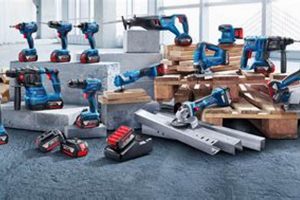
Tip 6: Consider Power Tools Strategically. While hand tools are valuable for learning, power tools such as a drill/driver and a circular saw can increase efficiency for larger projects. Choose quality tools from reputable brands.
Tip 7: Maintain Sharp Cutting Edges. Dull tools are dangerous and produce poor results. Learn to sharpen chisels, plane irons, and saw blades. A sharpening stone or honing guide is essential for this purpose.
Tip 8: Store Tools Properly. Organize tools in a designated area to prevent damage and facilitate easy access. A tool chest or wall-mounted rack ensures tools are readily available and protected from the elements.
Adhering to these recommendations establishes a solid base for developing woodworking skills. Focusing on safety, fundamental techniques, and precise measurements is vital to produce well-crafted projects.
With a well-curated collection of instruments and a commitment to safety and technique, the aspiring woodworker can confidently embark on creative endeavors and refine woodworking abilities.
1. Essential Hand Tools

The term “what tools to start woodworking” intrinsically encompasses a subset of instruments known as “essential hand tools.” This relationship is one of a broader category and a key constituent. The presence and skillful use of these hand tools directly influences the ability to effectively shape and join wood. For example, a hand saw is crucial for making accurate cuts prior to the acquisition of power tools. Similarly, a set of chisels is essential for refining joinery and carving details, tasks often performed by hand even in advanced woodworking. The lack of these core instruments impedes progress and restricts the scope of achievable projects.
Essential hand tools impart a fundamental understanding of woodworking principles. Working with these instruments requires manual dexterity and a feel for the material. Unlike power tools, hand tools provide direct feedback, allowing the woodworker to sense the wood’s grain and resistance. This tactile experience translates into improved control and precision. For instance, properly sharpened hand planes produce surfaces of exceptional smoothness, a quality not easily replicated by machine. Likewise, hand-cut dovetail joints exemplify precision joinery attainable through skillful use of chisels and saws. This direct interaction with the material is a cause of both improved skill and greater insight into the material’s properties and how to work it.
Therefore, while advanced power tools may enhance efficiency, essential hand tools remain a cornerstone of the craft. Mastering these tools equips the woodworker with a solid foundation, fostering a deeper understanding of the material and promoting a more deliberate approach to the craft. This mastery provides a unique capability when working with wood. The “tools to start woodworking” must always include a core selection of hand-operated instruments.
2. Accurate Measurement
The phrase “what tools to start woodworking” inherently necessitates the inclusion of instruments for accurate measurement. The selection of measuring implements directly dictates the precision and fit of the final product. Deficiencies in accuracy during the measuring phase cascade into dimensional errors throughout the project. For instance, failure to precisely measure and mark components of a cabinet can result in misaligned doors, drawers that bind, and an overall compromised structural integrity. This illustrates how inaccurate measurement, stemming from inadequate measuring tools, undermines the entire endeavor.
The interdependence of accurate measurement and successful woodworking extends beyond simple dimensioning. Angle finding and marking tools are also essential. A combination square, for example, allows for marking consistent right angles, critical for constructing square frames and ensuring perpendicularity in joinery. A marking gauge provides parallel lines, crucial for consistent mortise and tenon layouts. Without these, reproducing accurate angles and parallel lines becomes challenging, resulting in weak joints and aesthetically displeasing outcomes. Accurate layout and marking depend on this subset of instruments being included as primary components for starting the craft.
In summary, the ability to execute precise measurements is fundamental to competent woodworking. The selection of appropriate measuring tools including tape measures, squares, and marking gauges directly influences the dimensional accuracy and overall quality of woodworking projects. Neglecting this critical aspect of “what tools to start woodworking” leads to inevitable errors, wasted material, and compromised outcomes. The tools dedicated to accuracy are indispensable.
3. Effective Cutting
The phrase “what tools to start woodworking” inherently presumes the capability of effective material division, a function directly enabled by cutting instruments. Effective cutting, therefore, is not merely an ancillary skill, but a core requirement. The inability to divide stock accurately and cleanly renders subsequent woodworking operations, such as joinery and shaping, significantly more challenging or altogether impossible. For instance, attempting to construct a frame with poorly cut lumber results in mismatched joints, structural weakness, and aesthetic flaws. Consequently, the selection of appropriate cutting implements directly determines the feasibility and quality of woodworking projects.
The relationship between cutting tools and successful outcomes extends beyond basic dimensional division. The type of cutting tool employed influences the surface quality of the cut edge. A dull saw blade, for example, produces a ragged edge requiring extensive cleanup, whereas a sharp blade yields a clean, smooth surface requiring minimal refinement. This difference significantly impacts the efficiency of the woodworking process and the final appearance of the project. Furthermore, specialized cutting tools, such as coping saws or band saws, enable the creation of curved shapes and intricate details that would be difficult or impossible to achieve with simpler cutting instruments. The ability to execute complex cuts expands the scope of design possibilities and allows for more ambitious projects.
In conclusion, “effective cutting” is a foundational component of any woodworking endeavor and, as such, constitutes a critical element of “what tools to start woodworking.” The choice of cutting implements, their sharpness, and the operator’s skill in their use directly determine the accuracy, efficiency, and ultimate success of any woodworking project. Without the capacity for effective material division, the pursuit of woodworking becomes significantly more challenging and less rewarding. This skill is vital, and cannot be dismissed when selecting essential beginning equipment.
4. Reliable Fastening

The query “what tools to start woodworking” intrinsically encompasses the capability of reliably joining wood components. Effective fastening is not merely a supplementary action; it is a critical requirement for producing structurally sound and aesthetically pleasing finished pieces. The inability to securely and permanently connect wooden parts compromises the integrity and longevity of any woodworking project. For example, a table constructed with inadequately fastened legs will be unstable and prone to collapse under normal use. This demonstrates that reliable fastening, facilitated by appropriate tools and techniques, is fundamental to successful woodworking outcomes.
The interdependence of reliable fastening and successful woodworking extends beyond basic structural integrity. The choice of fastening method and corresponding tools influences the appearance and functionality of the final product. Screws, nails, and adhesives each offer distinct advantages and disadvantages depending on the specific application. Furthermore, specialized tools, such as clamps and vises, are essential for maintaining proper alignment and pressure during the fastening process. Neglecting these tools and techniques can result in misaligned joints, weakened bonds, and an overall compromised aesthetic. For example, a poorly clamped glue joint can result in gaps and uneven surfaces, detracting from the overall appearance and structural integrity of the piece.
In summary, secure and durable joints are necessary. The selection of appropriate tools including screwdrivers, nail guns, clamps, and adhesives directly influences the strength, appearance, and lifespan of projects. Overlooking this central aspect when considering “what tools to start woodworking” inevitably leads to structural flaws, visual imperfections, and ultimately, a diminished woodworking experience. The capacity for reliable joinery is integral to competent woodworking, making the relevant tools non-negotiable for beginners.
5. Safe Practices
The understanding of “what tools to start woodworking” is inextricably linked to the adoption of safe practices. Unsafe tool handling directly leads to injuries, ranging from minor cuts to severe lacerations and even permanent disabilities. For instance, neglecting to wear eye protection when operating a power saw creates a significant risk of wood fragments entering the eye, resulting in potential vision impairment. The correct utilization of woodworking instruments necessitates comprehensive knowledge of safety protocols. Therefore, safe practices are not merely an optional addition to the craft, but a fundamental prerequisite for engaging in it responsibly.
The effective integration of safe practices into woodworking directly affects the longevity and quality of the woodworker’s career. Consistent adherence to safety guidelines, such as wearing appropriate personal protective equipment (PPE) and maintaining a clean and organized workspace, minimizes the risk of accidents and promotes a sustainable approach to the craft. For example, the consistent use of dust collection systems when sanding or sawing reduces exposure to harmful airborne particles, mitigating the risk of respiratory illnesses. Furthermore, properly maintaining tools, such as sharpening blades and inspecting power cords, prevents malfunctions that could lead to injuries. A proactive approach to safety ensures that the individual can continue woodworking for many years to come, without the setbacks and limitations imposed by preventable injuries.
In conclusion, “safe practices” constitute a critical, inseparable component of “what tools to start woodworking.” The acquisition and utilization of woodworking tools are inherently tied to the responsibility of practicing safe techniques and adhering to safety regulations. Failure to prioritize safety not only increases the risk of injury but also undermines the long-term sustainability of woodworking as a fulfilling and productive endeavor. Thus, a comprehensive understanding of “what tools to start woodworking” necessarily includes a commitment to and implementation of safe practices.
6. Material Preparation

The selection process for “what tools to start woodworking” fundamentally includes implements designed for material preparation. Preparing stock is not a supplementary stage, but an indispensable prerequisite for achieving accurate dimensions, smooth surfaces, and structurally sound joints. The omission of tools necessary for material preparation renders subsequent woodworking operations significantly more difficult and compromises the final quality of the project. Consider, for example, attempting to assemble a frame from lumber that is warped or uneven in thickness. The resulting joints will be weak and aesthetically displeasing, necessitating extensive rework or rendering the project unusable. Therefore, the inclusion of tools for material preparation is essential for initiating any woodworking endeavor.
The interplay between material preparation and successful woodworking transcends mere dimensional accuracy. The condition of the wood surface directly impacts the adhesion of finishes and the overall appearance of the finished piece. Rough or uneven surfaces require excessive sanding and may still exhibit imperfections after finishing. In contrast, properly planed and smoothed surfaces readily accept finishes, resulting in a more professional and durable result. Furthermore, tools designed for preparing joinery surfaces, such as rabbet planes or marking gauges, ensure accurate and tight-fitting joints. These joints maximize structural integrity and minimize the need for fillers or other corrective measures. Examples include using a hand plane to create a perfectly flat surface for a tabletop or employing a marking gauge to establish consistent mortise and tenon dimensions.
In summary, proper material preparation is crucial for woodworking. Tools for planing, jointing, and marking form an inseparable part of what tools to start woodworking. The selection affects the project, and neglecting this element increases the probability of imperfections. The need to understand the material preparation processes leads to more professional result.
Frequently Asked Questions
The following addresses common inquiries related to selecting instruments for individuals initiating woodworking projects.
Question 1: Is it necessary to purchase an entire workshop of tools immediately upon starting woodworking?
No. Beginning woodworkers benefit from acquiring a core set of essential hand tools. These instruments facilitate the development of fundamental skills and provide a deeper understanding of woodworking principles before investing in more expensive power tools. Gradual expansion of tool collection is advisable.
Question 2: What are the most critical safety tools for beginner woodworkers?
Eye protection, hearing protection, and a dust mask are paramount. Safety glasses shield against flying debris, earplugs or earmuffs prevent hearing damage from loud machinery, and a dust mask minimizes inhalation of harmful particles. Investment in quality safety equipment is non-negotiable.
Question 3: How important is tool quality for beginners?
While professional-grade tools are not essential, purchasing low-quality instruments can impede progress and lead to frustration. Mid-range tools from reputable brands strike a balance between affordability and performance. Tools that can be easily sharpened and adjusted are preferred.
Question 4: What is the best way to learn how to use woodworking tools properly?
Formal woodworking classes, online tutorials, and mentorship from experienced woodworkers are valuable resources. Practicing fundamental techniques on scrap wood and consulting instructional materials promote skill development. Patience and persistence are essential.
Question 5: Should beginners focus on hand tools or power tools first?
Starting with hand tools provides a solid foundation in woodworking principles. Hand tools cultivate a tactile understanding of the material and enhance control over the shaping process. Power tools can be gradually introduced as skills develop and project scope expands.
Question 6: What are the essential measuring tools for woodworking?
A quality measuring tape, combination square, and marking gauge are indispensable. Accurate measurements are critical for achieving precise cuts and joinery. Inaccurate measurements can lead to flawed projects and wasted materials. It is necessary to invest in accurate devices.
Selecting the right tools is an iterative process informed by experience. Beginning with a small inventory helps set a foundation.
The subsequent section will explore a detailed equipment list by cost.
Conclusion
The preceding discussion analyzed the constituent components of “what tools to start woodworking.” Emphasis was placed on essential hand instruments, accurate measurement devices, effective cutting implements, reliable fastening methods, safe practices, and the necessities for material preparation. The exploration detailed the interdependencies of these elements and their impact on project outcomes, efficiency, and the woodworker’s safety. Fundamental importance was also given to the learning stages to start with an affordable number of equipments before to add more ones.
The careful selection of woodworking implements represents an investment in both skill development and creative potential. Prudence dictates a measured acquisition strategy, prioritizing safety equipment and foundational hand tools. Continued learning, combined with practical experience, refine selection, as the foundation that will allow you to become a well skilled craftsman.
![Smart & Clever Woodworking Tools: [Your Woodworking Goals] | Step-by-Step Guides, Tools & Inspiration to Build Beautiful Wooden Decor on a Budget](https://woodfromhome.com/wp-content/uploads/2026/04/th-305-300x200.jpg "Smart & Clever Woodworking Tools: [Your Woodworking Goals] Step-by-Step Guides, Tools & Inspiration to Build Beautiful Wooden Decor on a Budget")