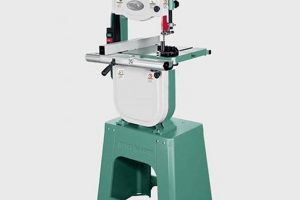
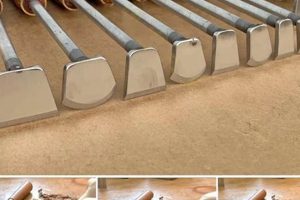
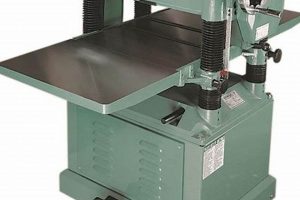
Devices employed in shaping and crafting wood are central to the creation of furniture, structures, and artistic pieces. These implements encompass a wide range, from hand-operated saws and chisels to power-driven routers and planers. Their selection depends significantly on the complexity of the project and the desired level of precision. For example, a delicate carving might necessitate the use of fine-pointed hand tools, while constructing a large cabinet might benefit from the efficiency of powered machinery.
The value of reliable, high-quality implements in woodworking cannot be overstated. They ensure accuracy, increase efficiency, and contribute significantly to the longevity and aesthetic appeal of the final product. Historically, the development of improved tools has directly correlated with advancements in woodworking techniques and design. Durable construction, ergonomic design, and precision engineering are key attributes that contribute to a craftsperson’s ability to produce exceptional work, reduce material waste, and maintain safety within the workshop environment.
Subsequent sections will delve into specific categories of woodworking equipment, discussing their applications, maintenance, and selection criteria. Particular attention will be given to understanding the features that distinguish superior instruments and the factors to consider when building a comprehensive collection for a diverse range of woodworking projects.
Woodworking Instrument Best Practices
The following guidelines are presented to optimize the lifespan and effectiveness of woodworking implements, promoting safety and precision in all projects.
Tip 1: Sharpen Regularly. Consistent sharpening is paramount. A dull blade necessitates excessive force, increasing the risk of slippage and compromising cut quality. Utilize appropriate sharpening stones or mechanical sharpeners based on the tool type and steel composition.
Tip 2: Maintain Cleanliness. Sawdust accumulation hinders performance and promotes corrosion. After each use, thoroughly clean tools with a brush and apply a light coat of rust preventative to exposed metal surfaces.
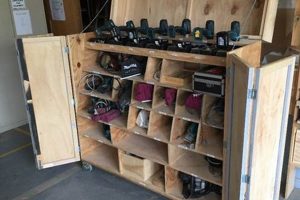
Tip 3: Store Properly. Secure and organized storage prevents damage and ensures easy access. Utilize dedicated tool chests, racks, or shadow boards to keep instruments separated and protected from impact.
Tip 4: Calibrate Power Tools. Regular calibration of power tools, such as planers and jointers, is crucial for accuracy. Verify fence alignment, blade parallelism, and table flatness periodically, making adjustments as needed per the manufacturer’s specifications.
Tip 5: Use Appropriate Safety Gear. Eye protection, hearing protection, and dust masks are essential when operating power tools. Select safety equipment that meets or exceeds relevant safety standards and is appropriate for the specific task.
Tip 6: Choose the Right Tool for the Job. Selecting the appropriate instrument for a specific task is crucial for achieving optimal results and preventing damage to the tool. Avoid using a tool beyond its intended capacity or design limitations.
Tip 7: Inspect Before Each Use. Conduct a thorough inspection of all implements prior to each use. Check for loose parts, damaged blades, frayed cords, or any other signs of wear or malfunction. Address any issues before proceeding with the project.
Adherence to these practices extends the service life of woodworking equipment, fostering safer working conditions and enhancing the precision and quality of finished projects.
The subsequent section will present a detailed discussion of tool selection criteria based on project type and material properties.
1. Precision Manufacturing

The quality and efficacy of woodworking instruments are inextricably linked to the precision applied during their manufacturing. Close tolerances, accurate machining, and rigorous quality control are fundamental prerequisites for producing tools that deliver consistent performance. Deviations from specified dimensions, even minor ones, can lead to inaccuracies in cuts, difficulty in assembly, and premature wear, negatively impacting the final product created using the instruments. For instance, a poorly aligned fence on a power jointer will invariably result in uneven board edges, necessitating further corrective action and potentially wasting material.
The impact of precision manufacturing extends beyond mere dimensional accuracy. It also encompasses the uniformity of material properties, such as steel hardness in blades and the balance of rotating components in power tools. Uneven hardness can cause blades to dull unevenly or chip, while imbalance can lead to excessive vibration, reducing tool life and increasing the risk of user fatigue or injury. One can observe the results of precision by examining the seamless operation of a dovetail jig, where precisely machined components interact to produce perfectly interlocking joints. Conversely, a poorly made jig will yield sloppy, ill-fitting dovetails.
Consequently, understanding the role of precision manufacturing in woodworking tool design and production is crucial for informed purchasing decisions. While tools manufactured to exacting standards may command a higher initial price, their superior performance, durability, and safety often translate to long-term cost savings and enhanced project outcomes. Recognizing the tangible benefits of precision allows woodworkers to prioritize quality and invest wisely in their craft. The pursuit of precision is not merely an aspiration but a fundamental requirement for achieving excellence in woodworking.
2. Material Composition

The longevity, performance, and safety of woodworking implements are significantly influenced by the materials used in their construction. Selecting appropriate materials is paramount to ensuring that tools can withstand the stresses and demands of woodworking operations.
- Blade Steel Quality
The composition of steel used in blades directly affects sharpness retention, wear resistance, and toughness. High-carbon steels offer excellent edge retention but can be brittle. Alloy steels, incorporating elements like chromium and vanadium, enhance hardness and resistance to abrasion. For example, a plane iron made from high-speed steel will maintain a sharp edge longer than one made from standard carbon steel, allowing for smoother and more efficient planing operations. Improper steel composition can result in frequent sharpening needs, blade chipping, or premature tool failure.
- Handle Material Selection
Handle materials impact grip comfort, shock absorption, and durability. Hardwoods like ash and hickory provide strength and impact resistance, while synthetics like polypropylene offer moisture resistance and dimensional stability. The choice depends on the tool’s intended use and the working environment. A poorly chosen handle material can lead to user fatigue, reduced control, or breakage under stress. For example, a chisel with a handle made from soft wood might split upon impact, rendering the tool unusable.
- Casting and Forging Metals
Metal components formed through casting or forging, such as plane bodies or vise jaws, require specific alloys to ensure dimensional stability, strength, and resistance to deformation. Cast iron provides excellent vibration damping and is often used for machine tool bases. Forged steel offers superior strength and toughness, ideal for high-stress applications. The selection of appropriate casting or forging metals ensures that these components maintain their shape and integrity under load. A poorly cast plane body, for instance, might warp over time, leading to inaccurate cuts.
- Fastener Composition and Corrosion Resistance
The material composition of fasteners, such as screws and rivets, affects their strength, holding power, and resistance to corrosion. Steel fasteners are commonly used but can corrode in humid environments. Brass or stainless-steel fasteners offer superior corrosion resistance. The proper selection of fastener materials is critical for maintaining the structural integrity of tools and preventing premature failure due to rust or breakage. The failure of a screw holding a blade in place, for example, can create a safety hazard.
Understanding the material composition of woodworking equipment facilitates informed purchasing decisions and proper tool maintenance. Each component material is chosen to optimize its functionality and longevity within its specific application. Neglecting to consider this factor can lead to compromised tool performance, reduced lifespan, and potential safety risks. Selecting high-quality instruments constructed from suitable materials is paramount for achieving reliable and accurate results in woodworking endeavors.
3. Ergonomic design
Ergonomic design plays a crucial role in determining the usability, safety, and efficiency of woodworking instruments. Instruments engineered with ergonomic principles reduce physical strain on the user, minimizing the risk of repetitive stress injuries and enhancing overall comfort during extended use. Handle shapes, grip textures, and tool balance are all critical considerations in ergonomic design. The direct consequence of poor ergonomic design is increased user fatigue, decreased accuracy, and a higher likelihood of accidents. Tools forcing unnatural hand or wrist positions can lead to conditions such as carpal tunnel syndrome, impacting a woodworker’s long-term capabilities.
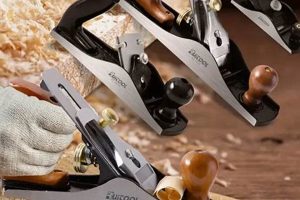
The integration of ergonomic principles is not merely a matter of comfort; it directly influences the quality of the finished product. A tool that feels natural and balanced in the hand allows for finer control and more precise movements. For example, a hand plane with a well-contoured handle and balanced weight distribution enables the user to maintain a consistent cutting angle, resulting in a smoother, more even surface. Similarly, a power tool designed with vibration dampening features reduces user fatigue and improves control, leading to cleaner cuts and reduced material waste. The effectiveness of ergonomic design is further enhanced by the use of non-slip grip materials and adjustable features that accommodate a variety of hand sizes and preferences.
Ultimately, prioritizing ergonomic design in the selection and use of woodworking equipment promotes a healthier and more productive working environment. While initial costs might be higher for ergonomically designed instruments, the long-term benefits in terms of reduced healthcare costs, increased productivity, and improved quality of work far outweigh the investment. Awareness of ergonomic principles empowers woodworkers to make informed decisions, mitigating risks and maximizing their potential. The pursuit of ergonomic excellence is an ongoing process that requires continuous evaluation of tools, techniques, and workplace layouts.
4. Longevity evaluation

Assessing the durability and expected lifespan of woodworking implements is critical for maximizing investment returns and ensuring consistent performance over time. The extended utility of tools directly correlates with their inherent quality, construction materials, and the adherence to recommended maintenance protocols. A proper longevity evaluation considers factors such as resistance to corrosion, wear characteristics of moving parts, and the availability of replacement components. For example, a hand plane constructed from high-carbon steel, properly maintained, can provide decades of accurate service, while a cheaper alternative may exhibit premature wear and diminished performance within a shorter timeframe. The impact of this evaluation is the long-term costs associated with replacement and the potential disruption to workflow caused by equipment failure.
The process of longevity evaluation involves examining manufacturer specifications, user reviews, and conducting hands-on assessments where possible. Understanding the types of materials utilized, such as hardened steel for cutting edges or durable polymers for handles, provides insight into potential failure points and expected wear rates. Observing the design and construction of critical components, such as motor housings in power tools or adjustment mechanisms in hand planes, also reveals potential vulnerabilities. Analyzing user feedback provides valuable information on the tool’s real-world performance over an extended period. A comparative analysis of different woodworking tools, accounting for initial cost and anticipated lifespan, facilitates informed decision-making and minimizes the risk of investing in equipment that will require frequent replacement.
In summary, longevity evaluation serves as a crucial component of prudent woodworking equipment selection. By understanding the factors that contribute to tool durability and performance over time, woodworkers can make informed purchasing decisions, minimizing long-term costs and ensuring reliable operation. Though initial cost might be higher for more durable instruments, the reduction in replacement expenses and downtime justifies the initial investment. Ignoring longevity evaluation increases the risk of premature tool failure, reduced productivity, and potential safety hazards within the woodworking environment.
5. Operational safety

The operational safety surrounding woodworking instruments is paramount, directly influencing user well-being and project outcomes. The potential for injury when working with sharp blades, high-speed machinery, and airborne particulate matter necessitates strict adherence to safety protocols. Protective equipment, such as eye protection, hearing protection, and respiratory masks, are compulsory. Furthermore, understanding and implementing safe operating procedures for each tool is fundamental. A malfunctioning safety switch on a power saw, for instance, can have catastrophic consequences. Consequently, consistent equipment inspection and maintenance are indispensable for mitigating risks.
Effective operational safety extends beyond personal protective measures. It encompasses workplace organization and safe tool handling. Properly grounded electrical systems prevent electrocution hazards. Adequate ventilation minimizes the inhalation of harmful dust and fumes. Ensuring that all instruments are used within their specified capacity and for their intended purpose reduces the likelihood of accidents. For instance, forcing a dull blade can cause kickback, leading to severe injury. Routine safety training and periodic audits of workshop practices are crucial for reinforcing a culture of safety. Detailed instructions on tool usage and potential hazards should be readily accessible and consistently reviewed.
Ultimately, operational safety is not merely a set of rules but an integral component of skilled woodworking. A commitment to safety fosters a productive and sustainable working environment. The absence of a rigorous safety mindset directly increases the risk of accidents, jeopardizing both the individual and the broader woodworking community. Thus, prioritizing safety is not optional but essential for responsible and successful woodworking practices. Continual education and adherence to established safety standards safeguard against potential harm and contribute to the longevity of the craft.
Frequently Asked Questions about Woodworking Instruments
The following addresses common inquiries regarding woodworking tools, aiming to provide clarification and guidance for both novice and experienced woodworkers.
Question 1: What are the fundamental woodworking instruments every beginner should acquire?
A basic set includes a hand saw, a set of chisels, a hand plane, a measuring tape, a combination square, and a sharpening stone. These implements facilitate fundamental woodworking tasks such as cutting, shaping, and joining wood.
Question 2: How frequently should woodworking blades undergo sharpening?
Sharpening frequency depends on the type of wood being worked and the tool’s usage. As a general guideline, blades should be sharpened whenever a noticeable decrease in cutting efficiency is observed or if the blade exhibits signs of dullness.
Question 3: What are the essential safety precautions to observe while operating power-driven woodworking instruments?
Always wear appropriate safety gear, including eye and hearing protection. Ensure that all safety guards are in place and functioning correctly. Familiarize with the tool’s operating manual before use. Maintain a clean and organized workspace to minimize hazards.
Question 4: How does the type of wood influence the selection of a woodworking implement?
Hardwoods require more robust and sharper tools compared to softwoods. Specialized blades and techniques may be necessary for working with hardwoods to prevent tear-out or splintering.
Question 5: What are the optimal storage practices for woodworking tools to prevent corrosion and damage?
Store tools in a dry environment. Apply a light coat of oil to metal surfaces to prevent rust. Keep blades protected with sheaths or in dedicated tool holders. Organize tools to prevent contact and potential damage.
Question 6: How does the selection of handle material affect the usability and longevity of a woodworking instrument?
Handles should provide a comfortable and secure grip. Hardwoods like hickory and ash offer durability and shock absorption. Synthetic materials provide resistance to moisture and dimensional stability. The choice depends on the tool’s intended use and the working environment.
These FAQs offer guidance on basic woodworking practices and equipment usage. Following this advice can extend equipment life and improve project quality.
Next, this article shall discuss the latest innovation within this industry
Conclusion
This exploration of woodworking implements, including those offered by entities such as fox woodworking tools, has underscored the importance of precision manufacturing, suitable material selection, ergonomic design, longevity considerations, and rigorous operational safety. These elements are not merely desirable features but fundamental prerequisites for achieving excellence in woodworking. Proper understanding of these factors empowers woodworkers to make informed decisions regarding equipment acquisition and utilization.
Continued adherence to best practices in tool maintenance and operation, coupled with ongoing evaluation of emerging technologies, will undoubtedly shape the future of woodworking. The enduring legacy of craftsmanship relies on both skill and the judicious application of appropriate instruments. The diligent application of these principles will foster sustainable and successful woodworking endeavors.