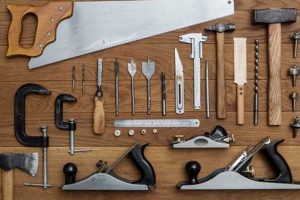
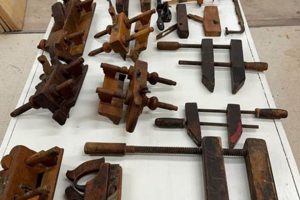
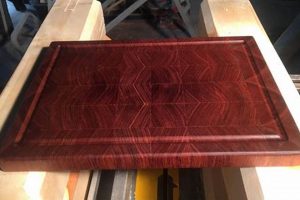
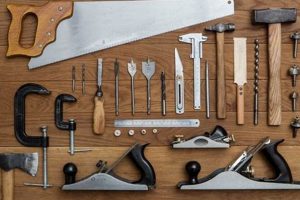
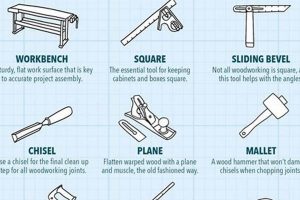
Implements employed in shaping and constructing objects from timber are fundamental to woodworking. These instruments, ranging from manual devices to power-driven machines, enable the manipulation of wood for diverse applications. An example includes a hand plane used to smooth a wooden surface.
The significance of these implements lies in their ability to transform raw materials into functional and aesthetically pleasing items. Historically, the evolution of woodworking coincided with the development of specialized implements. This progress resulted in increased efficiency, precision, and versatility in crafting wooden structures and objects.
The subsequent sections will examine specific categories of these instruments, highlighting their functionality and relevance in modern and traditional woodworking practices.
Essential Guidance for Woodworking Implements
This section offers essential guidance related to the selection, maintenance, and utilization of implements in the craft of woodworking. Adherence to these recommendations will promote safety, accuracy, and longevity in woodworking projects.
Tip 1: Selection Based on Project Requirements: Choose the appropriate implement for each specific task. For instance, a dovetail saw is suited for intricate joinery, while a circular saw is more efficient for cutting sheet goods.
Tip 2: Maintenance of Cutting Edges: Regularly sharpen blades and cutting edges. Dull implements require more force, increasing the risk of accidents and producing subpar results. A honing guide can assist in maintaining consistent angles during sharpening.
Tip 3: Proper Storage Procedures: Store implements in a dry, organized environment. Moisture can cause rust and corrosion, while disorganization can lead to damage and difficulty in locating specific instruments. Toolboxes and racks offer effective storage solutions.
Tip 4: Adherence to Safety Protocols: Always wear appropriate safety gear, including eye protection and hearing protection, when operating power-driven implements. Familiarize oneself with the operating manuals and safety features of each instrument prior to use.
Tip 5: Understanding Grain Direction: When working with wood, consider the grain direction. Cutting against the grain can result in splintering and tear-out. Adjust cutting techniques and implement selection to mitigate these issues.
Tip 6: Calibration and Adjustment: Periodically calibrate and adjust implements, particularly power tools. Ensure fences are square, blades are aligned, and measuring devices are accurate. Regular calibration ensures precise and consistent outcomes.
Effective employment and maintenance of these instruments enhance the quality, safety, and longevity of woodworking endeavors.
The concluding segment of this article will address recent innovations and advancements in woodworking technology.
1. Precision
Precision in woodworking refers to the degree of accuracy and exactness achieved in the execution of cuts, joinery, and overall dimensions of a project. The selection and proper utilization of woodworking instruments are paramount to achieving this level of accuracy.
- Instrument Calibration and Adjustment
The precise calibration of woodworking instruments is critical for ensuring accuracy. This includes verifying the squareness of saw fences, the alignment of blades, and the accuracy of measuring devices like levels and squares. For example, a jointer with an improperly aligned fence will produce uneven edges, hindering precise joinery. Regular adjustment and calibration of implements are therefore essential for maintaining high precision.
- Cutting Edge Sharpness
The sharpness of a cutting edge directly affects the precision of a cut. Dull blades require more force, leading to increased vibration and a higher likelihood of inaccurate cuts or tear-out. Sharp tools, such as chisels and planes, allow for clean and controlled material removal. Maintaining sharp cutting edges is thus fundamental for achieving precise results in woodworking.
- Measurement and Marking Accuracy
Accurate measurement and marking are prerequisite steps to precise woodworking. The use of high-quality measuring instruments, such as precision rulers, calipers, and marking gauges, is necessary. These tools enable the transfer of dimensions and the establishment of accurate reference lines. For instance, a precise marking gauge ensures consistent depth when cutting mortises, contributing to overall joinery precision.
- Material Properties and Stability
The inherent properties of wood, such as grain direction, density, and moisture content, influence the precision of woodworking operations. Understanding these properties and employing appropriate techniques, such as accounting for wood movement due to moisture changes, is necessary for maintaining dimensional accuracy. The stability of workpieces during machining, achieved through proper clamping and support, also contributes to precision.
The interplay between instrument quality, calibration, cutting edge sharpness, accurate measurement techniques, and an understanding of material properties collectively determines the level of precision attainable in woodworking. These elements must be carefully considered and meticulously managed to realize accurate and high-quality finished products.
2. Durability

Durability, as a characteristic of implements employed in woodwork, directly influences their operational lifespan and resistance to degradation under repeated use. The robustness of these implements dictates their capacity to withstand the stresses and strains inherent in cutting, shaping, and joining wood. The material composition, manufacturing processes, and design considerations of the implements are key determinants of their inherent durability. For example, a hand plane crafted from high-carbon steel, properly heat-treated, exhibits greater resistance to wear and deformation compared to one made from a less robust alloy. Similarly, the quality of bearings and the construction of housings in power tools affect their longevity and ability to maintain performance under sustained load. The causal relationship between implement durability and sustained performance is therefore evident; more robust tools necessitate less frequent replacement and exhibit a lower propensity for failure during critical woodworking tasks.
The practical significance of durable woodworking implements extends beyond mere cost-effectiveness. In professional settings, where implements are subjected to intensive and prolonged usage, durability directly impacts productivity and workflow continuity. A tool failure can result in project delays, material wastage, and potential safety hazards. Furthermore, the selection of durable implements reflects a commitment to sustainability and resource conservation. By minimizing the need for frequent replacements, the environmental impact associated with manufacturing and disposal processes is reduced. For instance, opting for a well-constructed hand saw with a replaceable blade, rather than a cheaper, disposable alternative, promotes long-term resource efficiency.
Ultimately, the emphasis on durability in woodworking implements represents a strategic investment in long-term performance, safety, and environmental responsibility. The initial cost of more durable implements may be higher, but the reduced frequency of replacements, the minimization of downtime, and the contribution to sustainable practices justify this investment. A thorough understanding of material properties, manufacturing techniques, and performance specifications is essential for making informed decisions regarding the durability of implements used in woodwork.
3. Ergonomics

Ergonomics, in the context of implements used for woodworking, directly concerns the design and arrangement of those implements to optimize human well-being and overall system performance. The objective is to minimize physical strain and reduce the risk of musculoskeletal disorders associated with repetitive movements and awkward postures often required in the manipulation of wood. The handle design of a hand plane, for example, significantly impacts the user’s grip and control, influencing the amount of force required and the potential for hand or wrist fatigue. Similarly, the height and angle of a workbench affect the user’s posture during tasks such as sawing or chiseling, potentially leading to back pain if improperly configured. Therefore, the ergonomic design of woodworking tools is a critical factor in preventing work-related injuries and maximizing productivity.
The practical application of ergonomic principles in woodworking entails a multifaceted approach. It involves the careful selection of implements with features that promote a comfortable and natural grip, such as contoured handles or vibration-dampening mechanisms. It also necessitates the optimization of the workspace to minimize reaching, bending, and twisting. This can include adjustable-height workbenches, strategically positioned tool racks, and adequate lighting to reduce eye strain. Furthermore, ergonomic practices extend to the implementation of proper techniques, such as maintaining a neutral wrist position when using hand tools and taking regular breaks to alleviate fatigue. The implementation of these strategies can mitigate the cumulative stress on the body and enhance both comfort and efficiency in woodworking tasks.
The understanding of ergonomics within the domain of woodworking underscores a shift towards prioritizing the health and safety of the craftsperson. While the initial investment in ergonomically designed tools and optimized workspaces may seem significant, the long-term benefits in terms of reduced injury rates, improved productivity, and enhanced job satisfaction are substantial. Challenges remain in disseminating ergonomic awareness among woodworking professionals and hobbyists, and in developing affordable ergonomic solutions for small-scale workshops. However, continued research and development in this area will undoubtedly lead to more effective strategies for integrating ergonomic principles into all aspects of woodworking, promoting a safer and more sustainable practice.
4. Versatility
Versatility, when applied to implements for woodwork, denotes the capacity of a single implement to perform a range of functions, adapt to diverse materials, or accommodate varying project scales. The characteristic of versatility influences the efficiency, cost-effectiveness, and overall adaptability within woodworking endeavors.
- Multi-Function Implements
Certain implements are engineered to perform multiple, distinct tasks. An example is a combination square, used for measuring, marking, and verifying angles. Another example is a multi-tool oscillating saw. The utility of multi-function instruments lies in their ability to reduce the number of individual implements required, conserving space and minimizing the need for frequent tool changes during a project. This adaptability makes them valuable in environments where portability or space constraints are factors.
- Adjustability and Configurability
Versatility is also exhibited through the adjustability of implements. Power tools like routers and table saws often feature adjustable speed controls, depth settings, and fence positions, enabling them to be adapted to different wood types and project requirements. Hand tools such as adjustable wrenches can accommodate a range of fastener sizes. This adaptability extends the usefulness of these tools across a wider spectrum of tasks.
- Material Compatibility
Certain woodworking implements demonstrate versatility through their compatibility with a range of materials beyond wood. Some saw blades, for example, are designed to cut through wood, plastics, and non-ferrous metals. Sanding abrasives are available in varying grits to accommodate both rough stock removal and fine surface finishing. This compatibility broadens the applicability of the implement across diverse project types.
- Scale Adaptability
The ability of implements to perform effectively on projects of varying sizes represents another facet of versatility. For instance, a small block plane can be used for detailed trimming and fitting, while a larger jointer plane is more suitable for flattening larger surfaces. Similarly, a set of chisels with varying widths allows for both delicate work and more substantial material removal. The adaptability to project scale ensures that the implement remains useful regardless of the size of the task.
The versatility of woodworking implements translates directly into enhanced productivity and reduced equipment costs. Implements that offer multi-functionality, adjustability, material compatibility, and scale adaptability provide a more comprehensive and efficient solution for diverse woodworking needs.
5. Maintenance

The longevity and performance of woodworking implements are contingent upon consistent and appropriate maintenance procedures. A well-maintained inventory of tools contributes directly to efficiency, safety, and the quality of finished woodworking projects. Neglecting maintenance protocols can result in premature wear, decreased performance, and potential safety hazards.
- Sharpening Cutting Edges
The sharpness of blades and cutting edges is paramount for efficient material removal and precision. Routine sharpening, honing, or grinding of implements such as chisels, planes, and saw blades is essential. A dull cutting edge necessitates increased force, elevating the risk of slippage and producing subpar results. Specialized sharpening tools and techniques are often required to maintain the correct bevel angles and edge geometry. The regularity of sharpening depends on the frequency of use and the type of material being worked.
- Cleaning and Lubrication
Resin, sawdust, and moisture can accumulate on woodworking implements, leading to corrosion, friction, and reduced performance. Regular cleaning with appropriate solvents and the application of lubricants to moving parts are crucial for preventing these issues. Power tools, in particular, require lubrication of gears, bearings, and other internal components to ensure smooth operation and prevent premature wear. Lubrication also minimizes friction, reducing the amount of energy required to operate the implement.
- Calibration and Adjustment
The accuracy and reliability of woodworking implements rely on proper calibration and adjustment. Power tools such as table saws, jointers, and planers require periodic alignment and adjustment of fences, blades, and tables to ensure precise cuts. Measuring instruments, such as squares and levels, should be checked for accuracy and recalibrated if necessary. Regular calibration and adjustment procedures minimize errors and ensure consistent results.
- Storage and Handling
Proper storage and handling practices contribute significantly to the longevity of woodworking implements. Storing tools in a dry, organized environment prevents rust, corrosion, and physical damage. Toolboxes, racks, and dedicated storage cabinets provide protection and organization. Careful handling during use and transportation minimizes the risk of accidental damage. Protecting sharp edges with sheaths or covers prevents dulling and injury.
These facets of maintenance are interconnected and collectively contribute to the overall health and performance of woodworking implements. The implementation of a comprehensive maintenance program ensures that these implements remain reliable, accurate, and safe, ultimately enhancing the quality and efficiency of woodworking endeavors.
6. Safety

The utilization of implements for woodwork inherently presents potential safety risks. The direct correlation between the operational state of these instruments and the likelihood of injury is significant. Inadequate training, insufficient protective measures, or the use of damaged implements increase the probability of accidents, including cuts, abrasions, and, in severe cases, amputations. For instance, operating a table saw without appropriate guarding mechanisms or employing a dull blade necessitates increased force, elevating the risk of kickback, where the workpiece is violently ejected towards the operator. Consequently, safety protocols and equipment constitute an indispensable component of responsible woodworking practices.
Effective safety measures encompass several key areas. First, comprehensive training on the proper operation and maintenance of each instrument is essential. This training should include instruction on safe work practices, hazard identification, and emergency procedures. Second, the consistent use of personal protective equipment (PPE), such as safety glasses, hearing protection, and respiratory protection, mitigates the risk of injury from flying debris, loud noise, and airborne particles. Third, the implementation of engineering controls, such as machine guards and dust collection systems, further reduces the potential for accidents and occupational health hazards. A real-world example involves the implementation of a blade guard on a band saw to prevent inadvertent contact with the moving blade. Fourth, regular inspection and maintenance of woodworking instruments are crucial for identifying and rectifying potential safety hazards before they result in accidents. Defective or poorly maintained instruments should be removed from service immediately.
The integration of safety principles into all aspects of woodworking is not merely a matter of compliance; it is a fundamental ethical obligation. Adherence to safety protocols protects woodworkers from harm and fosters a culture of responsibility within the woodworking community. The challenges lie in promoting continuous safety education, ensuring consistent enforcement of safety regulations, and encouraging the development of innovative safety technologies. A broader understanding of these measures contributes to a safer and more sustainable woodworking environment.
Frequently Asked Questions Regarding Woodworking Implements
The following questions address common inquiries concerning the selection, utilization, and maintenance of instruments employed in the craft of woodworking. These answers are intended to provide clarification and enhance understanding.
Question 1: What constitutes the essential complement of instruments for a novice woodworker?
A foundational set of instruments typically includes a measuring tape, combination square, hand saw, smoothing plane, chisels (various sizes), a drill with assorted drill bits, and a sharpening stone. The specific selection should align with the intended project types and individual preferences.
Question 2: How often should cutting implements, such as chisels and plane irons, be sharpened?
The frequency of sharpening depends on the type of wood being worked, the intensity of use, and the initial quality of the cutting edge. A perceptible decrease in cutting efficiency or an increase in force required to make a cut indicates the need for sharpening.
Question 3: What safety precautions are paramount when operating power-driven woodworking implements?
Essential safety measures encompass the consistent use of safety glasses, hearing protection, and dust masks. Additionally, adherence to manufacturer-recommended safety procedures, proper machine guarding, and awareness of potential kickback hazards are crucial.
Question 4: How does the selection of wood species influence the choice of woodworking instruments?
The hardness, density, and grain structure of different wood species necessitate adjustments in cutting techniques and implement selection. Hardwoods, such as oak and maple, generally require sharper, more robust implements compared to softwoods like pine or cedar.
Question 5: What are the recommended procedures for storing woodworking implements to prevent corrosion and damage?
Instruments should be stored in a dry, organized environment, preferably in a toolbox, cabinet, or rack. Metal implements should be coated with a rust-inhibiting lubricant. Cutting edges should be protected with sheaths or covers to prevent dulling.
Question 6: What distinguishes a high-quality woodworking implement from a less expensive alternative?
High-quality implements typically exhibit superior material construction, tighter tolerances, greater precision, and enhanced durability. While the initial cost may be higher, the long-term benefits include improved performance, reduced maintenance, and extended lifespan.
The information presented in these FAQs underscores the importance of informed decision-making in the realm of woodworking. Proper instrument selection, diligent maintenance, and unwavering adherence to safety protocols are essential for achieving successful outcomes.
The subsequent discussion will delve into emerging technologies and innovations that are transforming the field of woodworking implements.
Conclusion
This exploration has elucidated the multifaceted nature of tools for woodwork, underscoring the importance of precision, durability, ergonomics, versatility, maintenance, and safety. The selection, care, and utilization of these instruments directly impact the quality, efficiency, and safety of woodworking endeavors.
The continued evolution of implements used for woodwork necessitates a commitment to ongoing learning and adaptation. Mastery of these tools demands a synthesis of knowledge, skill, and unwavering adherence to best practices, ensuring both the longevity of the craft and the well-being of the practitioner. It remains the responsibility of each woodworker to uphold these standards.