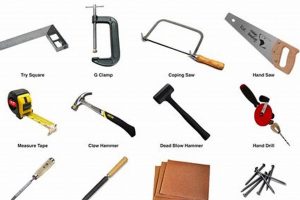
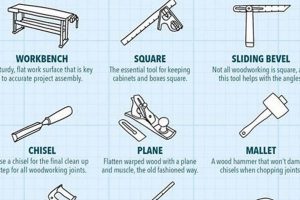
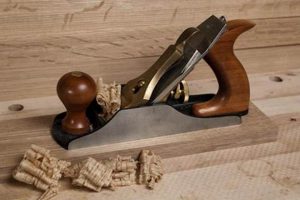
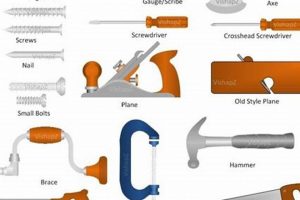
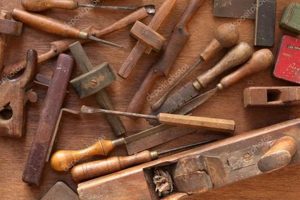
Instruments manipulated by hand, rather than powered machinery, are fundamental for shaping and joining wood. These implements offer precision, control, and a tactile connection to the material, allowing for detailed work and nuanced finishes. Examples include saws for cutting, planes for smoothing, chisels for shaping, and measuring tools for accuracy.
The employment of these instruments allows for greater control over the woodworking process, reduces noise pollution, and can be more sustainable than power tool alternatives. Historically, they represent the foundation of the craft, shaping structures and objects for millennia before the advent of electricity. Their continued use fosters a deeper understanding of wood properties and grain direction, leading to improved craftsmanship.
This article will detail the critical selection of implements necessary for a well-equipped workspace. Specific categories, maintenance, and proper techniques for achieving optimal results will be explored.
Essential Woodworking Hand Tools
The effective utilization of woodworking implements hinges upon proper selection, maintenance, and technique. The following suggestions will enhance the lifespan and performance of these instruments, leading to improved woodworking outcomes.
Tip 1: Sharpening is Paramount. Regularly hone cutting edges on chisels and plane irons to maintain sharpness. A dull edge necessitates increased force, reducing control and leading to inaccurate cuts. Employ a sharpening stone and honing guide for consistent results.
Tip 2: Select the Right Tool for the Task. Matching the implement to the specific operation ensures efficiency and prevents damage. For example, use a coping saw for curved cuts and a backsaw for precise joinery.
Tip 3: Maintain Proper Tool Storage. Protect against rust and damage by storing tools in a dry environment. Utilize tool rolls, drawers, or cabinets to prevent contact with other objects and environmental moisture.
Tip 4: Practice Proper Technique. Master fundamental techniques, such as sawing straight lines and using a hand plane with consistent pressure. Practice on scrap wood to refine skills and build muscle memory.
Tip 5: Apply Protective Finishes. Regularly apply oil or wax to wooden handles to prevent drying and cracking. Clean metal surfaces to remove rust and apply a light coat of oil to prevent future corrosion.
Tip 6: Regularly Inspect for Damage. Routinely examine implements for loose handles, cracks, or other damage. Address any issues promptly to prevent further deterioration and potential injury.
Tip 7: Utilize Appropriate Clamping. Secure workpieces firmly with clamps to prevent movement during sawing, chiseling, or planing. Ensure clamps are properly adjusted and applied to avoid damaging the wood.
The adherence to these guidelines will significantly improve the user experience, prolong the lifespan of equipment, and ultimately lead to more refined and accurate woodworking projects.
The next section will address advanced techniques and further refinement of skills related to the employment of such instrument.
1. Functionality

The functionality of woodworking implements directly dictates their value and relevance within a workshop. A tool lacking in functional efficacy, regardless of its material quality or aesthetic appeal, proves detrimental to project outcomes. The intended application determines the required functional attributes. A smoothing plane, for instance, must effectively reduce surface imperfections, while a mortise chisel must cleanly remove material to create precise joinery. A causal relationship exists: deficient functionality invariably leads to substandard results. The importance of functionality stems from its direct impact on efficiency, accuracy, and the overall quality of finished pieces. Consider a poorly designed marking gauge; its inability to consistently scribe parallel lines undermines the precision of subsequent cuts, cascading into errors throughout the project. Without adequate functionality, a tool becomes an impediment rather than an aid.
Practical significance manifests in various scenarios. A dovetail saw, optimized for its functional purpose, possesses a thin blade and precise tooth geometry, enabling clean and accurate cuts necessary for creating strong and visually appealing dovetail joints. In contrast, a generic saw, lacking these specialized features, would struggle to produce the required accuracy, resulting in weak or aesthetically flawed joints. Similarly, a block plane with an adjustable mouth allows for fine-tuning its functional characteristics for different wood types and grain orientations, resulting in smoother surfaces. This adaptability enhances its overall utility. Selecting equipment without proper consideration of its designed functionality represents a critical oversight.
In summary, functionality stands as a cornerstone in the evaluation and selection of woodworking equipment. The connection between functionality and the essential nature of hand tools is undeniable; without adequate functional performance, the potential for successful project completion is severely compromised. The primary challenge lies in accurately assessing the functional capacity of individual items and aligning those capabilities with the demands of specific woodworking tasks. An understanding of this core relationship is thus vital for any individual engaged in woodworking.
2. Precision

Precision in woodworking directly correlates with the quality and structural integrity of finished pieces. When implements achieve accuracy, joinery fits seamlessly, surfaces align perfectly, and structural members bear load as designed. The absence of precise execution leads to weakened structures, compromised aesthetics, and material waste. The following points underscore critical facets of precision in relation to fundamental hand implements for woodworking.
- Measurement Accuracy
Precise measurement is the foundation of all accurate woodworking. Measuring implements, such as rules, squares, and marking gauges, must provide consistent and reliable readings. Inaccurate measurements propagate errors throughout the project, leading to misaligned components and flawed joinery. For example, using an imprecise ruler to measure the length of a board will inevitably result in a joint that is either too tight or too loose. Precision in measurement dictates the overall accuracy of the woodworking endeavor.
- Cutting Accuracy
Saws and chisels are used to remove material. Maintaining the integrity of layout lines and creating true surfaces requires tools that cut accurately. Deviation from a marked line, or unintended material removal, undermines the dimensional integrity of components. A saw with a warped blade, or a chisel that is not properly sharpened, cannot produce clean, accurate cuts, leading to gaps in joints and overall structural weakness. Achieving accuracy in cutting necessitates both high-quality instruments and skillful execution.
- Surface Preparation Accuracy
Planes and rasps are commonly used to refine surfaces. Smooth, flat, and consistent surfaces are critical for finishing and joinery. A plane that chatters or a rasp that gouges leaves an uneven surface, compromising the aesthetics and potentially the structural integrity of the finished piece. Achieving consistently smooth and flat surfaces requires careful tool setup, sharp cutting edges, and consistent technique.
- Joinery Accuracy
The execution of precise joinery, whether dovetails, mortise and tenon joints, or rabbets, is predicated upon the accuracy of measurements and cuts. Poorly executed joinery results in weak connections, structural instability, and aesthetically displeasing gaps. Every step, from marking out the joint to removing material, must be performed with meticulous precision to ensure a strong and seamless fit. The accuracy of joinery is a direct reflection of the overall precision employed throughout the woodworking process.
These elements underscore the paramount significance of precision when employing fundamental woodworking tools. The inherent potential for accuracy resides within the equipment itself. However, the craftsperson’s proficiency in setup, maintenance, and operation determines the realized outcome. The pursuit of precision is not simply a matter of technique, but an ethos embraced by the dedicated woodworker.
3. Durability

The longevity of woodworking implements directly impacts their value and effectiveness over time. Instruments constructed with robust materials and thoughtful design withstand repeated use and resist degradation, ensuring consistent performance across numerous projects. Substandard construction, conversely, leads to premature failure, requiring frequent replacement and hindering project completion. The interplay between materials, manufacturing processes, and intended usage patterns defines the expected lifespan of such items. For instance, a hand plane fabricated from hardened steel and featuring a precisely machined sole will retain its flatness and cutting efficiency far longer than a comparable model made with inferior materials. The enduring performance stemming from robust construction directly contributes to a reduced cost per use, making durability a vital consideration when evaluating the long-term investment in woodworking equipment.
Practical implications of material selection and manufacturing methodology manifest in several ways. A chisel forged from high-carbon steel, correctly heat-treated, will withstand repeated impact from a mallet without deformation, maintaining its edge and shape for extended periods. Conversely, a chisel constructed from softer steel will mushroom and dull quickly, requiring frequent sharpening and eventual replacement. Similarly, a backsaw with a properly set and sharpened blade will provide clean, accurate cuts over many years, while an improperly manufactured or maintained saw will bind and produce inaccurate results, rendering it less effective and ultimately unusable. The significance of robust construction extends beyond mere longevity. Durable implements maintain their accuracy and performance characteristics over their lifespan, ensuring consistent outcomes and reducing the likelihood of errors stemming from tool failure.
In summary, durability constitutes a core attribute of valuable woodworking equipment. The inherent resistance to wear, deformation, and failure directly influences the cost-effectiveness, performance consistency, and overall utility of such tools. Careful consideration of material selection, manufacturing processes, and intended usage patterns is crucial for selecting items that provide long-term reliability and contribute to successful woodworking endeavors. The challenge rests in accurately assessing and prioritizing durability characteristics during the acquisition process, ensuring a worthwhile investment in equipment that withstands the demands of regular use and performs consistently over time.
4. Ergonomics

The application of ergonomic principles to woodworking implements directly influences user comfort, efficiency, and long-term physical well-being. Design considerations aimed at minimizing strain and maximizing control are paramount when evaluating hand implements intended for repetitive or prolonged use. This focus on ergonomics ensures that tools become extensions of the user’s body, promoting fluidity and reducing the risk of musculoskeletal disorders.
- Handle Design
The shape, size, and material of a tool handle significantly impact grip strength and hand fatigue. Handles should conform to the natural contours of the hand, allowing for a secure and comfortable grip without requiring excessive force. Materials with inherent damping properties, such as wood or specialized polymers, can reduce vibration and further minimize strain. A handle that is too large or too small can lead to discomfort and decreased control, while a poorly shaped handle can cause localized pressure points and accelerate fatigue. The ideal handle design distributes force evenly across the hand, promoting efficient power transfer and reducing the risk of repetitive stress injuries.
- Weight and Balance
The overall weight and balance of a woodworking implement affect its maneuverability and the amount of effort required for precise movements. Tools that are excessively heavy can lead to premature fatigue, while those that are too light may lack the inertia necessary for efficient cutting or shaping. Optimal balance ensures that the tool feels natural and responsive in the hand, minimizing the need for compensatory movements and reducing the risk of accidental slips or miscuts. Careful attention to weight distribution is essential for maximizing control and minimizing strain during prolonged use.
- Grip Angle and Orientation
The angle and orientation of the grip relative to the cutting edge or working surface influences the user’s posture and the biomechanics of force application. Ergonomic designs often incorporate angled grips that allow the wrist to remain in a neutral position, reducing strain on the tendons and ligaments. The orientation of the grip should also facilitate natural movements, allowing the user to maintain a comfortable stance and minimizing the need for awkward or strained positions. Thoughtful consideration of grip angle and orientation promotes efficient force transfer and reduces the risk of musculoskeletal discomfort.
- Surface Texture and Finish
The surface texture and finish of a tool handle contribute to grip security and tactile feedback. Handles with a slightly textured surface provide enhanced grip, even in humid conditions or when hands are sweaty. Finishes that are smooth but not slippery allow for easy adjustments and minimize the risk of blisters or calluses. The choice of surface texture and finish should strike a balance between grip security and comfort, promoting efficient tool use and reducing the risk of hand injuries. A properly finished handle also resists moisture absorption and protects the underlying material, contributing to the tool’s overall durability.
Integrating ergonomic principles into the design and selection of implements optimizes the woodworking experience by enhancing comfort, reducing strain, and promoting long-term physical well-being. Selecting tools that prioritize ergonomic design not only improves efficiency and accuracy but also ensures that woodworking remains a sustainable and enjoyable activity for years to come. The adoption of ergonomic tools thus transcends mere convenience, representing a commitment to the health and safety of the woodworker.
5. Maintainability

The operational lifespan and consistent performance of core woodworking instruments are inextricably linked to their maintainability. Implements designed for ease of care and repair exhibit extended utility, while those lacking such considerations are prone to premature obsolescence. The ability to readily sharpen blades, adjust components, and replace worn parts directly determines the long-term viability of these essential items. Ignoring maintainability during the selection process results in increased replacement costs and diminished productivity. For instance, a hand plane with an easily removable blade facilitates frequent sharpening, crucial for maintaining optimal cutting performance. Conversely, a plane with a complex or inaccessible blade-securing mechanism discourages regular maintenance, leading to reduced efficiency and ultimately, abandonment of the tool.
Effective maintenance procedures encompass several key actions. Regular sharpening of cutting edges is paramount, requiring readily accessible sharpening surfaces and minimal disassembly. Lubrication of moving parts, such as threads on adjustable fences or screws on blade clamps, prevents corrosion and ensures smooth operation. Replacement of worn components, such as handles, blades, or adjustment knobs, extends the lifespan of the implement, often at a fraction of the cost of a complete replacement. Proper storage, protecting against moisture and physical damage, further contributes to long-term maintainability. The practical significance of these actions is demonstrated by the continued use of antique woodworking tools, many of which have remained functional for centuries due to diligent maintenance practices.
In summation, maintainability constitutes a critical yet often overlooked attribute of valued implements. The capacity to readily care for and repair essential instruments directly affects their cost-effectiveness, performance consistency, and overall utility. Considering maintainability during acquisition and implementing consistent maintenance practices will yield long-term benefits, ensuring that woodworking equipment remains a reliable asset for years to come. The challenge lies in recognizing the often-subtle design features that facilitate maintenance and prioritizing these characteristics during the selection process.
6. Versatility
Versatility, as a quality of implements, enhances their utility within a woodworking context. The capacity of a tool to perform multiple functions or adapt to a range of tasks directly impacts its value as a component of a set of fundamental instruments. Consider a combination square: it serves not only as a square for ensuring 90-degree angles but also as a level, depth gauge, and marking gauge. This multifunctional nature reduces the number of specialized tools required, optimizing workspace and minimizing investment. The effect of such adaptability is a more efficient and streamlined workflow. Without versatility, a workshop becomes encumbered by a multitude of single-purpose items, increasing storage demands and hindering accessibility.
Practical examples of versatility manifest across a spectrum of tools. A well-chosen chisel, with appropriate width and edge geometry, can serve for both paring delicate shavings and chopping mortises. This adaptability reduces the need for multiple specialized chisels, streamlining the tool collection. A spokeshave, with its adjustable blade, can shape both concave and convex curves, eliminating the need for separate shaping tools. This versatility enhances its utility across diverse projects. The selection of instruments with inherent versatility addresses the economic constraints and spatial limitations common in many workshops. The absence of such versatility necessitates a larger investment in specialized tools and increases the physical demands of tool management and storage.
In conclusion, versatility is a crucial attribute of fundamental implements. The adaptability of a tool to multiple functions reduces redundancy, optimizes workspace, and enhances efficiency. While specialized tools offer precision in specific tasks, versatile implements provide a cost-effective and spatially efficient solution for a broader range of applications. The challenge lies in identifying and selecting tools that strike a balance between specialized performance and adaptable utility, ensuring a well-rounded and functional instrument collection for the modern woodworker.
7. Sharpening

The operational effectiveness of fundamental woodworking instruments is directly contingent upon the condition of their cutting edges. Sharpening, as a process, restores and maintains the requisite keenness for efficient material removal, precise shaping, and accurate joinery. A dull edge necessitates increased force, reduces control, and elevates the risk of material tear-out. The correlation is direct: a sharpened instrument performs predictably and effectively; a dull implement yields substandard results and compromises safety. For instance, a sharp chisel, properly honed, cleanly severs wood fibers, allowing for precise paring and controlled mortise creation. Conversely, a dull chisel crushes rather than cuts, resulting in ragged edges and increased effort. The quality of the finished product is, therefore, inextricably linked to the sharpness of the implemented instrument.
The connection extends beyond mere performance enhancement. Sharpening is an integral component of responsible instrument ownership and maintenance. Regular honing and grinding prolong the lifespan of cutting tools, delaying the need for replacement and conserving resources. Furthermore, mastering sharpening techniques cultivates a deeper understanding of tool geometry, steel properties, and the interaction between tool and material. This knowledge informs technique, allowing woodworkers to adapt their approach based on the specific instrument and wood species at hand. A proficient woodworker recognizes the subtle signs of edge degradation and proactively addresses them, maintaining optimal performance and extending the usable life of the instruments. This proactive approach distinguishes a skilled craftsperson from a novice.
In summary, sharpening is not merely a supplementary task but a fundamental skill intrinsic to woodworking practice. The sharpness of cutting implements dictates performance, enhances safety, and extends tool lifespan. The acquisition of sharpening skills, combined with consistent maintenance practices, is a hallmark of proficiency. The challenge lies in mastering diverse sharpening techniques, selecting appropriate abrasives, and developing the tactile sensitivity required to achieve and maintain optimal edge quality, ensuring that the instruments remain effective and reliable assets for years to come. Neglecting sharpening undermines the potential of any woodworking instrument, regardless of its inherent quality or design.
Frequently Asked Questions
This section addresses prevalent inquiries regarding the selection, application, and maintenance of fundamental implements employed in woodworking. The information presented aims to clarify common misconceptions and provide practical guidance for both novice and experienced practitioners.
Question 1: What constitutes an “essential” implement for woodworking?
Essential implements are defined as those fundamental for basic material preparation, shaping, and joinery. This typically includes a selection of saws, planes, chisels, measuring tools, and striking tools. The precise composition of such a set may vary depending on the specific woodworking style and project scope.
Question 2: Is it necessary to invest in expensive implements when beginning woodworking?
While high-quality implements offer superior performance and longevity, it is not always necessary to begin with the most expensive options. A carefully selected set of mid-range implements, maintained properly, can provide excellent results. Emphasis should be placed on acquiring implements that are well-made, comfortable to use, and capable of being sharpened effectively.
Question 3: How frequently should cutting edges be sharpened?
Sharpening frequency depends on the type of wood being worked, the intensity of use, and the steel composition of the implement. As a general guideline, cutting edges should be honed after each use and fully sharpened when they begin to lose their ability to cleanly sever wood fibers.
Question 4: What is the best method for storing implements to prevent damage?
Optimal storage practices involve protecting implements from moisture and physical impact. Storing implements in a dry environment, utilizing tool rolls or drawers, and applying rust preventative measures are recommended. Proper storage extends implement lifespan and preserves cutting edge sharpness.
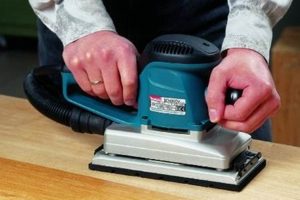
Question 5: Are powered woodworking tools a suitable replacement for implements?
Powered woodworking tools offer increased speed and efficiency for certain tasks, but they do not entirely replace implements. The latter provide greater control, precision, and tactile feedback, making them essential for detail work, complex joinery, and situations where noise reduction is desired.
Question 6: What are the key considerations when selecting a saw?
Key considerations when selecting a saw include the blade length, tooth geometry, set, and handle ergonomics. The appropriate saw type depends on the specific cutting task, such as crosscutting, ripping, or joinery. A well-chosen saw will provide accurate, efficient, and comfortable cutting performance.
The appropriate selection and consistent maintenance of such tools are crucial for achieving quality results in woodworking. Prioritizing these aspects enhances both the efficiency and enjoyment of the craft.
The subsequent section will explore specific tool types and their applications in greater detail.
Essential Woodworking Hand Tools
This exposition has systematically explored the attributes of implements vital to the craft of woodworking. Functionality, precision, durability, ergonomics, maintainability, versatility, and sharpening have been identified as critical determinants of implement value and performance. Mastering the selection, application, and maintenance of such instruments enables a deeper understanding of the craft and facilitates the creation of lasting, well-crafted pieces.
The knowledge gained from this analysis promotes informed decision-making, ensuring that practitioners possess the instruments and skills required to execute their designs with precision and efficiency. Continued exploration and refinement of these techniques will elevate the quality and longevity of woodworking projects, preserving this time-honored tradition for future generations.