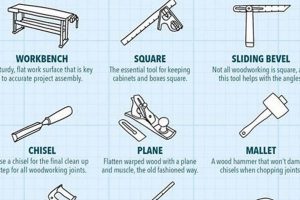
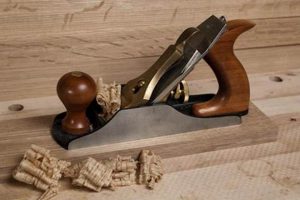
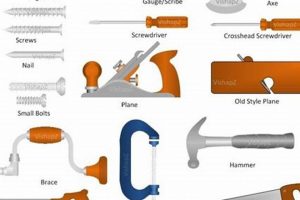
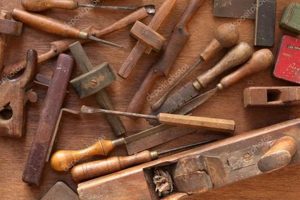
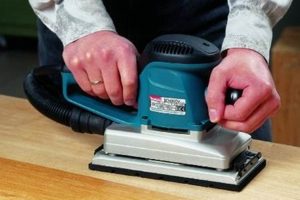
The implements employed directly by manual effort to shape, cut, join, or finish wood are fundamental to the craft. Examples encompass saws for dividing material, chisels for carving and shaping, planes for smoothing surfaces, and hammers for driving fasteners. These instruments require skill and understanding to achieve precise results.
The enduring significance of these instruments resides in their capacity to afford a high degree of control and finesse, enabling intricate detailing and customized solutions unattainable by mechanized processes. Their historical context is interwoven with the evolution of woodworking itself, representing a legacy of craftsmanship passed down through generations. The use of these tools promotes sustainable practices, reduces reliance on power, and fosters a deeper connection with the material.
The following sections will explore specific categories of woodworking instruments, outlining their functionalities, applications, and maintenance requirements to ensure optimal performance and longevity. The focus will be on providing practical knowledge applicable to both novice and experienced practitioners.
Essential Usage Guidelines
Optimizing the performance and longevity of manually operated instruments requires adherence to established best practices. The following guidelines are intended to enhance precision, safety, and overall work quality.
Tip 1: Sharpening is Paramount: Maintaining a keen edge on cutting implements, such as chisels and planes, is crucial for efficient material removal and clean finishes. Regular honing and sharpening are essential investments in both quality and safety.
Tip 2: Wood Selection Matters: The characteristics of the chosen wood species will significantly influence the outcome. Understanding grain direction, hardness, and moisture content is critical for selecting the appropriate tools and techniques.
Tip 3: Secure Workholding: Employing vices, clamps, and other workholding devices provides stability and minimizes the risk of slippage or injury during operation. Securely fastened workpieces are fundamental to accurate and controlled work.
Tip 4: Proper Tool Selection: Selecting the appropriate instrument for the task at hand prevents damage to both the tool and the workpiece. Using a saw intended for fine cuts to rip thick stock, for example, can lead to blade binding and inaccurate results.
Tip 5: Grain Direction Awareness: Working with the grain, rather than against it, reduces the likelihood of tear-out and produces smoother surfaces. Careful observation of grain patterns is essential for achieving optimal results with planing and shaping tools.
Tip 6: Consistent Practice: Proficiency with manual instruments develops through sustained practice. Dedicating time to hone fundamental skills, such as sawing straight lines and chiseling accurate angles, is an ongoing process.
Tip 7: Safety First: Adhering to safety protocols, including the use of eye protection and proper hand positioning, minimizes the risk of injury. Prioritizing safe practices is paramount to a sustainable woodworking practice.
Consistent application of these guidelines will contribute to improved precision, efficiency, and safety in woodworking endeavors. The knowledgeable use of these instruments remains a cornerstone of quality craftsmanship.
The subsequent sections will delve into specific projects and techniques that exemplify the application of these principles, offering practical demonstrations of skillful instrument manipulation.
1. Precision

The relationship between precision and manually operated implements in woodworking is causative. The inherent design and skillful application of these instruments directly influence the accuracy of cuts, joinery, and surface treatments. Insufficient understanding or imprecise execution inevitably leads to dimensional inaccuracies and compromised structural integrity. For example, a meticulously sharpened hand plane, when used with proper technique, achieves a flatness and smoothness on wood surfaces that mechanized methods often struggle to replicate. Conversely, a dull chisel or a poorly aligned saw will invariably result in rough, uneven cuts, necessitating corrective measures and potentially compromising the project’s intended dimensions.
Precision is not merely a desirable attribute but a critical component of successful woodworking projects employing manual instruments. The creation of tight-fitting joints, such as dovetails or mortise-and-tenon, demands exacting measurements and execution. Any deviation from the intended dimensions can weaken the joint or render it unusable. Similarly, when constructing furniture or architectural elements, maintaining precise angles and dimensions is essential for structural stability and aesthetic appeal. Consider the construction of a cabinet: accurate measurements and precise cuts are paramount for the doors and drawers to fit seamlessly within the frame. The overall functionality and visual appeal of the cabinet depend directly on the precision achieved during the construction process.
In summary, achieving precision with hand tools necessitates a combination of high-quality instruments, honed skill, and a thorough understanding of woodworking principles. While the process may demand more time and attention than mechanized methods, the resulting accuracy and control can lead to superior results, particularly in projects requiring intricate details and customized solutions. The challenge lies in developing the necessary skills and knowledge to effectively utilize these instruments to their full potential. Precision, therefore, is not merely an outcome, but a deliberate and essential element woven into every stage of the hand woodworking process, profoundly impacting the final product’s quality and longevity.
2. Material Compatibility

The interaction between material properties and the specific characteristics of manually operated implements is a critical determinant of success in woodworking. The selection of appropriate tools, coupled with a thorough understanding of wood characteristics, ensures efficient and precise material removal while minimizing the risk of damage to both the workpiece and the instrument.
- Wood Hardness and Tool Selection
The hardness of the wood species dictates the type of cutting edge required. Softer woods, such as pine or basswood, can be effectively worked with finely honed edges and lighter tools. Conversely, hardwoods, such as oak or maple, necessitate robust tools with steeper bevel angles to resist premature dulling and prevent damage. An attempt to use a delicate carving knife on a dense hardwood, for example, is likely to result in damage to the tool rather than efficient material removal.
- Grain Direction and Tooling Angle
The orientation of wood grain significantly impacts the cutting action. Working against the grain increases the risk of tear-out and splintering, particularly with tools like planes and chisels. Adjusting the angle of attack and employing techniques such as skewing the tool can mitigate these effects. Understanding grain direction allows the craftsman to exploit the material’s inherent properties for smoother, more controlled cuts.
- Moisture Content and Tool Performance
The moisture content of wood affects its workability. Wet or green wood tends to bind and clog cutting tools, reducing efficiency and increasing the effort required. Dry wood, on the other hand, can be more brittle and prone to splitting. Allowing wood to acclimate to the workshop environment before working it is crucial for optimal tool performance and minimizing material defects. The use of specialized tools, such as moisture meters, can aid in assessing wood’s suitability for working.
- Resin Content and Tool Maintenance
Woods with high resin content, such as pine or certain tropical hardwoods, can deposit residue on cutting edges, leading to increased friction and reduced cutting efficiency. Regular cleaning and lubrication of hand tools are essential when working with these materials. Solvent-based cleaners or specialized waxes can remove resin buildup and maintain optimal tool performance. Neglecting this maintenance can significantly shorten the lifespan of the instruments and compromise the quality of the work.
The informed selection of tools, coupled with a deep understanding of material properties, is paramount to successful and sustainable woodworking practices. By considering factors such as hardness, grain direction, moisture content, and resin content, practitioners can optimize tool performance, minimize material waste, and achieve superior results when employing manually operated implements.
3. Edge Maintenance

The efficacy of hand tools used in woodwork is directly contingent upon the condition of their cutting edges. Edge maintenance, therefore, represents a foundational element in the successful application of these instruments. A sharp, well-maintained edge allows for clean, efficient material removal, reduces the force required to execute cuts, and minimizes the risk of splintering or tear-out. Conversely, a dull or damaged edge necessitates increased force, leading to imprecise cuts, operator fatigue, and potential damage to the workpiece. For instance, a dull chisel used to pare a dovetail joint will crush the wood fibers instead of cleanly severing them, resulting in a weak and unsightly joint. The relationship between edge condition and outcome is thus causal: the state of the cutting edge directly determines the quality of the woodworking operation.
The practical application of edge maintenance involves a range of techniques, including honing, sharpening, and grinding. Honing, performed frequently, realigns the cutting edge and removes minor imperfections, preserving sharpness. Sharpening, a more involved process, restores the original bevel angle and removes significant wear or damage. Grinding, typically reserved for heavily damaged edges, reshapes the tool to its original geometry. The selection of appropriate abrasives, such as oilstones, waterstones, or diamond stones, is crucial for achieving the desired results without damaging the tool’s temper. Consider the example of a hand plane: regular honing ensures a smooth, consistent cutting action, resulting in a flawless surface finish. Neglecting this routine maintenance will inevitably lead to a decline in performance and require more extensive sharpening interventions.
In summary, edge maintenance is not merely an ancillary task but an integral component of hand tool woodworking. The investment of time and effort in maintaining sharp, well-conditioned cutting edges translates directly into improved precision, efficiency, and quality of workmanship. While the specific techniques and frequency of maintenance may vary depending on the tool type and material being worked, the underlying principle remains constant: a sharp edge is essential for achieving optimal results. The challenge lies in acquiring the skills and knowledge necessary to perform edge maintenance effectively and consistently, ensuring that hand tools are always ready to deliver their intended performance.
4. Joint Integrity

The structural soundness and long-term stability of woodworking projects hinge upon the integrity of their joints. This integrity is inextricably linked to the capabilities and skillful application of manually operated instruments. The precision achievable with these tools directly influences the strength, durability, and aesthetic quality of the resulting joinery.
- Precision of Cuts
The accuracy with which components are shaped directly affects joint strength. Hand tools, when properly sharpened and skillfully used, allow for the creation of precisely fitted surfaces. For example, a finely tuned shoulder plane ensures the perfect fit of a tenon within a mortise, maximizing glue surface area and mechanical interlock. Imprecise cuts lead to gaps and weakened bonds, compromising overall structural integrity.
- Surface Preparation for Adhesion
Manually operated instruments facilitate the creation of optimal surfaces for adhesive bonding. A well-prepared surface, free of irregularities and contaminants, promotes strong and lasting glue joints. Tools like card scrapers or smoothing planes create exceptionally smooth surfaces that enhance adhesion. Conversely, rough or uneven surfaces reduce contact area and weaken the bond.
- Mechanical Interlock
Certain joint designs, such as dovetails and mortise-and-tenon, rely on mechanical interlock for strength. The precise execution of these joints using hand tools ensures a secure and lasting connection. A properly cut dovetail joint, for instance, provides exceptional resistance to tensile forces. The fit and geometry, achievable through skilled manual work, are paramount for its effectiveness.
- Control Over Material Removal
Manual instruments offer a degree of control unattainable with mechanized processes, particularly in complex joinery. This control allows for fine-tuning of joint fit and adjustment for variations in material properties. The ability to selectively remove small amounts of material is crucial for achieving optimal joint performance. This level of control is often essential when working with irregularly grained or figured woods.
The preceding elements demonstrate that achieving optimal joint integrity is intimately connected to the effective use of manually operated implements. The precision, surface preparation, mechanical interlocking, and material control afforded by these instruments are essential for creating woodworking projects that withstand the test of time. The selection and skillful application of these tools are thus critical determinants of long-term structural performance.
5. Surface Refinement

Surface refinement in woodworking represents the culmination of the crafting process, dictating the tactile and visual properties of the finished piece. The attainment of desired surface qualities is intrinsically linked to the selection and application of manual instruments, each offering distinct capabilities in smoothing, shaping, and texturing wood.
- Planing and Smoothing
Hand planes, in their various forms, are fundamental for achieving flat, smooth surfaces. Smoothing planes, characterized by short soles and fine-set blades, remove minute shavings, eliminating imperfections left by previous operations. Skillful planing can produce surfaces of exceptional quality, often surpassing that achieved by mechanical methods. This process exemplifies the control afforded by manual instruments in refining the material’s surface.
- Scraping Techniques
Card scrapers are employed to remove subtle imperfections and further refine surfaces, particularly on woods with complex grain patterns. The scraper’s burr, when properly formed and maintained, shears wood fibers, producing a glass-like surface. Scraping is especially useful in areas inaccessible to planes or where tear-out is a concern, demonstrating the versatility of hand tools in addressing specific challenges.
- Abrasive Processes
While often associated with mechanical sanding, manual abrasion, using sandpaper or abrasive pads, plays a crucial role in refining surfaces prepared with planes and scrapers. Hand sanding allows for precise control, enabling the removal of minute imperfections and the creation of a consistent scratch pattern in preparation for finishing. The tactile feedback inherent in manual sanding provides valuable information regarding surface quality.
- Texturing and Decorative Effects
Manual instruments facilitate the creation of textured surfaces and decorative effects. Carving tools, gouges, and specialized planes enable the application of various patterns and textures, adding visual interest and tactile appeal to the finished piece. The ability to manipulate the surface in a controlled manner distinguishes manual woodworking from automated processes.
The aforementioned aspects demonstrate that surface refinement is not merely an aesthetic consideration but a fundamental element of quality woodworking. The informed selection and skillful application of manual instruments are essential for achieving desired surface properties, underscoring the enduring relevance of these tools in the pursuit of craftsmanship.
6. Ergonomic Efficiency

Ergonomic efficiency in woodworking directly impacts the user’s comfort, safety, and productivity when employing manually operated implements. Ill-designed tools or improper usage techniques can lead to musculoskeletal strain, fatigue, and potential long-term injuries. Therefore, ergonomic considerations are not merely superficial but are critical to a sustainable and safe woodworking practice. For instance, a hand plane with a poorly shaped handle requires excessive force to control, leading to wrist and hand fatigue. Conversely, a plane with a contoured handle that fits comfortably in the hand distributes pressure evenly, reducing strain and allowing for extended periods of use without discomfort. The causal relationship is evident: tool design and usage directly influence the user’s physical well-being and efficiency.
The importance of ergonomic design extends beyond individual tools to the overall workspace and workflow. The height of the workbench, the positioning of tools, and the posture adopted during woodworking tasks all contribute to ergonomic efficiency. A workbench that is too low forces the user to bend excessively, placing strain on the back. Similarly, a cluttered workspace requires unnecessary reaching and movement, increasing fatigue and the risk of accidents. Practical application involves selecting tools that fit the user’s hand size and strength, arranging the workspace to minimize unnecessary movement, and adopting proper posture to reduce strain. Real-life examples include utilizing adjustable-height workbenches to accommodate individual needs and employing tool holders to keep frequently used instruments within easy reach. Furthermore, practicing mindful movement and taking regular breaks can prevent cumulative strain injuries.
In conclusion, ergonomic efficiency is an indispensable element of woodworking with manually operated implements. By prioritizing tool design, workspace arrangement, and user technique, it is possible to enhance comfort, improve safety, and increase productivity. Challenges remain in promoting ergonomic awareness among woodworkers and in developing tools that cater to diverse user needs. However, the understanding and implementation of ergonomic principles are essential for ensuring a sustainable and enjoyable woodworking practice, linking directly to the broader themes of craftsmanship, well-being, and responsible tool usage.
Frequently Asked Questions
The following addresses common inquiries and misconceptions regarding the selection, application, and maintenance of manual implements in woodworking. The intent is to provide clarity and guidance for practitioners of all skill levels.
Question 1: What constitutes an essential starter set of hand tools for a novice woodworker?
An essential starter set includes a crosscut saw, a rip saw, a smoothing plane, a jack plane, a set of chisels (various sizes), a marking gauge, a combination square, a mallet, and sharpening stones. These tools enable basic cutting, shaping, and jointing operations. Additional tools can be acquired as skills and project complexity increase.
Question 2: How frequently should hand tools be sharpened?
The frequency of sharpening depends on the tool’s usage, the type of wood being worked, and the desired level of precision. As a general guideline, tools should be honed before each use and sharpened whenever they exhibit a noticeable decline in cutting performance. Regular honing significantly extends the intervals between sharpening.
Question 3: What are the advantages of using hand tools versus power tools in woodworking?
Hand tools offer a higher degree of control, reduce noise and dust, and promote a deeper connection with the material. They are particularly advantageous for intricate work, delicate operations, and situations where portability or power availability is limited. They also encourage a more sustainable and mindful approach to woodworking.
Question 4: How does wood grain affect the use of hand tools, particularly planes and chisels?
Wood grain direction profoundly impacts cutting action. Working against the grain increases the risk of tear-out and splintering. Planes and chisels should generally be used with the grain to achieve smooth, clean cuts. Techniques such as skewing the tool or adjusting the cutting angle can mitigate tear-out in challenging grain orientations.
Question 5: What are the common safety precautions when working with hand tools?
Essential safety precautions include wearing eye protection, using sharp tools, securing the workpiece effectively, and maintaining a clear and uncluttered workspace. Hands should always be positioned safely away from the cutting edge. Learning and adhering to proper tool handling techniques is crucial for preventing injuries.
Question 6: How should hand tools be stored to prevent damage and maintain their condition?
Hand tools should be stored in a dry environment to prevent rust and corrosion. Cutting edges should be protected with sheaths, wraps, or dedicated storage racks. Tools should be organized in a manner that prevents them from striking one another. Regular cleaning and light lubrication are also recommended.
The judicious selection, proper maintenance, and skillful application of manually operated instruments form the bedrock of quality woodworking. Mastery of these tools requires patience, practice, and a commitment to continuous learning.
The subsequent discussion will address advanced techniques and specialized hand tools used in more complex woodworking projects.
Conclusion
The preceding discussion has elucidated the fundamental role of hand tools used in woodwork in achieving precision, control, and structural integrity. The maintenance of these instruments, coupled with a thorough understanding of material properties and ergonomic considerations, directly impacts the quality and longevity of woodworking projects.
Continued exploration and refinement of manual woodworking techniques remain essential for preserving craftsmanship, promoting sustainable practices, and fostering a deeper appreciation for the inherent qualities of wood. A commitment to these principles will ensure the enduring relevance of these instruments in an evolving landscape.