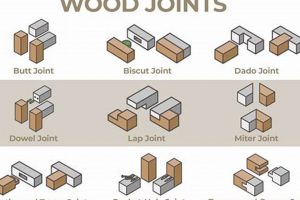
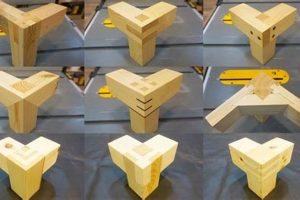
Connections that offer superior resistance to separation and failure under stress are paramount in woodworking. These joinery methods are engineered to maximize surface area for adhesive application, interlock mechanically, or both, resulting in assemblies that exhibit exceptional durability. A dovetail joint used in drawer construction exemplifies this principle, its interlocking tails and pins creating a robust connection resistant to pulling forces.
The selection of robust joinery techniques significantly enhances the longevity and structural integrity of wooden objects. Historically, these methods were crucial for constructing durable furniture and architectural elements that could withstand centuries of use. The benefits of employing such techniques extend to modern applications, ensuring that contemporary woodworking projects maintain structural stability and aesthetic appeal over extended periods. This approach reduces the likelihood of joint failure, thereby minimizing repair needs and extending the lifespan of the finished product.
An examination of specific joint types, their respective strengths and weaknesses, and suitable applications follows. This includes an analysis of factors influencing joint performance, such as wood species, adhesive selection, and construction precision. The article will then explore testing methodologies used to evaluate the load-bearing capabilities of different woodworking connections.
Maximizing Joint Strength
Achieving optimal joint performance in woodworking requires careful attention to several key aspects. This section outlines crucial considerations for ensuring robust and enduring connections.
Tip 1: Wood Selection: Employ wood species with high density and inherent strength characteristics when constructing load-bearing joints. Hardwoods such as oak, maple, or walnut provide superior resistance to stress compared to softer woods.
Tip 2: Surface Preparation: Ensure that all mating surfaces are clean, flat, and free from contaminants. Proper surface preparation maximizes adhesive bond strength and prevents premature joint failure.
Tip 3: Adhesive Choice: Select an adhesive appropriate for the specific wood species and application. Consider factors such as open time, clamp time, and resistance to moisture or solvents. Structural epoxy or high-quality polyurethane adhesives are often suitable for demanding applications.
Tip 4: Joinery Design: Incorporate mechanical interlocking features whenever possible. Mortise and tenon, dovetail, or lap joints provide significant increases in joint strength compared to simple butt joints.
Tip 5: Precision Cutting: Employ accurate cutting techniques and tools to ensure tight-fitting joints. Gaps or inconsistencies in joint fit compromise strength and stability.
Tip 6: Clamping Pressure: Apply adequate clamping pressure during adhesive curing to ensure intimate contact between mating surfaces. Insufficient pressure results in weaker bonds and potential joint failure.
Tip 7: Grain Orientation: Align wood grain strategically to maximize resistance to stress. Avoid situations where stress is applied perpendicular to the grain, which can lead to splitting or cracking.
These considerations, when meticulously implemented, contribute significantly to the robustness and longevity of woodworking projects. Prioritizing these factors minimizes the risk of joint failure and ensures structural integrity.
The following sections will delve into specific joint types and their relative performance characteristics.
1. Surface Area

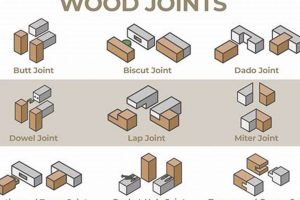
The magnitude of surface area within a woodworking joint directly correlates with its overall strength. A larger surface area provides a greater expanse for adhesive bonding or mechanical interlocking, thereby augmenting the joint’s capacity to withstand applied forces. Increased surface area in a joint translates to a more robust connection, minimizing the likelihood of failure under stress. A basic butt joint, characterized by minimal surface area, exhibits relatively low strength. Conversely, a mortise and tenon joint, with significantly greater contact surface, demonstrably outperforms the butt joint under equivalent loading conditions. The increased surface for adhesion and mechanical connection distributes stress over a larger area, reducing stress concentrations.
Dovetail joints provide a further example of the principle. The interlocking tails and pins create a substantial surface area for adhesive bonding and, critically, generate a mechanical lock that resists tensile forces. The long grain-to-long grain glue surface area is an advantage of many joints. In the practical application of furniture construction, the effectiveness of dovetail joints for drawer fronts, hinges entirely on this principle. Joints designed to maximize contact area often require more precision in their execution. The practical benefit of the added precision, however, results in a much stronger longer lasting build.
In summary, surface area is a critical determinant of joint strength in woodworking. Optimizing joint design to maximize bonding or contact surface enhances durability and resistance to failure. Careful consideration of surface area during the design and execution phases can significantly improve the longevity and structural integrity of woodworking projects. While increasing surface area helps, considerations of joint geometry must also be taken into account to account for any other weaknesses that may form from maximizing the surface area.
2. Mechanical Interlock

Mechanical interlock represents a critical attribute of high-strength woodworking joints. This refers to the physical engagement of joint components achieved through specific geometric designs, independent of adhesive bonding. The effectiveness of the interlock directly influences the joint’s resistance to separation under load. A properly executed mechanical interlock distributes stress across a wider area, mitigating stress concentrations that can lead to premature failure. The dovetail joint serves as a prime example, with its interlocking tails and pins creating a robust resistance to tensile forces. This inherent strength makes dovetails particularly well-suited for drawer construction, where repeated pulling and pushing stresses are common. The absence of mechanical interlock, as seen in a simple butt joint, necessitates reliance solely on adhesive strength, resulting in a significantly weaker connection.
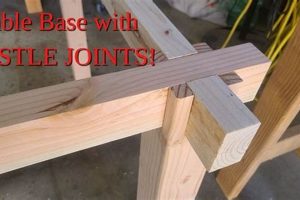
Beyond dovetails, mortise and tenon joints also exemplify the benefits of mechanical interlock. The tenon, precisely fitted within the mortise, provides substantial resistance to shear forces. Variations of this joint, such as wedged or through tenons, further enhance the interlock by incorporating additional mechanical constraints. Likewise, lap joints, particularly full lap joints, demonstrate increased strength due to the overlapping wood sections that resist bending and shear forces. The choice of joint design should align with the anticipated stresses and loading conditions of the finished product. In situations where high tensile strength is paramount, dovetails or modified mortise and tenon joints are generally preferred. For applications where shear strength is more critical, lap joints or traditional mortise and tenon designs may be more appropriate.
In summary, mechanical interlock is an indispensable component of strong woodworking joints. It contributes significantly to the joint’s overall load-bearing capacity and resistance to failure. Designers and woodworkers should prioritize joint designs that incorporate robust mechanical interlocking features, particularly in applications where structural integrity and longevity are paramount. While adhesive bonding plays a crucial role, mechanical interlock provides an essential safety net, ensuring joint stability even if adhesive bonds weaken over time. The optimal combination of mechanical interlock and adhesive bonding results in woodworking joints that exhibit exceptional strength and durability.
3. Adhesive Strength

The capacity of an adhesive to resist separation under stress is a critical factor in determining the overall strength of a woodworking joint. Adhesive strength directly influences the load-bearing capacity and longevity of joined wood components. The selection and application of appropriate adhesives are therefore paramount for achieving robust and durable connections.
- Bond Type and Material Compatibility
Adhesive strength is fundamentally linked to the type of adhesive used and its compatibility with the specific wood species being joined. Different adhesives exhibit varying degrees of adhesion to different wood types. For example, polyvinyl acetate (PVA) adhesives are commonly used for general woodworking applications, but epoxy adhesives may be preferred for oily or resinous woods where PVA adhesion is compromised. The adhesive must form a robust molecular bond with the wood fibers to effectively transfer stress across the joint.
- Surface Preparation and Application Technique
The strength of an adhesive bond is heavily dependent on the quality of surface preparation. Surfaces must be clean, dry, and free from contaminants such as dust, oil, or loose fibers. Proper sanding can increase surface area and improve mechanical keying of the adhesive. Furthermore, the adhesive must be applied evenly and in sufficient quantity to ensure complete wetting of the wood surfaces. Insufficient or uneven application leads to weak spots and reduced overall joint strength.
- Curing Time and Clamping Pressure
Adhesive strength develops during the curing process, which involves chemical reactions that solidify the adhesive. Proper curing requires adequate time and, in many cases, sustained clamping pressure. Clamping ensures intimate contact between the wood surfaces, maximizing the area of adhesive bonding. Insufficient curing time or inadequate clamping pressure can significantly reduce adhesive strength, resulting in a weakened joint that is susceptible to premature failure. Temperature and humidity can also affect curing time, so one should consider these during application of the adhesive.
- Environmental Resistance
The long-term durability of an adhesive bond is contingent on its resistance to environmental factors such as moisture, heat, and ultraviolet (UV) radiation. Exposure to these elements can degrade the adhesive over time, leading to reduced strength and eventual joint failure. Adhesives formulated for exterior use are designed to withstand these environmental stresses, while interior-grade adhesives may be unsuitable for outdoor applications. When choosing an adhesive, assess the intended environment of the project and select an adhesive with appropriate resistance characteristics.
In summary, adhesive strength is a multifaceted property crucial to the integrity of woodworking joints. Factors such as adhesive type, surface preparation, curing conditions, and environmental resistance all contribute to the overall performance of the joint. Optimizing these factors ensures that the adhesive component contributes effectively to creating connections exhibiting maximum strength and durability. The optimal combination of these factors enhances the longevity and structural integrity of woodworking projects, minimizing the risk of joint failure and ensuring structural stability.
4. Wood Species

The selection of wood species is a critical determinant in achieving structurally sound woodworking joints. The inherent mechanical properties of different wood types directly influence the strength, stability, and longevity of any connection. Matching the appropriate wood species to the specific demands of the joint is essential for optimal performance.
- Density and Hardness
Wood density and hardness are primary factors influencing joint strength. Denser hardwoods, such as oak, maple, and hickory, exhibit greater resistance to compression, shear, and tensile forces compared to softer woods like pine or cedar. Joints constructed from denser woods are better able to withstand stress and maintain their structural integrity over time. The use of harder woods in high-stress areas, such as the legs of a table or the rails of a chair, can significantly improve the overall durability of the piece. Conversely, using softer woods in these areas may lead to premature joint failure.
- Grain Orientation and Stability
Grain orientation plays a crucial role in joint stability. Wood expands and contracts differently depending on the direction of the grain, and this movement can induce stress on joints. Quarter-sawn wood, with its vertical grain orientation, exhibits greater dimensional stability compared to flat-sawn wood, making it a preferred choice for joints that require minimal movement. Furthermore, the alignment of grain direction within a joint can influence its resistance to splitting or cracking under stress. Careful consideration of grain orientation during joint design and construction can minimize the risk of wood movement-related failures.
- Adhesive Compatibility
Different wood species exhibit varying degrees of compatibility with different types of adhesives. Some woods, such as oily or resinous species like teak or rosewood, can be difficult to bond effectively with certain adhesives. In such cases, specialized adhesives, such as epoxy resins, may be required to achieve a strong and durable bond. The surface preparation of the wood, including cleaning and sanding, is also critical for ensuring proper adhesive bonding. Matching the appropriate adhesive to the specific wood species and application is essential for maximizing joint strength.
- Workability and Joint Geometry
The workability of a wood species influences the precision and ease with which complex joint geometries can be created. Some hardwoods, while strong, may be difficult to machine or shape, making it challenging to create tight-fitting joints. Softer woods are generally easier to work with but may not provide the necessary strength for demanding applications. Selecting a wood species that balances workability with strength requirements is essential for achieving optimal joint performance. The ability to create precise and well-fitting joints is a critical factor in maximizing their overall strength and stability.
The selection of wood species directly impacts the attainable strength and longevity of woodworking joints. Density, grain orientation, adhesive compatibility, and workability each contribute to the overall performance of the connection. Careful consideration of these factors ensures the selection of a wood species that optimally suits the specific demands of the joint and the intended application. The integration of appropriate wood selection with sound joinery techniques results in woodworking projects exhibiting superior structural integrity and durability.
5. Joint Geometry
The configuration of a woodworking joint, encompassing its shape, angles, and dimensional proportions, critically influences its load-bearing capacity and overall structural integrity. The efficiency with which a joint transmits force and resists separation is directly correlated to its geometric design. Therefore, careful consideration of joint geometry is paramount in achieving robust and durable woodworking connections.
- Surface Area Maximization
Joint geometry dictates the available surface area for adhesive bonding or mechanical interlock. Designs that maximize this area generally exhibit greater strength. For example, a dovetail joint, with its interlocking tails and pins, provides significantly more surface area than a simple butt joint. The increased surface facilitates a stronger adhesive bond and distributes stress more evenly across the joint, mitigating stress concentrations. This principle extends to mortise and tenon joints, where the tenon length and width directly influence the bonding surface and the joint’s resistance to shear forces.
- Load Distribution Efficiency
The geometric profile of a joint affects how efficiently it distributes applied loads. Joints designed to transfer forces along the wood grain, rather than perpendicular to it, tend to be stronger. A scarf joint, used to join two pieces of wood end-to-end, exemplifies this principle. By creating a long, angled surface, the scarf joint distributes tensile forces along the grain, minimizing the risk of splitting or failure. Conversely, joints that concentrate stress in localized areas are more prone to failure. Sharp internal corners, for instance, can create stress risers that weaken the joint. Fillets or rounded corners can mitigate this effect by distributing stress more evenly.
- Mechanical Interlock Optimization
Joint geometry determines the effectiveness of mechanical interlocking features. Dovetail joints, as previously mentioned, rely on the geometric shape of the tails and pins to resist tensile forces. The angle and taper of these features directly influence the joint’s holding power. Similarly, the shape and dimensions of a mortise and tenon affect the joint’s resistance to racking and shear. Tapered tenons, for example, can create a tighter, more secure fit within the mortise. In the context of lap joints, the amount of overlap and the angle of the lap influence the joint’s resistance to bending forces.
- Precision and Fit
The geometric complexity of a joint influences the precision required for its execution. Intricate joints with tight tolerances demand meticulous craftsmanship and accurate cutting techniques. Deviations from the intended geometry can compromise the joint’s strength and stability. Gaps or misalignments can reduce the bonding surface area, create stress concentrations, and weaken the mechanical interlock. For example, a poorly fitted dovetail joint will exhibit reduced strength and may be prone to failure under load. Therefore, careful attention to geometric accuracy is essential for achieving optimal joint performance.
Joint geometry is thus a fundamental aspect of strong woodworking joints. By optimizing surface area, load distribution, mechanical interlock, and precision fit, it is possible to create connections that exhibit exceptional strength and durability. The careful selection and execution of appropriate joint geometries, tailored to the specific demands of the application, are essential for ensuring the structural integrity and longevity of woodworking projects. Joint geometry and factors like adhesives and woodworking are all an integral part to the process.
Frequently Asked Questions
This section addresses common inquiries regarding the selection, application, and performance of structurally sound woodworking joints. These answers are intended to provide clarity and guidance for both novice and experienced woodworkers.
Question 1: What constitutes a “strong” woodworking joint?
A strong woodworking joint exhibits high resistance to separation under load. This resistance stems from a combination of factors, including surface area for adhesive bonding, mechanical interlock, the properties of the wood species used, and the precision of the joint’s execution. A truly strong joint effectively distributes stress and maintains its integrity over extended periods.
Question 2: Is adhesive alone sufficient for creating a strong joint?
While adhesive bonding is a crucial component of many woodworking joints, it is rarely sufficient on its own. Joints that rely solely on adhesive strength are inherently weaker and more susceptible to failure than those incorporating mechanical interlocking features. A dovetail or mortise and tenon joint, for example, offers significantly greater resistance to tensile forces compared to a simple butt joint relying solely on adhesive.
Question 3: Which wood species are best suited for strong woodworking joints?
Dense hardwoods, such as oak, maple, and hickory, are generally preferred for applications requiring high joint strength. These species exhibit superior resistance to compression, shear, and tensile forces compared to softer woods like pine or cedar. The choice of wood species should align with the specific demands of the joint and the intended use of the finished piece.
Question 4: How important is precision in joint construction?
Precision is paramount in achieving strong and durable woodworking joints. Gaps, misalignments, or inconsistencies in joint fit compromise strength and stability. Even minor imperfections can create stress concentrations, leading to premature failure. Careful execution and adherence to precise tolerances are essential for maximizing the performance of any woodworking joint.
Question 5: Does joint geometry impact overall strength?
Joint geometry plays a significant role in determining overall strength. Designs that maximize surface area for adhesive bonding or mechanical interlock tend to be stronger. Furthermore, the shape and angles of a joint influence how efficiently it distributes stress. Joints designed to transfer forces along the wood grain, rather than perpendicular to it, are generally more resistant to failure.
Question 6: What are common indicators of a failing woodworking joint?
Signs of a failing woodworking joint may include visible gaps, cracks, or movement between joint components. A creaking or popping sound when the joint is stressed can also indicate a weakening connection. In cases where adhesive has failed, separation of the joint surfaces may be evident. Promptly addressing these indicators is crucial to prevent further damage and potential structural failure.
In summary, the creation of structurally sound woodworking joints requires careful consideration of multiple factors, including adhesive selection, wood species, joint geometry, and construction precision. A holistic approach, encompassing all these elements, ensures the longevity and integrity of woodworking projects.
The subsequent article section will delve into testing methodologies for the assessment of various woodworking joints.
strongest woodworking joints
This exploration has underscored the multifaceted nature of creating enduring woodworking connections. The confluence of surface area maximization, effective mechanical interlock, judicious adhesive selection, appropriate wood species, and precise joint geometry dictates the ultimate load-bearing capacity of any assembly. Neglecting any of these critical elements compromises the structural integrity and diminishes the longevity of the finished product.
The pursuit of robust joinery demands a commitment to informed material selection, meticulous execution, and a thorough understanding of stress dynamics. The enduring legacy of woodworking lies in the strength and stability of its joints, a testament to the craftsman’s skill and knowledge. Continued research and refinement of woodworking techniques remain essential for advancing the art and ensuring the preservation of structural integrity in wooden constructions for generations to come. Further study of testing methodologies is encouraged to solidify understanding of joint performance.