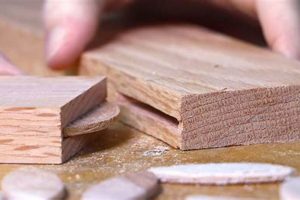
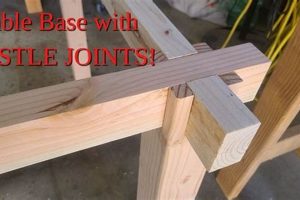
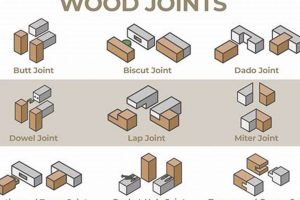
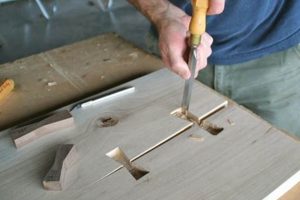
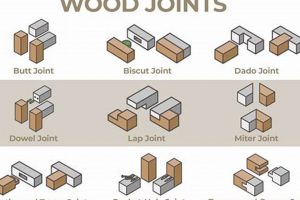
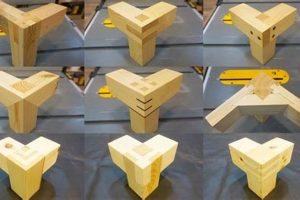
This method of joining wood pieces, often seen in frame construction, utilizes interlocking projections and recesses to create a strong and visually appealing connection. Each piece is precisely shaped to fit together, forming a robust and stable structure. The resulting connection resists pulling forces due to the mechanical interlock, making it suitable for applications where strength is paramount, such as table aprons or cabinet frames.
The inherent strength of this joint lies in the large gluing surface area and the mechanical locking effect. The geometry distributes stress effectively across the joint, minimizing the risk of failure. Historically, variations of this joint have been employed for centuries in furniture making and architectural applications, demonstrating its longevity and effectiveness. Its use often indicates quality craftsmanship and attention to detail, elevating the aesthetic value of the finished product.
The subsequent sections will delve into specific techniques for creating this type of joint, including the tools required, variations in design, and considerations for wood selection and glue application.
Essential Considerations for a Robust Interlocking Wood Connection
Achieving a successful and structurally sound interlocking wood connection requires careful planning and execution. The following tips offer insights into key aspects of the process, from material selection to final assembly.
Tip 1: Wood Selection is Paramount: Dense hardwoods, such as maple or oak, are generally preferred for their inherent strength and resistance to splitting. The chosen wood species should be well-seasoned to minimize warping or shrinkage after the joint is assembled.
Tip 2: Precise Layout is Critical: The accuracy of the layout directly impacts the fit and strength of the joint. Employ precise measuring tools, such as a marking gauge and sharp knives, to transfer dimensions onto the wood. Any inaccuracies in the layout will be amplified during the cutting process.
Tip 3: Cutting Techniques Matter: Sharp chisels and saws are essential for creating clean, crisp edges and tight-fitting interlocking elements. When using power tools, exercise caution and maintain control to prevent tear-out or over-cutting.
Tip 4: Dry-Fit Before Gluing: A dry-fit allows for verification of the joint’s fit and alignment prior to adhesive application. This step allows for corrections and adjustments, ensuring a seamless assembly.
Tip 5: Adhesive Selection and Application: Choose a high-quality wood glue that is appropriate for the wood species being joined. Apply the adhesive evenly to all mating surfaces, ensuring adequate coverage without excessive squeeze-out.
Tip 6: Clamping Strategies: Apply even clamping pressure to ensure that the joint is fully seated and aligned during the curing process. Protect the wood surface with cauls to prevent indentation from the clamps.
Tip 7: Surface Finishing Considerations: Consider the final finish and its potential impact on the joint. Some finishes may penetrate the wood and affect the glue bond, so it is advisable to test the finish on a sample piece prior to application.
Meticulous attention to these details will result in a strong, durable, and aesthetically pleasing interlocking wood connection. The effort invested in proper execution will be reflected in the longevity and integrity of the finished piece.
The following section will cover the common challenges and troubleshooting of this specific woodworking area.
1. Interlocking Geometry

Interlocking geometry is fundamental to the structural integrity and aesthetic character of a particular type of wood joinery. The precise configuration of interlocking elements dictates the joint’s resistance to tensile and shear forces, as well as its visual appeal within the finished piece. The following facets explore the critical relationship between geometrical design and joint performance.
- Tooth Profile and Angle
The shape and angle of each tooth significantly impact the joint’s mechanical advantage. Steeper angles offer greater resistance to pulling forces but may be more prone to splitting. A well-designed tooth profile distributes stress evenly across the joint, preventing localized failures. Examples include dovetail-like or square-cut teeth, each influencing the joint’s strength and aesthetic appearance.
- Contact Surface Area
The amount of surface area in contact between the interlocking elements directly correlates to the strength of the glue bond. A larger surface area provides more opportunity for adhesive to bind the wood fibers together, resulting in a stronger connection. Intricate geometries with multiple teeth inherently increase the contact surface, enhancing the overall joint integrity.
- Interlock Density
The density of the interlocking elements, or the number of teeth per unit length, affects both the strength and visual complexity of the joint. A higher density provides greater resistance to racking forces but may also require more precise cutting and fitting. This design consideration influences the aesthetic balance and structural robustness.
- Joint Symmetry and Balance
Symmetry in the interlocking geometry contributes to the overall stability and visual harmony of the joint. Balanced designs distribute stress evenly and prevent twisting or warping. Asymmetrical geometries, while aesthetically interesting, may require additional reinforcement to ensure structural integrity.
The interplay of these geometrical facets determines the efficacy and visual character of this specific type of woodworking joint. Optimization of these parameters, considering material properties and intended application, is crucial for creating durable and aesthetically pleasing wood structures. The choice of geometry should reflect a careful balance between structural requirements and artistic expression, enhancing both the form and function of the final product.
2. Glue Surface Area

Within the context of interlocking joinery, the extent of glue surface area functions as a primary determinant of joint strength and long-term stability. The specific design inherently maximizes the bonding surface through its intricate pattern of interlocking projections and recesses. A greater surface area translates to a more expansive region for adhesive bonding, consequently enhancing the joint’s capacity to withstand tensile and shear stresses. For example, in applications such as cabinet frame construction, the increased glue surface contributes significantly to the structural integrity required to support substantial weight and resist deformation over time.
Variations in the design impact glue surface area, and thus the joint’s performance. More complex designs with a higher density of interlocking elements provide more surface. Furthermore, the precise preparation of the wood surfaces, ensuring flatness and cleanliness, is crucial for optimal adhesive contact. An example of practical significance is observed in antique furniture where well-executed joints have maintained structural integrity for centuries due to a combination of robust design and ample gluing area. Understanding this principle allows woodworkers to make informed decisions regarding joint selection and execution, optimizing for both strength and aesthetic considerations. The effective use of appropriate clamping techniques during glue-up is also an integral part of the bond formed, and can lead to greater joint strength.
In summary, glue surface area plays a crucial role in defining the performance characteristics of this joint type. While factors like wood species and adhesive selection are significant, the geometrical maximization of bonding area remains a cornerstone of its effectiveness. Challenges in achieving optimal glue surface area include inaccurate cutting or fitting, leading to gaps and reduced contact. Addressing these challenges through meticulous craftsmanship and adherence to best practices ensures the creation of joints that are both structurally sound and aesthetically pleasing, aligning with the broader aims of quality woodworking.
3. Wood Fiber Orientation

Wood fiber orientation exerts a substantial influence on the strength and stability of joints, particularly those employing interlocking configurations. The alignment of wood fibers, whether parallel or perpendicular to the applied stress, dictates the joint’s resistance to splitting and deformation. When fibers run parallel to the force, the wood exhibits greater tensile strength; conversely, perpendicular orientation weakens the material’s capacity to withstand stress. In a configuration like a interlocking joint, careful consideration of fiber direction is imperative to maximize load-bearing capacity. For instance, aligning the wood grain of interlocking components parallel to the direction of anticipated tensile stress minimizes the risk of joint failure. Conversely, improper fiber orientation can lead to stress concentrations, weakening the overall structure and increasing susceptibility to splitting.
A practical example illustrating the significance of fiber orientation can be observed in the construction of heirloom-quality furniture. Cabinet makers meticulously select and orient wood components to ensure that the grain direction of the interlocking elements aligns with the primary stress vectors. This approach enhances joint integrity and contributes to the furniture’s longevity. Moreover, the direction of the grain also plays a role in the aesthetic appeal of the joint, adding visual interest and showcasing the natural characteristics of the wood. Therefore, when cutting this specific joint, the direction of the wood grain should be at an angle, if possible, but in alternating directions on the different pieces being joined.
In conclusion, the strategic management of wood fiber orientation is indispensable for achieving robust and enduring joints. Understanding the anisotropic nature of wood and its interaction with stress allows woodworkers to optimize joint design and component selection for enhanced structural performance. Challenges in managing fiber orientation, such as material imperfections or complex geometric constraints, necessitate careful planning and meticulous execution. A holistic approach that integrates fiber orientation considerations with other aspects of joint design ensures the creation of woodworking constructions that are not only structurally sound but also visually compelling, exemplifying the fusion of functionality and aesthetics in the craft.
4. Joint Precision
The interlocking joint’s structural integrity and aesthetic appeal are intrinsically linked to the precision with which it is executed. Deviations from accurate measurements and cuts compromise the tightness of the fit, directly reducing the glue surface area and the mechanical resistance of the interlocking elements. For example, even a slight discrepancy in the angle of a tooth can prevent it from seating properly, leading to a weaker bond and potential stress concentrations. The effect is amplified when multiple such imperfections accumulate across the joint.
Joint precision dictates its ability to withstand applied forces and maintain its intended form over time. A well-fitted joint distributes stress evenly, minimizing the risk of failure at any single point. Conversely, imprecisely crafted joints create localized stress concentrations, making them vulnerable to splitting or deformation under load. The practical implications are evident in furniture construction where poorly executed joints lead to wobbly tables, sagging shelves, and ultimately, premature structural failure. The creation of perfect joints on a repetitive basis ensures a consistent product output.
In conclusion, joint precision is not merely a matter of aesthetic preference but a fundamental requirement for the structural integrity and longevity of this type of wood joint. Achieving this level of accuracy demands meticulous attention to detail, proficiency in woodworking techniques, and the use of precision tools. Challenges arise from material variations, tool limitations, and human error, but overcoming these requires a commitment to continuous improvement and a deep understanding of the principles governing the joint’s behavior. Ignoring it undermines the entire purpose of the design, rendering it an ineffective and unreliable connection. Precise cutting every time, is the key.
5. Stress Distribution

The efficacy of an interlocking joint hinges significantly on how it manages and distributes stress under load. This joining method, by its very nature, introduces complex force dynamics due to its interlocking elements. The design aims to distribute stress evenly across the entire joint surface, mitigating potential weak points that could lead to failure. An effectively designed joint spreads the load, preventing any single tooth or glue line from bearing excessive stress. In applications such as heavy-duty shelving units or structural frame construction, optimized stress distribution becomes paramount. If stress is concentrated in a localized area, premature wear, cracking, or catastrophic failure may occur, regardless of the quality of materials or the strength of the adhesive used. This is also relevant when using softer types of wood that could crack if the teeth are too thin.
Achieving optimal stress distribution in this type of joint necessitates careful consideration of several factors. These include the geometry of the interlocking elements, the material properties of the wood being used, and the precision of the joint’s execution. For instance, a tooth with a rounded profile may distribute stress more evenly than one with a sharp corner, which can act as a stress riser. Likewise, using a denser hardwood can improve the joint’s overall load-bearing capacity. In historical examples, such as timber-framed buildings, the long-term stability is a testament to effective distribution principles employed by master craftsmen over generations. Examples of failures due to poor management of it include furniture with wobbly legs, drawers that stick or separate, and structures that exhibit deformation or collapse under normal use.
In summary, the relationship between stress distribution and the joint’s performance cannot be overstated. A well-designed and executed interlocking joint excels at dispersing stress, leading to a robust, durable, and long-lasting connection. Challenges in achieving optimal distribution arise from factors such as design complexity, material inconsistencies, and fabrication errors. Overcoming these challenges requires a thorough understanding of engineering principles, meticulous craftsmanship, and a commitment to quality in every aspect of the woodworking process. By prioritizing the management of stress, woodworkers can unlock the full potential of this joining method, creating pieces that are both structurally sound and aesthetically pleasing. The end result is a joint far stronger than a basic butt joint.
Frequently Asked Questions About Interlocking Wood Joinery
This section addresses common inquiries regarding the design, application, and performance characteristics of interlocking wood joinery, offering concise and authoritative answers.
Question 1: What types of wood are most suitable for creating this type of joint?
Dense hardwoods, such as oak, maple, and cherry, are generally preferred due to their inherent strength and resistance to splitting. Softwoods, while usable, may require careful design modifications and reinforcement to ensure adequate joint integrity.
Question 2: What tools are essential for creating a precise and accurate interlocking joint?
Essential tools include precision measuring instruments (marking gauges, calipers), sharp hand saws or specialized power tools (dovetail saws, routers with appropriate jigs), and a variety of chisels for fine-tuning the fit. The accuracy of these tools directly impacts the quality of the joint.
Question 3: How does the glue selection influence the strength and longevity of the joint?
A high-quality wood glue, specifically formulated for hardwoods or softwoods, is crucial for creating a durable bond. The glue should exhibit adequate open time for assembly and provide a strong, water-resistant seal to prevent joint separation over time.
Question 4: What are the common causes of failure in this type of joint?
Common causes of failure include inaccurate cutting, insufficient glue surface area, improper wood grain orientation, and inadequate clamping pressure during glue-up. These factors can lead to stress concentrations and premature joint failure.
Question 5: Can this joinery technique be used for both structural and decorative purposes?
Yes, interlocking joinery serves both structural and decorative functions. The interlocking elements provide mechanical strength, while the visible joint pattern can enhance the aesthetic appeal of the finished piece, showcasing craftsmanship and attention to detail.
Question 6: Are there variations in the design of interlocking elements that can influence joint performance?
Yes, variations in tooth shape, angle, and density significantly impact the joint’s resistance to tensile and shear forces. The specific design should be tailored to the intended application and the properties of the wood being used.
Proper material selection, precise execution, and a thorough understanding of the underlying principles are essential for achieving robust and aesthetically pleasing interlocking wood joints.
The subsequent section will cover case studies.
Woodworking Castle Joint
This exploration has elucidated the core principles governing the design, execution, and performance characteristics of the woodworking castle joint. The inherent strength, stemming from its interlocking geometry and maximized glue surface area, is inextricably linked to the precision of its creation and the strategic management of wood fiber orientation. The effective distribution of stress, achieved through careful planning and meticulous craftsmanship, ensures the longevity and structural integrity of any construction employing this method.
The diligent application of these principles will empower woodworkers to create robust, aesthetically pleasing connections that stand the test of time. Continued research and refinement of this technique will undoubtedly yield further advancements, solidifying its place as a hallmark of quality and ingenuity in the realm of woodworking. The understanding and skillful application of this technique represent a tangible investment in lasting craftsmanship.