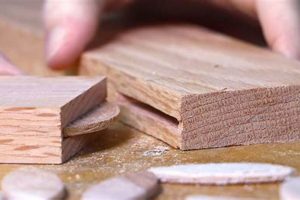
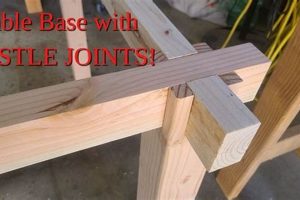
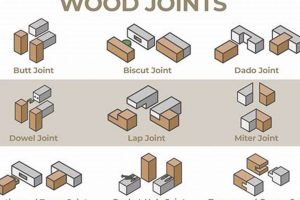
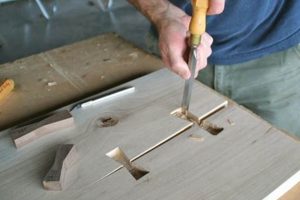
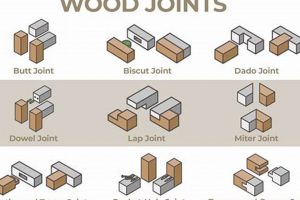
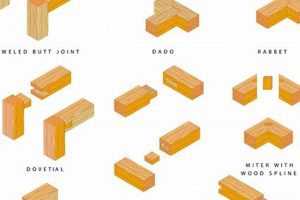
Connections formed where two pieces of wood meet at an angle, typically 90 degrees, are fundamental to constructing stable and visually appealing wooden structures. These junctions are critical in furniture making, cabinet construction, and various other wood-based projects, providing structural integrity and defining the overall aesthetic. Examples include the simple butt joint, the stronger mortise and tenon, and the aesthetically pleasing dovetail.
The selection and execution of these connections significantly impact the longevity and appearance of a finished piece. A well-executed joint ensures durability and resistance to stress, preventing warping and separation over time. Historically, different techniques have been developed and refined to address specific structural needs and design preferences, resulting in a rich variety of options, each offering unique strengths and visual characteristics. The appropriate selection for a given project depends on factors such as the intended use, the type of wood, and the desired aesthetic.
This article will delve into several common methodologies for creating these critical structural elements. We will examine the characteristics of each method, discussing their relative strengths and weaknesses, appropriate applications, and techniques for achieving precise and reliable results.
Considerations for Effective Intersections
Achieving strong and visually appealing intersections in woodworking requires careful planning and execution. The following points provide guidance for selecting and implementing appropriate techniques.
Tip 1: Joint Selection Based on Load: The expected stress on the connection should dictate the selection. High-stress applications necessitate robust options like mortise and tenon or dovetail, while low-stress applications might suffice with a simple butt joint reinforced with fasteners.
Tip 2: Wood Properties and Compatibility: Consider the wood’s properties. Softer woods benefit from joints with larger surface areas for gluing. When joining dissimilar woods, account for differing expansion and contraction rates to prevent joint failure.
Tip 3: Accurate Cutting and Fit: Precise cuts are essential. Even slight inaccuracies can compromise strength and aesthetics. Employ accurate measuring tools and techniques, and test the fit before applying adhesive.
Tip 4: Glue Selection and Application: Use a high-quality wood glue appropriate for the wood type and intended environment. Apply glue evenly to all mating surfaces, ensuring adequate coverage without excessive squeeze-out.
Tip 5: Clamping Pressure: Apply sufficient clamping pressure to ensure tight contact between the joint surfaces while the glue sets. Use appropriate clamps and cauls to distribute pressure evenly and prevent damage to the wood.
Tip 6: Reinforcement Techniques: Consider reinforcing with fasteners like screws or dowels, especially for joints that may experience high stress or vibration. Ensure the fasteners are appropriately sized and placed to avoid splitting the wood.
Tip 7: Addressing Wood Movement: Design connections to accommodate wood movement due to changes in humidity. Allowing some degree of play within the joint can prevent stress build-up and potential failure.
Careful consideration of load, material properties, accuracy, and proper adhesive techniques result in strong, durable, and aesthetically pleasing connections. These factors contribute significantly to the overall quality and longevity of woodworking projects.
The next section will explore common challenges encountered during their construction and methods for overcoming these obstacles.
1. Strength

The capacity of a wooden structure to withstand applied forces without failure is fundamentally dependent on the methods employed at its intersections. These methods, often involving the bonding or interlocking of two pieces, are critical load-bearing elements. The choice of a particular technique directly determines the structural integrity of the entire assembly. For instance, a basic butt joint, relying solely on adhesive and fasteners applied end-to-end, exhibits limited resistance to racking forces. Conversely, a mortise and tenon, dovetail, or finger joint, which increase the surface area for adhesive bonding and/or provide mechanical interlocking, demonstrate significantly greater strength. A chair leg connected with a poorly executed joint will fail quickly under repeated use, whereas a robust joint will provide years of service.
The selection of a method should be based on the expected load and stresses. Cabinets intended to support heavy items require connections capable of handling significant shear forces and bending moments. In contrast, purely decorative elements may suffice with less robust techniques. Consider, for example, the construction of a bookshelf. Shelves supported by butt joints may sag over time under the weight of books. A stronger approach, like a dado joint or a shelf support system that integrates directly into the frame, will provide greater load-bearing capacity and prevent deformation. The use of appropriate fasteners such as screws, dowels or nails, can supplement joint strength and reduce stress on the adhesive itself.
Ultimately, the strength of a wooden assembly is inextricably linked to the quality of its intersections. Understanding the mechanical properties and load-bearing capacities of different methods allows for informed decisions, leading to durable and safe constructions. Failure to consider the stress will result in premature failure, compromising the longevity and intended function of the project. The selection and execution of these connections must be approached with careful consideration of the intended use and load requirements.
2. Accuracy
Precision in woodworking is paramount, particularly when forming connections. The integrity and visual appeal of these intersections hinge on the degree to which components are dimensioned and assembled with exactitude. Deviation from prescribed measurements, even marginal, can compromise structural strength and aesthetic harmony.
- Dimensional Precision
Achieving tight-fitting surfaces necessitates adhering to exact measurements during cutting and shaping. Error accumulation across multiple pieces can lead to misaligned connections, resulting in weakened structures and visually unappealing gaps. Mortise and tenon, dovetail, and mitered joints all demand dimensional accuracy. For example, an imprecisely cut tenon may fit loosely in its mortise, reducing the adhesive surface area and compromising the strength of the joint. A poorly mitered joint will exhibit an unsightly gap along the seam.
- Angular Accuracy
Many methods rely on precise angles, typically 45 or 90 degrees. Inaccurate angles compromise the fit and structural integrity of the structure. Imagine a frame where methods are not perfectly square; the resulting assembly will be unstable and visually skewed. This facet is vital in cabinet making and frame construction, where consistently square structures are essential for both function and appearance.
- Tool Calibration and Maintenance
The accuracy of the tools used directly influences the precision of the cuts. Saw blades must be sharp and properly aligned, and measuring instruments must be calibrated regularly. A dull saw blade can produce ragged edges and inaccurate dimensions, making tight-fitting surfaces difficult to achieve. A miscalibrated square or ruler will lead to incorrect measurements, undermining the entire process.
- Assembly Technique
Even with accurate cuts, proper assembly is crucial. Clamping pressure must be applied evenly to ensure surfaces are in full contact during the curing process. Misaligned clamping or insufficient pressure can lead to gaps and weakened junctions. Proper use of jigs and fixtures can aid in achieving accurate alignment during assembly, particularly with complex methods.
In summary, accuracy is not merely a desirable trait; it is a prerequisite for creating strong, durable, and visually appealing structures. Meticulous attention to detail, proper tool maintenance, and precise assembly techniques are essential for ensuring the success of any woodworking project involving these critical connections. The investment in precision yields dividends in the form of longevity, stability, and aesthetic quality.
3. Aesthetics

Visual appeal is a key consideration in woodworking, and the design of these junctions significantly influences the overall aesthetic. The chosen method can either enhance or detract from the piece’s intended style, making its selection a crucial aspect of the design process.
- Visibility and Concealment
The degree to which a junction is visible directly impacts the visual presentation. Certain methods, such as the dovetail, are often showcased as decorative elements, emphasizing the craftsmanship involved. Others, like the butt joint, are typically concealed or minimized to maintain a cleaner, less detailed appearance. For example, exposed dovetails on a drawer front can add a touch of traditional elegance, while hidden butt joints on a cabinet frame create a more contemporary, minimalist look.
- Joint Line Characteristics
The appearance of the joint line itself contributes to the overall aesthetic. A crisp, clean line indicates precision and quality, while a gappy or uneven line detracts from the piece’s visual appeal. Mitered joints, when executed precisely, can create a seamless, almost invisible line, while finger joints produce a distinct, repetitive pattern. The selection should complement the design and wood grain.
- Style and Period Appropriateness
Different methods are associated with various styles and periods. Dovetails are commonly found in antique furniture, reflecting traditional craftsmanship. Mitered joints are often used in modern designs to achieve clean lines. Choosing a method appropriate for the intended style enhances the authenticity and visual coherence of the piece. Using anachronistic methods can appear incongruous and detract from the design.
- Grain Matching and Continuity
Careful attention to grain matching across a connection enhances its visual integration. Aligning the grain pattern across two pieces creates a sense of continuity and unity, making the structure appear as a single, cohesive unit. This technique is particularly effective with mitered methods, where a seamless transition in the grain can be achieved with careful planning and execution. Poor grain matching, conversely, can create a jarring visual disruption.
The interplay between these considerations underscores the importance of aligning junction selection with aesthetic goals. Whether the aim is to highlight craftsmanship through exposed methods or to achieve a clean, minimalist look through concealed options, careful planning and precise execution are paramount. By thoughtfully considering these aspects, woodworkers can create pieces that are not only structurally sound but also visually compelling.
4. Wood Type

The characteristics of the chosen wood species exert a significant influence on the selection, design, and execution of woodworking junctions. Properties such as density, hardness, grain structure, and stability directly impact the joint’s strength, durability, and long-term performance. A dense, hard wood like maple or oak, for example, can withstand the stresses associated with complex methods like dovetails or mortise and tenon, while a softer wood like pine may require modifications to these techniques or a different method altogether. The inherent structural properties of the wood must be carefully considered to ensure the connection can bear the intended load without failure. Failure to account for wood type can lead to premature joint failure, warping, or cracking.
The selection also affects the type of adhesive best suited for the task. Certain wood species, particularly those with high oil content, may require specific adhesives that can bond effectively to their surfaces. For instance, gluing oily woods such as teak or rosewood necessitates the use of epoxy or specialized polyurethane adhesives rather than standard PVA (polyvinyl acetate) wood glues. Grain orientation is another critical factor. Aligning the grain properly across intersecting pieces maximizes strength and minimizes the risk of splitting or warping as the wood expands and contracts with changes in humidity. A practical example is the construction of a frame for a painting; using quartersawn wood, which is more dimensionally stable than plain-sawn wood, and aligning the grain direction minimizes the risk of the frame warping over time and damaging the artwork.
In summary, understanding the interplay between wood type and joint selection is fundamental to successful woodworking. The characteristics of the wood dictate the appropriate design and construction techniques, influencing the strength, stability, and aesthetic appeal of the finished product. While robust methods can compensate somewhat for weaker wood types, the selection of the wrong method, or improper execution, can lead to structural failure regardless of the woods initial strength. A comprehensive understanding of these variables enables woodworkers to make informed decisions, resulting in durable, aesthetically pleasing, and long-lasting creations.
5. Glue Surface

The area available for adhesive bonding is a critical determinant of a woodworking joint’s strength and longevity. Surface area directly correlates to the potential for adhesion; a larger bonding area provides greater resistance to tensile and shear forces. The design of these junctions inherently dictates the extent of available surface for adhesive application, influencing the overall structural integrity of the assembly. For instance, a simple butt joint offers a limited surface area compared to a finger joint or a mortise and tenon, resulting in a weaker bond and reduced resistance to stress. Similarly, a dovetail joint, with its interlocking tails and pins, presents a significantly expanded surface for adhesion, contributing to its renowned strength and stability.
The preparation of the surface is equally vital. Wood surfaces must be clean, dry, and free of contaminants such as dust, oil, or old finish. Contaminants impede adhesive penetration and reduce bond strength. Proper surface preparation techniques, such as sanding or wiping with a solvent, are essential to ensure a strong and reliable bond. The type of wood also affects the surface preparation required. Oily woods, as previously noted, require specialized surface treatments to promote adhesion. Furthermore, the clamping pressure applied during adhesive curing directly impacts the effectiveness of the bond. Adequate pressure ensures intimate contact between the surfaces, maximizing adhesive transfer and minimizing voids that could weaken the junction.
In conclusion, the magnitude and condition of the adhesive bonding area are crucial factors in the successful creation of robust and durable junctions. By maximizing the available surface and employing proper preparation and clamping techniques, woodworkers can ensure strong and long-lasting connections. The understanding of glue surface principles allows for optimization of both joint design and construction processes, contributing significantly to the overall quality and durability of woodworking projects. Ignoring the importance of glue surface can lead to joint failure and compromise the longevity of a project.
6. Clamping

Application of consistent pressure is essential during the adhesive curing process for woodworking junctions. This force, typically achieved through clamping devices, ensures intimate contact between mating surfaces. Effective clamping practices contribute directly to the strength and longevity of such connections.
- Pressure Distribution
Even pressure across the surfaces prevents localized stress concentrations that could weaken the bond. Cauls, which are rigid or semi-rigid materials placed between the clamp and the wood, distribute force evenly. Insufficient or uneven pressure may result in gaps, compromising the integrity. An example is the assembly of a mitered frame, where uneven clamping can lead to misalignment and visible gaps at the joint line.
- Clamp Selection
The type of clamping device must be appropriate for the joint type and geometry. Bar clamps provide long reach for larger assemblies, while pipe clamps offer versatility in length. Spring clamps are suitable for light-duty applications. Corner clamps facilitate 90-degree angles. Selection based on the specific demands is critical for proper performance. A butt joint, for example, might only require simple spring clamps, whereas a dovetail might need bar clamps and a vise.
- Glue Squeeze-Out Management
Clamping pressure should be sufficient to produce a small amount of glue squeeze-out, indicating complete coverage of the mating surfaces. Excessive squeeze-out, however, can be messy and require additional cleanup. Strategies for managing squeeze-out include using wax paper or tape to protect surrounding surfaces. Insufficient clamping can lead to a dry joint, resulting in an unreliable bond.
- Clamping Time
The duration for which the joint is clamped is governed by the adhesive type and environmental conditions. Most wood glues require a minimum clamping time, typically specified by the manufacturer. Premature removal of clamps can compromise the strength of the still-curing bond. Extended clamping times can improve the overall performance, especially in high-stress applications. For example, epoxy resins may require significantly longer clamping times than PVA glues.
These factors demonstrate the crucial role of consistent application pressure in achieving high-quality woodworking connections. Selecting the correct clamping methods and duration ensures the connection’s long-term stability and the overall structural integrity of the project.
7. Fasteners
Mechanical fasteners, such as screws, nails, and dowels, serve as critical supplements to adhesives in many woodworking intersections. While adhesives create a chemical bond between wood surfaces, fasteners provide immediate holding power and additional mechanical strength, particularly in situations involving high stress or vibration. The integration of fasteners can significantly enhance the overall durability and reliability of the junction. For instance, a butt joint, which inherently lacks significant strength, can be substantially reinforced by driving screws through one piece of wood into the other. Similarly, nails or screws can augment a mortise and tenon to resist racking forces and prevent separation of the joint under stress. In cabinet construction, screws are often used to secure face frames to cabinet boxes, providing both structural support and aesthetic integration.
The selection of appropriate fastener types and sizes is crucial. The fastener must be compatible with the wood species being used to prevent splitting or damage. For example, using coarse-threaded screws in softwoods is recommended to maximize holding power, whereas fine-threaded screws are better suited for hardwoods. The length of the fastener must also be sufficient to penetrate both pieces of wood adequately without protruding through the opposite side. Furthermore, the placement of fasteners should be strategic, avoiding areas of high stress concentration or potential interference with other components. Dowels, wooden cylinders inserted into pre-drilled holes, function as both alignment aids and structural reinforcements, particularly in edge-to-edge connections and frame construction. Proper dowel placement and adhesive application are essential for maximizing their effectiveness.
In summary, fasteners represent an indispensable component in many woodworking connections, offering supplemental strength, stability, and immediate holding power. The appropriate selection, application, and integration of fasteners significantly contribute to the overall robustness and longevity of wood assemblies. Challenges related to fastener selection, spacing, and installation are directly addressed by combining fasteners in order to bolster adhesive applications. A thorough understanding of the mechanical properties of both fasteners and wood enables informed decisions, leading to durable and aesthetically pleasing results in woodworking endeavors. The strategic use of fasteners complements adhesive techniques, addressing specific load requirements and wood characteristics for more robust outcomes.
Frequently Asked Questions
This section addresses common inquiries and clarifies misconceptions related to woodworking corner junctions, providing concise and informative answers.
Question 1: What is the most fundamental attribute of effective junctions?
Structural integrity constitutes the most critical attribute. A poorly executed connection compromises the overall stability and load-bearing capacity of the woodworking project.
Question 2: How does wood species impact joint selection?
Wood species significantly influence the choice. Softer woods often require methods that maximize surface area for gluing, whereas hardwoods can accommodate more intricate and mechanically robust options.
Question 3: What role does accuracy play in joint construction?
Precision in cutting and assembly is paramount. Even slight inaccuracies can weaken a junction and detract from its aesthetic appeal. Careful measurement and execution are essential.
Question 4: Why is clamping crucial during glue-up?
Clamping applies uniform pressure across the mating surfaces, ensuring intimate contact and maximizing the adhesive bond strength. Insufficient clamping results in weak and unreliable bonds.
Question 5: Can mechanical fasteners compensate for a poorly executed joint?
Mechanical fasteners, such as screws or dowels, can augment joint strength, they cannot fully compensate for fundamental deficiencies in design or execution. They serve as reinforcements, not replacements for good craftsmanship.
Question 6: How does joint selection impact the aesthetic of a woodworking project?
The choice has a direct bearing on visual appeal. Exposed methods can showcase craftsmanship, while concealed methods offer a cleaner, more minimalist aesthetic. The selection should align with the overall design intention.
In summary, the effectiveness of woodworking junctions relies on a combination of factors, including structural integrity, wood species, accuracy, clamping, reinforcement, and aesthetic considerations. Addressing each of these aspects contributes to strong, durable, and visually pleasing results.
The following section explores advanced techniques and strategies for creating specialized woodworking junctions.
Woodworking Corner Joints
This article has thoroughly explored the multifaceted considerations involved in creating reliable woodworking corner joints. The importance of strength, accuracy, appropriate material selection, surface preparation, and proper assembly techniques has been underscored. Mechanical reinforcement through fasteners was examined, along with the aesthetic implications of different methods. The frequently asked questions addressed common misconceptions and reinforced key principles for successful execution.
Mastering these fundamental principles of woodworking corner joints ensures not only the structural integrity and longevity of crafted pieces but also the elevation of woodworking from a mere assembly process to a true art form. Continued study and diligent application of these techniques will undoubtedly refine skills and foster innovative solutions for complex woodworking challenges. The enduring value of these intersections in woodworking warrants continued dedication to their refinement and optimization.