The connection of wood pieces is a fundamental skill in woodworking. Basic joinery techniques, accessible to those new to the craft, provide structural integrity and aesthetic appeal to finished projects. These elementary methods allow the creation of strong and durable assemblies using hand tools or power tools.
Mastering foundational joinery opens avenues for a wide range of projects, from simple boxes to complex furniture. Historically, the ability to create robust wood connections has been essential for construction and craftsmanship. Understanding these principles empowers individuals to build lasting items and reduces reliance on fasteners like screws or nails.
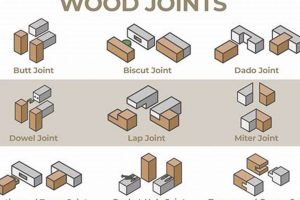
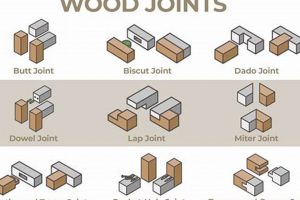
This article will explore several fundamental methods for joining wood. These include butt joints, lap joints, and mortise and tenon variations. Guidance on selecting the appropriate joint for specific applications and ensuring accurate execution will be provided.
Essential Guidance for Novice Woodworkers
Achieving strong and accurate connections is paramount. Focus on core strategies to improve joint construction and project outcomes.
Tip 1: Accurate Measurement is Critical. Precise marking of all joint components is essential for proper fit. Use a sharp marking knife and a reliable measuring tool.
Tip 2: Practice with Scrap Wood. Before committing to a final project, refine your technique on inexpensive material. This prevents costly errors.
Tip 3: Maintain Sharp Tools. Dull tools can tear wood fibers and make precise cuts difficult. Sharpening planes, chisels, and saws is crucial for clean joinery.
Tip 4: Ensure Squareness and Flatness. Start with lumber that is properly milled and square. Using a jointer and planer beforehand guarantees accurate dimensions.
Tip 5: Clamp Strategically. Apply even pressure when gluing up joints. Distribute clamps to avoid distortion and ensure a tight bond.
Tip 6: Allow Sufficient Drying Time. Follow adhesive manufacturer guidelines regarding drying periods. Premature stress on a joint can compromise its integrity.
Tip 7: Select the Appropriate Joint for the Task. Not every joint is suitable for every application. Consider the load and stress factors when selecting a construction method.
Applying these strategies will significantly improve joint quality and overall woodworking project success. Attention to detail and a commitment to practice are vital.
The next section will focus on specific joint types and their particular advantages in woodworking.
1. Strength

The strength of woodworking joints is paramount, particularly for beginners seeking to create durable and functional projects. The selection and execution of a given joint directly influences the longevity and load-bearing capacity of the finished piece. Novice woodworkers must prioritize strength considerations to ensure project success and safety.
- Surface Area of Glue Joint
A larger glued surface area contributes significantly to joint strength. Joints with greater contact between mating surfaces, such as lap joints or mortise and tenon joints, inherently provide more glue surface compared to butt joints. Increasing glue surface area distributes stress more evenly and enhances the overall bond. For example, a beginner constructing a bookshelf should opt for a joint that maximizes glue surface area to support the weight of the books.
- Mechanical Interlock
Certain joints rely on mechanical interlocking to resist separation, independent of the adhesive. Dovetail joints are a prime example, as their interlocking tails and pins create a strong connection that resists pulling forces. This feature is advantageous for drawer construction or other applications where the joint is subjected to significant stress. For those new to woodworking, even simpler variations of interlocking joints, such as rabbet joints, can provide enhanced strength compared to simple butt joints.
- Wood Grain Orientation
The orientation of wood grain within a joint significantly affects its strength. End-grain gluing, where the end of one piece of wood is glued to the side grain of another, produces a weaker bond. Conversely, side-grain to side-grain gluing creates a stronger connection. Beginners should strive to design joints that maximize side-grain to side-grain contact whenever possible. An example is choosing a mitered corner joint for a picture frame, which, although visually appealing, is weaker than a frame using mortise and tenon joinery due to the presence of end grain.
- Joint Geometry and Stress Distribution
The geometric design of a joint plays a crucial role in distributing stress. Joints that concentrate stress in one area are prone to failure. Dovetail joints, for instance, distribute stress over a wider area, minimizing the likelihood of cracking or separation. Understanding basic principles of stress distribution is essential for selecting appropriate joint types for different loading scenarios. A novice building a table should select a joint for the legs that can effectively distribute the weight of the tabletop and any added load.
The interplay of surface area, mechanical interlock, grain orientation, and geometric design determines the ultimate strength of any connection. For beginners, focusing on these facets will not only enhance the durability of their projects but also build a solid foundation for exploring more advanced woodworking techniques. Experimentation with different joints and careful observation of their performance under stress is invaluable in developing a practical understanding of joint strength.
2. Accuracy

Precision in measurement and execution is paramount for successful woodworking joints. Beginner projects, in particular, rely heavily on accuracy to compensate for the lack of experience and advanced techniques. Inaccurate cuts or misaligned joints result in structural weaknesses, aesthetic imperfections, and potential project failure. The relationship between accuracy and fundamental joinery is a direct correlation: increased precision yields stronger, more reliable connections. For example, a novice attempting a simple butt joint must ensure both pieces are cut squarely; a slight angle will prevent full surface contact, weakening the glue bond and potentially causing the joint to fail under stress.
The impact of accuracy extends beyond individual joints to the overall project. Consistent precision across all stages from initial measurements to final assembly ensures the finished piece adheres to the intended dimensions and design. Consider the construction of a basic box: even minor inaccuracies in each corner joint accumulate, leading to a skewed or misshapen final product. Furthermore, precise joinery facilitates smoother finishing and hardware installation. Gaps or misalignments necessitate extensive filling and sanding, detracting from the project’s appearance and potentially compromising its structural integrity. The use of measuring tools, such as a combination square and marking gauge, are essential to obtain accuracy in all woodworking joints for beginners.
Achieving precision in woodworking necessitates a combination of meticulous technique, sharp tools, and careful attention to detail. While the pursuit of perfect accuracy can be challenging, especially for beginners, the benefits of striving for it are significant. By prioritizing accuracy in their initial projects, novice woodworkers develop essential skills and build a solid foundation for more advanced woodworking endeavors. The result is a stronger sense of accomplishment, greater confidence in their abilities, and more durable, aesthetically pleasing finished products. Accurate cuts are a cornerstone of success.
3. Simplicity

The principle of simplicity serves as a crucial guide for novice woodworkers navigating the complexities of joinery. Effective initial learning hinges on mastering accessible techniques that establish a foundation for future skill development. By prioritizing straightforward methods, beginners can build confidence and avoid early discouragement.
- Reduced Tool Requirements
Simplified joints often require fewer specialized tools, making them more accessible to individuals without extensive equipment. A basic butt joint, for example, primarily necessitates a saw, measuring device, and adhesive. Contrast this with a dovetail joint, which demands precision chisels, specialized saws, and intricate layout. By selecting joints requiring minimal tooling, beginners can focus on developing fundamental woodworking skills rather than grappling with complex equipment.
- Streamlined Construction Processes
Simpler joinery methods involve fewer steps and processes, decreasing the potential for error. A lap joint, where two pieces of wood overlap and are joined with adhesive or fasteners, can be executed with relative ease. Conversely, mortise and tenon joints require careful layout, precise cutting, and meticulous fitting. Reducing the number of steps minimizes the chances of misalignment, incorrect cuts, and other common mistakes that can plague novice projects.
- Ease of Understanding and Execution
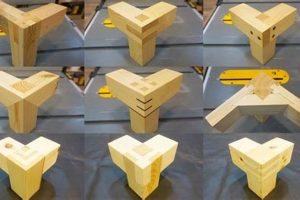
Joints with straightforward designs are easier to understand and execute, fostering a quicker learning curve. A miter joint, where two pieces are cut at complementary angles to form a corner, is conceptually simple and can be accomplished with a miter saw. Complicated joinery, such as compound dovetails, requires a deep understanding of geometry and advanced cutting techniques. By focusing on joints with intuitive designs, beginners can grasp the fundamentals of joinery more readily.
- Increased Project Success Rates
Employing simpler techniques leads to a higher likelihood of project completion and satisfaction. A beginner tackling a basic box using butt joints or screw joinery is more likely to achieve a successful outcome compared to attempting a complex cabinet with intricate joinery. By prioritizing achievable goals, novices build confidence and are more likely to persist in developing their woodworking skills.
The emphasis on simplicity is not a compromise on quality but rather a strategic approach to skill acquisition. By focusing on accessible techniques and minimizing complexity, novice woodworkers can establish a solid foundation in joinery, leading to greater long-term success and enjoyment of the craft.
4. Tooling

The selection and application of woodworking tools are inextricably linked to successful joinery, particularly for those new to the craft. Appropriate tools, correctly utilized, enable accurate cuts and precise shaping, essential for creating strong and aesthetically pleasing connections. Conversely, inadequate or misused tools lead to flawed joints, compromising the structural integrity of the finished piece. The relationship between tooling and novice woodworking projects is therefore a critical factor in determining project success.
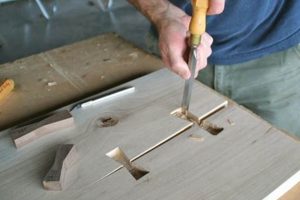
Consider a beginner attempting to create a basic mortise and tenon joint. A sharp chisel, properly sized, allows for the clean removal of wood within the mortise. Paired with a mortise gauge, the layout becomes more accurate, leading to a snug and strong joint. Attempting the same task with a dull chisel or without a proper marking tool results in ragged edges, ill-fitting components, and a structurally unsound connection. Similarly, a precise saw is necessary for cutting the tenon to fit the mortise. The type of saw used and its condition affect the quality of the tenon shoulders and cheeks. A poorly executed mortise and tenon joint, regardless of adhesive used, will be inherently weak and prone to failure under stress. Proper setup of the tools is just as essential. A miter saw that isn’t properly calibrated will inevitably lead to joints that are off, no matter the level of experience.
In summary, the selection and maintenance of appropriate tools form a cornerstone of successful joint creation for beginners. Investment in quality tools and a commitment to learning their proper use not only enhance the accuracy and strength of joints but also contribute to a safer and more enjoyable woodworking experience. Moreover, the understanding that tooling is an extension of the craftperson and must be approached with respect and diligence is paramount. With the right tools and knowledge, the beginner can execute joints that are as impressive as they are effective.
5. Adhesive

Adhesive selection and application form a crucial aspect of basic joinery. For those new to woodworking, understanding the properties of different adhesive types and their impact on joint strength is essential for creating lasting and reliable connections.
- Adhesive Type and Joint Suitability
Different wood adhesives possess varying strengths, drying times, and water resistance. Polyvinyl acetate (PVA) glue, commonly known as wood glue, is a versatile option suitable for interior projects. However, it may not be appropriate for outdoor applications requiring water resistance. Polyurethane adhesives offer greater water resistance but can expand during curing, potentially affecting joint fit. Epoxy adhesives provide exceptional strength and gap-filling capabilities, making them suitable for demanding applications. The choice of adhesive must align with the specific joint type and the intended use of the project.
- Surface Preparation and Application Techniques
Proper surface preparation is crucial for achieving a strong adhesive bond. Surfaces must be clean, dry, and free from dust, oil, or other contaminants. Sanding the mating surfaces can improve adhesion by creating a rougher texture. The adhesive should be applied evenly and in sufficient quantity to ensure full coverage. Clamping the joint during the curing process is essential to maintain pressure and prevent movement. Following the manufacturer’s instructions regarding application techniques and clamping times is critical for maximizing bond strength.
- Open Time and Clamping Pressure
Adhesives have a limited open time, the period during which they remain workable after application. Exceeding the open time can result in a weakened bond. Clamping pressure is necessary to ensure close contact between the mating surfaces, allowing the adhesive to penetrate the wood fibers. Insufficient clamping pressure results in gaps and a compromised bond. The appropriate clamping pressure varies depending on the adhesive type and the joint configuration. Too much pressure can starve the joint of adhesive, while too little pressure may not achieve adequate contact.
- Adhesive Cleanup and Curing Process
Excess adhesive should be removed from the joint before it cures. Wet adhesive can typically be wiped away with a damp cloth. Cured adhesive may require scraping or sanding. The curing process varies depending on the adhesive type. Some adhesives reach full strength within 24 hours, while others may require longer. Allowing the adhesive to cure fully before subjecting the joint to stress is essential for achieving maximum strength and durability.
For woodworking beginners, a basic understanding of adhesive properties and application techniques is paramount. Experimentation with different adhesive types and careful attention to surface preparation, application, clamping, and curing will lead to stronger, more reliable joints and ultimately, more successful woodworking projects. Furthermore, consulting with experienced woodworkers or adhesive manufacturers can provide valuable guidance on selecting the appropriate adhesive for specific applications.
6. Application

The practical employment of joinery techniques is paramount for novice woodworkers. Successful completion of woodworking projects hinges on selecting and executing the appropriate joint for a given application. The intended function, anticipated load, and aesthetic considerations all influence this decision.
- Load-Bearing Structures
For structural elements such as table legs or frame components, strength is paramount. Mortise and tenon joints, or robust variations of lap joints, are appropriate choices for beginners. These joints distribute weight effectively and resist stress. An example is the construction of a workbench where the legs must support significant weight. A well-executed mortise and tenon joint ensures stability and prevents racking.
- Enclosures and Boxes
For box construction, options range from simple butt joints secured with fasteners to more refined rabbet or dado joints. The selection depends on the desired aesthetic and the intended contents of the box. A small keepsake box might utilize mitered corners for a clean look, while a larger storage chest would benefit from the added strength of rabbet joints to support the weight of the contents.
- Drawer Construction
Drawers require joints that can withstand repeated use and resist pulling forces. Dovetail joints are the traditional choice for their superior strength, but half-lap joints or reinforced rabbet joints can serve as simpler alternatives for beginners. The selection is influenced by the size and weight capacity of the drawer. A kitchen drawer laden with heavy items demands stronger joinery than a small desk drawer.
- Decorative Elements
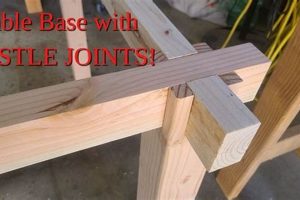
For decorative elements like picture frames or molding, aesthetics often take precedence over structural strength. Miter joints provide a seamless appearance, while other joints can be employed to create interesting visual effects. A picture frame, for example, typically uses miter joints for its clean lines, but a beginner could experiment with bridle joints for a more rustic aesthetic.
The practical application of basic joinery principles is crucial for novice woodworkers. Selecting the appropriate joint for the specific demands of a project ensures structural integrity and enhances the overall aesthetic appeal. By understanding these considerations, beginners can effectively translate theoretical knowledge into tangible and lasting woodworking creations.
7. Aesthetics

The visual presentation of woodworking projects is directly influenced by joint selection and execution. While structural integrity is paramount, the aesthetic impact of joinery choices cannot be overlooked, especially for those new to the craft. The visible elements of a joint contribute significantly to the overall style and perceived quality of a finished piece. A poorly executed joint detracts from the visual appeal, regardless of its structural soundness, while a well-crafted joint can enhance the piece’s beauty and craftsmanship.
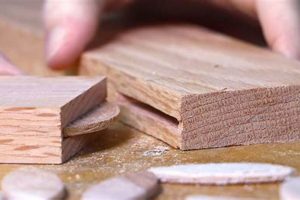
Consider, for example, the difference between a simple butt joint and a meticulously crafted dovetail joint on a drawer front. The butt joint, while functional, lacks visual interest and may appear utilitarian. In contrast, the dovetail joint, with its interlocking fingers, showcases skill and adds a decorative element. Similarly, a miter joint, if flawlessly executed, creates a seamless corner with clean lines, ideal for picture frames or other decorative applications. However, even a slight misalignment or gap in the miter compromises the aesthetic, drawing attention to the imperfection. The choice between a visible or concealed joint also impacts the overall look; a beginner might choose to hide screws in a butt joint to improve the look, rather than highlighting them. This might be achieved by using wood plugs to conceal screws or nails.
Therefore, for woodworking beginners, an awareness of aesthetic considerations is essential. This includes understanding how different joints appear, both in terms of their visual characteristics and their perceived level of craftsmanship. While mastering complex joinery techniques takes time and practice, an appreciation for the aesthetic potential of even simple joints can guide project design and inspire a commitment to precision and quality. This will lead to the creation of projects that are not only structurally sound but also visually appealing and demonstrative of good craftsmanship. Balancing function and aesthetics is, therefore, a key consideration when selecting suitable jointing methods.
Frequently Asked Questions
This section addresses common inquiries regarding the fundamentals of joining wood, particularly for individuals new to the craft. The information aims to clarify basic concepts and address potential challenges.
Question 1: What is the most fundamental joint for beginners?
The butt joint is the most basic. It involves joining two pieces of wood end-to-end or edge-to-edge. While simple to execute, it relies heavily on fasteners or adhesives for strength and is not inherently strong on its own.
Question 2: Which joint offers a balance of strength and ease of construction for beginners?
The lap joint presents a good balance. It involves overlapping two pieces of wood and securing them with adhesive and/or fasteners. This provides increased surface area for gluing and mechanical interlocking compared to a butt joint.
Question 3: Is specialized equipment essential for creating strong woodworking joints?
While advanced equipment can improve precision and efficiency, many strong joints can be created with basic hand tools. Sharp saws, chisels, and measuring tools are essential, but elaborate machinery is not always necessary for foundational joinery.
Question 4: How critical is precise measurement in joint construction?
Precise measurement is paramount. Even slight inaccuracies can compromise the fit and strength of a joint. Accurate marking and cutting are essential for achieving tight-fitting, durable connections.
Question 5: What is the role of wood glue in joint strength?
Wood glue plays a significant role. It provides a strong bond between the wood fibers, increasing the overall strength of the joint. The type of glue used should be appropriate for the wood species and the intended application of the project.
Question 6: How important is clamping during the gluing process?
Clamping is essential for applying even pressure to the joint while the adhesive cures. This ensures close contact between the mating surfaces and maximizes the strength of the bond. Insufficient clamping pressure can result in a weak and unreliable joint.
Mastering fundamental woodworking connections requires a combination of knowledge, skill, and attention to detail. By understanding the principles outlined in these questions and practicing diligently, beginners can build a solid foundation for more advanced woodworking endeavors.
The next section will provide a summary of key considerations for woodworking projects, along with references.
Conclusion
This exploration of woodworking joints for beginners has highlighted fundamental techniques and considerations. Emphasis has been placed on strength, accuracy, simplicity, appropriate tooling, and the critical role of adhesives. Joint selection must align with the intended application and aesthetic requirements of a given project.
Proficiency in basic joinery forms the bedrock of successful woodworking. Continued practice, coupled with a commitment to precision and quality, will empower individuals to create durable and aesthetically pleasing projects. Mastering these skills facilitates the realization of complex designs and fosters a deeper appreciation for the craft.