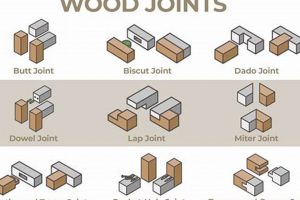
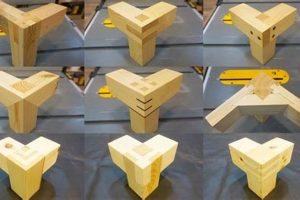
Methods of connecting wood pieces to construct the enclosing and sliding components of case furniture are fundamental to both its structural integrity and aesthetic appeal. These connections determine the drawer’s ability to withstand repeated use, resist racking, and maintain a square form over time. A properly executed joint will create a strong, seamless transition between drawer components.
The longevity and functional effectiveness of furniture are significantly influenced by the joinery methods employed. Strong joinery prevents premature failure, extending the lifespan of the piece. Historically, the selection of a particular joint was dictated by available tools, skill level, and desired aesthetic. Today, a wider range of options allows for optimized solutions balancing strength, visual appeal, and manufacturing efficiency. Choosing appropriate joinery impacts the overall cost and perceived value of the finished piece.
Understanding the various types of joinery used in drawer construction, including their strengths, weaknesses, and best applications, is crucial for furniture makers. Subsequent sections will delve into specific types of these connections, focusing on their construction, advantages, and suitability for different drawer designs and materials.
Essential Considerations for Drawer Construction
Optimizing the durability and functionality of drawers requires careful attention to joinery techniques and best practices during construction. The following tips provide guidance on selecting and implementing effective methods.
Tip 1: Select Joints Based on Material Thickness. Thinner materials may benefit from joints that maximize glue surface area, such as rabbet joints, while thicker materials can accommodate more complex joints like dovetails.
Tip 2: Emphasize Accurate Cutting and Fitting. Precision is paramount for strong, visually appealing connections. Inaccurate cuts will compromise joint strength and necessitate corrective measures that may weaken the final product.
Tip 3: Prioritize Glue Selection. Choose an adhesive appropriate for the wood species and intended environment. Consider factors such as open time, clamping pressure requirements, and moisture resistance.
Tip 4: Properly Orient Wood Grain. Orient grain direction to minimize wood movement and prevent distortion of the drawer box over time. Alternating grain direction between drawer sides can enhance stability.
Tip 5: Reinforce High-Stress Areas. Drawer fronts, which bear the brunt of pulling forces, may require reinforced joinery, such as the inclusion of screws or dowels, in addition to glue.
Tip 6: Employ Proper Clamping Techniques. Even pressure distribution is crucial during glue-up. Utilize clamps and cauls to ensure tight, gap-free connections.
Tip 7: Consider the Aesthetic Impact. The visible nature of certain joints, like dovetails, can contribute significantly to the overall aesthetic. Choose a joint style that complements the design and intended use of the furniture.
Adherence to these principles results in drawers that are structurally sound, operate smoothly, and enhance the overall quality of the furniture piece.
The subsequent article sections will address specific joint types and their applications in greater detail.
1. Strength

The structural integrity of a drawer, and by extension, the furniture piece it inhabits, is directly contingent upon the strength of its joinery. A deficiency in the connection between drawer components results in premature failure, manifested as racking, separation, or complete collapse. For example, a drawer constructed with inadequately sized or poorly executed butt joints and lacking sufficient adhesive surface area will invariably fail under repeated loading, particularly when subjected to uneven weight distribution. The impact of this failure extends beyond mere inconvenience; it compromises the overall usability and perceived quality of the furniture.
Achieving optimal strength in drawer construction necessitates careful consideration of joint geometry, material properties, and adhesive selection. Dovetail joints, characterized by their interlocking pins and tails, provide exceptional resistance to tensile forces, making them a preferred choice for drawer fronts, which endure significant pulling stress. Similarly, mortise-and-tenon joints, when properly executed, offer substantial shear strength, resisting deformation under lateral loads. The selection of appropriate wood species also plays a crucial role; hardwoods, with their higher density and tensile strength, contribute to the overall robustness of the joint. Glue selection and application are equally critical; a high-quality adhesive, properly applied, creates a bond stronger than the wood itself, effectively distributing stress and preventing separation.
In summary, the strength of joinery is a foundational element in drawer construction, directly impacting the durability and longevity of the furniture. A thorough understanding of joint mechanics, material properties, and adhesive science is essential for crafting drawers that withstand the rigors of daily use. Prioritizing joint strength not only ensures functional performance but also enhances the perceived value and lifespan of the finished product.
2. Precision

Accuracy in the execution of woodworking joints directly impacts the structural integrity, aesthetic appeal, and functional longevity of drawers. Deviation from prescribed dimensions or angles compromises joint strength, introduces visual imperfections, and can ultimately lead to premature failure. The level of exactness required varies based on joint type and intended application, but a consistent commitment to meticulous craftsmanship is essential.
- Dimensional Accuracy
Dimensional accuracy refers to the exact correspondence between the intended measurements of joint components and their realized dimensions. For instance, the pins and tails of a dovetail joint must be precisely cut to ensure a snug, gap-free fit. Even slight discrepancies accumulate, resulting in a weakened joint and a visually unappealing appearance. Accurate measurements, careful marking, and the use of precise cutting tools are crucial for achieving dimensional accuracy.
- Angular Accuracy
Angular accuracy pertains to the conformity of joint angles to their specified values. Miter joints, for example, require perfectly cut 45-degree angles to create a seamless 90-degree corner. Inaccurate angles result in gaps, misalignments, and compromised structural integrity. The use of precision measuring tools, such as digital protractors and angle finders, along with accurate sawing techniques, is essential for maintaining angular accuracy.
- Fit and Tolerance
Fit and tolerance describe the degree of tightness or looseness between mating joint components. A joint that is too tight may be difficult to assemble and could induce stress in the surrounding wood, potentially leading to cracking or warping. A joint that is too loose will lack strength and stability. Achieving the optimal fit requires careful consideration of wood species, moisture content, and the specific characteristics of the joint. Test fits are crucial for verifying proper fit and making necessary adjustments before final assembly.
- Surface Flatness and Alignment
The flatness of mating surfaces and the alignment of joint components are critical for achieving a strong and visually appealing connection. Uneven surfaces or misaligned components create gaps and stress points, compromising joint strength and detracting from the overall aesthetic. Proper preparation of joint surfaces, including planing and sanding, is essential for ensuring flatness. Accurate alignment during assembly is equally important and requires the use of clamping jigs and other aids to maintain proper positioning.
The examples above demonstrate that the overall quality of woodworking joints for drawers is heavily reliant on precision in all stages of design and execution. By adhering to rigorous standards of accuracy, furniture makers can ensure that drawers are not only visually appealing but also robust and long-lasting.
3. Aesthetics

The visual character of furniture is significantly influenced by the choice and execution of joinery in drawer construction. The presence or absence of visible joints, their style, and the precision with which they are executed directly impact the perceived quality and overall design aesthetic. Visible dovetails, for instance, are often employed as a deliberate design element, showcasing craftsmanship and adding a traditional or high-end appeal. Conversely, a desire for a clean, minimalist aesthetic might necessitate the use of concealed joints, such as rabbets or blind dovetails, which prioritize a seamless surface appearance. The selection of a particular joint, therefore, is not solely a structural consideration but also a critical design decision.
The effect of aesthetics extends beyond simply choosing visible or concealed joints. The execution of the chosen joint also plays a crucial role. A poorly executed dovetail, with gaps or uneven pins and tails, detracts from the overall aesthetic and undermines the perceived quality, regardless of the material or finish. Similarly, an improperly fitted miter joint reveals an unsightly seam, disrupting the visual flow of the piece. The choice of wood species and the grain orientation further influence the aesthetic impact of joinery. Contrasting wood species can be used to highlight a particular joint, while careful grain matching can create a more seamless and integrated appearance. The finishing process also plays a role, with certain finishes enhancing the visual texture and detail of the joinery.
In summary, aesthetics are inextricably linked to woodworking joints for drawers. The selection, execution, and finishing of joinery directly contribute to the visual character and perceived quality of the finished piece. Understanding the interplay between structural requirements and aesthetic considerations is crucial for furniture makers aiming to create both functional and visually appealing designs. The challenge lies in balancing the need for strength and durability with the desire for a specific aesthetic, requiring careful planning and meticulous craftsmanship. This understanding extends beyond mere surface-level considerations and informs the entire design and construction process, ensuring that the joinery not only performs its structural function but also enhances the overall aesthetic value of the furniture.
4. Durability

The capacity of drawers to withstand repeated use and environmental stressors without degradation is intrinsically linked to the selection and execution of woodworking joints. The joinery method chosen directly influences a drawer’s resistance to racking, separation, and overall structural failure. For instance, a drawer constructed with poorly executed butt joints, relying solely on fasteners and inadequate adhesive surface area, will exhibit diminished durability. Over time, these joints are susceptible to loosening and eventual failure under the cyclical stresses of opening and closing. Conversely, drawers employing dovetail or mortise-and-tenon joints, characterized by their mechanical interlocking and increased adhesive surface area, demonstrate superior durability. The inherent strength of these joints distributes stress more effectively, minimizing the risk of component separation and extending the lifespan of the drawer. The implementation of robust joinery methods represents a proactive measure to mitigate premature wear and ensure the longevity of furniture.
The practical significance of understanding the relationship between joinery and durability is evident in the selection of appropriate methods for specific applications. Drawers subjected to frequent or heavy use, such as those in kitchen cabinetry or tool chests, necessitate stronger, more durable joints. Dovetail joints, either through-dovetails for maximum strength or half-blind dovetails for aesthetic concealment, are commonly employed in these contexts. Drawers in less demanding environments, such as those in bedside tables or dressers, may utilize simpler joinery methods, such as rabbet or dado joints, provided they are accurately executed and adequately reinforced. Real-world examples underscore the criticality of this consideration. Antique furniture, often showcasing meticulously crafted dovetail joints, has endured for centuries, while contemporary pieces utilizing less durable joinery may exhibit signs of wear or failure within a comparatively short timeframe. The choice of joint, therefore, represents a long-term investment in the durability and value of furniture.
In conclusion, durability is a paramount attribute in drawer construction, directly influenced by the selection and execution of woodworking joints. Prioritizing robust joinery methods mitigates the risk of premature failure, extends the lifespan of furniture, and represents a commitment to quality craftsmanship. Challenges in achieving optimal durability include the need for specialized skills, precision tooling, and a thorough understanding of material properties and joint mechanics. However, the long-term benefits of durable joinery far outweigh the initial investment, ensuring that furniture remains functional and aesthetically pleasing for generations to come. The understanding of the intricate relationship between joinery and durability is essential for any woodworker seeking to create lasting and valuable pieces.
5. Efficiency

In the context of furniture construction, achieving efficiency in drawer making hinges significantly on the selection and execution of woodworking joints. The chosen joint directly impacts both the time required for construction and the material yield, ultimately influencing production costs and throughput.
- Joint Complexity and Assembly Time
The complexity of a joint correlates directly with the time required for its execution. Intricate joints, such as hand-cut dovetails, demand considerable skill and time, reducing overall production efficiency. Simpler joints, like rabbets or dados produced with power tools, can be completed more rapidly, thereby increasing efficiency. The appropriate choice depends on balancing the desired strength and aesthetic with available resources and time constraints.
- Material Optimization and Waste Reduction
Efficient joinery minimizes material waste. Joints requiring extensive stock removal, like mortise-and-tenon when executed imprecisely, can lead to significant material loss. Conversely, joints that utilize material efficiently, such as butt joints or finger joints, reduce waste and improve overall material yield. Optimization of cutting plans and precise execution of joints are essential for maximizing material usage and minimizing costs.
- Tooling and Setup Time
The tooling required for specific joints and the time spent on setup directly affect efficiency. Joints requiring specialized jigs or complex setups, such as dovetails cut with a router, increase setup time and require skilled operation. Joints that can be readily produced with standard tools and minimal setup, like rabbets or dados cut on a table saw, improve efficiency. Streamlining tooling and setup procedures is crucial for minimizing non-productive time.
- Automation and Standardization
Automation and standardization enhance efficiency in drawer construction. Joints suitable for machine production, such as finger joints or machine-cut dovetails, can be produced rapidly and consistently. Standardizing joint sizes and configurations allows for efficient production of interchangeable components, reducing setup time and minimizing errors. Implementation of automated processes and standardized designs contributes significantly to increased throughput and reduced costs.
The preceding facets highlight the multifaceted nature of efficiency in drawer construction. Optimizing joint selection, material utilization, tooling, and standardization can significantly reduce production time and costs. Balancing these considerations with the desired strength and aesthetic properties of the finished product is crucial for achieving overall efficiency in the woodworking process. Real-world examples, such as mass-produced furniture utilizing automated finger jointing, demonstrate the potential for efficiency gains through strategic joinery choices.
6. Material Suitability

The selection of appropriate woodworking joints for drawer construction is contingent upon the inherent properties of the materials employed. Material suitability, therefore, becomes a primary determinant in the overall success and longevity of the finished product. For instance, joining hardwoods such as oak or maple requires robust joints capable of withstanding significant stress and resisting seasonal wood movement. In contrast, softer woods like pine or poplar may be adequately joined with less complex methods, provided they are not subjected to excessive loads or moisture fluctuations. Neglecting the material’s density, grain structure, and dimensional stability can lead to joint failure, resulting in compromised structural integrity and aesthetic degradation. The impact of this consideration is evident in historical examples, where furniture crafted from durable hardwoods using time-tested joinery techniques has endured for centuries, while pieces constructed from inferior materials with inappropriate joinery have succumbed to premature deterioration.
Consider the practical applications of this understanding. When constructing drawers for high-stress environments, such as kitchen cabinetry, dovetail joints or reinforced mortise-and-tenon joints are often preferred for their superior strength and resistance to racking. Hardwoods, like maple or birch, are typically chosen to complement these robust joints, ensuring long-term durability. Conversely, for lightweight drawers in low-stress applications, such as decorative boxes or drawer dividers, simpler joints like rabbets or dados may suffice. In these cases, softer woods, like poplar or basswood, can be utilized, balancing cost-effectiveness with adequate structural performance. Moreover, the selection of adhesives must align with the wood species. Certain adhesives bond more effectively with hardwoods than softwoods, and the choice of adhesive must account for the wood’s porosity and moisture content. Failure to consider these factors can lead to weakened joints and premature failure. Consider the specific constraints imposed by engineered wood products. Medium-density fiberboard (MDF), while dimensionally stable, lacks the tensile strength of solid wood and requires specialized joinery techniques, such as screw-and-glue connections or specialized fasteners. Similarly, plywood, with its cross-laminated construction, offers improved stability but requires careful edge treatment to prevent delamination when joined.
In conclusion, material suitability is an indispensable consideration in the selection of woodworking joints for drawer construction. A thorough understanding of wood properties, combined with appropriate joint selection and execution, is essential for creating durable, functional, and aesthetically pleasing furniture. Challenges include the need for specialized knowledge, careful material selection, and adherence to best practices in woodworking. The successful integration of material considerations into the design and construction process is critical for ensuring the long-term performance and value of the finished product. The consideration is not merely about choosing aesthetically matching woods or using a favorite joint; instead, an informed decision balances material properties, anticipated loads, and construction methodology.
Frequently Asked Questions About Woodworking Joints for Drawers
The following addresses common inquiries regarding the selection and implementation of joinery techniques in drawer construction. These answers aim to provide concise and informative guidance based on established woodworking principles.
Question 1: What is the strongest woodworking joint for drawer construction?
Dovetail joints, particularly through dovetails, generally offer the highest tensile strength and resistance to racking, making them suitable for demanding applications. However, the optimal joint selection depends on material properties, aesthetic considerations, and skill level.
Question 2: Are butt joints suitable for drawer construction?
Butt joints, while simple to execute, lack inherent mechanical strength and rely heavily on fasteners and adhesive. They are generally not recommended for high-stress drawer applications unless reinforced with additional elements such as dowels or splines.
Question 3: How does wood movement affect drawer joints?
Wood expands and contracts with changes in moisture content. Joinery techniques must accommodate this movement to prevent stress buildup and potential joint failure. Floating panels and grain orientation are key considerations.
Question 4: Is it necessary to use specialized tools for drawer joinery?
While specialized tools can enhance precision and efficiency, many drawer joints can be executed with basic woodworking tools. However, accurate measurements, sharp tools, and consistent technique are essential regardless of the tools used.
Question 5: What factors influence the selection of an adhesive for drawer joints?
Adhesive selection depends on wood species, joint type, environmental conditions, and desired open time. Consider factors such as bond strength, water resistance, and compatibility with finishes. Follow manufacturer guidelines for proper application.
Question 6: How can visual imperfections in drawer joints be minimized?
Precision in cutting, accurate assembly, and careful sanding are crucial for minimizing visual imperfections. Employing techniques such as grain matching and strategically concealing joints can further enhance the aesthetic appeal.
The understanding of these points can facilitate informed decisions in drawer design and construction, promoting durable and aesthetically pleasing results.
The subsequent section will explore specific examples of drawer construction projects.
Conclusion
This exposition has addressed the multifaceted considerations inherent in the selection and execution of woodworking joints for drawers. Strength, precision, aesthetics, durability, efficiency, and material suitability have been explored as interconnected factors influencing the functional performance and perceived value of case furniture. The significance of each aspect has been underscored with practical examples and real-world scenarios.
The judicious application of these principles represents a commitment to quality craftsmanship and ensures the creation of durable, aesthetically pleasing, and long-lasting furniture pieces. Further exploration and refinement of these techniques will continue to advance the art and science of furniture making, benefiting both artisans and consumers alike.