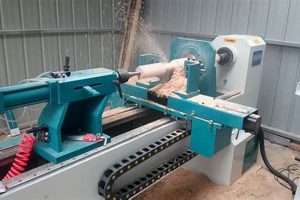
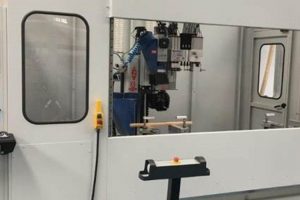
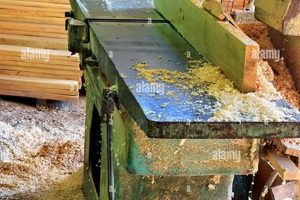
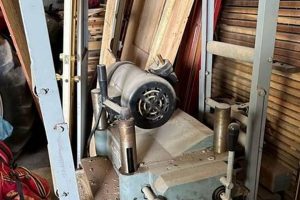
Components crucial for the operation of wood processing equipment encompass a wide array of items. These include blades, belts, motors, bearings, fences, tables, and various specialized attachments. As an example, a jointer relies on a cutterhead assembly and precisely aligned fences to create flat, square edges on lumber.
The availability and quality of these elements directly impacts the efficiency, accuracy, and safety of woodworking operations. Historically, skilled machinists crafted many of these items. Today, manufacturers offer a variety of replacements and upgrades, improving machine performance and extending operational lifespan. Selection of appropriate, high-quality components minimizes downtime and maximizes the value derived from woodworking equipment investments.
The subsequent discussion will delve into specific categories of these items, examining their functionalities, common failure points, and best practices for maintenance and replacement. Detailed considerations for specific machine types, such as saws, planers, and routers, will be explored, providing a comprehensive overview of essential elements within the woodworking machinery landscape.
Essential Guidelines for Maintaining Woodworking Equipment Components
Proper upkeep of woodworking machinery components is crucial for ensuring operational safety, precision, and longevity of equipment. Consistent maintenance practices minimize downtime and maximize the return on investment in woodworking machinery.
Tip 1: Adhere to Manufacturer Specifications. Consult the equipment’s documentation for recommended maintenance schedules and part replacement guidelines. Ignoring these guidelines can lead to premature failure and safety hazards.
Tip 2: Implement a Regular Cleaning Protocol. Dust and debris accumulation can impede the function of moving components. Regular cleaning, particularly of bearings and motor housings, prevents overheating and wear.
Tip 3: Conduct Routine Inspections. Regularly inspect blades for sharpness and signs of damage, belts for wear and tension, and bearings for excessive play. Early detection of potential issues prevents catastrophic failures.
Tip 4: Lubricate Moving Components. Appropriate lubrication reduces friction and extends the lifespan of bearings, gears, and other moving parts. Use the correct type of lubricant recommended by the manufacturer.
Tip 5: Maintain Proper Tension on Belts. Incorrect belt tension leads to slippage, excessive wear, and inefficient power transmission. Regularly check and adjust belt tension according to specifications.
Tip 6: Ensure Correct Alignment. Misalignment of saw blades, fences, or tables can compromise accuracy and safety. Use precision measuring tools to verify and correct alignment issues.
Tip 7: Store Replacement Parts Properly. Store replacement items in a clean, dry environment to prevent corrosion or damage. Organized storage facilitates quick and efficient replacements.
Implementing these practices protects investments in woodworking machinery, reduces the risk of accidents, and ensures consistent, high-quality results. A proactive approach to component maintenance is a hallmark of responsible woodworking operations.
The following section will explore specific issues related to sourcing quality components and identifying reputable suppliers, furthering the understanding of this critical aspect of woodworking.
1. Material Composition

The selection of materials used in crafting elements for wood processing equipment is paramount to their performance, durability, and safety. Material attributes directly influence the equipment’s ability to withstand operational stresses and maintain precision over extended periods.
- Blade Hardness and Toughness
Saw blades require a balance of hardness for maintaining a sharp cutting edge and toughness to resist chipping and breakage. High-speed steel (HSS) and carbide-tipped blades are common choices, with carbide offering superior wear resistance for demanding applications. The composition determines the blade’s suitability for cutting specific wood types and its longevity under heavy use.
- Bearing Steel Grade
Bearings used in spindles and other rotating assemblies demand high-grade steel alloys with exceptional hardness and dimensional stability. These materials minimize friction, reduce wear, and withstand high radial and axial loads. The steel grade directly affects the bearing’s service life and the precision of the rotating component.
- Frame and Table Stability
Frames and tables of woodworking machines often employ cast iron or heavy-gauge steel. These materials provide rigidity and vibration damping, essential for maintaining accuracy during machining. The material’s ability to resist deformation under stress is crucial for consistent performance and precise results.
- Polymer and Composite Components
Polymer-based materials and composites are increasingly used in components like fences, handles, and dust collection housings. These materials offer advantages such as reduced weight, corrosion resistance, and ease of manufacturing. The specific polymer or composite composition determines its strength, durability, and resistance to wear and chemicals.
In summary, the material characteristics of individual elements have a direct bearing on the operational effectiveness of wood processing equipment. Understanding the properties of various materials allows for informed decisions regarding equipment selection, maintenance, and component replacement, ultimately impacting the quality and efficiency of woodworking processes.
2. Dimensional Accuracy

Dimensional accuracy is a critical attribute of wood processing equipment items. Deviations from specified dimensions can lead to cumulative errors in woodworking projects, compromising the fit and finish of assembled components. A saw blade with excessive runout, for example, produces cuts that are not square, requiring additional processing and potentially rendering the workpiece unusable. Similarly, a planer with inaccurately aligned infeed and outfeed tables creates stock that is not uniformly thick, affecting subsequent joinery operations.
The significance of this attribute extends beyond the immediate task at hand. In cabinetmaking, where precise joinery is essential, even slight dimensional inaccuracies in machinery elements can result in gaps, misalignments, and structural weaknesses in the final product. Production environments relying on interchangeable items and standardized dimensions require stringent adherence to tolerances. Furthermore, the longevity of woodworking equipment is directly influenced by the dimensional stability of its elements. Components that deviate from their original dimensions due to wear or deformation can compromise the overall integrity of the machine.
Therefore, an understanding of dimensional accuracy is paramount for selecting, maintaining, and troubleshooting wood processing equipment. Regular calibration, inspection of critical dimensions, and timely replacement of worn or damaged elements are essential practices. By prioritizing dimensional accuracy, woodworkers can ensure consistent, high-quality results, minimize material waste, and maximize the lifespan of their machinery.
3. Manufacturing Tolerances

Manufacturing tolerances, representing the permissible variation in the dimensions or properties of machine components, hold critical importance for woodworking machinery. These tolerances directly influence the precision, reliability, and lifespan of the equipment. Inadequate tolerances can lead to misalignment, increased wear, and compromised performance of individual items, such as bearings, blades, and guides. For instance, if a table saw arbor’s bearing housing is manufactured with excessive tolerance, the resulting play can cause blade wobble, leading to inaccurate cuts and potential safety hazards. The precision with which these items are produced is a direct determinant of the machine’s overall accuracy and ability to maintain consistent results.
The impact of manufacturing tolerances extends to the assembly and interchangeability of woodworking machinery items. Tighter tolerances facilitate easier assembly, reduce the need for manual adjustments, and ensure that replacement items fit correctly without requiring extensive modifications. Consider the example of a jointer fence. If its mounting holes deviate significantly from the specified locations due to loose tolerances, proper alignment becomes challenging, affecting the accuracy of edge jointing operations. Conversely, tightly controlled tolerances enable seamless replacements, minimizing downtime and ensuring continued equipment functionality. Furthermore, tolerances directly impact vibration levels. Loose tolerances within rotating assemblies, such as sander drums, can induce excessive vibration, reducing surface quality and accelerating wear on bearings and other components.
In summary, the control of manufacturing tolerances is inextricably linked to the performance and longevity of woodworking machinery elements. A comprehensive understanding of these tolerances is essential for selecting equipment, performing maintenance, and ensuring consistent, high-quality woodworking operations. The pursuit of tighter tolerances in manufacturing contributes directly to improved accuracy, reduced wear, and enhanced overall equipment reliability, representing a cornerstone of modern woodworking machinery design and production.
4. Operational Compatibility

Operational compatibility, concerning woodworking machinery elements, denotes the capacity of individual items to integrate seamlessly with other system constituents and execute intended functions effectively. It is critical for ensuring the equipment’s reliability, efficiency, and safety, and it encompasses both physical and functional integration aspects.
- Material Matching and Reactivity
This facet addresses the chemical and physical interactions between dissimilar materials within a machine. Galvanic corrosion, for instance, can occur when incompatible metals are in contact within a humid environment, leading to premature degradation of connected elements, such as fasteners or housings. Selection of materials with compatible electrochemical potentials is crucial to avoid such issues. Incompatibility can compromise structural integrity and necessitate more frequent replacements.
- Power Transmission Synchronization
Woodworking machinery frequently involves coordinated motion between multiple components driven by a single power source. Operational compatibility, in this context, requires precise synchronization of rotational speeds and torque transfer between motors, belts, pulleys, and spindles. Mismatched belt sizes or pulley ratios, for instance, result in slippage, inefficient power transfer, and increased wear. Compatible items within a power transmission system ensure optimal energy utilization and prevent premature element failure.
- Control System Integration
Modern woodworking equipment often incorporates electronic control systems for automated operations and enhanced precision. Operational compatibility necessitates seamless communication and coordinated action between sensors, actuators, and control software. A sensor that fails to provide accurate feedback to the control system, for example, can compromise automated cutting processes or lead to safety shutdowns. Functional integration with the control system ensures efficient and reliable operation of complex machinery.
- Fluid System Interoperability
Hydraulic and pneumatic systems play a crucial role in many woodworking machines, powering clamping mechanisms, tool positioning devices, and dust collection systems. Operational compatibility, in this context, requires that hydraulic or pneumatic components operate within specified pressure ranges and flow rates. Incompatible cylinder sizes or valve characteristics can lead to inefficient operation, system overloads, or inadequate clamping forces, directly affecting the quality of the woodworking process.
The preceding facets illustrate that operational compatibility is not merely a matter of physical fit but extends to the functional interplay between various elements of woodworking machinery. A holistic approach to design, selection, and maintenance ensures that all constituents work harmoniously, resulting in reliable, efficient, and safe woodworking operations. Disregarding these aspects can lead to costly repairs, reduced productivity, and potential safety risks.
5. Safety Compliance

Adherence to established safety standards is paramount in the design, manufacture, and operation of woodworking machinery. The structural integrity, functional design, and operational parameters of all elements must align with recognized safety regulations to minimize the risk of accidents and ensure operator well-being. Non-compliance exposes operators to potential hazards and can lead to legal repercussions for manufacturers and employers.
- Emergency Stop Mechanisms
Emergency stop mechanisms represent a fundamental safety feature integrated into woodworking machines. These mechanisms, typically in the form of readily accessible buttons or levers, are designed to immediately halt machine operation in the event of an emergency. Functionality depends on reliable switches, wiring, and braking systems. Malfunctioning emergency stop mechanisms negate their intended purpose, potentially leading to severe injuries. Compliant systems undergo rigorous testing to ensure responsiveness and reliability under diverse operating conditions.
- Guarding Systems
Guarding systems are physical barriers strategically positioned to prevent operator contact with hazardous moving elements, such as saw blades, cutterheads, and drive mechanisms. Effective guarding requires robust construction, secure mounting, and interlocks that disable the machine if the guard is removed or improperly positioned. Defective or missing guards expose operators to the risk of lacerations, amputations, and other severe injuries. Safety regulations prescribe specific guarding requirements based on the type of machinery and the nature of the hazard.
- Dust Collection Systems
Wood dust generated during machining operations poses a significant health hazard, potentially causing respiratory illnesses and increasing the risk of fire and explosions. Dust collection systems are designed to capture and remove airborne particles at the source, maintaining a safe working environment. These systems include hoods, ductwork, filters, and blowers. Compliance with safety standards mandates adequate airflow, efficient filtration, and proper disposal of collected dust. Inadequate dust collection increases operator exposure to harmful particles and elevates the risk of combustible dust explosions.
- Electrical Safety Standards
Electrical systems within woodworking machinery must adhere to stringent safety standards to prevent electrical shocks and fire hazards. These standards address wiring practices, grounding requirements, overload protection, and insulation integrity. Defective wiring, compromised insulation, or inadequate grounding can expose operators to lethal electrical currents. Safety compliance necessitates regular inspections, testing, and maintenance of electrical systems by qualified personnel.
These elements of woodworking machinery underscore the inextricable link between engineering design, operational safety, and regulatory compliance. A proactive approach to safety, encompassing both machine design and operator training, is essential for minimizing the risk of accidents and ensuring a safe working environment within woodworking facilities.
6. Maintenance Requirements

Scheduled upkeep directly affects the operational lifespan and performance consistency of woodworking machinery components. Neglecting maintenance can lead to premature failure of critical parts, such as bearings, blades, belts, and motors. For example, inadequate lubrication of bearings increases friction, generating heat and accelerating wear, which results in bearing failure and potential spindle damage. Similarly, failure to regularly sharpen or replace saw blades compromises cutting precision, increasing the load on the motor and potentially leading to motor burnout. Maintenance requirements are therefore not merely ancillary considerations but integral attributes of woodworking machinery elements, directly influencing their durability and functionality.
Effective maintenance protocols involve a combination of proactive inspection, preventative maintenance, and timely replacement of worn items. Routine inspection enables early detection of potential issues, such as cracks in belts, play in bearings, or misalignment of fences. Preventative maintenance measures, such as lubrication, cleaning, and tension adjustments, mitigate wear and prolong component life. Timely replacement of worn or damaged items prevents cascading failures and minimizes downtime. A woodworking shop that prioritizes scheduled maintenance reduces the risk of unexpected breakdowns, ensures consistent product quality, and optimizes the return on investment in machinery.
The relationship between maintenance and woodworking machinery elements is symbiotic: proper upkeep enhances the longevity and reliability of components, while neglecting maintenance accelerates wear and increases the likelihood of failure. The practical implications of this understanding are significant, affecting not only equipment performance but also safety, productivity, and profitability. By implementing comprehensive maintenance strategies, woodworking professionals can maximize the value of their machinery, minimize operational disruptions, and ensure a safe and efficient working environment.
7. Interchangeability

Interchangeability, in the context of woodworking machinery elements, signifies the capacity of one item to be substituted for another identical item without requiring significant modification or adjustment. This characteristic streamlines maintenance, reduces downtime, and enhances the overall efficiency of woodworking operations. The degree of interchangeability directly impacts the ease of repair and the cost-effectiveness of long-term equipment ownership.
- Standardized Fasteners and Fittings
The utilization of standardized fasteners, such as bolts, screws, and nuts, ensures that replacement items can be readily sourced from various manufacturers and installed without requiring custom machining. Standardized fittings for pneumatic and hydraulic systems similarly facilitate quick replacements, minimizing disruptions to production workflows. Lack of standardization necessitates the creation of custom fittings or re-tapping threads, a time-consuming and costly process. For example, using standard sized nuts and bolts can minimize the tool size needed and ensure that a part is readily replaceable.
- Modular Component Design
Modular design principles allow for the replacement of entire sub-assemblies rather than individual parts. This approach simplifies repairs and reduces the risk of error during reassembly. A damaged motor assembly on a belt sander, for instance, can be replaced with a pre-assembled module, minimizing downtime and the need for specialized technical skills. Modular items can be quickly swapped.
- Universal Blade Mounts and Arbor Sizes
Consistent blade mounting systems and arbor sizes across different woodworking machines, particularly saws and routers, facilitate the use of a single set of blades or cutters on multiple machines. This standardization reduces inventory costs and streamlines tooling management. Incompatibility between blade mounts and arbors would restrict blade utilization to specific machines, increasing tool acquisition costs and logistical complexities. For instance, using standard blade mounts can reduce the total cost by 25% compared to custom blade types.
- Interchangeable Guide Rails and Fences
Guide rails and fences used on various woodworking machines, such as table saws and routers, can be designed for interchangeability, allowing a single fence system to be used across multiple machines. This approach enhances flexibility and reduces the need for duplicate items. Incompatible rail and fence designs would necessitate separate systems for each machine, increasing equipment costs and storage requirements. For instance, using a common fence and guide rail type can reduce the total cost of the equipment by 10%.
The pursuit of enhanced interchangeability in woodworking machinery parts contributes directly to reduced maintenance costs, improved operational efficiency, and enhanced equipment flexibility. This characteristic is a key consideration for woodworking professionals seeking to maximize the value and longevity of their equipment investments. Further advancements in standardization and modular design are expected to further improve interchangeability, streamlining maintenance processes and reducing downtime in woodworking operations.
Frequently Asked Questions Regarding Woodworking Machinery Parts
The following addresses common inquiries concerning components used in wood processing equipment. Information is provided to enhance understanding of their selection, maintenance, and operational impact.
Question 1: What factors determine the lifespan of saw blades?
Blade lifespan is influenced by material composition, blade thickness, wood type being cut, feed rate, and the presence of foreign objects. Carbide-tipped blades generally offer extended life compared to high-speed steel blades. Routine sharpening and proper tensioning also contribute significantly.
Question 2: How often should bearings in woodworking machinery be lubricated?
Lubrication frequency depends on the type of bearing, operating speed, load, and environmental conditions. Consult the machinery’s documentation for specific recommendations. As a general guideline, bearings subjected to high loads or speeds require more frequent lubrication.
Question 3: What are the consequences of using non-OEM replacement items?
Non-OEM items may not meet the original equipment manufacturer’s specifications for material quality, dimensional accuracy, or performance characteristics. Use of such may compromise machine performance, void warranties, and potentially create safety hazards. Careful consideration of the risks and benefits is advised.
Question 4: How can vibration in woodworking machinery be minimized?
Vibration can be minimized by ensuring proper alignment of rotating items, balancing rotating assemblies, securing machine mounting, and addressing excessive play in bearings. Regular inspection and timely replacement of worn elements are also crucial.
Question 5: What safety precautions are necessary when replacing blades on a table saw?
Prior to blade replacement, disconnect the machine from the power source. Wear appropriate personal protective equipment, including eye protection and gloves. Ensure the new blade is correctly mounted with the teeth pointing in the direction of rotation. Verify that the blade guard is properly positioned before resuming operation.
Question 6: How does dust accumulation affect the operation of woodworking equipment?
Dust accumulation can impede the function of moving parts, reduce cooling efficiency, and create fire hazards. Regular cleaning of motors, bearings, and ventilation systems is essential for maintaining optimal performance and preventing equipment damage.
Prioritizing the use of quality materials, following recommended maintenance schedules, and adhering to safety guidelines are paramount for ensuring the longevity and reliable operation of woodworking machinery.
The subsequent section provides a glossary of common terms associated with woodworking machinery parts, offering definitions and practical insights.
Conclusion
The preceding exploration of woodworking machinery parts underscores their pivotal role in achieving precision, safety, and efficiency within woodworking operations. Factors ranging from material composition and manufacturing tolerances to operational compatibility and maintenance protocols directly influence the performance and longevity of both individual machines and entire woodworking facilities. A comprehensive understanding of these elements is essential for informed decision-making, from equipment selection to preventative maintenance.
The commitment to utilizing high-quality woodworking machinery parts, coupled with proactive maintenance strategies, represents a sound investment in the future of woodworking enterprises. Continuous advancements in material science, manufacturing processes, and safety technologies promise to further enhance the capabilities and reliability of these critical components. A dedication to staying informed and embracing best practices remains crucial for woodworking professionals seeking to optimize their operations and maintain a competitive edge.