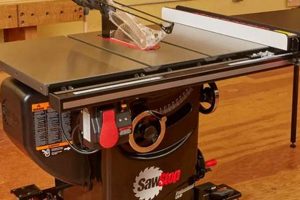
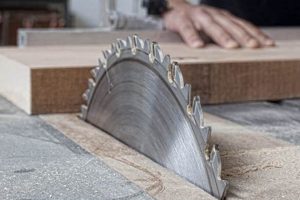
The practice centers around crafting items from wood utilizing tools and techniques that circumvent the necessity of a stationary power tool designed for ripping and crosscutting. This approach might involve hand tools like saws and planes, or smaller power tools such as circular saws or jigsaws, often in conjunction with clamping systems and guides to achieve precise cuts. A specific example involves constructing a cabinet using only hand saws, chisels, and hand planes to prepare and join the wood components.
This method is beneficial for individuals with limited workshop space, those seeking a quieter working environment, or those who prefer a more traditional and tactile engagement with the material. Historically, woodworking was predominantly executed without reliance on large power tools; these skills and techniques offer a connection to that heritage and can be invaluable in situations where power is unavailable or impractical. Furthermore, avoiding the purchase and maintenance of a large, stationary saw can represent a significant cost saving.
The subsequent sections will delve into the specific tools and methods employed in this approach, focusing on accurate cutting techniques, effective joinery methods, and project planning considerations when operating without the central, often-relied-upon, piece of machinery.
Essential Techniques for Woodworking Without a Table Saw
This section provides crucial guidance on executing woodworking projects effectively when a stationary table saw is unavailable. Adhering to these techniques ensures precision, safety, and quality in the finished product.
Tip 1: Prioritize Accurate Measurement and Marking: Precise dimensions are paramount. Use a sharp marking knife and a reliable measuring tool, such as a combination square or steel rule. Double-check all measurements before initiating any cuts.
Tip 2: Employ Guide Systems and Jigs: Circular saws and jigsaws benefit significantly from guide systems. Straight edges clamped securely to the workpiece facilitate controlled, accurate cuts. Consider building specialized jigs for repetitive cuts.
Tip 3: Master Hand Saw Techniques: Proficiency with hand saws, including crosscut and rip saws, is essential. Maintain a consistent angle and rhythm while sawing. Practice regularly to develop accuracy and efficiency.
Tip 4: Utilize a Router with Edge Guide: For creating precise edges and dados, a router equipped with an edge guide provides a controlled and repeatable method. Ensure the router base is stable and the edge guide is properly adjusted.
Tip 5: Leverage Hand Planes for Fine Adjustments: Hand planes are invaluable for achieving perfectly flat surfaces and fine-tuning joinery. Sharp blades and proper technique are critical for optimal results.
Tip 6: Secure Workpiece Stability: Properly securing the workpiece is crucial for safety and accuracy. Use clamps, vises, or other appropriate workholding devices to prevent movement during cutting and shaping.
Tip 7: Sharpen Tools Regularly: Sharp tools are safer and more efficient. Maintain a regular sharpening schedule for all cutting tools, including saws, chisels, and planes.
Implementing these techniques enables the successful completion of woodworking projects without relying on a table saw, fostering adaptability and skill development.
The following section will explore specific project examples and address common challenges encountered when employing these alternative methods.
1. Accuracy

In woodworking devoid of a table saw, accuracy transcends simple measurement; it becomes the cornerstone of project feasibility and structural integrity. The inherent precision afforded by a table saw must be consciously replicated through alternative means.
- Precise Measurement and Marking
Accurate measurement is paramount when relying on hand tools or portable power tools. Discrepancies, even minor ones, can accumulate, leading to ill-fitting joints and compromised structural stability. Tools such as precision squares, marking gauges, and sharp marking knives are essential for transferring dimensions accurately. For example, when constructing a frame and panel door, each stile and rail must be precisely measured and marked to ensure a square and properly aligned assembly.
- Controlled Cutting Techniques
Achieving accuracy requires mastery of controlled cutting techniques. Whether using hand saws, circular saws, or jigsaws, maintaining a consistent cutting line is critical. Guide systems, such as clamped straightedges or shop-made jigs, provide a reference point and prevent deviation. When cutting a tenon by hand, for instance, careful sawing along the marked lines, combined with paring using a chisel, ensures a tight and accurate fit within the mortise.
- Careful Joinery Execution
Precise joinery is the linchpin of robust and visually appealing woodworking. Traditional joints like dovetails, mortise-and-tenons, and rabbets demand meticulous execution. Gaps or misalignments resulting from inaccurate cuts or poorly fitted joints undermine the project’s structural integrity and aesthetic value. A well-executed dovetail joint, achieved through accurate sawing and careful chiseling, provides exceptional strength and a visually appealing connection between two boards.
- Iterative Refinement and Adjustment
When striving for accuracy without a table saw, an iterative approach involving refinement and adjustment becomes necessary. Slight overcuts or imperfections can be corrected using hand planes, chisels, or sanding blocks. This process allows for fine-tuning the dimensions and ensuring a precise fit. For instance, after assembling a drawer box, hand planing the edges to achieve a perfect flush fit with the cabinet face is an example of iterative refinement.
The foregoing illustrates that accuracy in woodworking without a table saw is not merely a desirable attribute, but a fundamental requirement. Attentive measurement, controlled cutting, meticulous joinery, and iterative refinement collectively compensate for the absence of a table saw, enabling the creation of high-quality, structurally sound wooden objects. The reliance on alternative techniques amplifies the necessity of precision at every stage of the woodworking process.
2. Hand Saws

Hand saws are integral to woodworking when a table saw is not available. Their versatility and portability enable a range of cuts and operations, demanding skill and precision for effective utilization.
- Types of Hand Saws and Their Applications
Various hand saw types exist, each suited for specific tasks. Crosscut saws excel at cutting against the wood grain, while rip saws are designed for cutting along the grain. Backsaws, characterized by a reinforced spine, provide increased rigidity for precise cuts, particularly in joinery. A dovetail saw, a type of backsaw, is specifically designed for creating dovetail joints. The selection of an appropriate saw type is crucial for achieving optimal results and minimizing material waste.
- Techniques for Accurate Hand Sawing
Accurate hand sawing requires proper technique and consistent practice. Establishing a starting kerf with a chisel or knife helps guide the saw blade. Maintaining a consistent angle and applying even pressure are essential for straight and accurate cuts. Regular sharpening and proper set of the saw teeth are necessary for efficient cutting and preventing binding. Practicing on scrap material is recommended to develop proficiency and refine technique.
- Hand Saws in Joinery
Hand saws play a critical role in creating traditional joinery. Dovetail saws are specifically designed for cutting the precise angles required for dovetail joints. Backsaws are used for creating tenons for mortise-and-tenon joints. Coping saws are employed for shaping curved or irregular components in complex joints. The precision achievable with hand saws allows for tight-fitting and structurally sound joinery, essential for durable and aesthetically pleasing woodworking projects.
- Maintenance and Sharpening of Hand Saws
Proper maintenance is essential for prolonging the lifespan and performance of hand saws. Regular cleaning removes debris and prevents rust. Sharpening is necessary to maintain the sharpness of the saw teeth and ensure efficient cutting. The sharpening process involves filing the teeth to restore their original shape and setting the teeth to create clearance for the saw blade. Properly maintained hand saws are more effective, safer to use, and produce cleaner cuts.
The diverse capabilities of hand saws, coupled with proper technique and maintenance, enable woodworkers to execute projects with precision and control when operating without the constraints or availability of a table saw. Skillful application of hand saws facilitates intricate joinery and fine detail work, emphasizing the continued relevance of these traditional tools in modern woodworking practices.
3. Circular Saw
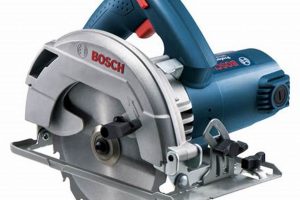
The circular saw serves as a principal tool when executing woodworking projects in the absence of a table saw. Its portability and capacity for cutting sheet goods and lumber render it a viable substitute for certain table saw functions. The effect is a reduced reliance on stationary machinery, enabling woodworking in spaces where a table saw is impractical or unavailable. For example, constructing built-in shelving in an existing home might necessitate the use of a circular saw due to space constraints, whereas a table saw would be difficult to maneuver and position effectively. Furthermore, controlled by appropriate guides and jigs, a circular saw can produce accurate cuts comparable to those achieved on a table saw, albeit often requiring more setup time.
The practical application of a circular saw in this context demands careful consideration of safety protocols and technique. Securing the workpiece and employing a straight edge or manufactured guide are essential for achieving straight and consistent cuts. The selection of an appropriate blade, specifically designed for the material being cut (e.g., plywood blade for minimal tear-out), further contributes to the quality of the final product. For instance, fabricating a cabinet door using a circular saw involves precisely cutting the stiles and rails to size, followed by employing joinery techniques to assemble the frame. This demonstrates the capacity of the circular saw to replicate tasks typically associated with a table saw.
While the circular saw offers a practical alternative, it presents certain limitations. Ripping long boards can be challenging due to the difficulty in maintaining a perfectly straight cut. The absence of a fixed reference surface, inherent in a table saw, necessitates careful attention to accuracy. However, through the implementation of proper techniques and the use of auxiliary tools, the circular saw functions as a crucial component of woodworking practices that bypass the need for a table saw. Understanding its capabilities and limitations is vital for effectively substituting its function for certain applications of a table saw.
4. Router Usage

The router, in the context of woodworking practices excluding a table saw, assumes a significantly elevated role. The absence of the table saw necessitates alternative methods for achieving precise cuts, shaping edges, and creating joinery. Router usage directly addresses these needs. The device, when fitted with appropriate bits and guided properly, effectively mills edges straight, cuts dadoes and grooves for joinery, and profiles decorative features. Failure to recognize the router’s potential within this framework limits the scope and precision of woodworking projects. Constructing cabinet doors, for example, requires precise shaping of the stiles and rails. Without a table saw, a router equipped with a stile and rail bit set becomes the primary tool for achieving the required profiles and joinery.
Further applications underscore the router’s value. Creating consistent rabbets for cabinet backs or drawer bottoms is efficiently accomplished using a router with a rabbeting bit and an edge guide. This combination ensures uniform depth and width, crucial for structural integrity and aesthetic consistency. Similarly, flush trimming edge banding or laminate is facilitated by a flush trim router bit, leaving a smooth, even surface. Deeper mortises can be created with plunge routers using a spiral upcut bit in multiple passes removing the material and creating the desire hole. The selection of appropriate bits and the implementation of secure guidance systems are essential for safe and accurate operation.
In conclusion, router usage represents a critical component of woodworking strategies that circumvent reliance on a table saw. The router’s versatility enables a range of operations, from edge shaping to joinery creation, expanding project possibilities. Successfully integrating the router into the workflow requires understanding its capabilities, mastering appropriate techniques, and prioritizing safety. The challenges associated with precise guidance and bit selection are offset by the device’s indispensable contribution to achieving high-quality results in the absence of a table saw.
5. Joinery Skills

The absence of a table saw in woodworking elevates the significance of joinery skills. A table saw facilitates rapid and precise creation of many joints; lacking it necessitates proficiency in alternative joinery techniques. Therefore, strong joinery skills become not merely advantageous but essential for achieving structurally sound and aesthetically pleasing results. Without the ease of creating machine-cut joinery, woodworkers must rely on traditional hand tool methods or creatively adapt power tools to achieve comparable precision.
For instance, constructing a solid wood table without a table saw mandates the use of mortise and tenon joints or dovetail joints to connect the legs to the tabletop and apron. Successfully executing these joints relies on meticulous layout, precise hand sawing and chiseling, and iterative fitting skills that are often less emphasized when a table saw is readily available. Furthermore, the adaptability to create custom jigs and fixtures to guide portable power tools, such as routers and circular saws, is crucial for replicating table saw accuracy in joint creation. A cabinet maker crafting drawer boxes, for example, might use a router and jig to create precise rabbets and dadoes for a strong and square assembly.
In summary, the interdependence of strong joinery skills and successful woodworking without a table saw is undeniable. The constraints imposed by the absence of this tool necessitate a deeper understanding and mastery of alternative joinery methods and jig-making techniques. The quality and longevity of woodworking projects, in this context, directly correlate with the woodworker’s command of joinery skills, presenting both a challenge and an opportunity for heightened craftsmanship.
6. Project Planning

Project planning assumes a paramount role when undertaking woodworking without a table saw. The absence of this central piece of equipment necessitates meticulous foresight to mitigate potential inaccuracies and inefficiencies. Without the rapid dimensioning and shaping capabilities offered by a table saw, project success hinges on accurate material calculation, strategic cutting plans, and adaptable construction sequences. Effective project planning directly reduces material waste and minimizes the reliance on corrective measures later in the process.
The development of detailed cutting diagrams is especially crucial. Each component must be carefully nested within available material to optimize yield and minimize offcuts. This process may involve altering initial design dimensions to align with standard lumber sizes or available stock. Employing scaled drawings or digital modeling software to visualize the project and its component breakdown enables anticipatory identification of potential challenges. A real-world example is constructing a set of drawers. Lacking a table saw, the woodworker must meticulously plan the cuts for the drawer sides, front, back, and bottom to ensure accurate dimensions and minimize material waste, a process significantly more demanding than when utilizing a table saw for precise dimensioning. Furthermore, carefully considered build sequence can reduce the number of cuts and the potential for mistakes.
In conclusion, project planning acts as the linchpin for successful woodworking endeavors devoid of a table saw. Meticulous material estimation, strategic cutting diagrams, and adaptable build sequences become not merely advisable but fundamentally necessary. The absence of a table saw compels a deeper investment in the planning phase, ultimately resulting in increased material efficiency, minimized waste, and a more streamlined construction process. The investment in thorough planning directly contributes to the overall quality and viability of projects executed under such constraints.
Frequently Asked Questions
The following addresses common inquiries regarding the feasibility and techniques associated with woodworking projects when a table saw is unavailable. These answers aim to provide clarity and guidance for those exploring alternative methods.
Question 1: Is it possible to complete complex woodworking projects without a table saw?
Yes, completing complex projects is achievable, although it requires a greater emphasis on accurate measurement, alternative cutting methods, and joinery techniques. Project success depends on the woodworker’s skill and planning rather than reliance on a single machine.
Question 2: What are the essential tools needed for woodworking without a table saw?
Essential tools include a circular saw with guide systems, hand saws (rip, crosscut, and backsaw), a router with various bits, a marking knife, a combination square, and clamping systems for securing workpieces.
Question 3: How does one achieve straight cuts when using a circular saw without a table saw?
Straight cuts are achieved by employing a clamped straightedge or commercially available guide system. Careful alignment and controlled movement of the circular saw along the guide are crucial for accuracy.
Question 4: What are the best joinery methods to use when avoiding the table saw?
Effective joinery methods include mortise and tenon joints, dovetail joints (requiring hand sawing and chiseling), rabbet joints, and dado joints (cut with a router). Selection depends on project requirements and the woodworker’s skill level.
Question 5: Is woodworking without a table saw more time-consuming?
Generally, yes. The absence of a table saw often necessitates more time for setup, cutting, and fitting. However, the increased attention to detail can result in higher quality craftsmanship.
Question 6: Does woodworking without a table saw require more skill?
Woodworking without a table saw demands a broader range of skills. Proficiency in hand tool techniques, jig construction, and careful layout is essential for achieving precise results.
The answers provided clarify that while woodworking without a table saw presents unique challenges, it remains a viable option for skilled and resourceful woodworkers. Success hinges on careful planning, mastery of alternative techniques, and a commitment to precision.
The subsequent section will delve into specific project examples and provide practical tips for applying these techniques in real-world scenarios.
Conclusion
The preceding exploration has detailed the methods and considerations pertinent to woodworking without table saw. It underscores the viability of alternative techniques when that tool is absent, emphasizing the importance of precision, planning, and a diverse skillset. The reliance on hand tools, portable power tools, and carefully constructed jigs replaces the singular function of a stationary table saw.
The choice to engage in woodworking without table saw may stem from spatial constraints, budgetary limitations, or a preference for traditional methods. Regardless of the impetus, the successful execution of projects necessitates a thorough understanding of the discussed principles and a commitment to meticulous craftsmanship. The capacity to adapt and innovate within these parameters defines the skilled woodworker.