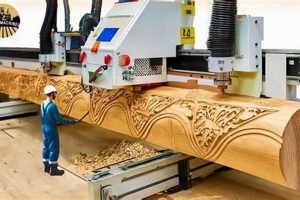
Equipment designed for shaping, cutting, and joining wood within industrial settings is vital for efficient production processes. This specialized apparatus encompasses a range of tools from saws and planers to sanders and jointers, all engineered to perform specific tasks with precision and consistency. An example would include automated systems facilitating high-volume production runs of furniture components.
These systems play a critical role in optimizing manufacturing workflows, reducing manual labor requirements, and enhancing product quality. Their development has evolved alongside technological advancements, resulting in sophisticated, computer-controlled machines that offer unparalleled accuracy and speed. Historically, such innovations have significantly impacted the woodworking industry, enabling businesses to meet increasing demands and achieve greater profitability.
The following sections will delve into specific types of this equipment, exploring their functionalities, applications, and the factors to consider when selecting the most suitable options for particular operational needs. This includes an analysis of efficiency metrics, maintenance requirements, and the impact of technological advancements on the industry.
Optimizing Operations with Specialized Woodworking Equipment
The following tips aim to guide the effective implementation and maintenance of advanced woodworking systems for maximized productivity and longevity.
Tip 1: Conduct Thorough Needs Assessment: Before investing, meticulously evaluate current production volume, desired product output, and the complexity of designs to determine the appropriate machinery specifications. For example, a high-volume cabinet manufacturer would require a vastly different configuration than a custom furniture shop.
Tip 2: Prioritize Operator Training: Comprehensive training on equipment operation, safety protocols, and routine maintenance is paramount. Properly trained operators can minimize downtime, reduce the risk of accidents, and optimize machine performance. A structured training program should be implemented and regularly updated.
Tip 3: Implement a Preventative Maintenance Schedule: Regular inspections, lubrication, and component replacements are essential to prevent costly breakdowns and extend the lifespan of machinery. A detailed maintenance log should be maintained, documenting all service activities and identified issues.
Tip 4: Optimize Material Handling: Efficient material handling processes can significantly reduce bottlenecks and improve overall workflow. Integrating automated feeding and offloading systems can minimize manual labor and increase production speed. Careful planning of the shop floor layout is critical.
Tip 5: Monitor Performance Metrics: Track key performance indicators (KPIs) such as production rate, downtime, and material waste to identify areas for improvement. Data-driven analysis can reveal inefficiencies and guide optimization efforts. Utilize machine data logging capabilities where available.
Tip 6: Ensure Adequate Dust Collection: Wood dust is a significant health hazard and can negatively impact machine performance. Invest in a robust dust collection system to maintain a clean and safe working environment, while also preventing dust buildup in machinery components.
These guidelines emphasize the importance of thoughtful planning, consistent maintenance, and data-driven decision-making to maximize the return on investment and ensure the long-term success of woodworking operations.
The subsequent sections will explore advanced features and emerging technologies within this specialized sector, highlighting the potential for further improvements in efficiency and product quality.
1. Precision

The operation of woodworking machinery necessitates a high degree of accuracy in cutting, shaping, and joining processes. Precision directly impacts the quality of finished products, minimizing waste and ensuring conformity to design specifications. The machinery, therefore, integrates features like calibrated measuring systems, computer numerical control (CNC), and laser-guided cutting to achieve these precise outcomes. Inaccurate machinery results in dimensional errors, necessitating rework or rejection of components, leading to increased production costs. An example is the production of intricate cabinet components, where even minor deviations from specified dimensions can compromise the structural integrity and aesthetic appeal of the final product.
The pursuit of higher precision has driven technological advancements in woodworking machinery, including improved feedback control systems, enhanced sensor technologies, and more rigid machine structures. These improvements enable tighter tolerances and greater repeatability in manufacturing processes. For instance, advanced CNC routers utilize closed-loop feedback systems to continuously monitor and correct tool position, minimizing errors caused by vibration, thermal expansion, or tool wear. This level of control is critical in applications where complex geometries or tight-fitting joints are required, such as the production of custom millwork or musical instruments.
In summary, precision is an indispensable attribute of modern woodworking equipment. Its attainment relies on the integration of sophisticated technologies and rigorous quality control measures. The continuous refinement of precision capabilities remains a driving force in the evolution of these systems, facilitating increased efficiency, reduced waste, and enhanced product quality. Addressing challenges related to vibration damping, thermal stability, and sensor accuracy will continue to be essential for advancing the capabilities of the machinery and meeting the increasingly demanding requirements of the woodworking industry.
2. Durability
Durability, the ability of equipment to withstand wear, pressure, or damage, constitutes a fundamental characteristic of woodworking machinery. The inherent nature of woodworking processes involving repetitive cutting, shaping, and abrasion of materials necessitates robust machinery construction. Consequently, the longevity and reliability of woodworking machinery are directly linked to the use of high-quality materials, precision engineering, and protective coatings. For example, band saws constructed with hardened steel frames and equipped with sealed bearings exhibit greater resistance to vibration and wear, ensuring extended operational life. The failure to prioritize durability leads to premature equipment failure, increased downtime, and escalated maintenance costs.
The relationship between durability and specific machine components is evident across a range of woodworking operations. In edgebanding machines, the application of adhesive and the subsequent trimming of excess banding exert significant stress on the machine’s feeding mechanisms and cutting tools. Machines with durable, precisely aligned components maintain consistent performance over extended periods, producing clean, uniform edges with minimal material waste. Similarly, CNC routers employed in high-volume production environments require robust spindle designs and rigid frame construction to withstand the forces generated during rapid tool changes and intricate cutting paths. The choice of materials, such as high-strength alloys for spindle housings and vibration-damping composites for machine bases, plays a critical role in mitigating wear and ensuring long-term accuracy.
In summary, the durability of woodworking machinery is a key factor in determining its overall value and operational efficiency. Equipment designed and manufactured with durability in mind reduces the frequency of repairs, minimizes production interruptions, and contributes to a lower total cost of ownership. Prioritizing the selection of machines with robust construction and readily available replacement parts is essential for woodworking businesses seeking to maintain consistent production output and achieve long-term profitability. Challenges associated with material fatigue, corrosion, and the availability of skilled maintenance personnel must be addressed to fully realize the benefits of durable woodworking machinery.
3. Automation

The integration of automation is a defining characteristic of modern woodworking machinery, fundamentally reshaping manufacturing processes and increasing productivity. This encompasses a broad spectrum of technological applications, from computer numerical control (CNC) systems directing tool movements to automated material handling systems feeding stock to machines. The primary effect of automation is a reduction in manual labor requirements and an increase in the precision and consistency of finished products. For example, automated sawing systems can optimize cutting patterns to minimize waste, whereas CNC routers can execute complex designs with repeatable accuracy. The presence of automation is a critical element in contemporary woodworking, allowing for higher throughput, reduced error rates, and greater design complexity.
The practical significance of automation in woodworking lies in its ability to address challenges associated with skilled labor shortages and increasing customer demands. Automated machinery enables businesses to maintain consistent production levels with a reduced workforce, mitigating the impact of labor costs and skill gaps. Consider the use of automated finishing lines, where robotic arms apply coatings with uniform thickness and coverage, minimizing the need for manual spraying and reducing exposure to hazardous materials. Furthermore, automation empowers manufacturers to produce customized products on a large scale, catering to niche markets and meeting evolving customer preferences. This is exemplified by the growing adoption of automated nesting systems, where software optimizes the layout of parts on a sheet of material to minimize waste and maximize material utilization.
In conclusion, automation represents a transformative force in the woodworking industry. Its adoption has not only improved efficiency and productivity but has also enabled manufacturers to overcome labor challenges and respond to changing market demands. Future advancements in automation, such as the integration of artificial intelligence and machine learning, are poised to further enhance the capabilities of woodworking machinery, enabling even greater levels of precision, flexibility, and resource optimization. Addressing challenges related to initial investment costs and the need for specialized training remains essential for businesses to fully leverage the benefits of automated woodworking systems.
4. Versatility

Versatility, in the context of industrial woodworking, refers to the ability of machinery to perform a wide range of operations or adapt to diverse materials and project requirements. It is a critical attribute of efficient and cost-effective woodworking operations. Machinery exhibiting high versatility minimizes the need for specialized equipment, reducing capital investment and maximizing floor space utilization.
- Multi-Operational Capabilities
Certain woodworking machines are designed to perform several distinct functions, such as sawing, planning, and jointing, all within a single unit. Such multi-operational capabilities reduce setup times and enable streamlined workflows, especially in smaller workshops or facilities with limited space. An example is a combination machine that can function as a table saw, jointer, and planer, thus accommodating various processing requirements within a compact footprint. This decreases the need for dedicated machines, thereby saving space and reducing operational costs.
- Material Adaptability
Woodworking machinery may exhibit versatility by being capable of processing a wide array of materials beyond solid wood. This includes handling plywood, MDF (Medium Density Fiberboard), particleboard, and various composite materials. This adaptability is crucial for manufacturers producing diverse products or those seeking to optimize material utilization. An illustrative instance involves a CNC router that can efficiently cut intricate patterns in both hardwood and acrylic sheets, thereby broadening the scope of possible applications without necessitating additional equipment acquisitions.
- Tooling Flexibility
The capability to accommodate a variety of cutting tools and accessories enhances machinery versatility. Machines equipped with quick-change tooling systems and adaptable clamping mechanisms can readily switch between different operations, such as routing, drilling, and sanding. For example, a spindle moulder with interchangeable cutter heads can produce diverse profiles and shapes, enabling manufacturers to create custom millwork components with minimal downtime for tool changes. This capability streamlines production and reduces the investment in specialized equipment.
- Programmability and Customization
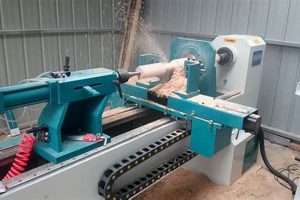
Modern woodworking machinery often incorporates advanced programming features, allowing operators to create and store customized settings for specific projects or materials. This programmability enhances versatility by enabling machines to adapt to unique production requirements. CNC machines, in particular, offer unparalleled flexibility through their ability to execute complex cutting paths and generate intricate designs based on user-defined parameters. An example is a CNC lathe that can be programmed to produce custom-turned furniture legs with varying diameters and profiles, thereby offering greater customization options to meet diverse customer needs.
In conclusion, the versatility of specialized woodworking systems stems from their ability to integrate multiple functions, adapt to various materials, accommodate diverse tooling, and leverage advanced programming features. These attributes collectively contribute to enhanced operational efficiency, reduced equipment costs, and greater flexibility in meeting diverse project requirements. The incorporation of such features within the sector contributes to optimized manufacturing processes and allows woodworking businesses to effectively address the demands of the contemporary market.
5. Safety

The integration of safety measures within woodworking machinery is paramount to mitigating the inherent risks associated with high-speed cutting, shaping, and joining processes. Equipment designs and operational protocols must prioritize operator well-being and minimize the potential for injury. Effective safety provisions are not merely regulatory compliance measures but fundamental aspects of responsible manufacturing practices.
- Emergency Stop Mechanisms
Emergency stop (E-stop) devices are critical components of woodworking machinery safety systems. These mechanisms enable operators to immediately halt machine operation in the event of a malfunction or hazardous situation. Strategically positioned E-stop buttons, easily accessible from all operating stations, are essential. For example, a band saw should incorporate an E-stop button near the blade guide to allow for rapid shutdown in the event of a material jam or blade breakage. The responsiveness and reliability of these systems are crucial for preventing severe injuries.
- Guarding and Interlock Systems
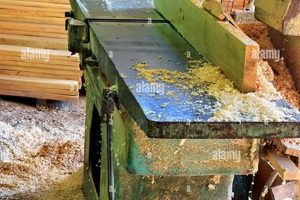
Physical guards and interlock systems are designed to prevent operator contact with moving parts, such as blades, cutters, and belts. Guards must be robustly constructed and securely attached to the machinery, effectively isolating hazardous areas. Interlock systems ensure that machinery cannot operate unless guards are properly in place. An example is a jointer equipped with a guard that automatically retracts as the workpiece is fed through, while simultaneously preventing access to the rotating cutter head. The integration of interlocks ensures that the machine ceases operation if the guard is removed or improperly positioned.
- Dust Collection and Air Quality Control
Wood dust generated during machining operations poses a significant health hazard, including respiratory irritation and potential long-term lung damage. Effective dust collection systems are essential for maintaining air quality and protecting operator health. These systems employ vacuum-assisted extraction to capture dust particles at the source, preventing them from becoming airborne. For example, a CNC router should be integrated with a dust collection hood positioned close to the cutting tool to capture the majority of the generated dust. Regular maintenance and filter replacement are crucial for ensuring the continued effectiveness of dust collection systems.
- Operational Training and Safety Protocols
Comprehensive operational training and adherence to established safety protocols are indispensable for preventing accidents and injuries. Operators must receive thorough instruction on the safe operation of each machine, including the proper use of personal protective equipment (PPE) and the identification of potential hazards. Safety protocols should be clearly documented and readily accessible, providing step-by-step guidance on machine startup, operation, and shutdown procedures. An example is a training program that emphasizes the importance of wearing safety glasses and hearing protection when operating woodworking machinery. Regular refresher courses and ongoing safety audits are essential for reinforcing safe work practices.
In summary, safety within woodworking operations is achieved through a multifaceted approach, encompassing machine design, protective equipment, and rigorous training. The integration of emergency stop mechanisms, physical guarding, dust collection systems, and comprehensive training programs creates a safer working environment, reducing the risk of accidents and promoting operator well-being. Ongoing efforts to improve safety technology and enforce adherence to safety protocols are essential for minimizing the potential for injury in the woodworking industry.
6. Maintenance
Scheduled maintenance is intrinsically linked to the sustained performance and longevity of woodworking machinery. The mechanical stresses, dust accumulation, and continuous operation inherent in woodworking environments necessitate a proactive approach to equipment care. Failure to adhere to a rigorous maintenance schedule invariably leads to reduced efficiency, increased downtime, and potential equipment failure. Consider a CNC router employed in a high-production setting; without regular lubrication of its bearings and cleaning of its ventilation systems, overheating and premature wear will inevitably occur, leading to diminished cutting accuracy and eventual breakdown.
The practical significance of understanding this relationship lies in the ability to minimize operational disruptions and maximize the return on investment in the machinery. Maintenance procedures encompass a broad range of activities, including lubrication, filter replacement, blade sharpening, and component inspection. These actions not only prevent costly repairs but also contribute to maintaining optimal performance levels. For instance, the timely replacement of dull saw blades reduces the load on the motor, conserves energy, and produces cleaner cuts. Similarly, the regular cleaning of dust collection systems prevents clogs, maintains airflow, and reduces the risk of fire hazards. Adherence to manufacturer-specified maintenance schedules and the use of genuine replacement parts are crucial for preserving the original equipment warranty and ensuring compatibility.
In conclusion, maintenance is not merely an ancillary task but an integral component of woodworking operations. A proactive maintenance strategy, encompassing regular inspections, scheduled servicing, and the use of quality replacement parts, is essential for ensuring the reliability, longevity, and optimal performance of woodworking machinery. Ignoring the importance of maintenance can result in significant financial losses and operational disruptions. Addressing challenges related to skilled maintenance personnel and the availability of spare parts is vital for maintaining the efficiency and competitiveness of woodworking businesses.
Frequently Asked Questions About Woodworking Machinery
The following section addresses common inquiries regarding the selection, operation, and maintenance of specialized woodworking equipment. The information presented is intended to provide clarity and inform decision-making processes within industrial settings.
Question 1: What factors should be considered when selecting woodworking machinery for a specific application?
The selection process should prioritize the following: material type, production volume, desired precision, available floor space, budget constraints, and operator skill level. Compatibility with existing equipment and integration with automation systems must also be evaluated.
Question 2: How frequently should woodworking machinery undergo preventative maintenance?
Preventative maintenance schedules are dictated by the manufacturer’s recommendations and the intensity of equipment usage. Daily inspections, weekly cleaning, and monthly lubrication are generally advisable. A comprehensive maintenance log must be maintained.
Question 3: What are the primary safety concerns associated with operating woodworking machinery?
Key safety concerns include: exposure to airborne wood dust, risk of contact with moving parts (blades, cutters), potential for projectile debris, and noise pollution. Adherence to safety protocols and the use of personal protective equipment are mandatory.
Question 4: What are the benefits of integrating CNC technology into woodworking operations?
CNC technology offers increased precision, reduced material waste, improved repeatability, and the ability to produce complex designs. It also allows for automated production runs and minimizes the need for skilled labor in certain tasks.
Question 5: How can the lifespan of woodworking machinery be extended?
Extending the lifespan requires: strict adherence to maintenance schedules, the use of genuine replacement parts, proper storage conditions, protection from environmental factors (humidity, temperature fluctuations), and adequate operator training.
Question 6: What are the potential cost savings associated with investing in high-quality woodworking machinery?
High-quality machinery, while representing a larger initial investment, typically results in: reduced downtime, lower maintenance costs, improved product quality, increased production efficiency, and a longer operational lifespan, leading to significant long-term cost savings.
The foregoing responses highlight critical aspects of woodworking machinery ownership and operation. Diligent attention to these factors is essential for optimizing performance and minimizing risks.
The following sections will explore real-world applications of specialized woodworking equipment and delve into emerging trends shaping the future of the industry.
Conclusion
This exploration has detailed the significance of specialized woodworking equipment in modern manufacturing. Precision, durability, automation, versatility, safety, and maintenance have been identified as critical parameters influencing operational effectiveness. Optimizing these parameters is essential for maximizing productivity and minimizing operational costs.
The continued evolution of this equipment will undoubtedly shape the future of woodworking. Adopting advanced technologies and implementing rigorous maintenance protocols are paramount for businesses seeking to maintain a competitive edge. A continued commitment to innovation and safety is required to ensure the long-term viability of the industry.