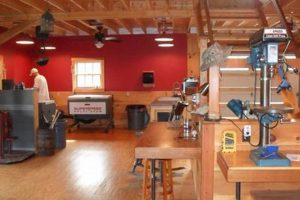
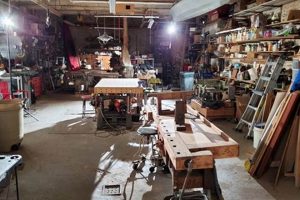
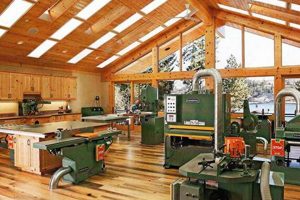
The configuration of a workspace dedicated to woodworking endeavors is a crucial determinant of efficiency and safety. A well-organized arrangement facilitates seamless workflow, minimizing unnecessary movement and potential hazards. For example, positioning frequently used tools within easy reach can significantly reduce project completion time and the risk of accidents.
Effective workspace organization contributes to enhanced productivity, reduced material waste, and a safer working environment. Historically, woodworking spaces were often cramped and poorly lit, leading to inefficiencies and increased risk of injury. The development of ergonomic principles and a greater understanding of workflow optimization have led to increasingly sophisticated and effective workspace designs.
The following sections will detail key considerations in achieving an optimized woodworking environment. These considerations include space allocation, tool placement, dust collection, and safety protocols. Attention to these elements will contribute to a more productive and enjoyable woodworking experience.
Essential Considerations for Woodworking Workspace Arrangement
Optimizing the physical arrangement of a woodworking space is paramount for efficiency and safety. Strategic planning minimizes wasted movement and reduces the risk of accidents. The following tips provide a framework for achieving a functional and productive environment.
Tip 1: Centralize Dust Collection: A robust dust collection system is essential for maintaining air quality and preventing respiratory issues. Position the collector centrally to minimize ducting runs to individual machines. Ensure adequate airflow to each collection point.
Tip 2: Prioritize Workflow: Arrange equipment in a logical sequence that mirrors the typical workflow of a woodworking project. For example, locate the lumber storage area near the milling machines (jointer, planer) and then progress towards assembly and finishing stations.
Tip 3: Implement a Tool Storage System: A well-organized tool storage system improves efficiency and prevents tool damage. Consider wall-mounted racks, shadow boards, or rolling cabinets to keep frequently used tools within easy reach. Designate specific locations for each tool and enforce a strict return policy.
Tip 4: Optimize Lighting: Adequate lighting is crucial for accurate work and safe operation of power tools. Supplement overhead lighting with task-specific lighting, such as adjustable lamps or LED strips, to illuminate work surfaces and prevent shadows.
Tip 5: Delineate Work Zones: Clearly define different work zones, such as milling, assembly, and finishing areas. This separation helps to prevent cross-contamination (e.g., sawdust in the finishing area) and promotes a more organized workflow.
Tip 6: Plan for Expansion: Consider future needs when designing the workspace. Allocate space for potential equipment upgrades or additional storage requirements. A flexible arrangement allows for adaptation as the woodworking practice evolves.
Tip 7: Emphasize Safety: Safety should be a primary consideration in any woodworking area. Ensure clear pathways, unobstructed access to emergency exits, and proper ventilation. Post safety guidelines and maintain a well-stocked first-aid kit.
Adhering to these principles will lead to a workspace that is not only efficient and productive but also promotes a safer and more enjoyable woodworking experience. Careful planning and attention to detail are essential for creating an optimal environment.
The subsequent sections will address advanced considerations, including power distribution, material handling, and ergonomic design principles.
1. Workflow Efficiency

Workflow efficiency is inextricably linked to the physical arrangement of a woodworking space. The placement of tools, machinery, and materials directly affects the time and effort required to complete a project. A sub-optimally arranged shop introduces unnecessary steps, increases material handling, and elevates the risk of accidents. Conversely, a strategically designed layout minimizes movement, optimizes material flow, and enhances overall productivity. Consider, for instance, a cabinetmaker who frequently uses a jointer, planer, and table saw. If these machines are clustered together in a logical sequence, the craftsman can process lumber with minimal wasted steps. This configuration contrasts sharply with a layout where these machines are widely dispersed, resulting in increased handling and reduced output.
The attainment of workflow efficiency requires a comprehensive understanding of the woodworking process, from raw material to finished product. This understanding informs the spatial relationships between different work zones and equipment. For example, a dedicated assembly area with readily available clamps, fasteners, and adhesives streamlines the assembly process. Similarly, a well-ventilated finishing area with appropriate lighting facilitates the application of coatings and protects against the inhalation of harmful fumes. Furthermore, the consideration of potential bottlenecks in the workflow is crucial. If sanding is a time-consuming process, allocating adequate space and equipment for sanding operations prevents delays in downstream stages of the project.
In conclusion, workflow efficiency serves as a cornerstone of an effective woodworking space. By optimizing the physical arrangement of tools, machines, and materials, woodworkers can substantially reduce project completion times, minimize material waste, and enhance safety. The realization of these benefits requires a thorough understanding of the woodworking process and a commitment to implementing layout strategies that support efficient workflow. Failure to prioritize workflow efficiency compromises productivity and jeopardizes the overall success of woodworking endeavors.
2. Tool Accessibility

The concept of tool accessibility is integral to achieving a functional and efficient woodworking space. Strategic placement and organization of tools minimizes wasted time and effort, directly contributing to increased productivity and enhanced safety. The arrangement should prioritize frequently used implements and minimize the need for excessive reaching or searching.
- Proximity to Primary Work Zones
Tool storage should be strategically located near the zones where those tools are primarily used. Placing measuring tools and marking gauges near lumber storage and milling machines is more efficient than storing them across the workshop. The proximity ensures convenient access, reduces unnecessary movement, and promotes a more seamless workflow.
- Categorization and Organization
Tools should be categorized and organized logically, facilitating quick identification and retrieval. Grouping similar tools together, such as chisels or saws, streamlines the selection process. Utilizing labeled storage containers or shadow boards further enhances organization and reduces the time spent searching for specific implements. This structured approach minimizes frustration and maintains focus on the task at hand.
- Ergonomic Considerations
The height and placement of tool storage should be ergonomically sound, minimizing strain and potential injuries. Storing heavy or frequently used tools at waist height reduces the need for bending or reaching, thereby mitigating the risk of back pain or muscle fatigue. Adjustable storage systems offer greater flexibility and accommodate individual preferences, contributing to a more comfortable and productive work environment.
- Visibility and Inventory Management
A readily visible tool inventory allows for quick assessment of available resources and prevents unnecessary delays. Open storage solutions, such as wall-mounted racks or transparent containers, promote visibility and simplify inventory management. Regularly checking and restocking tool supplies, such as blades, sandpaper, and fasteners, ensures that necessary items are readily available when needed, preventing disruptions in the workflow.
In summary, tool accessibility is a critical determinant of the effectiveness of any woodworking space. A thoughtfully designed system for tool storage and organization, incorporating proximity to work zones, logical categorization, ergonomic considerations, and visibility, directly impacts productivity and safety. This focused approach elevates the woodworking experience by creating an environment where tools are readily available, promoting efficiency, and minimizing unnecessary physical strain.
3. Dust Management

Dust management is an indispensable component of any woodworking space. Wood dust, a byproduct of cutting, sanding, and shaping wood, poses significant health and safety risks. Inhalation of wood dust can lead to respiratory ailments, including asthma, bronchitis, and even certain types of cancer. Moreover, accumulated dust creates a fire hazard, particularly when combined with flammable finishes and solvents. Thus, effective dust management is not merely an aesthetic consideration but a fundamental necessity for safeguarding health and preventing accidents.
The physical arrangement of a woodworking shop directly influences the efficacy of dust management efforts. A well-designed layout facilitates the capture and removal of dust at its source. For instance, positioning dust collection ports near machines such as table saws, sanders, and routers allows for immediate extraction of airborne particles. A centralized dust collection system, coupled with strategically placed ductwork, minimizes the dispersion of dust throughout the workspace. Conversely, a poorly planned layout, characterized by inadequate dust collection infrastructure or obstructed airflow, contributes to a higher concentration of airborne dust and increases the risk of exposure. Consider a scenario where a sanding station is located far from a dust collection port and lacks adequate ventilation. The resulting accumulation of dust creates a health hazard and compromises the overall cleanliness of the work area.
In conclusion, dust management is intrinsically linked to shop layout. A thoughtfully designed workspace prioritizes dust capture at the source, utilizing efficient collection systems and strategic equipment placement. This integrated approach minimizes health risks, reduces fire hazards, and promotes a cleaner, safer, and more productive woodworking environment. Neglecting dust management in the layout planning stage compromises the well-being of woodworkers and undermines the overall functionality of the shop.
4. Safety Protocols

The implementation of stringent safety protocols is fundamentally intertwined with an optimized woodworking space arrangement. A properly designed layout proactively mitigates hazards and promotes adherence to safe work practices, minimizing the risk of accidents and injuries. The integration of safety considerations during the planning and execution phases of workshop arrangement is, therefore, not merely advisable, but essential.
- Emergency Egress and Clear Pathways
Unobstructed pathways to emergency exits are paramount. The arrangement should facilitate rapid evacuation in the event of fire, equipment malfunction, or other emergencies. Adequate spacing between machines and storage areas, coupled with clearly marked exits, ensures unimpeded access and minimizes the potential for tripping hazards. Example: Designating a three-foot perimeter around all machinery to allow for safe movement and quick egress in an emergency.
- Equipment Guarding and Placement
Machinery placement must account for safe operating distances and the installation of appropriate guarding. The arrangement should prevent accidental contact with moving parts and minimize the risk of ejected debris. Strategic placement of machines, coupled with the use of physical barriers and interlocks, enhances operator safety. Example: Ensuring that the outfeed table of a table saw provides adequate support for long workpieces, preventing kickback and potential injury. Installation of blade guards on all power equipment.
- Ventilation and Air Quality Control
Effective ventilation and dust collection systems are critical for maintaining air quality and minimizing respiratory hazards. The arrangement should facilitate efficient capture of airborne dust and fumes, preventing their accumulation in the workspace. Strategic placement of dust collection ports and ventilation fans, coupled with proper ductwork design, ensures optimal air quality and protects the health of woodworkers. Example: Positioning a dust collector near a sanding station and utilizing downdraft tables to capture fine particulate matter. Compliance with local air quality standards.
- Fire Prevention and Suppression
The arrangement must incorporate fire prevention measures and provide readily accessible fire suppression equipment. Proper storage of flammable materials, such as finishes and solvents, is essential. The presence of fire extinguishers and sprinkler systems enhances the ability to quickly suppress fires. Example: Storing flammable liquids in approved safety cabinets and ensuring that fire extinguishers are properly maintained and readily accessible throughout the shop. Adherence to fire codes and regulations.
The convergence of safety protocols and well-considered physical arrangements culminates in a secure and productive woodworking environment. Through the meticulous integration of safety considerations into layout design, the potential for accidents is significantly reduced, fostering a work atmosphere characterized by security and efficacy. This synergistic approach not only safeguards the well-being of woodworkers but also contributes to the overall success and sustainability of woodworking endeavors.
5. Material Storage
Material storage constitutes a critical element in the development of a functional and efficient woodworking workspace. Improper storage not only consumes valuable space but also impedes workflow, increases the risk of damage, and compromises safety. A well-planned material storage system, integrated within a comprehensive workspace layout, minimizes these challenges and maximizes productivity. The location, organization, and accessibility of materials directly impact the efficiency of project execution. For instance, storing lumber horizontally and off the floor, with proper supports to prevent warping, ensures readily available stock while preserving its structural integrity. In contrast, haphazard stacking of lumber can lead to damage and create potential hazards. Therefore, material storage isn’t merely about containment but a strategic component of the overall workspace design.
Practical applications of effective material storage principles manifest in several ways. Vertical storage systems for sheet goods, such as plywood and MDF, minimize floor space consumption and facilitate easy access to various sizes and thicknesses. Small parts, like screws, nails, and hardware, are best organized in labeled bins or drawers, preventing loss and ensuring readily available supplies. Dedicated storage areas for finishes, adhesives, and solvents, preferably within fire-resistant cabinets, mitigate the risk of fire and exposure to harmful chemicals. Furthermore, integrating material storage with the workflow by positioning raw material near milling stations promotes a seamless transition from storage to processing. These examples underscore the practical significance of strategic material storage in enhancing workshop efficiency and safety.
In summary, the interplay between material storage and optimized workspace arrangement is undeniable. Effective storage maximizes space utilization, protects material integrity, streamlines workflow, and enhances safety. Challenges in material storage often stem from limited space, diverse material sizes, and evolving project requirements. Addressing these challenges necessitates careful planning, strategic utilization of vertical space, and flexible storage solutions adaptable to changing needs. Proper material storage is not an isolated consideration but an essential ingredient in achieving a productive and safe woodworking environment.
6. Adequate Lighting
Adequate illumination is an indispensable component of a superior woodworking shop configuration. The correlation between lighting quality and workspace functionality is direct and substantial. Insufficient or poorly distributed lighting can lead to inaccurate cuts, increased risk of injury, and reduced productivity. Conversely, an effectively illuminated workspace enhances precision, promotes safety, and contributes to a more comfortable and efficient working environment. For example, performing intricate joinery requires clear visibility of fine details, a condition achievable only with sufficient and well-directed light. Without it, misalignments and errors become more frequent, leading to wasted material and compromised project quality.
The practical implementation of adequate lighting within a woodworking area involves several key considerations. First, general ambient lighting should provide a base level of illumination throughout the space, minimizing shadows and ensuring even distribution. Supplemental task lighting, strategically positioned near workstations and machinery, further enhances visibility for specific operations. Adjustable lamps with focused beams allow for precise illumination of intricate details, while overhead lighting with diffusers reduces glare and prevents eye strain. The color temperature of the light source also plays a crucial role. Natural daylight or full-spectrum lighting simulates natural conditions, reducing eye fatigue and improving color accuracy. In a real-world scenario, a cabinet shop might utilize a combination of fluorescent overhead lights for general illumination and adjustable LED task lights at each workbench to provide focused illumination during assembly and finishing.
In summary, adequate lighting is inextricably linked to the creation of an optimized woodworking shop. It promotes safety, enhances precision, and contributes to a more productive and comfortable work environment. Addressing challenges such as glare, shadows, and uneven distribution requires careful planning and strategic implementation of various lighting solutions. The investment in adequate lighting is not merely an aesthetic consideration but a fundamental requirement for achieving woodworking excellence and ensuring the well-being of those working within the space.
7. Space Optimization
Space optimization is an indispensable component of a functional and efficient woodworking shop layout. A well-optimized space maximizes usable area, promotes efficient workflow, and minimizes wasted movement, thereby directly contributing to enhanced productivity and safety. A poorly optimized space, conversely, leads to clutter, congestion, and increased risk of accidents. The arrangement of equipment, material storage, and work zones significantly impacts the overall effectiveness of the shop. The absence of space optimization negates even the most sophisticated machinery and skilled craftsmanship.
Practical examples of space optimization within a woodworking context include the strategic use of vertical storage solutions. Wall-mounted shelving, lumber racks, and tool organizers liberate valuable floor space, creating more room for maneuvering and project execution. Multi-functional machinery, such as combination jointer/planers, reduce the footprint of equipment while providing diverse capabilities. Rolling tool cabinets and workbenches allow for flexible reconfiguration of the workspace to accommodate varying project demands. A small, efficient shop might utilize a central island workbench with storage beneath, surrounded by stationary machinery positioned against the walls. This arrangement centralizes workflow and maximizes peripheral space, demonstrating practical space optimization.
Effective space optimization in woodworking shops necessitates careful planning and consideration of individual needs and workflow. Challenges such as limited square footage, irregularly shaped rooms, and evolving project requirements demand innovative solutions. However, prioritizing space optimization in the initial design phase and continually refining the arrangement based on experience yields significant benefits. A woodworking shop characterized by efficient space utilization enhances productivity, promotes safety, and contributes to a more enjoyable and fulfilling woodworking experience. It is integral to consider space not just as a container but as a resource that enables better workflow.
Frequently Asked Questions About Woodworking Workspace Arrangement
The following questions address common inquiries regarding the optimization of woodworking spaces. The answers provided aim to clarify fundamental principles and offer practical guidance.
Question 1: What is the primary benefit of a well-planned woodworking workspace?
The primary benefit lies in enhanced efficiency and safety. A strategically arranged workspace minimizes unnecessary movement, reduces the risk of accidents, and promotes a more streamlined workflow.
Question 2: How does workflow impact the configuration of a woodworking shop?
Workflow dictates the optimal placement of machinery and tools. Arranging equipment in a logical sequence, reflecting the typical progression of a woodworking project, reduces handling and saves time.
Question 3: What are essential safety considerations in woodworking shop layout?
Essential safety considerations include clear pathways to emergency exits, appropriate machine guarding, effective dust collection, and proper storage of flammable materials.
Question 4: How does tool accessibility influence productivity?
Readily accessible tools minimize wasted time searching for implements and promote a more efficient workflow. Strategic placement of frequently used tools near relevant work zones is crucial.
Question 5: What role does lighting play in woodworking workspace optimization?
Adequate lighting enhances visibility, reduces eye strain, and promotes accurate work. General ambient lighting should be supplemented with task-specific lighting to illuminate work surfaces.
Question 6: How can limited space be effectively managed in a small woodworking shop?
Vertical storage solutions, multi-functional machinery, and rolling tool cabinets maximize usable space. Careful planning and strategic arrangement are essential for optimizing small workspaces.
In summary, a strategic approach to workspace arrangement is essential for achieving a safe and productive woodworking environment. Careful consideration of workflow, safety protocols, tool accessibility, lighting, and space optimization contributes to overall efficiency and effectiveness.
The subsequent section will delve into case studies that demonstrate real-world applications of these principles.
Conclusion
Effective workspace design is crucial for optimizing woodworking activities. The preceding exploration emphasizes the multifaceted nature of achieving superior workspace organization, encompassing workflow efficiency, tool accessibility, dust management, safety protocols, material storage, adequate lighting, and space optimization. Each element contributes significantly to the overall functionality and productivity of a dedicated woodworking environment.
The principles outlined offer a foundation for creating spaces that enhance both the safety and effectiveness of woodworking endeavors. Adherence to these guidelines fosters an environment where projects can be executed with precision, efficiency, and minimized risk. Consistent application of these best practices will yield a workspace that effectively supports the demands of woodworking and stands as a testament to thoughtful design.