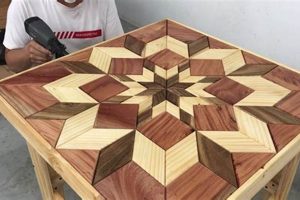
A dedicated surface for crafting with wood forms the cornerstone of any productive woodworking space. These structures range from simple, utilitarian platforms to highly specialized and feature-rich workstations, each designed to facilitate specific tasks and projects within the discipline. Considerations for material selection, dimensions, and integrated features are paramount in determining its suitability for various woodworking activities.
The presence of a stable and well-equipped area significantly enhances precision, safety, and overall efficiency in woodworking endeavors. Historically, these structures have evolved alongside woodworking techniques, adapting to the changing needs of artisans and craftspeople. Their design directly impacts the quality of the finished product and the comfort of the individual utilizing them. A robust design provides a firm foundation for accurate cuts, secure clamping, and detailed assembly, contributing to superior workmanship.
The subsequent sections will examine diverse designs, exploring the merits of different construction methods, essential features, and practical modifications. Factors such as size, storage capabilities, and the inclusion of vices or other work-holding devices will be discussed, offering guidance in selecting or building a suitable foundation for woodworking pursuits.
Enhancing Woodworking Efficiency
Effective utilization of a woodworking surface relies on careful planning and attention to detail. The following tips outline key elements for optimizing its functionality and maximizing output.
Tip 1: Prioritize Stability: A solid, unwavering base is paramount. Any movement during operation compromises precision. Construct the frame from heavy-gauge lumber and ensure all joints are securely fastened. Consider incorporating leveling feet to compensate for uneven floors.
Tip 2: Optimize Work Surface Height: Determine the optimal height based on the primary woodworking tasks. A general guideline suggests aligning the surface with the user’s bent elbow. Adjustments may be necessary to accommodate specific project requirements or individual preferences.
Tip 3: Integrate Effective Clamping Mechanisms: A versatile clamping system is crucial for securing workpieces. Consider incorporating a front vise, an end vise, or a series of dog holes compatible with bench dogs. The configuration should accommodate a wide range of workpiece sizes and shapes.
Tip 4: Maximize Storage Potential: Incorporate drawers, shelves, or cabinets to organize tools and materials. A well-organized workspace minimizes downtime and improves workflow efficiency. Consider the frequency of tool usage when determining storage placement.
Tip 5: Consider a Durable Finish: Apply a protective finish to the work surface to resist damage from spills, glue, and impacts. Options include oil-based finishes, polyurethane, or epoxy resin. The chosen finish should be non-reflective and easy to clean.
Tip 6: Implement Proper Lighting: Adequate illumination is essential for accurate work. Consider overhead lighting combined with adjustable task lighting to eliminate shadows and improve visibility. LED lighting offers energy efficiency and consistent light output.
Tip 7: Regularly Maintain the Work Surface: Periodically flatten the surface to remove imperfections and ensure accuracy. This can be achieved using hand planes or a power planer. Routine cleaning is also essential for maintaining a clean and safe working environment.
These considerations contribute to a more productive and enjoyable woodworking experience. A thoughtfully designed and well-maintained structure provides a solid foundation for a wide range of woodworking projects.
The subsequent sections will delve into specific design considerations, addressing the unique challenges and opportunities presented by various woodworking projects.
1. Stability

Stability represents a foundational requirement in woodworking. A stable structure minimizes vibrations and movement, leading to greater accuracy and safer operation when working with tools and materials. Within the context of woodworking bases, stability directly influences the precision of cuts, the effectiveness of clamping, and the overall quality of finished projects. It is therefore a primary consideration in the design and construction phases.
- Material Selection and Rigidity
The choice of materials profoundly impacts structural integrity. Dense hardwoods, such as maple or oak, offer superior resistance to deflection compared to softer woods. The thickness and grade of lumber must be sufficient to withstand the forces generated during woodworking tasks. Inadequate material selection results in unwanted movement during sawing, planing, or routing operations. For example, using thin plywood for the frame will compromise its structural integrity, and could be dangerous.
- Joint Construction and Integrity
The method of joining the various components is critical for maintaining overall stability. Strong joinery techniques, such as mortise and tenon, dovetails, or robust mechanical fasteners, contribute to a rigid framework. Weak joints create points of flexure, diminishing the structure’s ability to resist movement. An example is using screws instead of mortise and tenon, could result the structure be wobble
- Weight Distribution and Footing
An even distribution of weight prevents tipping or rocking during use. A wide base and strategically placed supports enhance overall stability. Leveling feet allow for adjustments on uneven surfaces, ensuring a flat and stable work platform. An example is when you put all your tools in one side, it can become dangerous.
- Vibration Dampening Properties
Minimizing vibration is essential for precise woodworking. Utilizing materials with inherent vibration-dampening properties, such as solid wood or incorporating damping elements within the design, improves accuracy. This is particularly crucial when using power tools or performing intricate work. Adding rubber to its footing can make it more dampening.
These facets underscore the critical role of stability in woodworking structures. By addressing material selection, joint construction, weight distribution, and vibration dampening, a craftsman can construct a solid foundation for accurate and safe woodworking. A stable structure is therefore not merely a desirable feature, but a fundamental requirement for achieving quality workmanship.
2. Work surface height

The vertical dimension of a woodworking platform directly impacts the ergonomics and efficiency of woodworking tasks. Determining the optimal work surface height is a crucial element in the design of a functional woodworking platform. An inappropriately dimensioned surface leads to postural strain, reduced precision, and increased fatigue, thereby negatively affecting the quality and safety of the finished product. For instance, a surface that is too low forces the user to stoop, causing back pain, while one that is too high requires excessive reaching, leading to shoulder and neck discomfort.
The selection of an appropriate height should be tailored to the individual user and the specific woodworking activities to be performed. A common guideline suggests aligning the surface with the user’s bent elbow; however, this may require adjustments based on the nature of the work. For example, detailed carving often benefits from a slightly higher surface that allows for closer visual inspection, whereas planing may be more comfortable with a lower surface that facilitates downward force application. Adjustable-height woodworking stands offer a versatile solution, enabling adaptation to varying tasks and user preferences. A lower height bench can be useful for planing and other high force activities. a higher height bench can be useful for delicate operations.
In summary, the work surface height is a critical component in woodwork base design. Its careful consideration leads to improved ergonomics, increased productivity, and a reduction in the risk of physical strain. An investment in determining and achieving the optimal height results in a more comfortable and efficient woodworking experience, enhancing both the enjoyment and the quality of the craft.
3. Clamping mechanisms
Clamping mechanisms are integral to any woodwork foundation, directly impacting the precision, safety, and versatility of woodworking operations. These mechanisms provide the necessary force to secure workpieces during cutting, shaping, assembly, and finishing processes. Without effective clamping, the ability to perform accurate and controlled woodworking tasks is significantly compromised. The selection and integration of appropriate clamping devices are therefore essential considerations in woodwork station design. Clamping helps to secure any unwanted movement and helps reduce risk of accidents.
Various clamping options exist, each suited to specific applications. Vises, including face vises, end vises, and leg vises, offer robust holding power for larger workpieces. Bench dogs, used in conjunction with dog holes, provide flexible clamping solutions for a wide range of shapes and sizes. Specialized clamps, such as hand screws and quick-action clamps, are useful for intricate or awkwardly shaped pieces. The choice of clamping mechanisms should align with the types of projects typically undertaken and the dimensions of the materials used. For example, for making big wood panels, you would need big clamping mechanism. But, for small project, it can be smaller.
In conclusion, clamping mechanisms represent a critical component of a complete woodwork station. Their effective integration is essential for achieving accurate results, enhancing safety, and maximizing the versatility of the woodworking process. Investment in high-quality clamping devices and thoughtful consideration of their placement on the platform constitutes a fundamental step towards creating a functional and productive woodworking environment. Clamping has huge role to help with accurate cuts.
4. Storage solutions

Effective storage represents a cornerstone of organized and efficient woodworking practices. Within the context of woodworking station designs, integrating adequate storage solutions minimizes clutter, reduces downtime, and optimizes workspace utilization. The strategic inclusion of storage features enhances the overall functionality of the structure and contributes significantly to productivity.
- Integrated Tool Storage
Incorporating tool storage directly into the design provides immediate access to frequently used implements. Drawers, cabinets, and pegboards can be integrated to accommodate various tool sizes and types. Proximity to the work surface minimizes movement and reduces the time spent searching for necessary items. A well placed storage provides time saving for a wood worker.
- Material Storage Considerations
Efficient material storage is crucial for managing lumber, hardware, and finishing supplies. Shelving units, lumber racks, and designated compartments prevent damage and facilitate easy inventory management. Proper material organization ensures the availability of necessary resources and minimizes waste. When you have big storage, you can put it in the cabinet, so it doesn’t waste space.
- Mobile Storage Options
Introducing mobile storage elements, such as rolling carts or tool chests, offers flexibility in workspace configuration. These units can be positioned as needed, providing convenient access to tools and materials during specific tasks. Mobility enhances adaptability and allows for workspace reconfiguration to accommodate varying project requirements. Rolling carts are good for moving tools here and there in your workshop.
- Optimizing Vertical Space
Vertical storage solutions maximize limited floor space. Wall-mounted cabinets, shelves, and tool holders utilize unused vertical areas, freeing up valuable workspace. Vertical organization promotes a clear and uncluttered environment, fostering a more efficient and focused work atmosphere. For example, a pegboard to hang all your tools.
These storage facets, when thoughtfully integrated into woodworking station designs, yield a more organized, efficient, and productive workspace. Optimizing storage solutions directly impacts workflow, safety, and the overall quality of woodworking projects. Careful planning and implementation of appropriate storage features are therefore essential for maximizing the potential of a woodworking station.
5. Durability

The longevity and resilience of a woodworking base represent a crucial factor in its overall utility and value. Durability, in this context, encompasses the ability to withstand the physical stresses and environmental conditions inherent in woodworking activities. A robust and enduring woodworking structure minimizes the need for repairs or replacements, ensuring consistent performance and long-term cost-effectiveness.
- Material Selection and Resistance to Wear
The selection of materials directly influences the structure’s ability to withstand wear and tear. Dense hardwoods, such as maple or oak, offer superior resistance to abrasion, impact, and moisture compared to softer woods. The use of high-quality fasteners and adhesives further contributes to structural integrity and longevity. For example, a base constructed from pressure-treated lumber exhibits enhanced resistance to rot and insect infestation, prolonging its lifespan.
- Surface Protection and Resistance to Damage
The application of a durable finish protects the work surface from scratches, dents, and spills. Options include polyurethane, epoxy resin, and oil-based finishes, each offering varying degrees of protection. Regular maintenance, such as cleaning and re-application of finish, further enhances surface resistance and prevents deterioration. A well-maintained finish not only protects the wood but also improves its aesthetic appeal.
- Structural Design and Load-Bearing Capacity
The structural design dictates the structure’s ability to withstand heavy loads and resist deformation. A robust frame, reinforced joints, and strategically placed supports contribute to overall strength and stability. The load-bearing capacity should exceed the anticipated weight of tools, materials, and workpieces to prevent structural failure. A properly engineered frame ensures the woodworking surface remains flat and stable under load.
- Resistance to Environmental Factors
Exposure to moisture, temperature fluctuations, and ultraviolet radiation can degrade materials over time. Protective coatings, such as paints, stains, and sealants, shield the wood from environmental damage. Proper ventilation and humidity control within the workshop environment further minimize the risk of deterioration. A woodworking area located in a dry climate requires different protective measures than one in a humid environment.
These facets collectively define the durability of a woodworking structure. By addressing material selection, surface protection, structural design, and resistance to environmental factors, the lifespan and performance of the platform can be significantly enhanced. A durable and well-maintained woodworking support provides a stable and reliable foundation for countless woodworking projects, representing a worthwhile investment for any serious woodworker.
6. Lighting

Effective illumination is not merely an amenity but a critical component of any functional woodworking structure. The quality and distribution of light directly influence visual acuity, impacting precision, safety, and the overall quality of finished woodworking projects. Inadequate lighting leads to errors, miscalculations, and an increased risk of accidents, while optimized lighting conditions enhance focus and reduce eye strain. For instance, insufficient light can obscure fine details during intricate carving, leading to mistakes and potentially dangerous tool handling. A woodworking surface situated in a dimly lit area necessitates supplementary lighting solutions tailored to the specific tasks being performed.
The integration of appropriate lighting involves several considerations, including the type of light source, the direction and intensity of light, and the elimination of shadows and glare. Overhead lighting provides general ambient illumination, while adjustable task lighting allows for targeted illumination of specific work areas. LED lighting offers energy efficiency, long lifespan, and consistent light output. Placement of lighting fixtures should minimize shadows and glare, ensuring clear visibility of workpieces and tools. The selection of light source should also account for color rendering index (CRI), where high CRI values more accurately represent colors. For example, a combination of overhead and task lighting is generally preferred over relying solely on a single light source. This ensures uniform lighting over the entire work area, improving depth perception and minimizing errors.
In summary, appropriate lighting is an indispensable component of well-designed woodworking area. Its integration enhances visual acuity, improves safety, and contributes to the overall quality of woodworking projects. By addressing the type of light source, direction and intensity, and the elimination of shadows and glare, woodworkers can optimize their workspace and achieve superior results. Investment in quality lighting solutions represents a commitment to precision, safety, and long-term productivity within the woodworking environment. Lighting should be considered when designing your woodwork support to prevent error cuts.
7. Maintenance

Sustaining the integrity and functionality of woodworking platforms is fundamentally linked to consistent maintenance practices. Neglecting maintenance procedures compromises structural stability, reduces working precision, and shortens the lifespan of the equipment. Therefore, incorporating maintenance considerations into the initial design and subsequent usage protocols is essential for optimizing the investment in woodworking infrastructure.
- Surface Flattening and Trueness
Maintaining a flat and true work surface is critical for accurate woodworking operations. Over time, the surface may warp, develop dents, or accumulate debris, compromising its accuracy. Regular flattening using hand planes or power planers ensures a level plane for precise cuts and assemblies. This practice directly affects the quality of finished projects, particularly those requiring tight tolerances or seamless joinery. For instance, a warped surface can cause inaccurate cuts when using a table saw or hand plane, leading to misaligned joints and structural weakness.
- Joint Inspection and Reinforcement
The integrity of joints is vital for the structural stability of woodworking structures. Periodic inspection of joints for looseness, cracks, or separation is necessary to prevent catastrophic failure. Reinforcing weakened joints with glue, screws, or additional supports can restore structural integrity and prevent further deterioration. Neglecting joint maintenance can lead to instability during operation, potentially causing accidents or damaging workpieces. For example, mortise and tenon joints that loosen over time may require re-gluing or reinforcement with pegs to maintain their holding power.
- Hardware Maintenance and Replacement
Hardware components, such as vises, clamps, and leveling feet, require regular maintenance to ensure proper functionality. Cleaning, lubrication, and tightening of hardware mechanisms prevent corrosion, binding, and slippage. Replacing worn or damaged hardware components maintains the overall performance and safety of the structure. Faulty vises can fail to securely hold workpieces, increasing the risk of injury or damage. Threaded components of the vise and cleaning it is required to avoid future issues.
- Protective Finish Maintenance and Reapplication
The protective finish safeguards the work surface from moisture, spills, and physical damage. Regular cleaning and reapplication of the finish maintain its protective properties and extend the lifespan of the wood. Scratches, dents, and water stains compromise the finish’s effectiveness, increasing the risk of damage to the underlying wood. Maintaining the finish not only protects the woodworking surface but also enhances its aesthetic appeal. For example, if a finish peels, it’s necessary to sand it and reapply it.
These maintenance facets collectively contribute to the longevity, accuracy, and safety of woodworking infrastructures. By implementing a consistent maintenance schedule and addressing potential issues promptly, woodworkers can ensure their woodworking surface remain reliable and productive assets for years to come. Neglecting these practices not only shortens the lifespan of the stand, but also diminishes the quality of the work it supports.
Frequently Asked Questions
The following section addresses common inquiries regarding the design, construction, and maintenance of structures designed for woodworking. These answers aim to provide clarity and guidance in optimizing woodworking infrastructure.
Question 1: What is the minimum recommended size for a woodworking surface?
The minimum size depends on the intended projects. However, a surface measuring at least 4 feet in length and 2 feet in width is generally recommended for accommodating a range of woodworking tasks. Smaller surfaces may restrict the size of workpieces and limit maneuverability.
Question 2: What type of wood is best suited for constructing a woodworking structure?
Hardwoods, such as maple, oak, and beech, are generally preferred due to their durability, stability, and resistance to wear. Softwoods, such as pine or fir, may be suitable for less demanding applications but are more prone to denting and scratching.
Question 3: How can the work surface be kept flat and true?
Regular flattening using hand planes or power planers is essential for maintaining a flat and true surface. Filling any imperfections or voids with epoxy resin can further enhance surface smoothness. A straightedge and winding sticks can be used to assess surface trueness.
Question 4: What is the ideal height for a woodworking surface?
The ideal height typically aligns with the user’s bent elbow. However, adjustments may be necessary based on individual preferences and the specific tasks being performed. Adjustable-height surfaces offer versatility in accommodating varying needs.
Question 5: What are the essential clamping mechanisms to incorporate?
A face vise, an end vise, and a series of dog holes are generally considered essential clamping mechanisms. These provide versatile holding power for a wide range of workpiece sizes and shapes. Quick-action clamps and hand screws can supplement these primary clamping devices.
Question 6: How often should a woodworking structure be inspected for maintenance?
A thorough inspection should be conducted at least annually. More frequent inspections may be necessary if the structure is subjected to heavy use or harsh environmental conditions. Addressing any issues promptly can prevent further deterioration and ensure long-term reliability.
In conclusion, these answers address common considerations related to woodworking surface design, construction, and maintenance. Implementing these recommendations contributes to a safer, more efficient, and more productive woodworking environment.
The subsequent section will explore advanced woodworking techniques that can be applied to enhance the functionality of these structures.
Woodwork Bench Ideas
This exploration has detailed diverse considerations relevant to “woodwork bench ideas,” encompassing stability, ergonomics, clamping mechanisms, storage solutions, durability, lighting, and maintenance. These elements collectively define the functionality and longevity of any woodworking structure, impacting both the quality of the craft and the safety of the artisan.
Adherence to these principles allows for the creation of a robust and adaptable foundation for woodworking endeavors. Thoughtful application of these guidelines not only enhances productivity but also fosters a more rewarding and sustainable engagement with the craft. Further study and experimentation are encouraged to refine individual woodworking setups and elevate the standards of craftsmanship.