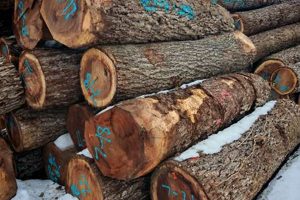
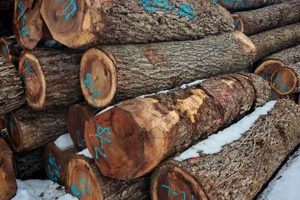
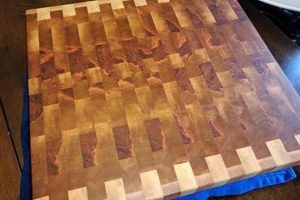
The selection of lumber is a critical decision point in any construction or fabrication project involving timber. The inherent characteristics of various natural materials dictate their suitability for specific applications. Factors such as density, grain pattern, workability, and resistance to decay influence the final product’s structural integrity, aesthetic appeal, and longevity. For instance, a hardwood species like oak, known for its strength and durability, is commonly utilized in furniture making and flooring, while a softwood such as pine, prized for its ease of manipulation and affordability, often finds its place in framing and interior trim work.
Strategic material selection offers numerous advantages, ensuring both optimal performance and cost-effectiveness. Selecting the appropriate substance can significantly enhance a project’s durability, reducing the need for frequent repairs or replacements. Furthermore, the chosen material directly affects the aesthetic quality of the finished piece, contributing to its overall value and visual impact. Historically, the understanding and skillful utilization of diverse material properties have been fundamental to advancements in various crafts and construction techniques, leading to innovation and refinement in design and functionality.
Therefore, a thorough comprehension of the unique properties inherent in different varieties of timber is essential for achieving desired outcomes. Subsequent sections will delve into specific categories and exemplary specimens, examining their attributes and appropriate uses in detail.
Selection Guidance for Timber Utilization
The following guidance provides recommendations for optimizing material selection in carpentry and related crafts. These tips address key considerations that influence the quality, durability, and aesthetic appeal of finished projects.
Tip 1: Assess Project Requirements: Before selecting a timber variety, determine the specific performance demands of the project. Consider factors such as load-bearing capacity, exposure to moisture, and potential for wear and tear. For high-stress applications, hardwoods such as maple or hickory are generally preferred.
Tip 2: Evaluate Material Density: Density is a primary indicator of strength and durability. Higher density lumber tends to be more resistant to impact and abrasion. Exercise caution when using high-density species, as they may require specialized tools and techniques.
Tip 3: Analyze Grain Pattern: The grain pattern influences both the structural integrity and visual appeal. Straight-grained lumber is typically easier to work with and less prone to warping. Figured grains, such as burl or tiger stripe, can enhance the aesthetic value but may present challenges during fabrication.
Tip 4: Consider Workability: Workability refers to the ease with which a particular timber can be cut, shaped, and finished. Softwoods generally exhibit better workability than hardwoods, making them suitable for intricate designs and detailed carvings. Select tools appropriately for the timber hardness.
Tip 5: Account for Moisture Content: Moisture content significantly affects dimensional stability. Ensure that the timber is properly seasoned and acclimated to the environment in which it will be used. Kiln-dried lumber offers greater predictability and reduces the risk of warping or cracking.
Tip 6: Choose Sustainably Sourced Materials: Selecting lumber from responsibly managed forests promotes environmental stewardship and ensures the long-term availability of resources. Look for certifications such as FSC (Forest Stewardship Council) to verify sustainable sourcing practices.
Tip 7: Match Species to Finish: Different timber varieties exhibit varying degrees of finish absorption and color compatibility. Test finishes on sample pieces to ensure desired results. Consider the natural color and grain of the wood when selecting stains or paints.
The diligent application of these guidelines will improve the quality of the finished products and maximize the efficiency of the fabrication process. Informed material selection is paramount to successful completion of any carpentry undertaking.
The following section provides an analysis of the various types used and their applications.
1. Hardwood vs. Softwood

The distinction between hardwoods and softwoods is a fundamental consideration in woodworking projects. While the terms might suggest a correlation to physical hardness, the classification is rooted in the botanical structure of the trees. Hardwoods originate from angiosperms, deciduous trees that typically have broad leaves and produce seeds within an enclosure (fruit or nut). Examples include oak, maple, and cherry. Softwoods, on the other hand, come from gymnosperms, coniferous trees characterized by needles or scale-like leaves and naked seeds (cones). Examples include pine, fir, and cedar. This botanical difference dictates the inherent material properties, affecting workability, strength, and suitability for particular applications.
The effect of this difference on project outcomes is significant. For instance, the denser cell structure of hardwoods generally provides greater resistance to wear and impact, making them ideal for flooring, furniture subjected to heavy use, and projects requiring structural integrity. However, this increased density also translates to more challenging machining, potentially necessitating specialized tools and techniques. Softwoods, with their less dense structure, offer ease of cutting, shaping, and fastening. Consequently, they are commonly employed in framing, interior trim, and projects where intricate detailing is paramount. Pine, a softwood, is often used in furniture construction due to its relative affordability and ease of shaping, but a protective finish is typically required to enhance its durability. Oak, a hardwood, is frequently chosen for flooring due to its resistance to wear and tear, despite its greater cost and machining requirements.
In summary, the classification of hardwoods and softwoods provides a valuable framework for selecting appropriate materials. Recognizing the botanical basis and associated material properties enables informed decisions, optimizing both the functional performance and aesthetic quality of woodworking projects. Although exceptions exist regarding the actual hardness of specific varieties within each category (e.g., some softwoods can be harder than certain hardwoods), understanding this foundational dichotomy remains essential for achieving desired outcomes and avoiding potential challenges related to material selection and workability.
2. Grain Pattern

Grain pattern, a visual manifestation of the wood’s cellular structure, is inextricably linked to material selection. The arrangement, size, and orientation of wood cells directly influence strength, workability, and aesthetic properties. Understanding this relationship is crucial for successful woodworking. Straight grain, characterized by parallel alignment of cells, typically provides superior strength and ease of machining, rendering it suitable for structural components like beams and posts. Conversely, irregular or figured grain, such as burl or curly patterns, imparts unique visual appeal but often compromises structural integrity and necessitates specialized handling during processing. For instance, quartersawn oak, with its consistent vertical grain, is prized for flooring due to its stability and resistance to cupping, whereas highly figured maple, though visually striking, requires careful attention to prevent tear-out during planing.
The selection decision is also influenced by intended finish and application. Open-grained woods, like oak and ash, possess larger pores that readily absorb stains and finishes, potentially resulting in a textured surface. Closed-grained woods, such as maple and cherry, offer a smoother, more uniform finish. The grain orientation also plays a role in joinery. End grain, exposed when cutting across the wood’s length, is highly absorbent but also weaker, requiring special techniques like mortise and tenon joints to ensure durable connections. Furthermore, environmental factors can exacerbate the effects of grain pattern. Changes in humidity can cause wood to expand and contract differently along and across the grain, leading to warping or cracking if grain orientation is not properly considered during construction. A classic example is the splitting of tabletops constructed with incorrect grain orientation across their width.
In conclusion, grain pattern is not merely a cosmetic feature but a fundamental determinant of wood performance and suitability. Proper assessment of grain characteristics allows woodworkers to select appropriate species and employ suitable techniques, optimizing both structural integrity and aesthetic qualities. Failure to account for the interaction between pattern and other material properties can result in project failure, underscoring the practical significance of understanding this interconnected relationship. The challenges posed by complex or irregular patterns can be mitigated through skillful application of specialized tools and techniques, transforming potential weaknesses into unique design elements.
3. Density & Stability

Density and dimensional stability are crucial properties that significantly influence the performance of timber in construction and fabrication. Density, defined as mass per unit volume, correlates directly with strength, hardness, and resistance to wear. Higher density generally indicates a stronger and more durable material, capable of withstanding greater loads and resisting impact damage. However, high density can also translate to increased weight and greater difficulty in machining. Dimensional stability refers to a material’s ability to maintain its shape and size when subjected to changes in moisture content or temperature. Timber is hygroscopic, meaning it absorbs and releases moisture from the surrounding environment, leading to expansion and contraction. Woods with poor dimensional stability are prone to warping, cracking, and joint failure. For instance, balsa wood, with its extremely low density, is suitable for lightweight model building but lacks the structural integrity for load-bearing applications. Conversely, lignum vitae, one of the densest woods available, offers exceptional wear resistance in bearings and bushings but is challenging to work with due to its hardness. The equilibrium moisture content (EMC) varies significantly between species, affecting their susceptibility to dimensional changes.
The relationship between density, stability, and suitability is apparent across various applications. Furniture construction often favors hardwoods with moderate density and good stability, such as cherry or walnut, balancing strength and workability. Flooring demands high density and stability to withstand foot traffic and resist moisture fluctuations; oak, maple, and some engineered wood products are commonly employed. Exterior applications, like decking or siding, require naturally durable or treated materials with high resistance to decay and dimensional change; cedar, redwood, and pressure-treated pine are frequently selected. Instability can manifest in many ways, causing doors to bind in humid weather, drawers to stick, or structural members to deflect excessively under load. Historical construction practices often relied on careful selection of lumber with specific grain orientations to minimize warping and maximize strength. Woodworkers employ various techniques to mitigate the effects of wood movement, including proper seasoning, joinery methods that accommodate expansion and contraction, and the use of sealants and finishes.
In summary, density and dimensional stability are critical considerations in material selection. Understanding their interrelationship and impact on performance allows for informed decisions, optimizing both the structural integrity and aesthetic longevity of woodworking projects. Challenges associated with material selection can be addressed through a combination of species selection, appropriate construction techniques, and proper environmental control. The long-term success of any project depends on a comprehensive understanding of these fundamental properties and their implications for material behavior. This focus on density and stability allows for a better understanding of why certain lumber types are better suited for certain projects than others.
4. Workability

Workability, in the context of lumber selection, represents the ease with which a specific timber can be shaped, cut, fastened, and finished. This characteristic profoundly influences project efficiency, the complexity of designs that can be executed, and the quality of the final product. The inherent properties of different timber species dictate their respective levels of workability, impacting the selection process and fabrication techniques employed.
- Cutting Resistance
Cutting resistance refers to the force required to sever the wood fibers. Hardwoods, with their denser cellular structure, exhibit higher cutting resistance than softwoods. Species like oak and maple demand sharper tools and more powerful machinery, increasing the risk of tool wear and potential for kickback. Conversely, softwoods like pine and fir are easier to cut, allowing for finer detailing and reduced operator fatigue. This difference dictates tool selection and the complexity of cuts feasible for a given species. The choice between hand tools and power tools may be influenced by cutting resistance.
- Planing and Shaping Characteristics
Planing and shaping involve removing thin layers of wood to achieve a smooth surface or desired profile. The grain orientation and hardness significantly influence the quality of the resulting surface. Interlocked or irregular grain patterns can lead to tear-out, requiring specialized techniques such as back planing or the use of card scrapers. Softer woods are generally easier to plane and shape, but they are also more susceptible to compression and surface damage. The selection of appropriate cutting angles and tool sharpness is essential for achieving a clean, smooth finish. The presence of knots and other imperfections can further complicate planing and shaping operations.
- Fastening Properties
The ability of a timber to accept and retain fasteners, such as screws and nails, is crucial for assembling components. Density and grain structure influence the holding power of fasteners. Hardwoods generally provide superior holding power compared to softwoods, but they may require pre-drilling to prevent splitting. Softwoods, while easier to fasten, are more prone to stripping or fastener pull-out. The choice of fastener type and size must be carefully considered to ensure adequate joint strength. The presence of resin or extractives in certain wood species can also affect the performance of adhesives and fasteners.
- Finishing Receptivity
Finishing receptivity describes the ease with which a timber accepts stains, paints, and other coatings. Open-grained woods, such as oak and ash, readily absorb finishes, potentially resulting in a darker, more textured appearance. Close-grained woods, such as maple and cherry, require careful surface preparation to ensure uniform finish absorption. The presence of extractives in certain species can interfere with finish adhesion or cause discoloration. The selection of appropriate primers, sealers, and topcoats is crucial for achieving a durable and aesthetically pleasing finish. The final appearance is also heavily influenced by grain orientation and cutting method.
The interplay between workability and lumber types dictates the feasibility and efficiency of woodworking projects. Selecting a timber species that aligns with the intended design complexity and available tools and skills is paramount. While hardwoods offer superior strength and durability, their demanding workability may necessitate specialized equipment and techniques. Conversely, the ease of working with softwoods makes them suitable for intricate designs and novice woodworkers, but their reduced strength and durability may limit their application. The choice ultimately depends on a careful evaluation of project requirements, available resources, and desired aesthetic outcomes.
5. Natural Durability

Natural durability, a crucial attribute in lumber selection, refers to a timber species’ inherent resistance to decay, insect infestation, and other forms of biological degradation. This characteristic is directly related to the presence of extractives and other compounds within the wood that act as natural preservatives. The selection of lumber based on natural durability reduces the need for chemical treatments, promoting environmental sustainability and minimizing potential health risks associated with treated lumber. Therefore, understanding natural durability is essential for informed decision-making in woodworking projects, particularly those exposed to harsh environmental conditions.
- Extractives and Resistance to Decay
Extractives, chemical compounds deposited within the wood structure during the tree’s growth, play a pivotal role in imparting decay resistance. These substances, often phenolic compounds, tannins, or oils, inhibit the growth of fungi and bacteria that cause wood rot. Species like redwood and cedar contain high concentrations of these extractives, rendering them naturally resistant to decay, even in damp environments. In contrast, species lacking such extractives are highly susceptible to rot and require preservative treatments for outdoor use. Redwood’s use in outdoor decking showcases the efficacy of extractives, while untreated pine’s rapid decay illustrates the absence of this natural defense.
- Resistance to Insect Infestation
Certain lumber types possess inherent resistance to insect attacks, particularly termites and wood-boring beetles. This resistance is often linked to the presence of specific extractives that are toxic or repellent to insects. For example, Eastern red cedar contains compounds that deter moths and other insects, making it suitable for lining closets and chests. Similarly, some tropical hardwoods exhibit resistance to termite damage. Conversely, species like poplar and aspen are highly susceptible to insect infestation. The presence of natural insect repellents in some woods explains their traditional use in areas prone to insect damage.
- Heartwood vs. Sapwood Durability
The heartwood, the inner core of a tree, generally exhibits greater natural durability compared to the sapwood, the outer layer that transports water and nutrients. Heartwood contains a higher concentration of extractives, providing enhanced resistance to decay and insect attack. Sapwood, lacking these protective compounds, is more vulnerable to degradation. Therefore, specifying heartwood lumber is often recommended for projects requiring long-term durability. The contrast in durability between heartwood and sapwood is why lumber grades often distinguish between the two.
- Climate and Environmental Factors
The effectiveness of natural durability is influenced by climate and environmental conditions. High humidity and warm temperatures accelerate the decay process, placing greater demands on the natural defenses of the wood. In harsh environments, even naturally durable species may require supplemental preservative treatments to ensure longevity. Conversely, in dry climates, the risk of decay is reduced, and less durable species may suffice. The impact of environmental factors underscores the importance of considering the specific application and climate when selecting lumber based on natural durability. This is why naturally durable wood are often chosen for construction near the coast.
The consideration of natural durability directly influences long-term performance and maintenance costs. The selection of lumber with high natural durability minimizes the need for chemical treatments, reduces the risk of premature failure, and extends the service life of woodworking projects. Comparing naturally durable species, such as teak, against less durable ones, such as basswood, illustrates the profound impact of this characteristic on longevity and maintenance requirements. The integration of natural durability considerations into the lumber selection process optimizes both the environmental footprint and the economic viability of woodworking endeavors. This contributes to the long-term value and performance of the finished structure or piece.
6. Finishing Properties

The relationship between finishing properties and lumber selection is a critical determinant of the aesthetic and protective qualities of a woodworking project. The surface characteristics of different timber varieties significantly influence the adhesion, absorption, and overall appearance of finishes, requiring careful consideration during material selection. Variability in pore size, grain pattern, and density directly affects the ease and success of applying stains, paints, varnishes, and other coatings. For instance, open-grained woods like oak readily absorb stains, potentially leading to a pronounced grain pattern and requiring multiple coats for uniform color. Conversely, closed-grained species like maple exhibit finer pores, demanding careful surface preparation to prevent blotching and ensure proper finish adhesion. Consequently, understanding these inherent surface characteristics enables informed decisions that optimize the final aesthetic outcome and long-term protection of the wood.
The selection of appropriate finishing techniques must align with the specific properties of the chosen lumber. For oily woods, such as teak or rosewood, surface preparation often involves solvent wiping to remove excess oils that may impede finish adhesion. Pre-stain conditioners can mitigate blotching on woods with uneven porosity, ensuring a consistent color across the surface. The choice of finish itself depends on the desired level of protection and aesthetic effect. Polyurethane provides durable, water-resistant protection suitable for high-use surfaces, while lacquer offers a smooth, elegant finish for decorative pieces. The application of each type is affected by grain. Example: Oak, with its open grain, benefits from paste fillers to create a smooth surface before a high-gloss finish, while cherry may need no filler.
In conclusion, finishing properties represent a crucial consideration in the lumber selection process. A comprehensive understanding of how different wood types interact with various finishes allows for optimal results, enhancing both the visual appeal and long-term durability of woodworking projects. Failure to account for these interactions can lead to undesirable outcomes, such as uneven color absorption, finish delamination, or inadequate protection against environmental factors. Thus, informed lumber selection, coupled with appropriate finishing techniques, remains essential for achieving professional-quality results and maximizing the value of woodworking endeavors. This ensures each piece is not only structurally sound but also aesthetically pleasing and long-lasting.
7. Sourcing & Cost

The origin and financial implications of acquiring timber are inextricably linked to material selection in woodworking. Geographic location, processing methods, and market demand directly impact the availability and pricing of different species. A comprehensive understanding of sourcing logistics and cost factors is essential for project planning and budgetary control.
- Geographic Availability and Transportation Costs
The proximity of a timber source to the project location significantly influences cost. Lumber sourced from distant regions incurs higher transportation expenses, increasing the overall material cost. Availability is also affected by regional climate and forest management practices. Tropical hardwoods, for instance, are typically more expensive in temperate zones due to transportation and import tariffs. Local wood distributors and the distance from mills or forests contribute to the base lumber price.
- Rarity and Market Demand
The scarcity of a particular lumber type directly correlates with its market value. Species that are slow-growing, subject to harvest restrictions, or possess unique aesthetic qualities command premium prices. Highly figured lumber, such as burl or quilted maple, is often more expensive due to its limited availability and high demand. Supply and demand fluctuations, influenced by economic trends and consumer preferences, can also impact lumber prices.
- Processing and Milling Techniques
The methods employed to process lumber from raw logs to finished boards affect its cost and quality. Kiln-dried lumber, which undergoes controlled drying to reduce moisture content, is generally more expensive than air-dried lumber. Precision milling, resulting in consistent dimensions and smooth surfaces, also increases the price. Specialized cuts, such as quartersawn or riftsawn lumber, require additional processing and therefore cost more than plain-sawn lumber.
- Sustainability Certifications and Ethical Considerations
Lumber sourced from sustainably managed forests often carries a premium due to responsible harvesting practices and environmental stewardship. Certifications such as the Forest Stewardship Council (FSC) verify that the lumber originates from responsibly managed forests. Consumers and businesses increasingly prioritize ethical sourcing, willing to pay a higher price for lumber that aligns with their environmental values. Balancing cost with environmental responsibility is a key consideration.
These factors collectively determine the financial viability of incorporating specific lumber types into woodworking projects. While cost is a primary consideration, it is essential to balance budgetary constraints with the desired aesthetic qualities, performance characteristics, and environmental impact of the selected material. Strategic sourcing and a comprehensive understanding of cost drivers enable informed decisions that optimize project outcomes.
Frequently Asked Questions about Wood Types for Woodworking
This section addresses common inquiries regarding the selection and utilization of various lumber varieties in woodworking applications. The following questions and answers aim to provide clarity and guidance on critical aspects of material choice.
Question 1: What is the primary distinction between hardwoods and softwoods, and how does it impact woodworking project decisions?
The fundamental difference lies in their botanical origin; hardwoods come from angiosperms (deciduous trees), while softwoods originate from gymnosperms (coniferous trees). This classification influences density, workability, and suitability for different projects. Hardwoods are generally denser and more durable, ideal for load-bearing structures or high-wear items, while softwoods are easier to shape and fasten, suitable for detailing and framing. However, some exceptions exist, making it imperative to consider specific species properties rather than solely relying on this broad categorization.
Question 2: How does grain pattern affect the strength and stability of lumber?
Grain pattern directly relates to a lumber’s structural integrity and resistance to warping. Straight-grained lumber offers consistent strength along its length and is less prone to distortion. Irregular or figured grain, while aesthetically appealing, can compromise strength and require specialized techniques during machining. Grain orientation must be considered to prevent weakness.
Question 3: What factors contribute to the natural durability of different wood species?
Natural durability is primarily determined by the presence of extractives within the wood. These chemical compounds act as natural preservatives, inhibiting decay and insect infestation. Species like redwood and cedar contain high concentrations of extractives, rendering them naturally resistant to degradation. Heartwood, the inner core of a tree, generally exhibits greater natural durability than sapwood.
Question 4: How does the density of a timber species influence its workability?
Density is a primary determinant of workability. Higher density lumber requires more force to cut, shape, and fasten. Hardwoods, with their denser cellular structure, demand sharper tools and more powerful machinery. Softwoods, with lower density, are generally easier to manipulate. However, very low-density lumber may be prone to compression and damage.
Question 5: What are the key considerations when selecting lumber for outdoor projects?
For outdoor applications, prioritize species with high natural durability or those treated with preservatives. Resistance to decay, insect infestation, and dimensional stability are crucial. Consider the environmental conditions to which the lumber will be exposed, such as moisture levels and temperature fluctuations. Heartwood lumber is generally preferable due to its higher concentration of protective extractives.
Question 6: How can sustainable sourcing practices be incorporated into lumber selection?
To ensure sustainable sourcing, seek lumber certified by organizations like the Forest Stewardship Council (FSC). Verify that the lumber originates from responsibly managed forests. Consider the environmental impact of transportation and processing. Prioritize locally sourced lumber when feasible. Support companies committed to ethical and sustainable forestry practices.
In summary, informed lumber selection necessitates a comprehensive understanding of various properties, including botanical classification, grain pattern, density, natural durability, and sustainability. Careful consideration of these factors will optimize project outcomes and promote responsible resource management.
The following section summarizes the key aspects of timber selection.
Conclusion
This exploration of lumber underscores the importance of informed decision-making in construction and fabrication. The unique characteristics of material including density, grain, workability, and natural durability directly influence the structural integrity, aesthetic appeal, and longevity of finished projects. Strategic selection optimizes both performance and cost-effectiveness. An understanding of hardwoods versus softwoods, grain patterns, and finishing properties enables woodworkers to create durable and visually appealing pieces.
The careful consideration of source, processing methods, and market demand contributes to efficient project planning. A commitment to responsible forestry practices ensures the long-term availability of resources. As construction techniques evolve, a continued understanding of material properties remains crucial for achieving excellence in craftsmanship and responsible resource management. With increased awareness, the future of construction can result in durable pieces and reduced waste.