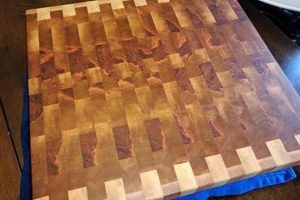
Utilizing leftover timber pieces from larger constructions to create smaller, functional, or decorative items represents a resourceful approach to material use. Such endeavors transform offcuts, which might otherwise be discarded, into valuable and aesthetically pleasing objects. Examples include constructing small boxes, picture frames, coasters, or even intricate inlays for furniture.
Employing this practice reduces waste, lowers material costs, and fosters creativity. Historically, the practice has been essential in times of scarcity and remains relevant today due to increased environmental awareness and a desire for sustainable practices. It allows for the maximization of resources and encourages innovation in design and construction techniques.
The subsequent discussion will explore a variety of applications and techniques applicable to the repurposing of these materials, focusing on practical advice and design considerations. The topics covered will include project selection, material preparation, joinery methods, and finishing techniques, with a view toward producing high-quality results from repurposed sources.
Essential Considerations for Repurposing Wood Remnants
The following guidelines are designed to maximize efficiency and quality when undertaking projects utilizing reclaimed wood pieces. Careful planning and execution are crucial for successful outcomes.
Tip 1: Material Assessment: Prior to initiating any build, rigorously evaluate the available resources. Examine for defects such as splits, warps, insect damage, or decay. Discard compromised pieces or reserve them for smaller, less structurally critical elements.
Tip 2: Design Adaptability: Modify project blueprints to accommodate the dimensions and characteristics of the available materials. Flexibility in design is essential when working with non-standard sizes and shapes.
Tip 3: Grain Matching: Pay attention to grain orientation and pattern when joining components. Strategic grain matching enhances the visual appeal and structural integrity of the finished product.
Tip 4: Joint Selection: Choose appropriate joinery methods based on the material’s thickness and the intended application. Strong, well-executed joints are paramount for durable constructions.
Tip 5: Surface Preparation: Thoroughly prepare surfaces before applying finishes. Sanding, planing, and filling imperfections ensure a smooth, professional-looking final result.
Tip 6: Hardware Considerations: Select hardware that complements the design and is appropriate for the intended use. Ensure proper fit and secure attachment for optimal functionality.
Tip 7: Finishing Techniques: Employ appropriate finishing techniques to protect the wood and enhance its natural beauty. Consider the project’s intended environment when choosing sealants, stains, and topcoats.
Applying these guidelines can significantly enhance project outcomes when resourcefully using discarded timber. Thoughtful planning and precise execution result in durable, aesthetically pleasing objects that maximize resource utilization.
The subsequent sections will delve deeper into specific project examples and advanced techniques for crafting quality items.
1. Material Assessment

Material assessment forms the foundational element in woodworking projects utilizing reclaimed timber. The process dictates project scope, design possibilities, and ultimately, the structural integrity and aesthetic value of the finished item. Thorough scrutiny of available timber dictates viable project selection and execution strategies.
- Species Identification and its Implications
Determining wood species is crucial as it dictates properties such as hardness, density, and grain pattern. Softwoods like pine are suitable for carving and lighter projects, while hardwoods like oak or maple offer superior durability for furniture. Mismatched species can lead to uneven wear and finishing issues, compromising the final product’s longevity and appearance.
- Defect Detection and Mitigation
Assessing for defects such as knots, cracks, insect damage, or rot is essential. These imperfections can weaken structural integrity and affect joinery. Strategies include cutting around defects, using epoxy fills, or incorporating imperfections as unique design elements, adapting the design to accommodate existing flaws.
- Dimensional Evaluation and Planning
Precise measurement of available stock is critical for project planning. Irregular dimensions necessitate careful layout and potentially modified designs. Efficient utilization of available sizes minimizes waste and maximizes material use. Projects are often constrained or inspired by the dimensions of the materials at hand.
- Moisture Content Analysis and Adjustment
Wood’s moisture content influences its stability. Excess moisture can cause warping or cracking, while overly dry wood can become brittle. Acclimatizing timber to the workshop environment and using moisture meters ensures stability, minimizing dimensional changes that could compromise joinery and structural integrity over time.
The confluence of these facets fundamentally shapes the feasibility and quality of endeavors that capitalize on reclaimed resources. By addressing species, flaws, dimensions, and moisture, craftsmen maximize the potential of disparate resources, transforming discarded material into functional and aesthetically pleasing outcomes.
2. Design Adaptation

Design adaptation, within the context of woodworking projects utilizing repurposed timber, denotes the necessary modifications to project plans to accommodate the irregular dimensions, limited quantities, and inherent imperfections of available material. This process represents a departure from standardized builds, requiring a flexible approach to both aesthetic and structural considerations. The absence of readily available, uniform stock necessitates adjustments to pre-conceived notions of scale, proportion, and joinery methods.
A direct consequence of working with reclaimed material is the constraint imposed on design choices. For instance, if a project blueprint calls for a 4-foot long board, and only a 3-foot board is available, the design must be scaled down, or alternative methods of construction considered. Examples of this include altering table leg heights to match available stock, substituting planned mortise-and-tenon joints with dowel joinery due to material thickness limitations, or incorporating existing imperfections, such as knot holes, as deliberate design features. This adaptability is critical; without it, the viability of resourcefully re-purposing stock diminishes significantly.
Ultimately, design adaptation forms a cornerstone of woodworking projects. It balances idealized design concepts with material realities, ensuring both efficient resource utilization and the creation of functional, aesthetically pleasing items. It necessitates not only woodworking skill but also ingenuity and creative problem-solving, transforming potential limitations into distinctive design characteristics. The skill in design adaptation determines if an undertaking using discarded stock results in a lasting piece or simply more discarded waste.
3. Joint Integrity

Joint integrity, referring to the strength and durability of connections between wood components, assumes paramount importance in projects utilizing reclaimed timber. The inherent variability in material dimensions, potential presence of defects, and often limited stock of uniform pieces necessitates robust and well-executed joinery to ensure structural stability. Poor joint construction leads to premature failure, negating the ecological and economic benefits of repurposing. Cause-and-effect relationships are readily apparent: inadequate joint design or execution invariably results in weakened structural capacity and reduced lifespan of the constructed object. Its significance is amplified because materials may already be weakened due to their past use or age.
Several factors influence joint integrity when using reclaimed stock. Firstly, careful selection of appropriate joinery techniques is critical. Traditional methods like dovetails or mortise-and-tenon joints provide exceptional strength but require precise execution. Simpler joints, such as butt joints reinforced with screws and glue, can be adequate for less demanding applications, but proper alignment and clamping are crucial. Furthermore, the presence of knots, checks, or splits near joint locations presents significant challenges. Reinforcement strategies, such as using bridging pieces or epoxy consolidation, may be necessary to compensate for weakened material. In furniture projects, such as a coffee table built from reclaimed barn wood, poorly executed joints can lead to wobbly legs or a collapsing tabletop, rendering the piece unusable.
In summary, prioritizing joint integrity is not merely a desirable aspect but a fundamental requirement for success. Woodworking projects that resourcefully use discarded stock demand meticulous attention to joinery. Employing suitable techniques, compensating for material defects, and ensuring proper execution are vital to creating durable, functional items from recycled materials. Ignoring these considerations jeopardizes structural stability, diminishing the project’s utility and negating the sustainability benefits. Thorough planning and proficient execution are essential for achieving lasting results.
4. Finishing Quality

Finishing quality directly correlates with the longevity, aesthetic appeal, and perceived value of woodworking projects utilizing repurposed stock. A well-executed finish enhances the wood’s natural grain, protects it from environmental factors, and conceals imperfections often present in discarded material. Conversely, a poorly applied finish can detract from the overall appearance, fail to provide adequate protection, and even accelerate deterioration. The selection and application of appropriate finishing materials and techniques are, therefore, critical components of these projects.
The choice of finish must consider the intended use of the object and the inherent characteristics of the wood. For instance, an exterior project, such as a planter box constructed from reclaimed cedar, requires a weather-resistant finish like spar varnish or exterior-grade paint to protect against moisture and UV damage. An interior piece, such as a bookshelf built from pallet wood, might benefit from a durable, non-toxic finish like polyurethane or a natural oil finish. Proper surface preparation, including sanding, filling imperfections, and applying a suitable primer, is essential for achieving a smooth, even finish. Without adequate preparation, blemishes are amplified, and the finish may not adhere properly, leading to peeling, cracking, or discoloration over time. A poorly sanded surface, for example, will result in uneven stain absorption, highlighting scratches and imperfections that diminish the final product’s visual appeal. Similarly, neglecting to properly clean the wood before applying a finish can trap contaminants, preventing proper adhesion and causing premature failure.
In conclusion, achieving a high-quality finish is indispensable for woodworking projects that resourcefully use discarded stock. It is the culmination of careful material selection, design adaptation, and joint construction. Through appropriate finish selection, meticulous surface preparation, and skillful application, craftsmen can transform imperfect, repurposed wood into durable, aesthetically pleasing items. Understanding this critical link between finishing quality and project success ensures that such endeavors are not only environmentally responsible but also economically viable and aesthetically satisfying.
5. Project Suitability

Project Suitability, within the context of woodworking projects from discarded timber, signifies the alignment between a specific construction endeavor and the characteristics of the available material. A mismatch between project requirements and material attributes invariably leads to compromised structural integrity, aesthetic shortcomings, or outright project failure. Factors influencing suitability include material dimensions, wood species, presence of defects, and the craftsman’s skill level.
Consider the construction of a dining table from reclaimed lumber. If only short, narrow boards are available, a table design requiring long, continuous pieces is unsuitable. A more fitting project might be a mosaic-style tabletop composed of smaller, interconnected tiles. Similarly, using softwood remnants for a high-stress application like chair legs invites instability and potential breakage. A more suitable application might be decorative trim or non-structural elements. Furthermore, intricate joinery demands a higher level of skill and material precision than simpler construction methods. Attempting complex techniques with irregular or flawed material frequently results in frustration and substandard results. A beginner might be better suited to build a simple box or picture frame before attempting a dovetailed drawer.
Determining Project Suitability is, therefore, a critical step in the process. Careful assessment of material constraints and matching those constraints with achievable project goals forms the foundation for successful and sustainable resource utilization. This understanding minimizes wasted effort, maximizes the utility of reclaimed material, and ensures that the finished project aligns with both functional requirements and aesthetic expectations, while addressing the challenge of making quality furniture out of discarded stock.
Frequently Asked Questions About Woodworking Projects with Scrap Wood
This section addresses common inquiries regarding woodworking projects that capitalize on reclaimed or discarded timber, providing clarity on essential aspects of this resourceful practice.
Question 1: What constitutes appropriate material for woodworking projects?
The selection of suitable materials necessitates careful consideration of species, dimensions, and the presence of defects. Hardwoods are preferable for structural components, while softwoods may be suitable for decorative elements. Material dimensions should align with project requirements, and defects must be assessed for their impact on structural integrity.
Question 2: How does one compensate for irregularities in discarded timber?
Irregularities are inherent in this type of material. Design modifications, selective material use, and specialized joinery techniques can mitigate the impact of non-uniform dimensions, knots, and other imperfections.
Question 3: What joinery methods are best suited for woodworking?
The selection of joinery methods is based on material thickness, project demands, and skill level. Traditional techniques, such as mortise-and-tenon or dovetail joints, offer superior strength. Simpler joints, when properly executed, can suffice for less demanding applications.
Question 4: How important is surface preparation when using reclaimed wood?
Surface preparation is paramount to achieving a quality finish. Sanding, filling, and cleaning are essential steps in ensuring proper adhesion and a smooth, uniform appearance. Neglecting preparation can lead to finish failures and accentuate imperfections.
Question 5: Which finishing options provide optimal protection for repurposed wood?
The selection of finishing material should align with the project’s intended environment and usage. Exterior projects require weather-resistant finishes, while interior projects may benefit from durable, non-toxic options. Consider durability, UV protection, and ease of maintenance when making this selection.
Question 6: What are the primary benefits of woodworking projects that resourcefully use discarded stock?
The benefits include reduced material costs, waste minimization, and the promotion of creativity. Additionally, it can result in unique and aesthetically pleasing items while contributing to sustainable practices.
These FAQs provide a foundational understanding of the practical considerations involved in woodworking projects. Addressing these points enables craftsman to make informed decisions, resulting in successful and sustainable outcomes.
The next section offers case studies and project plans.
Conclusion
The foregoing exploration of woodworking projects with scrap wood has illuminated critical aspects ranging from material assessment and design adaptation to joint integrity, finishing quality, and project suitability. The synthesis of these considerations determines the viability and outcome of such endeavors. Successful repurposing relies on meticulous planning and skillful execution, recognizing the inherent limitations and potential of reclaimed resources.
Effective implementation of these principles fosters a sustainable approach to woodworking, minimizing waste and maximizing resource utilization. Continual refinement of techniques and a commitment to quality will further enhance the value and durability of items crafted. The future of woodworking may increasingly rely on resourcefulness, demanding both innovation and adherence to sound construction principles in the face of material constraints.