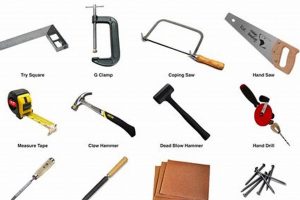
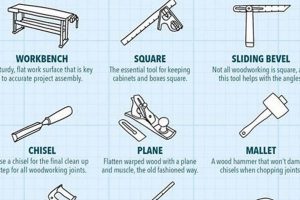
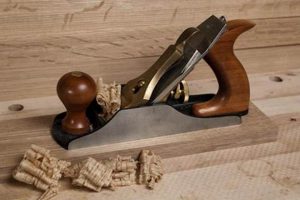
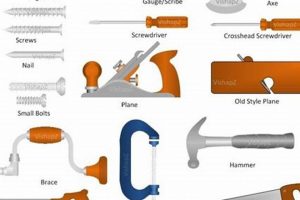
A hand drill is a manually operated tool employed to create holes in wood. It utilizes a rotating bit, powered by the user’s hand through a crank or handle, to bore through the material. A common application involves creating pilot holes for screws, ensuring accurate placement and preventing wood splitting. Another practical use is drilling small-diameter holes for dowels or other joinery elements where precision and control are paramount.
Its significance stems from the precision and control it affords, especially in delicate woodworking tasks where the speed and power of an electric drill could be detrimental. The absence of electricity makes it a versatile option for remote locations or situations where power is unavailable. Historically, the hand drill represents a fundamental tool in woodworking, predating motorized versions and offering a direct connection between the craftsman and the material.
Therefore, a detailed exploration of the types of hand drills, proper usage techniques, maintenance guidelines, and safety considerations will provide a complete understanding of this essential woodworking implement. Furthermore, a comparison with other drilling methods, such as electric drills and brace drills, will highlight its unique advantages and limitations.
Tips for Effective Hand Drill Usage in Woodwork
The following guidelines enhance the effectiveness and safety of utilizing a manually operated drilling tool in woodworking applications.
Tip 1: Secure the Workpiece: Before commencing drilling, rigidly clamp the wood to a stable surface. This prevents movement, enhancing accuracy and minimizing the risk of injury.
Tip 2: Select the Appropriate Bit: Choose a drill bit specifically designed for wood. Brad point bits, for instance, offer precise starting points, reducing the likelihood of wandering. Auger bits are appropriate for larger holes where rapid material removal is needed.
Tip 3: Mark the Drilling Point: Use an awl or punch to create a small indentation at the intended drilling location. This provides a physical guide for the drill bit, ensuring accurate hole placement.
Tip 4: Apply Consistent Pressure: Maintain steady, even pressure while turning the crank. Avoid forcing the drill, as this can lead to bit breakage or damage to the wood.
Tip 5: Periodically Clear Debris: As drilling progresses, periodically withdraw the bit to remove wood chips and shavings. This prevents clogging, reduces friction, and maintains drilling efficiency.
Tip 6: Control Drilling Depth: Implement a depth stop, either commercially purchased or shop-made, to ensure consistent hole depth. This is especially crucial when drilling multiple holes to a precise specification.
Tip 7: Sharpen Bits Regularly: Maintain sharp drill bits for optimal performance. A dull bit requires excessive force, increasing the risk of slippage and splintering.
These tips promote precision, efficiency, and safety when employing a hand drill in woodworking, leading to improved project outcomes.
The concluding sections of this document delve into best practices for maintaining the tool and comparing it with other drilling methods.
1. Pilot hole creation

The creation of pilot holes is a fundamental application of a hand drill in woodworking. Pilot holes are small-diameter holes drilled into wood prior to inserting screws. The primary purpose of a pilot hole is to provide clearance for the screw’s shank, the smooth, unthreaded portion of the screw. Without a pilot hole, driving a screw directly into wood can cause the wood to split, particularly in hardwoods or near the edges of boards. The hand drill facilitates this process through controlled, precise drilling, allowing the user to determine the depth and location of the pilot hole with accuracy. For instance, when assembling a cabinet frame, pilot holes prevent the wood from splitting at the joints, ensuring a strong and aesthetically pleasing structure.
The significance of pilot holes extends beyond preventing splitting. They also reduce the effort required to drive the screw, minimizing the risk of stripping the screw head or damaging the threads. Furthermore, pilot holes ensure the screw follows a straight path, crucial for aligning components accurately. An example is in furniture making, where precise alignment is necessary for drawers to slide smoothly and doors to close properly. The use of a hand drill for pilot hole creation allows for the nuanced control needed in delicate woodworking tasks, surpassing what might be achieved with a power drill in certain situations. The control of hand drill make it suitable for this kind of jobs.
In summary, pilot hole creation represents a critical function of a hand drill, offering a means to prevent wood splitting, reduce driving effort, and ensure accurate screw placement. While power drills can also create pilot holes, the hand drill provides a level of control and precision particularly valuable in fine woodworking and situations where power is unavailable. Understanding this connection is essential for effectively employing a hand drill and achieving high-quality woodworking results.
2. Precise small drilling

The capacity for precise small drilling is intrinsically linked to the utility of a hand drill in woodworking. It represents a core function enabled by the tool’s manual operation and inherent control. The direct connection between the user’s hand and the rotating bit allows for minute adjustments and careful execution, essential when accuracy is paramount. This is particularly relevant in applications where power drills might cause splintering or tear-out due to their higher speeds and torques. Examples include drilling small holes for delicate inlay work, creating precisely sized openings for miniature hardware, or crafting intricate details in wood carvings. The ability to precisely control the drill bit’s placement, depth, and speed translates directly into higher quality and more refined woodworking projects.
Consider the construction of a model ship, where numerous small holes are required for rigging or attaching decorative elements. A power drill would be unwieldy and prone to errors in such a delicate task. Conversely, a hand drill allows the model maker to drill each hole precisely where it is needed, minimizing the risk of damage and ensuring the final product reflects a high level of craftsmanship. Similarly, when creating small wooden boxes or jewelry boxes, a hand drill enables the creation of perfectly aligned holes for hinges, latches, and other hardware, enhancing both the functionality and aesthetic appeal of the finished product. Its manual operation makes it ideal for drilling near the edges of thin materials.
In conclusion, precise small drilling is not merely an application of a hand drill; it is a defining characteristic that underscores its value in woodworking. The ability to execute these tasks with accuracy and control enables woodworkers to create intricate designs, assemble delicate structures, and achieve a level of detail unattainable with power tools. Understanding this connection is crucial for selecting the appropriate tool for a given task and for maximizing the potential of a hand drill in achieving superior woodworking results. Its value is undeniable in small precise drilling.
3. Remote site usability

The inherent portability and independence from external power sources directly link remote site usability to the function of a hand drill in woodworking. This capability arises from the manual operation of the tool, eliminating the need for electricity or battery power. Consequently, a hand drill becomes an essential tool for woodworking projects undertaken in locations lacking access to conventional power infrastructure. This may encompass construction sites in undeveloped areas, wilderness settings where crafting outdoor structures is necessary, or even historical restoration projects where the use of modern power tools is either inappropriate or impossible.
In situations where transporting generators or dealing with the logistical constraints of electrical power is impractical, the hand drill provides a viable alternative. Consider the construction of a remote cabin or the repair of a fence line on a rural property. The ability to drill pilot holes, create joinery, or make repairs using a hand drill streamlines the work process and mitigates the challenges associated with power access. Likewise, in archaeological digs involving the restoration of wooden artifacts, the controlled and non-invasive nature of a hand drill proves invaluable. The elimination of power cords and outlets makes the hand drill a safe and efficient solution in environments where such considerations are paramount.
In conclusion, the remote site usability of a hand drill stands as a significant advantage, enabling woodworking tasks to be performed in locations devoid of electrical power. This characteristic stems directly from its design and operation, making it a practical and reliable tool for a range of applications where portability and independence are essential. This understanding underlines the tool’s continued relevance in specific woodworking contexts, despite the widespread availability of power drills.
4. Fine control applications

The inherent design and operation of a hand drill directly enable woodworking tasks requiring a high degree of precision and control. This characteristic distinguishes it from power drills, where speed and torque often outweigh the need for meticulous execution.
- Delicate Material Drilling
When working with thin veneers, brittle hardwoods, or aged wood, the force and speed of a power drill can easily cause splintering, cracking, or tear-out. A hand drill allows for a slow, steady application of force, minimizing the risk of damage to delicate materials. The user maintains tactile feedback and can adjust the drilling speed accordingly.
- Precision Hole Placement
Certain woodworking applications demand extremely accurate hole placement, such as installing miniature hinges, creating intricate inlay patterns, or aligning dowels in complex joints. A hand drill provides the user with direct control over the bit’s position and trajectory, allowing for precise adjustments that would be difficult or impossible to achieve with a power drill. The tactile feedback allows for iterative adjustments, ensuring the hole is precisely where it needs to be.
- Controlled Depth Drilling
In applications where drilling through a material is undesirable, but a precisely measured hole depth is required, a hand drill offers a significant advantage. The user can carefully monitor the drill’s progress and stop precisely at the intended depth. This is particularly useful for creating mortises for hardware or installing dowels that must not protrude from the surface. A depth stop can be easily implemented, further enhancing this control.
- Angled Drilling with Precision
Maintaining a specific drilling angle can be challenging with a power drill, especially when working freehand. A hand drill allows the user to slowly and deliberately establish the desired angle, making small corrections as needed. This is useful for creating angled mortises or drilling holes for decorative elements that require a precise orientation. It minimizes the risk of bit wandering and ensures accurate alignment.
These facets of fine control demonstrate the continued relevance of hand drills in woodworking, particularly in tasks where precision and delicacy outweigh the need for speed and power. The ability to directly manipulate the drilling process, with constant tactile feedback, enables woodworkers to achieve results that are difficult or impossible to replicate with power tools in certain specialized applications.
5. Joint reinforcement holes

Joint reinforcement holes represent a specific application of a hand drill in woodworking that directly contributes to the structural integrity and longevity of wooden assemblies. These holes are strategically drilled to accommodate dowels, pegs, or other reinforcing elements, enhancing the mechanical strength of the joint beyond what adhesives alone can provide. The hand drill is particularly suited for this purpose due to the control it offers over hole placement, depth, and angle, all of which are crucial for effective joint reinforcement. The consequence of improper hole drilling can include weakened joints prone to failure under stress, while precise execution ensures a robust and durable connection. For example, drilling precisely aligned dowel holes in a mortise and tenon joint significantly increases its resistance to racking forces.
The importance of joint reinforcement holes stems from their ability to distribute stress across a wider area, preventing concentrated loads that can lead to joint failure. This is particularly critical in furniture making, where joints are subjected to repeated stress from use. Consider the construction of a chair; dowel-reinforced joints in the legs and backrest significantly increase the chair’s stability and weight-bearing capacity. Without these reinforcement holes, the joints would be more susceptible to loosening or breaking over time. The use of a hand drill enables the craftsman to tailor the reinforcement to the specific demands of the joint, optimizing its strength and durability. This allows for the creation of furniture or wooden structures that can endure prolonged use and environmental factors.
In summary, the creation of joint reinforcement holes exemplifies a key function of a hand drill in woodworking, directly influencing the robustness and longevity of wooden structures. Precise hole placement, achieved through the controlled operation of the hand drill, is paramount for distributing stress and preventing joint failure. Understanding this connection is essential for woodworkers seeking to create durable and reliable assemblies, particularly in applications where joints are subjected to significant stress. The hand drill provides a means to achieve the necessary precision and control, leading to enhanced structural integrity and extended lifespan of woodworking projects.
Frequently Asked Questions
This section addresses common inquiries regarding the application and utility of manually operated drilling tools in woodworking, providing concise and informative answers.
Question 1: What distinguishes a hand drill from an electric drill in woodworking applications?
The primary distinction lies in the power source and control. A hand drill is manually operated, offering greater control over drilling speed and pressure, advantageous for delicate tasks. An electric drill provides higher speed and torque, suitable for larger holes and faster material removal, but potentially at the expense of precision.
Question 2: In what scenarios is a hand drill preferred over a power drill for woodworking?
A hand drill is preferred when fine control is paramount, such as drilling pilot holes near edges, working with fragile materials, or performing tasks requiring high accuracy. It is also suitable for remote locations lacking power access and when noise reduction is desired.
Question 3: What types of drill bits are commonly used with hand drills in woodworking?
Brad point bits are frequently used for their ability to create clean, precise holes without wandering. Auger bits are suitable for larger diameter holes, while twist drill bits can be used for general-purpose drilling in wood. The selection depends on the specific application and desired hole quality.
Question 4: How is a hand drill properly maintained to ensure optimal performance?
Maintenance involves regular cleaning to remove sawdust and debris, lubrication of moving parts, and sharpening of drill bits. Proper storage in a dry environment prevents rust and corrosion. Periodic inspection for loose parts or damage is also recommended.
Question 5: What safety precautions should be observed when using a hand drill for woodworking?
Workpieces should be securely clamped to prevent movement. Eye protection is essential to guard against flying debris. Hands should be kept clear of the rotating bit. Ensure the drill bit is securely fastened in the chuck before operation.
Question 6: Can a hand drill be used effectively for drilling hardwoods?
Yes, a hand drill can be used to drill hardwoods, but it may require more effort and time compared to using it on softwoods. Sharp drill bits and consistent pressure are crucial for successful drilling in hardwoods. Pilot holes are strongly recommended.
The manual drilling tool is valuable for specific woodworking tasks, prioritizing control and precision over speed. Its proper use and maintenance contribute to high-quality results and enhanced safety.
The concluding section delves into a comparative analysis with alternative drilling tools.
Conclusion
This exposition has illuminated the multifaceted applications of a manually operated drilling tool within woodworking. The investigation has encompassed pilot hole creation, precise small drilling, remote site usability, fine control applications, and joint reinforcement. Each of these uses underscores the tool’s significance in contexts demanding accuracy, portability, or delicate handling of materials. While power drills offer speed and efficiency, the hand drill retains relevance through its tactile feedback and control, particularly in niche applications where precision outweighs speed.
The continued employment of the manual drilling tool in woodworking testifies to the enduring value of craftsmanship and precision in an increasingly automated world. A careful consideration of the specific demands of a woodworking task will dictate the optimal tool selection. The legacy of this tool is secure in fine woodworking projects.