



Woodworking clamps are essential tools employed to securely hold wood pieces together during gluing, fastening, or assembly. These devices apply pressure, ensuring precise alignment and a strong, lasting bond. For instance, when assembling a cabinet, clamps maintain uniform pressure across the glued joints until the adhesive cures.
The utilization of these devices significantly enhances the quality and accuracy of woodworking projects. They allow for hands-free operation, preventing shifting or movement while materials set. Historically, woodworking clamps have evolved from rudimentary wooden designs to sophisticated metal mechanisms, reflecting advancements in material science and manufacturing techniques. Their proper application results in stronger, more durable constructions and reduces the potential for errors.
The subsequent sections will detail various types of woodworking clamps, appropriate applications for each, and best practices for achieving optimal results in woodworking projects. This includes choosing the correct clamp, applying the appropriate pressure, and protecting the wood surface from damage.
Essential Techniques for Woodworking Clamp Application
Effective woodworking clamp utilization hinges on understanding the nuances of each clamp type and material interaction. Adherence to these guidelines maximizes project integrity and minimizes potential damage.
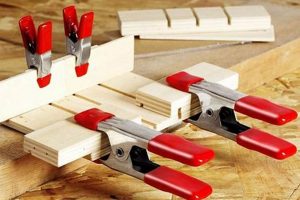
Tip 1: Select the Appropriate Clamp Type: Different projects demand specific clamp designs. Bar clamps are suitable for large surfaces, while spring clamps excel at holding smaller pieces. Choosing the wrong type can compromise joint strength and alignment.
Tip 2: Apply Consistent Pressure: Over-tightening can damage wood fibers, while insufficient pressure leads to weak bonds. Distribute clamps evenly and monitor pressure levels to ensure uniform adhesion. Gauge pressure by observing glue squeeze-out; a thin, even bead indicates sufficient clamping force.
Tip 3: Protect Wood Surfaces: Direct contact between clamp jaws and wood can leave indentations. Use cauls or scrap wood pieces to distribute pressure and prevent marring. Cauls should be wider than the clamp jaws to prevent edge marking.
Tip 4: Maintain Proper Alignment: Prior to tightening, verify the alignment of all components. Misalignment under pressure results in skewed joints and structural weakness. Utilize squares and measuring tools to ensure accuracy before final clamping.
Tip 5: Allow Adequate Curing Time: Adhesives require specified curing periods to achieve maximum strength. Premature removal of clamps can compromise joint integrity. Consult adhesive manufacturer guidelines for recommended clamping duration.
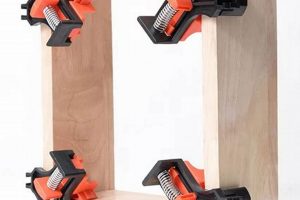
Tip 6: Consider Joint Geometry: Different joint types require specific clamping strategies. Miter joints, for example, necessitate corner clamps or band clamps to provide uniform pressure across angled surfaces.
Tip 7: Utilize Clamp Placement Strategically: The positioning of clamps influences the distribution of pressure. For wide boards, alternate clamp placement above and below the joint to prevent bowing or warping.
Mastery of these techniques results in stronger, more aesthetically pleasing woodworking projects. Precise application and informed selection of clamps are cornerstones of professional craftsmanship.
The subsequent section will address common errors and troubleshooting techniques in woodworking clamp applications, ensuring optimal project outcomes.
1. Selecting Proper Clamp
The selection of a suitable clamp is a foundational element in the effective utilization of woodworking clamps. The success of a project, in terms of structural integrity and aesthetic appeal, hinges on the appropriate match between clamp type and task requirements. An ill-suited clamp can compromise joint strength, damage materials, or hinder the assembly process.
- Joint Type Compatibility
Different joint types, such as butt joints, miter joints, and mortise-and-tenon joints, necessitate specific clamping configurations. For instance, miter joints typically require corner clamps or band clamps to apply even pressure across the angled surfaces, ensuring a tight, seamless fit. Using a bar clamp on a miter joint would likely result in slippage or misalignment due to the lack of support at the corner. Butt joints, conversely, may benefit from simple bar clamps or pipe clamps. The clamp selection must align with the joint’s geometry for optimal results.
- Material Thickness and Size
The dimensions of the workpiece dictate the required clamp capacity and reach. Clamping thin veneers demands low-pressure clamps to avoid crushing the material, while large-scale assemblies necessitate long-reach clamps to span the entire joint. Using an undersized clamp will fail to apply sufficient pressure across the entire gluing surface, resulting in a weakened joint, while an overly powerful clamp risks damaging delicate materials. The clamp size and force capabilities must correspond to the material’s physical characteristics and overall dimensions.
- Pressure Distribution Considerations
The manner in which pressure is applied across the joint is crucial for preventing warping, bowing, or uneven adhesion. For wide boards, alternating clamp placement above and below the joint distributes pressure uniformly, preventing cupping or twisting. Certain specialized clamps, like parallel jaw clamps, are designed to exert even pressure across the entire clamping surface, minimizing the risk of localized stress points. Proper pressure distribution is essential for achieving flat, stable, and structurally sound assemblies.
- Accessibility and Maneuverability
The physical design and ergonomics of the clamp influence its accessibility in tight spaces and ease of manipulation. Certain projects may necessitate one-handed clamps for quick adjustments or specialized clamps with pivoting jaws for reaching awkward angles. Consider the project’s overall geometry and the available workspace when selecting a clamp to ensure efficient and comfortable operation. Clamps that are difficult to maneuver or position can lead to frustration and potentially compromise the quality of the finished product.
In summation, the selection of a proper clamp is not a mere formality but a critical decision that directly affects the outcome of woodworking endeavors. Careful consideration of joint type, material properties, pressure distribution, and ergonomic factors is essential for achieving optimal results. The effective utilization of woodworking clamps hinges on the ability to match the right tool to the specific task at hand, ensuring structural integrity and aesthetic precision.
2. Consistent Pressure Application

Consistent pressure application stands as a cornerstone in the effective employment of woodworking clamps. The application of uniform force across a bonded surface directly correlates with the strength and longevity of the joint. Insufficient pressure compromises adhesion, resulting in weak bonds prone to failure under stress. Conversely, excessive pressure risks damaging the wood fibers, creating indentations or even fractures, thereby weakening the overall structure.
The type of adhesive utilized further underscores the importance of consistent pressure. Many woodworking adhesives require close contact between surfaces to achieve optimal bonding. Variances in pressure distribution create gaps, hindering proper adhesion and diminishing the joint’s load-bearing capacity. For instance, when laminating multiple layers of wood, consistent pressure ensures that each layer adheres completely to its neighbor, creating a solid, monolithic structure. In contrast, inconsistent pressure leads to voids within the laminate, reducing its strength and stiffness. Furthermore, when clamping boards edge-to-edge to create a wider panel, uniform pressure is essential to prevent cupping or bowing during the curing process. Uneven pressure may cause the panel to deform permanently, rendering it unusable.
In summary, consistent pressure application is not merely a desirable outcome but a fundamental requirement for successful woodworking clamp utilization. Proper technique mitigates the risks of both under-clamping and over-clamping, ensuring strong, durable, and aesthetically pleasing joints. Mastering this aspect of woodworking clamp application is crucial for achieving professional-quality results and maximizing the lifespan of woodworking projects. Furthermore, challenges in achieving consistent pressure often stem from inadequate clamp selection or improper setup. Recognizing these factors is paramount for skilled craftsmanship.
3. Surface Protection
Surface protection constitutes an indispensable component of proper woodworking clamp usage. The application of clamps, while essential for securing joints and assemblies, inherently carries the risk of marring or damaging the wood surface. This risk stems from the direct contact between the clamp jaws and the wood, where concentrated pressure can leave indentations, scratches, or even crush delicate fibers. These imperfections not only detract from the aesthetic appeal of the finished piece but can also compromise its structural integrity, particularly in the case of softer woods. The connection is direct: inappropriate clamp application, without regard for surface protection, leads to irreversible damage. For example, directly clamping a finished tabletop with a metal bar clamp can easily leave deep impressions, necessitating costly repairs or rework. Therefore, the implementation of surface protection techniques is not an optional add-on but an integral aspect of how woodworking clamps are to be correctly applied.
Effective surface protection primarily involves the use of protective barriers between the clamp jaws and the wood. Cauls, typically constructed from wood or durable plastic, distribute the clamping pressure over a wider area, mitigating the risk of localized damage. These cauls should be wider than the clamp jaws to ensure that the pressure is evenly dispersed and that the edges of the clamps do not directly contact the wood. Soft, compressible materials, such as cork or felt, can also be applied to the clamp jaws to provide a cushioning effect. When working with delicate veneers or figured woods, multiple layers of protection may be necessary to prevent any surface imperfections. Furthermore, the choice of clamp material itself can influence the degree of surface protection required. Clamps with smooth, non-abrasive surfaces are less likely to cause damage than those with rough or textured jaws. The proper integration of these protective measures ensures that the clamping process enhances, rather than detracts from, the quality and appearance of the woodworking project. Additionally, careful consideration must be given to the type of wood being clamped as softer woods require more protection than harder woods. For instance, clamping a piece of pine requires more caution compared to clamping a piece of oak.
In conclusion, surface protection is inextricably linked to the skillful application of woodworking clamps. The awareness and diligent implementation of protective techniques are paramount for preserving the integrity and aesthetic value of woodworking projects. By employing appropriate cauls, cushioning materials, and careful clamping practices, woodworkers can effectively mitigate the risks of surface damage and achieve optimal results. The understanding of how to use woodworking clamps necessitates an appreciation of surface protection, ensuring that pressure is applied effectively without compromising the quality of the finished piece. The avoidance of damage not only ensures a better aesthetic outcome but can also save significant time and resources by preventing costly repairs and rework. Thus, surface protection is an investment in quality and efficiency, a fundamental aspect of professional woodworking practice.
4. Alignment Accuracy
Alignment accuracy is a critical determinant in the successful utilization of woodworking clamps. The proper application of clamping force presumes that component pieces are correctly oriented and maintained in their intended positions throughout the assembly process. Failure to achieve and maintain precise alignment compromises the structural integrity and aesthetic quality of the finished product. The purpose of clamps is not to force misaligned pieces into position, but to maintain accurate positioning while adhesive cures or fasteners are secured.
- Pre-Clamping Alignment Verification
Prior to clamp application, meticulous verification of alignment is paramount. This involves using measuring tools such as squares, rules, and levels to ensure that components are properly oriented. For example, when assembling a cabinet, ensuring that the sides are square to the base before clamping prevents racking and ensures a stable structure. Neglecting this step can result in a distorted assembly that is difficult or impossible to correct post-clamping.
- Clamp Placement and its Impact on Alignment
The positioning of clamps exerts a significant influence on alignment. Applying clamping pressure in a non-uniform manner can induce subtle shifts in the components, leading to misalignment. Strategic clamp placement, distributing force evenly across the joint, is essential for maintaining accuracy. For instance, when gluing up a panel from multiple boards, alternating clamp placement above and below the panel prevents bowing and ensures a flat surface. Incorrect clamp placement, on the other hand, can exacerbate existing alignment issues.
- The Role of Jigs and Fixtures
Jigs and fixtures serve as invaluable tools for maintaining alignment during clamping. These devices provide physical constraints that hold components in their correct positions, simplifying the assembly process and improving accuracy. A simple example is a corner jig used when assembling picture frames; it ensures that the corners are square and that the frame remains aligned while the glue dries. Employing jigs and fixtures reduces the likelihood of misalignment, particularly when working with complex assemblies or repetitive tasks.
- Monitoring and Adjustments During Clamping
Even with careful pre-clamping verification and strategic clamp placement, it is crucial to monitor alignment throughout the clamping process. Subtle shifts can occur as pressure is applied. Periodic checks with measuring tools allow for timely adjustments to clamp positions, preventing minor misalignments from becoming major problems. For example, while clamping a long tabletop, periodic checks with a straightedge reveal any bowing or twisting, allowing for adjustments to clamp pressure or the addition of cauls to maintain a flat surface. Active monitoring and adjustment are integral to achieving and maintaining alignment accuracy.
In conclusion, alignment accuracy is inextricably linked to how woodworking clamps are used effectively. The outlined facetspre-clamping verification, strategic clamp placement, the use of jigs and fixtures, and continuous monitoringcollectively contribute to achieving precise alignment. These elements, when properly implemented, transform the clamping process from a mere application of force into a controlled and deliberate operation aimed at ensuring structural integrity and aesthetic precision. Failing to observe the significance of alignment undermines the fundamental purpose of clamping, resulting in compromised quality and diminished structural reliability. The relationship of proper clamp usage and alignment showcases expert woodworking practices.
5. Adequate Curing Time
Adequate curing time represents a non-negotiable element in the effective utilization of woodworking clamps. The duration for which clamps remain in place directly influences the final strength and stability of the assembled piece. Adhesive manufacturers specify curing times based on environmental factors like temperature and humidity, and adherence to these guidelines is crucial. Premature removal of clamps can result in joint failure, even if the initial bond appears adequate. This is because the adhesive may not have fully reached its maximum strength potential. For instance, a mortise and tenon joint glued with epoxy requires extended clamp time compared to a similar joint glued with fast-setting polyurethane adhesive. Understanding this distinction is central to successful clamp application.
The type of wood also affects the requisite curing time. Porous woods absorb adhesive more readily than dense hardwoods, potentially requiring longer clamp times to ensure sufficient bonding. Consider the assembly of a large tabletop using multiple boards. If clamps are removed too soon, internal stresses within the wood can cause the joints to separate over time, even after the adhesive has initially set. This demonstrates the necessity of prolonged clamping, allowing the adhesive to fully cure and counteract these stresses. Furthermore, the complexity of the joint influences the duration. Intricate joints with larger surface areas often require longer clamping times to ensure complete adhesion across all contact points.
In summary, adequate curing time is inextricably linked to the correct utilization of woodworking clamps. Ignoring manufacturer recommendations or failing to account for wood type and joint complexity undermines the entire clamping process, leading to weakened joints and potential project failure. Understanding and implementing proper curing procedures transforms clamping from a simple application of pressure into a crucial step towards creating strong, durable, and long-lasting woodworking projects. This aspect’s relevance to successful clamp utilization must be understood for proper woodworking execution.
6. Strategic Placement

Strategic placement constitutes a critical facet of how woodworking clamps are employed effectively. It involves deliberately positioning clamps to maximize pressure distribution, prevent deformation, and ensure accurate alignment throughout the bonding or fastening process. Inadequate or haphazard clamp placement can negate the benefits of even the highest-quality clamps, resulting in weakened joints, warped components, or aesthetically unacceptable outcomes. The connection between strategic placement and clamp functionality is causal: appropriate placement directly influences the clamp’s ability to perform its intended function. Conversely, incorrect placement undermines the clamp’s effectiveness, regardless of its design or material. Therefore, mastering strategic placement is fundamental to realizing the full potential of woodworking clamps.
Practical application of strategic placement principles necessitates understanding the specific characteristics of the joint being clamped. For edge-gluing wide boards, clamps should be positioned alternately above and below the joint line to prevent bowing or cupping as the adhesive cures. The spacing between clamps must be considered; too few clamps result in uneven pressure, while excessive clamping can damage the wood fibers. In mitered corners, specialized corner clamps or band clamps are often required to exert pressure uniformly across the angled surfaces. When clamping curved components, cauls shaped to match the curvature are essential for distributing pressure evenly and preventing distortion. The principles of strategic placement extend beyond simple linear clamping to encompass complex geometries and material properties. Real-world examples demonstrate the significance: a poorly clamped frame might exhibit racking, while a tabletop assembled with inadequate clamp placement could develop an uneven surface over time.
In summary, strategic placement is an indispensable component of proper woodworking clamp utilization. It represents a proactive approach to maximizing the benefits of clamping, minimizing the risks of damage, and ensuring the structural integrity and aesthetic quality of woodworking projects. Challenges in strategic placement often arise from a lack of understanding of joint mechanics or insufficient attention to detail. Overcoming these challenges requires a commitment to careful planning, precise execution, and continuous learning. Proper technique, informed by knowledge of adhesive properties, wood behavior, and clamp mechanics, transforms clamping from a brute-force operation into a carefully calibrated process that directly contributes to the success of the project. Ultimately, the connection between strategic placement and clamp performance is so intertwined it’s essential for success.
Frequently Asked Questions
The following addresses common inquiries regarding the correct application of woodworking clamps, aiming to clarify best practices and dispel misconceptions.
Question 1: What constitutes the most common error in clamp utilization?
The most prevalent mistake involves applying excessive force. Over-tightening clamps can damage wood fibers, leading to indentations or structural weakening. Controlled pressure, sufficient to ensure a tight joint, is paramount.
Question 2: How is the appropriate clamp type determined for a given project?
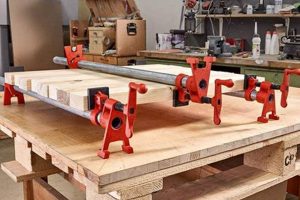
Clamp selection hinges on project dimensions and joint geometry. Bar clamps are suitable for large, flat surfaces, while pipe clamps offer extended reach. Miter joints often require specialized corner clamps to ensure proper alignment.
Question 3: Why is surface protection necessary when using clamps?
Direct contact between clamp jaws and wood can mar the surface. Protective cauls, typically constructed from wood or durable plastic, distribute pressure evenly, preventing indentations and scratches.
Question 4: What role does adhesive selection play in clamping procedures?
Different adhesives possess varying curing times. Consult manufacturer specifications to determine the appropriate clamping duration. Premature clamp removal compromises joint strength and stability.
Question 5: How does temperature affect adhesive curing and clamping time?
Elevated temperatures generally accelerate curing, while lower temperatures retard it. Adjust clamping times accordingly, adhering to adhesive manufacturer guidelines.
Question 6: Is it possible to reuse clamps indefinitely, or do they require periodic replacement?
Woodworking clamps, if properly maintained, can provide extended service. Regular cleaning and lubrication are essential to prevent corrosion and ensure smooth operation. Replace clamps exhibiting significant wear, damage, or compromised clamping force.
Consistent pressure, strategic clamp selection, and adherence to recommended curing times are paramount for achieving professional-quality woodworking results.
The subsequent section will delve into advanced techniques for specialized clamping applications, expanding upon the fundamental principles outlined herein.
Concluding Remarks
The preceding discussion has illuminated the multifaceted nature of how to use woodworking clamps effectively. From strategic clamp selection and consistent pressure application to crucial surface protection measures and adherence to proper curing times, each element contributes to the structural integrity and aesthetic success of woodworking endeavors. Attentive execution of these techniques minimizes risks, optimizes joint strength, and ensures lasting project quality. Moreover, it reinforces a foundational understanding of wood properties, adhesive behavior, and the mechanical principles governing clamp operation.
The consistent application of knowledge ensures superior results. Continued refinement of clamping practices, informed by experience and a commitment to precision, represents a pathway to elevate craftsmanship and achieve the enduring quality sought in all woodworking projects.
![Top-Rated: Best Quick Clamps for Woodworking Projects [2024] | Step-by-Step Guides, Tools & Inspiration to Build Beautiful Wooden Decor on a Budget](https://woodfromhome.com/wp-content/uploads/2026/04/th-264-300x200.jpg "Top-Rated: Best Quick Clamps for Woodworking Projects [2024] Step-by-Step Guides, Tools & Inspiration to Build Beautiful Wooden Decor on a Budget")