



This collection comprises various tools specifically designed to hold pieces of wood securely together during gluing, fastening, or assembly. The tools exert pressure, maintaining alignment and ensuring a strong, lasting bond. For instance, applying these tools to a freshly glued mortise and tenon joint guarantees optimal contact and prevents movement while the adhesive cures.
The value of a well-equipped collection stems from its ability to enhance precision, efficiency, and the overall quality of woodworking projects. Historically, such devices evolved from rudimentary wedges and ropes to sophisticated mechanical apparatuses, reflecting the increasing demand for accurate and robust construction techniques. Using these tools significantly reduces the risk of errors and contributes to a more professional finish.
Subsequent sections will delve into the different types available, factors to consider when selecting the most appropriate options, and practical tips for their effective utilization in diverse woodworking applications.
Essential Usage Considerations
Effective application of these tools significantly enhances woodworking project outcomes. The following guidelines promote safe and efficient utilization.
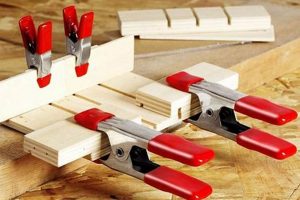
Tip 1: Choose Appropriately: The selection should correspond to the task’s specific requirements. Bar style devices are suitable for larger surfaces, while spring-loaded devices offer quick application for smaller components.
Tip 2: Distribute Pressure Evenly: Uneven force can lead to warping or damage. Employ caulsprotective blocks of woodto spread the pressure. This is especially crucial with delicate stock.
Tip 3: Protect Surfaces: Direct contact can mar the wood. Use pads made of cork, leather, or soft wood between the jaws and the workpiece.
Tip 4: Avoid Over-Tightening: Excessive pressure does not necessarily result in a stronger bond and can, in fact, weaken the joint or damage the material. Apply only the force necessary to close the joint.
Tip 5: Maintain Proper Alignment: Prior to tightening, ensure that all components are correctly positioned. Misalignment locked in place is difficult to correct and can compromise the structural integrity.
Tip 6: Inspect Regularly: Periodically check for wear, damage, or corrosion. Clean and lubricate moving parts to ensure smooth operation and prevent premature failure.
Tip 7: Store Methodically: Organization prolongs their lifespan and improves accessibility. Designate a specific location for storage, ideally a rack or cabinet, to prevent damage and facilitate selection.
Adherence to these recommendations optimizes performance and extends the lifespan of the equipment. Proper technique ensures quality and minimizes the potential for errors.
The subsequent section offers a detailed examination of various types of these tools and their applications.
1. Pressure Distribution

Effective pressure distribution is paramount to the function of the a collection designed for holding wood. Unevenly applied force, a consequence of improperly utilized tools within the collection or inadequate distribution methods, introduces the potential for workpiece deformation, compromised joint integrity, and ultimately, structural failure. The primary objective is to exert consistent, uniform pressure across the entire bonding surface, facilitating intimate contact between the joining pieces. As an example, when constructing a frame and panel door, bar style devices applied without consideration for equal force distribution across the stiles and rails can result in a warped or twisted frame, requiring significant rework or complete reconstruction.
Utilizing caulsspecifically shaped auxiliary pieces of woodbetween the tool’s jaws and the workpiece represents a common strategy for optimizing the allocation of force. These cauls, often custom-fabricated to match the contours of the project, mitigate point loading and ensure the force is spread evenly. Furthermore, the strategic placement of several devices from the collection is often preferable to relying on a single, over-tightened implement. This approach minimizes the risk of localized stress and promotes a more balanced application of force. The composition and compressibility of the material being worked also necessitates careful consideration of how pressure impacts the final product.
In summary, pressure distribution is an inextricable element of successful implementation. The proper application and thoughtful arrangement prevents project-compromising stress points. This foundational understanding of force dynamics, coupled with the judicious selection and application of appropriate implements from the collection, contributes directly to the construction of durable, aesthetically pleasing, and structurally sound woodworking projects. Neglecting this fundamental principle increases the likelihood of project failure and necessitates a greater investment of time and resources in rectifying resulting imperfections.
2. Joint Alignment

Precise joint alignment constitutes a critical objective in woodworking, and the implements within a collection designed for this purpose serve as indispensable tools in achieving this goal. Incorrect alignment during assembly inevitably leads to structural weaknesses, aesthetic imperfections, and compromised functionality. The collection’s ability to maintain the precise positioning of components until a permanent bond is established directly impacts the overall quality and longevity of the finished piece. For instance, constructing a cabinet door requires the stiles and rails to be perfectly square before the glue cures; a misalignment, even slight, will result in a door that does not sit flush within the frame, impacting both its visual appeal and operational efficacy. The implements provide the external force necessary to counteract internal stresses within the wood itself, thereby ensuring the joint remains true throughout the bonding process.
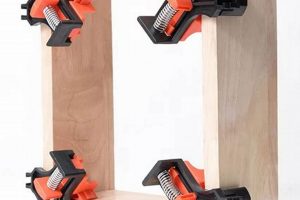
Different joinery methods, such as mortise and tenon, dovetails, or rabbets, each present unique alignment challenges. The choice of device and its application technique must be tailored to the specific joint type. Mitered corners, for example, often necessitate specialized corner devices to ensure precise angular alignment. Furthermore, the application of these tools must consider potential movement or slippage during tightening; pre-drilling pilot holes for screws or using dowels can provide additional stability. The material’s inherent properties, such as grain direction and moisture content, can also influence its behavior under pressure, requiring careful monitoring and adjustment during the alignment process.
In summation, joint alignment is inextricably linked to the successful utilization of a collection designed for such wood working. Achieving accurate alignment necessitates a thorough understanding of joint mechanics, appropriate tool selection, and meticulous application techniques. Neglecting alignment invariably results in compromised structural integrity and diminished aesthetic appeal. The value, therefore, of a comprehensive understanding and precise application cannot be overstated.
3. Material Compatibility
Material compatibility is a crucial factor when utilizing any collection of clamping tools in woodworking. The interaction between the tool’s components and the wood dictates the success of the assembly process. Direct contact between steel jaws and softwoods, for instance, can cause indentation or marring of the surface. Conversely, applying excessive pressure with rigid jaws on brittle materials like certain hardwoods or composites can induce cracking or crushing. The selection of appropriate jaw pads or cushioning materials becomes paramount to prevent damage to the workpiece. Different species of wood react differently to the pressure exerted; denser, harder species are less susceptible to damage than softer, more porous species.
In practical application, utilizing a set of clamps with rubber or cork pads when working with veneers or delicate inlays becomes essential. This mitigates the risk of leaving impressions or causing delamination of the veneer layers. The chemical composition of the adhesive used in conjunction with can also affect material compatibility. Certain adhesives can react negatively with the materials used in the construction of the tools, causing corrosion or degradation. Similarly, prolonged contact between wet wood and untreated metal can lead to staining or discoloration of the wood surface. Consider the use of clamps with non-reactive coatings or rust-resistant materials, especially when working with moisture-sensitive woods.
Ultimately, a thorough understanding of material properties and potential interactions enables the selection of implements and techniques that safeguard the integrity of the woodworking project. Failing to consider this aspect can result in cosmetic damage, structural weaknesses, and ultimately, project failure. Awareness of material compatibility is therefore integral to achieving professional-quality results and ensuring the longevity of the finished piece.
4. Adjustability Range

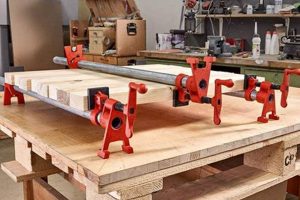
Adjustability range directly influences the versatility of a woodworking collection designed for holding wood. A limited range restricts the types and sizes of projects that can be undertaken. Conversely, a broad adjustability spectrum enables the user to accommodate a greater diversity of workpieces, from small, intricate components to large, expansive assemblies. For example, a set primarily composed of small spring-clamps is ill-suited for assembling a large tabletop, whereas a collection featuring long bar clamps and adjustable pipe clamps would be more appropriate. The ability to modify the tool’s reach and holding capacity expands its utility across numerous woodworking applications, minimizing the need for multiple specialized sets.
The design of the implement dictates its adjustability. Screw-type mechanisms offer fine-tuned control over pressure and placement, while quick-release mechanisms facilitate rapid adjustments for efficiency in repetitive tasks. Ratcheting mechanisms offer incremental increases in clamping pressure, which is useful in managing delicate pieces. The ideal collection includes a variety of designs with different adjustability features to meet the demands of diverse projects. A comprehensive grasp of these mechanisms allows the woodworker to select the appropriate tool for each specific task, optimizing both precision and speed.
In summary, adjustability range is a critical determinant of a well-rounded collection’s practical value. It facilitates adaptability to various project requirements, enhancing efficiency and reducing the likelihood of needing multiple specialized implements. Selecting a set with a suitable adjustability range is an essential consideration for any woodworker seeking to maximize versatility and minimize investment in redundant tooling.
5. Durability
Durability, in the context of a woodworking clamp set, represents the capacity of individual tools and the set as a whole to withstand prolonged use, repeated stress, and environmental factors without significant degradation in performance or structural integrity. It is a fundamental attribute that directly affects the long-term value and cost-effectiveness of such a set.
- Material Composition and Construction
The materials used in the construction of the clamp set profoundly impact its durability. High-quality steel alloys, resistant to corrosion and deformation, are essential for the frame, jaws, and threaded components. Furthermore, robust construction techniques, such as reinforced joints and precise machining, contribute to the tool’s ability to withstand the repetitive application of force and the potential for accidental impacts. Sets constructed with inferior materials or sloppy manufacturing processes are prone to premature failure, rendering them unreliable and potentially hazardous.
- Resistance to Corrosion and Environmental Factors
Woodworking environments often expose tools to moisture, solvents, and wood adhesives, all of which can accelerate corrosion and degradation. A durable set features protective coatings or is fabricated from materials inherently resistant to these elements. Chrome plating, powder coating, or the use of stainless steel can significantly extend the lifespan of the tools by preventing rust and chemical damage. Neglecting this aspect of durability leads to compromised performance, such as seized threads or weakened joints, ultimately reducing the set’s usefulness and requiring frequent replacements.
- Load Capacity and Structural Integrity
A durable set exhibits a high load capacity, reflecting its ability to withstand substantial clamping forces without deformation or failure. The structural integrity of the frame and jaws is critical in maintaining consistent pressure and ensuring accurate joint alignment. Sets with inadequate load capacities are susceptible to bending, cracking, or stripping of threads under stress, compromising the quality of the woodworking project and potentially causing injury. Regular inspection and adherence to recommended load limits are essential for preserving the durability of a set.
- Maintenance and Repairability
The ease of maintenance and the availability of replacement parts contribute to the overall durability. A well-designed set facilitates cleaning, lubrication, and the occasional replacement of worn components. Accessible spare parts extend the tool’s lifespan and minimize downtime. Sets that are difficult to maintain or are rendered obsolete by a lack of replacement parts represent a less durable investment, requiring complete replacement upon encountering even minor issues.
The facets of material, environmental resistance, load capacity, and maintainability are all crucial contributors to a clamp set’s lifespan. Neglecting any of these aspects degrades the long-term value of the woodworking implements. Investing in a durable set constitutes a prudent approach, ensuring reliable performance and a sustained return on investment over numerous projects.
Frequently Asked Questions
The following addresses common inquiries regarding the selection, use, and maintenance of woodworking holding implement collections.
Question 1: What constitutes a comprehensive set for general woodworking applications?
A foundational set should include bar style devices of varying lengths (e.g., 6″, 12″, 24″, 36″), pipe style devices with extendable reach, spring style devices for quick application, and at least two corner holding devices for frames and boxes. This assortment accommodates diverse project requirements.
Question 2: How often should these tools be inspected and maintained?
A visual inspection prior to each use is recommended to check for damage, corrosion, or wear. A more thorough cleaning and lubrication should be performed at least quarterly, or more frequently with heavy use.
Question 3: What is the proper method for cleaning these tools?
Remove adhesive residue with a solvent-based cleaner and a stiff brush. Clean metal surfaces with a wire brush to remove rust. Lubricate moving parts with a light machine oil to prevent corrosion and ensure smooth operation.
Question 4: Is there a risk of damaging wood using excessive pressure?
Yes. Over-tightening can compress wood fibers, leading to indentations or even fractures. Apply only enough pressure to achieve a tight joint. Utilize cauls to distribute force evenly and protect surfaces.
Question 5: How do implement choices impact the success of specific joinery methods?
Certain joinery methods demand specific implements. Mitered corners benefit from corner holding devices, while dovetail joints often require handscrew devices to apply controlled pressure. Proper choice optimizes alignment and strength.
Question 6: What are the key indicators that a clamp should be replaced?
Replace holding implements exhibiting significant corrosion, bent frames, stripped threads, or cracked jaws. Continued use of damaged tools can compromise project quality and pose safety risks.
Proper selection, maintenance, and usage techniques are crucial for maximizing performance and prolonging the lifespan. A well-maintained collection is an invaluable asset to any woodworking endeavor.
The subsequent section will address recommended safety practices and precautions when using woodworking holding tools.
Woodworking Clamp Set
This exploration has underscored the crucial role that a woodworking clamp set plays in achieving precise, durable, and aesthetically pleasing results in woodworking projects. From ensuring even pressure distribution and accurate joint alignment to accommodating diverse materials and providing long-lasting reliability, the collection facilitates consistent, repeatable outcomes. Choosing the right implement for a given task, maintaining tools diligently, and understanding material properties are essential for maximizing its potential.
A thoughtful investment in a quality woodworking clamp set, coupled with a commitment to informed usage, ensures that woodworking endeavors are built on a solid foundation. The pursuit of excellence in woodworking demands not only skill and creativity but also a reliance on dependable implements that uphold the highest standards of craftsmanship. The long-term value is not merely in the completion of individual projects, but in the enduring quality of the completed objects and the satisfaction derived from their creation.
![Top-Rated: Best Quick Clamps for Woodworking Projects [2024] | Step-by-Step Guides, Tools & Inspiration to Build Beautiful Wooden Decor on a Budget](https://woodfromhome.com/wp-content/uploads/2026/04/th-264-300x200.jpg "Top-Rated: Best Quick Clamps for Woodworking Projects [2024] Step-by-Step Guides, Tools & Inspiration to Build Beautiful Wooden Decor on a Budget")