The array of tools utilized to sever wood fibers, primarily through the application of a toothed blade moved across the material, includes numerous designs tailored for specific tasks. These instruments can be manually operated, powered by electricity, or pneumatically driven, each providing different levels of precision, speed, and cutting capacity. For example, a fine-toothed backsaw offers exceptional control for joinery, while a circular saw facilitates rapid, straight cuts on larger stock.
The correct selection of a cutting tool is paramount for achieving optimal results and ensuring user safety. Historically, the evolution of these tools reflects advancements in metallurgy and engineering, leading to increased efficiency and versatility in woodworking practices. From rough shaping to intricate detailing, having the appropriate tool enhances both the quality and speed of project completion, minimizing material waste and reducing the risk of injury.
The following sections will delve into the characteristics and applications of various categories, encompassing both hand-powered and machine-powered models, including handsaws, backsaws, coping saws, jigsaws, circular saws, table saws, miter saws, and band saws. Each section will elaborate on their unique features, typical uses, and considerations for selecting the most suitable option for a given woodworking task.
Guidance on Selecting and Utilizing Cutting Implements for Wood
The selection and proper use of cutting implements are fundamental to successful woodworking. The following guidance offers insights to optimize efficiency, accuracy, and safety when engaging with these tools.
Tip 1: Blade Selection: Prioritize blade selection based on material and cut requirements. Finer teeth are suited for hardwoods and precise work, while coarser teeth excel on softer woods and rapid material removal. Carbide-tipped blades offer extended lifespan and are advantageous for hardwoods or abrasive materials.
Tip 2: Kerf Considerations: Acknowledge the kerf, the width of the cut produced. Thinner kerfs minimize material waste and require less power, particularly in hand-powered implements. Wider kerfs are often necessary for stability with power implements and when cutting thicker stock.
Tip 3: Safety Protocols: Adhere to stringent safety protocols. Employ appropriate personal protective equipment, including eye protection, hearing protection, and respiratory protection, as dictated by the implement and material. Secure workpieces firmly to prevent movement during cutting operations.
Tip 4: Maintenance Regimen: Implement a routine maintenance regimen. Sharpen blades regularly to maintain cutting efficiency and reduce strain on both the implement and the operator. Clean implements after each use to remove debris and prevent corrosion.
Tip 5: Understanding Grain Direction: Recognizing grain direction is critical in woodworking. Cutting with the grain generally produces a cleaner cut, while cutting against the grain can lead to tear-out. Adapting the cutting strategy according to grain orientation will improve the finish quality.
Tip 6: Implement-Specific Training: Secure implement-specific training. Each implement, from handsaws to power saws, possesses unique operational characteristics. Formal training or thorough familiarization with the operational manual is essential for safe and effective use.
Diligent application of these guidelines contributes to enhanced project outcomes and minimizes the potential for accidents. Precise material cutting is an indispensable aspect of woodworking, demanding careful planning and skilled execution.
The concluding section will summarize the key considerations presented, reinforcing the importance of informed implement selection and responsible operational practices.
1. Hand Saws

Hand saws represent a foundational category within the broader spectrum of woodworking saws. Their direct, human-powered operation allows for a heightened degree of control and tactile feedback during the cutting process. This attribute is particularly beneficial when executing intricate cuts, fine joinery, or working with delicate materials where power tools may introduce excessive force and potential for damage. A dovetail saw, for example, exemplifies this level of control, enabling precise cuts essential for creating robust and aesthetically pleasing joints. The absence of a motor also makes hand saws a viable option in situations where access to electricity is limited or noise reduction is a priority.
The diversity within the hand saw category itself is significant, encompassing tools designed for specific applications. Backsaws, characterized by a rigid spine, provide stability for accurate cuts. Coping saws, with their thin, replaceable blades, excel at cutting curves and intricate shapes. Crosscut saws are optimized for cutting perpendicular to the wood grain, while rip saws are designed to efficiently cut along the grain. The selection of the appropriate hand saw for a given task directly impacts the efficiency and quality of the final result. Misapplication of a saw type can lead to inaccurate cuts, material damage, and increased physical effort.
Understanding the connection between hand saws and the wider classification of woodworking cutting implements is crucial for informed tool selection and effective woodworking practices. While power tools offer speed and efficiency for certain tasks, hand saws remain indispensable for precision work, delicate operations, and situations where control and quiet operation are paramount. The hand saw’s enduring relevance highlights its continued importance in both traditional and contemporary woodworking contexts.
2. Powered Saws

Powered saws represent a significant subset within the comprehensive category of woodworking cutting implements. These tools employ electric or pneumatic power to drive a blade, enabling faster and more efficient material removal compared to manual saws. This capability is particularly advantageous for large-scale projects, repetitive tasks, or when working with thick or dense materials. Their integration into woodworking has revolutionized workflow and expanded the scope of possible projects.
- Circular Saws
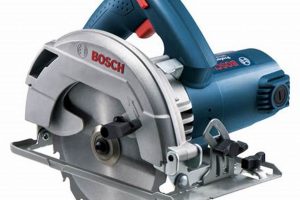
Circular saws are characterized by their rotating circular blade and are primarily utilized for straight cuts. They excel in ripping sheet goods, such as plywood, and crosscutting lumber. Variations include cordless models for portability and sidewinder or worm-drive configurations, impacting power and torque. The presence of a riving knife to prevent kickback is a critical safety feature.
- Table Saws
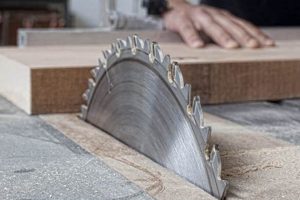
Table saws are stationary tools featuring a circular blade that protrudes through a table surface. They are highly versatile, capable of performing ripping, crosscutting, and dado cuts with appropriate blade changes and jigs. The integrated fence system allows for precise and repeatable cuts, making them a cornerstone of many woodworking shops. Safe operation necessitates adherence to proper blade height, fence alignment, and the use of push sticks or blocks.
- Miter Saws
Miter saws are designed for making precise angled cuts, primarily for trim work and joinery. Compound miter saws can cut both a miter angle and a bevel angle simultaneously, increasing their versatility. Laser guides and digital angle readouts enhance accuracy. Secure workholding and proper blade selection are essential for clean, splinter-free cuts.
- Band Saws
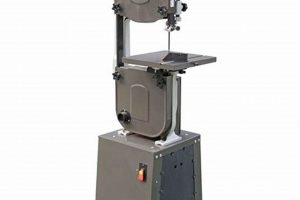
Band saws utilize a continuous loop blade to cut curves and irregular shapes. Their narrow blade width allows for intricate designs. They are also capable of resawing thicker stock into thinner pieces. Blade tension and guide alignment are critical for accurate cutting and preventing blade breakage. Variable speed control accommodates diverse materials and cutting requirements.
The selection of a powered saw is dictated by project requirements, material characteristics, and desired precision. While powered saws offer significant advantages in speed and efficiency, safety protocols must be strictly adhered to. Each powered cutting implement requires specific training and maintenance to ensure optimal performance and minimize the risk of injury. Their integration has expanded the possibilities of woodworking. The impact of these innovations on woodworking practices is undeniable, shaping both the speed and scale of project completion.
3. Blade Material
Blade material directly dictates a cutting implement’s performance and longevity, forming a critical component in the selection and application of various woodworking cutting implements. The choice of blade material influences cutting speed, precision, resistance to wear, and suitability for specific wood types. For instance, high-carbon steel blades, frequently found in hand saws, offer excellent sharpness and are relatively easy to resharpen. However, they are more prone to wear and corrosion compared to other materials, making them better suited for softer woods and requiring diligent maintenance to prevent degradation.
In contrast, carbide-tipped blades, commonly used in circular saws and table saws, exhibit superior hardness and abrasion resistance. These blades maintain their sharpness for extended periods, making them ideal for cutting hardwoods, abrasive materials like plywood, and engineered wood composites. While more expensive than steel blades, their extended lifespan and consistent performance often justify the increased initial investment. Diamond-coated blades represent another material choice, primarily employed for cutting extremely hard or abrasive materials, such as tile or certain plastics, which can quickly dull traditional blades. The material characteristics and tools purpose guide material selection.
Therefore, understanding the connection between blade material and the type of woodworking cutting implement is essential for achieving optimal cutting results and maximizing tool lifespan. Matching the blade material to the intended application ensures efficient cutting, minimizes the risk of damage to the workpiece or the implement, and promotes safe woodworking practices. The appropriate selection of blade material is therefore a critical element in the overall effectiveness and efficiency of any woodworking operation. The material of blade can give the user safety and effective usage to woodworking saws.
4. Tooth Configuration
Tooth configuration is a critical determinant of performance across woodworking cutting implements. The geometry of the teeth, encompassing factors such as tooth pitch, rake angle, and gullet depth, directly influences cutting speed, smoothness, and the type of material best suited for a particular saw. For instance, rip saws, designed for cutting along the grain, typically feature teeth with a more aggressive rake angle to efficiently sever long wood fibers. This configuration, however, is ill-suited for crosscutting, which demands a different tooth geometry to cleanly sever fibers perpendicular to the grain.
The number of teeth per inch (TPI) also significantly affects the quality of the cut. A higher TPI results in a smoother finish, ideal for fine woodworking and joinery. Conversely, a lower TPI facilitates faster material removal but produces a rougher cut. Consider the differing applications of a fine-toothed dovetail saw versus a coarse-toothed panel saw; the tooth configuration is precisely tailored to the intended task. Moreover, specialized tooth patterns, such as those found on some miter saw blades, are designed to minimize tear-out when cutting delicate trim or molding. The variety across different woodworking saws is directly related to teeth configuration, which offers the best results for woodworking.
Ultimately, understanding tooth configuration is essential for selecting the appropriate tool for a given woodworking task and optimizing cutting performance. A mismatched tooth configuration can lead to inefficient cutting, material damage, and increased user fatigue. Thus, informed selection of a implement based on its tooth design is a crucial aspect of effective woodworking. Selecting teeth configuration to each woodworking saw is very important.
5. Cut Type

The type of cut required fundamentally dictates the selection of the appropriate woodworking cutting implement. Different implements are designed and optimized for specific cutting tasks, rendering a universal tool unsuitable for all scenarios. Failure to align the implement with the intended cut type results in diminished efficiency, reduced accuracy, increased material waste, and potential safety hazards. For example, attempting a rip cut with a crosscut saw leads to labored progress and a subpar finish, whereas employing a coping saw for a straight cut across a wide board is impractical and inefficient.
The distinction between rip cuts and crosscuts exemplifies this relationship. Rip cuts, performed parallel to the wood grain, require a tooth geometry optimized for severing long fibers. Rip saws and table saws equipped with ripping blades are designed for this task. Crosscuts, conversely, are executed perpendicular to the grain, necessitating a tooth configuration that cleanly severs fibers at the end grain. Crosscut saws, miter saws, and circular saws with crosscut blades are tailored for this purpose. Furthermore, specialized cuts, such as curves, dados, rabbets, and dovetails, demand specific implements like band saws, routers, or dovetail saws, each uniquely designed to achieve the desired geometry and precision. Some blades and saws allow for doing these complex joints.
In summary, the intended cut type is a primary determinant in the selection process. Recognizing the distinct requirements of each cut and matching them with the appropriate cutting tool is essential for efficient, accurate, and safe woodworking practices. This understanding forms a cornerstone of effective woodworking, enabling practitioners to achieve optimal results and minimize the risks associated with improper tool usage. The selection of saw related to different type of cuts offers the effective and efficient result.
Frequently Asked Questions
This section addresses common inquiries regarding the selection, application, and maintenance of woodworking cutting implements. The information presented aims to provide clarity and guidance for woodworkers of all skill levels.
Question 1: What is the primary difference between a rip saw and a crosscut saw?
The principal distinction lies in their tooth geometry. Rip saws are designed to cut along the grain of the wood, featuring teeth with a more aggressive angle for efficient fiber severance. Crosscut saws, intended for cutting perpendicular to the grain, possess teeth configured for cleaner cuts across wood fibers.
Question 2: When is it appropriate to use a hand saw instead of a power saw?
Hand saws are advantageous when precision, control, and delicate material handling are paramount. They are also suitable for situations where access to electricity is limited or noise reduction is desired.
Question 3: What safety precautions should be observed when operating a table saw?
Essential safety measures include wearing appropriate eye and ear protection, utilizing push sticks or blocks to keep hands away from the blade, ensuring proper blade height and fence alignment, and understanding the risks of kickback.
Question 4: How does the number of teeth per inch (TPI) affect the cut quality?
A higher TPI results in a smoother finish, making it suitable for fine woodworking. A lower TPI allows for faster material removal but produces a rougher cut. Selection should be based on the desired finish and the material being cut.
Question 5: What are the benefits of using carbide-tipped blades?
Carbide-tipped blades offer superior hardness and abrasion resistance, maintaining sharpness for extended periods compared to steel blades. They are particularly advantageous when working with hardwoods or abrasive materials.
Question 6: How often should blades be sharpened?
The frequency of sharpening depends on usage and the type of material being cut. Blades should be sharpened when they exhibit decreased cutting efficiency, require increased force to operate, or produce rough or uneven cuts. Regular maintenance prolongs blade life and improves performance.
Understanding these fundamental aspects of cutting implements promotes safer and more efficient woodworking practices. Knowledgeable tool selection and diligent maintenance are crucial for achieving optimal results.
The next section provides a concluding summary of the key considerations discussed throughout this article.
Conclusion
The comprehensive survey of woodworking saws different types reveals a complex landscape of tools, each uniquely suited for specific tasks. Selection hinges upon a careful evaluation of material properties, cut requirements, and desired precision. Ignoring these factors leads to compromised results and potential safety hazards. The differentiation extends beyond mere categorization into hand-powered and machine-powered implements, encompassing variations in blade material, tooth configuration, and intended application.
Proficient utilization demands a thorough understanding of these nuances. Mastery of woodworking necessitates a commitment to continuous learning and a dedication to safe operational practices. As technology advances, further innovations in cutting implements are anticipated, requiring ongoing adaptation and informed decision-making from woodworking professionals and enthusiasts alike.