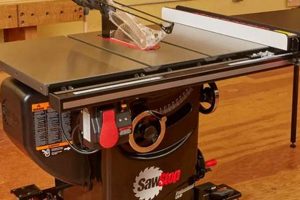
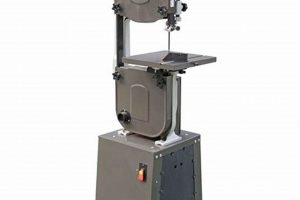
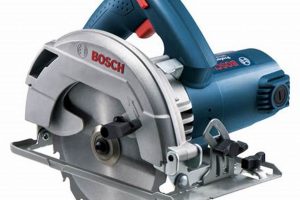
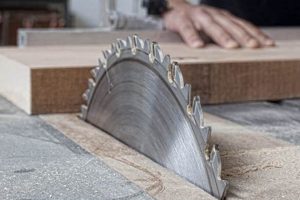
A crucial component in shaping timber, a toothed disc or band is employed to cut through wood. This cutting tool comes in a variety of forms, each designed for specific applications, ranging from rough carpentry to fine joinery. For instance, a circular model with large teeth is often used for quickly ripping boards, while a thin, fine-toothed blade is better suited for creating smooth, precise cuts in delicate materials.
This tool’s effectiveness directly impacts the quality and efficiency of woodworking projects. Selecting the correct type improves cut accuracy, minimizes material waste, and enhances overall safety. Throughout history, advancements in metallurgy and design have led to increasingly durable and precise cutting implements, transforming the craft and allowing for more intricate and complex woodworking.
The selection, use, and maintenance of these cutting implements will be further explored in the following sections. Considerations for material type, tooth geometry, and optimal operating speed are important factors in achieving desired results. Finally, safe handling practices and proper sharpening techniques will be discussed to ensure longevity and consistent performance.
Essential Guidance for Optimized Cutting
The following guidelines aim to improve the performance and lifespan of circular and band-style implements used to cut wood. Adhering to these practices contributes to enhanced precision, reduced material waste, and improved safety within the woodworking environment.
Tip 1: Blade Selection Based on Material. Choose a blade specifically designed for the type of wood being cut. Hardwoods necessitate blades with a higher tooth count and specialized tooth geometry to prevent tear-out, while softwoods can generally be cut with blades designed for faster material removal.
Tip 2: Inspect Blades Before Each Use. Thoroughly examine the blade for any signs of damage, such as missing teeth, cracks, or warping. Using a damaged blade can lead to inaccurate cuts, increased vibration, and potential workpiece kickback.
Tip 3: Match Speed to Material and Blade. Adjust the cutting speed according to the material and the blade’s specifications. Overheating can occur when operating at excessively high speeds, reducing the blade’s temper and overall lifespan. Slower speeds may be required for dense hardwoods or thicker stock.
Tip 4: Utilize Proper Blade Stabilization. Employ blade stabilizers or stiffeners, particularly when cutting thin or flexible materials. This minimizes vibration and ensures a cleaner, more accurate cut.
Tip 5: Implement Dust Collection Systems. Efficient dust collection is crucial for maintaining visibility and preventing the accumulation of sawdust, which can impede cutting performance and pose health hazards. Regularly clean the blade and surrounding area to remove any debris.
Tip 6: Practice Proper Cutting Technique. Feed the material into the blade at a consistent rate, avoiding sudden stops or changes in pressure. This minimizes the risk of kickback and ensures a smooth, even cut.
Tip 7: Regular Sharpening and Maintenance. Sharpen blades regularly to maintain optimal cutting performance. Dull blades require more force, increasing the risk of kickback and producing rougher cuts. Consider professional sharpening services for complex blade geometries.
Adherence to these guidelines will lead to increased tool longevity, improved project outcomes, and a safer woodworking experience. Diligent application of these principles is essential for professionals and hobbyists alike.
The following sections will delve into advanced cutting techniques and safety protocols to further refine woodworking practices.
1. Material Composition

The material composition of a woodworking saw blade directly dictates its performance, durability, and suitability for various wood types and cutting tasks. Selecting a blade with an appropriate material ensures efficient cutting, reduces wear, and enhances safety. The following facets explore the influence of different materials used in blade manufacturing.
- High-Speed Steel (HSS)
HSS blades are characterized by their high hardness and resistance to wear at elevated temperatures, making them suitable for general-purpose woodworking. Historically prevalent, HSS offers a balance of affordability and performance. However, they tend to dull more quickly than carbide-tipped alternatives, requiring more frequent sharpening. In practice, HSS blades are commonly used for cutting softer woods and non-abrasive materials where extreme durability is not a primary concern.
- Carbide-Tipped
Carbide-tipped blades feature teeth made of extremely hard tungsten carbide brazed onto a steel body. This composition provides exceptional wear resistance, allowing for prolonged use and the ability to cut hardwoods, plywood, and abrasive materials like particleboard. While more expensive than HSS blades, their increased lifespan and superior cutting performance often justify the investment, particularly for professional woodworkers and high-volume applications. The implications of using carbide-tipped blades extend to improved cut quality and reduced downtime for blade changes.
- Diamond-Tipped
Diamond-tipped blades represent the pinnacle of abrasive cutting technology. Employing industrial diamonds bonded to a steel core, these blades exhibit unmatched hardness and durability. Primarily used for cutting highly abrasive materials such as fiber cement, composites, and certain types of plastic laminates, diamond-tipped blades are essential in applications where other blade materials would rapidly degrade. Although costly, their extended lifespan and consistent performance make them a cost-effective solution for specialized cutting tasks.
- Bi-Metal Construction
Bi-metal blades combine the flexibility and toughness of high-speed steel with the wear resistance of harder alloys. This construction technique typically involves welding a strip of HSS, often with a high cobalt content, to a more flexible steel backing. The result is a blade that is less prone to breakage and can withstand greater stress and vibration. Bi-metal blades are commonly used in reciprocating saws and bandsaws for cutting a variety of materials, including wood, metal, and plastic, providing a versatile option for demanding applications.
In conclusion, the material composition of a woodworking saw blade critically influences its performance characteristics, determining its suitability for specific tasks and materials. The choice of HSS, carbide-tipped, diamond-tipped, or bi-metal construction should be based on a thorough understanding of the intended application, considering factors such as wood hardness, cutting frequency, and budget constraints. Selecting the right material is paramount to achieving optimal cutting efficiency and ensuring the longevity of the tool.
2. Tooth Geometry

Tooth geometry, referring to the shape, angle, and arrangement of the cutting edges, is a critical determinant of a saw blade’s performance in woodworking. The configuration of teeth directly influences the efficiency of material removal, the quality of the cut surface, and the blade’s susceptibility to vibration and kickback. Different tooth designs are optimized for specific tasks and material properties. For example, a blade with a high tooth count and a shallow hook angle produces a smoother finish, ideal for crosscutting hardwoods, while a blade with fewer teeth and a more aggressive hook angle is better suited for ripping softwoods quickly.
The impact of tooth geometry is evident in various woodworking applications. Blades designed for cutting plywood often feature alternating top bevel (ATB) teeth to minimize splintering of the veneer layers. Similarly, blades used for cutting melamine or laminate materials incorporate a triple chip grind (TCG) to prevent chipping and ensure a clean edge. Understanding the relationship between tooth geometry and material properties allows woodworkers to select the appropriate blade for the task, optimizing cutting speed, accuracy, and surface finish. Furthermore, proper tooth geometry contributes to operator safety by reducing the likelihood of kickback, a potentially dangerous situation where the workpiece is ejected forcefully from the saw.
In summary, tooth geometry is an indispensable factor in the design and selection of woodworking saw blades. Its influence extends from cutting performance and material compatibility to safety considerations. Failure to appreciate the impact of tooth geometry can result in suboptimal cutting results, increased material waste, and heightened risk of injury. A thorough understanding of these principles is therefore essential for anyone engaged in woodworking, whether as a professional or hobbyist.
3. Blade Diameter

The dimension across a circular cutting implement significantly influences its operational characteristics. In woodworking, this parameter directly correlates with the maximum cutting depth achievable. A larger diameter facilitates the severing of thicker stock, while a smaller diameter is often selected for portable or specialized tools where maneuverability is prioritized over sheer cutting capacity. The choice of diameter is therefore dictated by the nature and scale of the intended woodworking project.
Furthermore, blade diameter impacts the peripheral speed, given a constant rotational velocity of the driving motor. Greater diameters inherently yield higher surface speeds, influencing the rate of material removal and the resulting cut quality. For instance, a table saw designed for ripping large panels typically utilizes a 10-inch or 12-inch blade to maintain adequate surface speed and cutting efficiency. Conversely, a smaller 6-inch or 7-inch blade on a miter saw may suffice for finer crosscuts and trim work where precision is paramount. Mismatched diameter relative to tool power can induce motor strain, premature wear, or suboptimal performance.
Ultimately, understanding the interplay between diameter, cutting depth, and surface speed is crucial for selecting the appropriate cutting implement. Incorrect selection not only limits the versatility of the tool but also compromises safety and efficiency. Woodworkers must carefully consider the requirements of each task and select the diameter accordingly, taking into account the tool’s power rating, material thickness, and desired cut quality. Diligent consideration of these factors is essential for achieving professional results and ensuring safe operation.
4. Kerf Width
The kerf, defined as the width of the cut produced by a woodworking saw blade, is a critical parameter influencing material yield, joint precision, and overall project quality. Its dimension directly impacts the fit and accuracy of woodworking assemblies and represents a tangible loss of material during the cutting process.
- Material Yield Optimization
Kerf width directly affects the amount of usable material remaining after cutting. A wider kerf results in a greater volume of material being converted into sawdust, thus reducing the overall yield from a given piece of stock. This is particularly important in projects where material costs are significant or when working with rare or exotic woods. Minimizing the kerf width, through the selection of appropriate cutting implements, maximizes material utilization and reduces waste.
- Joint Precision and Fit
The kerf affects the accuracy of joints and the overall fit of woodworking projects. When designing and cutting joinery, such as tenons or dadoes, the kerf must be precisely accounted for to ensure proper alignment and structural integrity. Inaccurate kerf considerations can lead to loose or misaligned joints, compromising the strength and aesthetics of the finished piece. Precise measurement and consistent kerf width are therefore essential for achieving professional-quality joinery.
- Blade Stability and Vibration
Kerf width is inherently linked to blade thickness, influencing its stability during operation. Thicker blades, associated with wider kerfs, generally exhibit greater resistance to vibration and deflection, particularly when cutting dense or abrasive materials. This stability contributes to cleaner, straighter cuts and reduces the likelihood of blade wander or chatter. However, excessively thick blades can generate more heat and require greater power from the saw motor. A balance must be struck between kerf width, blade stability, and cutting performance.
- Material-Specific Considerations
The ideal kerf width often depends on the type of material being cut. For example, when working with thin veneers or delicate hardwoods, a narrow-kerf blade is preferred to minimize tear-out and reduce the risk of splitting. Conversely, when cutting thicker stock or materials prone to binding, a slightly wider kerf can prevent the blade from pinching and ensure smooth, controlled cutting. Consideration of material properties is therefore crucial when selecting the appropriate blade and kerf width.
In summary, the kerf is a fundamental attribute impacting several critical aspects of woodworking. Optimizing it involves carefully balancing factors such as material yield, joint precision, blade stability, and material-specific requirements. A thorough understanding of the kerf and its implications is essential for achieving efficient and accurate results in a wide range of woodworking applications.
5. Arbor Size
Arbor size, the diameter of the center hole on a woodworking saw blade, directly determines compatibility with the saw’s spindle. Correct matching of these dimensions is paramount for secure blade mounting and safe operation. A blade with an undersized arbor hole cannot be mounted, while an oversized hole introduces play, leading to vibration, inaccurate cuts, and potential blade failure. Manufacturers adhere to standardized arbor sizes, such as 5/8 inch for many table saws and miter saws, ensuring interchangeability within specified tool categories. The practical consequence of ignoring arbor size specifications is severe, ranging from damaged equipment to potential operator injury.
Adaptations, such as adapter rings, exist to permit using blades with larger arbor holes on saws with smaller spindles. However, this approach introduces additional points of potential failure and is generally discouraged for high-precision work. Selecting blades with the correct arbor size inherently simplifies the mounting process and ensures optimal stability. For example, using a blade intended for an angle grinder (typically with a 7/8 inch arbor) on a table saw (typically requiring a 5/8 inch arbor) without proper adapters is a demonstrably unsafe practice, inviting uncontrolled blade movement and material kickback. The physical integration of the blade onto the tool is entirely dependent on this fundamental size parameter.
In summary, arbor size is a non-negotiable factor in woodworking saw blade selection. Adherence to specified dimensions is crucial for maintaining operational safety and accuracy. While adapters may offer limited flexibility, prioritizing direct compatibility between blade and saw spindle is the best practice. This simple yet critical detail underpins the entire cutting process, ensuring the tool performs as intended and the operator remains safe from potential hazards.
6. Rotation Speed

Rotational velocity, measured in revolutions per minute (RPM), exerts a substantial influence on the performance and safety of any tool employing a circular cutting implement for timber processing. Matching the RPM to the specific blade characteristics and material properties is paramount for achieving optimal cutting efficiency and minimizing hazards.
- Material Hardness and Heat Generation
Higher RPMs generate increased frictional heat. While appropriate for rapidly cutting softer woods, excessive speeds when processing dense hardwoods can lead to blade overheating, causing temper loss and premature dulling. Consequently, adjusting the RPM based on material hardness becomes essential for preserving blade integrity and achieving clean cuts. Examples include reducing the RPM for cutting oak or maple compared to pine or fir.
- Blade Diameter and Peripheral Speed
Peripheral speed, the linear velocity of the cutting edge, is a product of RPM and blade diameter. Larger diameter blades, at the same RPM, exhibit higher peripheral speeds. Exceeding the blade’s recommended peripheral speed limit can induce vibration, instability, and potential blade rupture. Adherence to the manufacturer’s RPM recommendations, considering the diameter of the cutting implement, is critical for safe operation. A 12-inch blade requires a lower RPM than a 7.25-inch blade for equivalent peripheral speed.
- Tooth Geometry and Feed Rate
Tooth geometry, including tooth count and rake angle, is optimized for specific RPM ranges. Running a blade outside its intended RPM range can lead to inefficient cutting, increased tear-out, or excessive binding. Slower RPMs may necessitate a reduced feed rate to prevent stalling, while excessively high RPMs can cause the teeth to chatter or skip across the workpiece. Matching RPM to tooth design and adjusting feed rate accordingly ensures smooth, controlled cutting.
- Dust Extraction and Visibility
Rotational velocity affects the efficiency of dust extraction. Higher RPMs tend to generate more airborne sawdust, potentially compromising visibility and increasing the risk of respiratory hazards. Effective dust collection systems, coupled with appropriate RPM settings, are necessary to maintain a clean and safe working environment. Lowering the RPM may reduce airborne dust, improving visibility during intricate cuts.
These facets underscore the complex relationship between RPM, cutting implement characteristics, and material properties. Skillful adjustment of rotational velocity, guided by an understanding of these interdependencies, is essential for maximizing the effectiveness and safety of woodworking operations. Deviation from recommended RPM ranges can lead to suboptimal results, accelerated tool wear, and increased risk of accidents. Therefore, diligent attention to this parameter is crucial for both novice and experienced woodworkers.
Frequently Asked Questions
The following section addresses common queries and misconceptions regarding woodworking saw blades. This information aims to provide clarity and promote safe, efficient practices.
Question 1: What distinguishes a rip blade from a crosscut blade?
Rip blades are designed to cut along the grain of wood, featuring teeth with a more aggressive angle for efficient material removal. Crosscut blades, conversely, are optimized for cutting across the grain, employing teeth with a shallower angle to minimize splintering and produce a smoother finish.
Question 2: How frequently should woodworking saw blades be sharpened?
Sharpening frequency depends on usage, material cut, and blade quality. Dull blades require more force, increasing the risk of kickback and producing rough cuts. Regular inspection is critical; resharpening is warranted when cutting performance noticeably degrades or the blade exhibits signs of damage.
Question 3: Is it safe to use a blade with missing teeth?
No. Operating with a deficient blade compromises stability and increases the likelihood of workpiece ejection, uneven cuts, and tool damage. A blade with missing teeth should be immediately removed from service and either repaired or replaced.
Question 4: What is the significance of the blade’s kerf width?
The kerf, or width of the cut, directly influences material yield and joint precision. A narrower kerf minimizes material waste, while accurate kerf measurement is essential for achieving tight, well-fitted joints. Select the appropriate blade based on material and project requirements.
Question 5: Can any blade be used on any woodworking saw?
No. Compatibility is dictated by arbor size, blade diameter, and tool power. Mismatched blades pose a serious safety risk and can damage the saw. Always consult the tool’s manual for approved blade specifications.
Question 6: What safety precautions are essential when working with blades?
Always wear appropriate personal protective equipment, including eye and ear protection. Ensure the blade is properly mounted and secured. Never reach across a spinning blade. Disconnect power before making adjustments. Familiarize oneself with the tool’s operation and safety features.
These answers provide foundational knowledge for responsible woodworking. Prioritizing safety and selecting appropriate tools enhances project outcomes and minimizes potential risks.
The next section will cover troubleshooting tips and advanced cutting techniques.
In Summary
This discourse has methodically examined the pivotal role of the woodworking saw blade within timber shaping processes. The multifaceted aspects of material composition, tooth geometry, blade diameter, kerf width, arbor size, and rotation speed have been delineated to provide a comprehensive understanding of their influence on cutting efficiency, safety, and project outcomes. Selecting and maintaining these implements appropriately is essential for all woodworking endeavors.
The insights presented herein should serve as a foundation for informed decision-making, leading to optimized tool utilization, reduced material waste, and enhanced workplace safety. Continued vigilance in blade selection, maintenance, and operational practices will not only contribute to improved project quality but also foster a safer and more productive woodworking environment. Seek expert consultation when uncertainty arises, prioritizing precision and safety at all times.