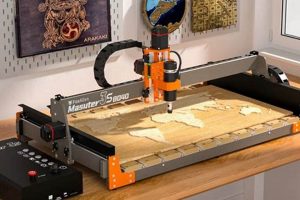
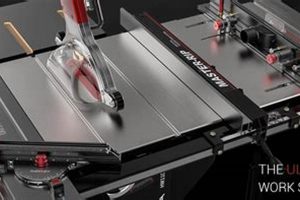
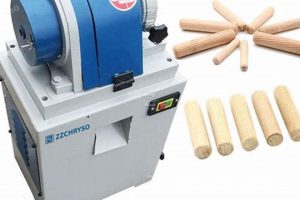
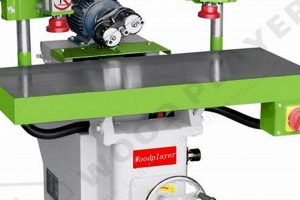
This equipment is employed in the finishing stages of woodcraft to refine surfaces and impart a smooth, lustrous sheen. These devices utilize abrasive materials, often in the form of pads, wheels, or belts, to remove imperfections and enhance the aesthetic appeal of wooden objects. For instance, a cabinet maker might use this type of machinery to prepare a newly constructed piece for staining or varnishing.
The application of mechanized finishing processes offers numerous advantages within woodworking industries. It increases efficiency compared to manual methods, allowing for faster production times and consistent results. Historically, achieving a polished finish was a labor-intensive task. The introduction of automated systems has revolutionized the process, improving both the quality and quantity of finished products. Furthermore, the machinery contributes to improved safety for operators by minimizing exposure to dust and repetitive motions.
The subsequent sections will detail specific types of these devices, their operational principles, appropriate safety measures, and best practices for achieving optimal results. This analysis will explore the selection criteria for choosing the appropriate machine, maintenance procedures, and common troubleshooting scenarios.
Operating Principles for Wood Finishing Machinery
The following guidance addresses essential operational aspects concerning powered equipment designed for surface refinement of wooden materials. Adherence to these principles fosters optimal outcomes and preserves equipment longevity.
Tip 1: Abrasive Selection: The choice of abrasive material directly influences the final surface quality. Progressively finer grits should be employed to minimize scratching and achieve a uniform polish. Example: Start with 120-grit sandpaper to remove imperfections, followed by 220-grit and finally 320-grit or higher for smoothing.
Tip 2: Speed Regulation: Adjust the rotational speed of the polishing component to match the material characteristics and the desired finish. Excessive speed can generate excessive heat, potentially scorching the wood or damaging the abrasive. Harder woods may tolerate slightly higher speeds than softwoods.
Tip 3: Consistent Pressure: Maintain uniform pressure across the workpiece during operation. Inconsistent pressure can lead to uneven polishing and surface irregularities. A steady, light to medium pressure is generally recommended.
Tip 4: Dust Extraction: Implement a robust dust extraction system. Airborne wood dust poses both a health hazard and interferes with the polishing process. Effective dust collection minimizes particulate contamination and enhances visibility.
Tip 5: Machine Maintenance: Regularly inspect and maintain the equipment. Check belts, bearings, and abrasive pads for wear or damage. Timely replacement of worn components ensures consistent performance and prevents equipment failure.
Tip 6: Workpiece Preparation: Ensure the workpiece is free from loose debris, splinters, or other contaminants prior to commencing the polishing process. These imperfections can become embedded in the abrasive and mar the surface.
Tip 7: Controlled Environment: Operate the machinery in a controlled environment with adequate ventilation. Proper ventilation helps dissipate heat generated by the friction of the polishing process and removes airborne particles.
These procedures are intended to maximize the effectiveness of mechanized finishing techniques and to promote operator safety. Correct application contributes significantly to the creation of high-quality, professionally finished wooden products.
The next phase will discuss potential problems and practical troubleshooting strategies that can occur during use.
1. Abrasive Grade
Abrasive grade, defined by its grit size, is a fundamental parameter directly influencing the surface refinement process within woodworking operations utilizing mechanical polishing equipment. Selection of an appropriate abrasive grade dictates the rate of material removal, surface smoothness, and the final aesthetic qualities of the workpiece.
- Coarse Grits (e.g., 60-80 grit)
Coarse abrasives are intended for rapid material removal and initial surface leveling. Examples include the removal of saw marks, imperfections, or coatings on rough lumber. Usage in woodworking machinery necessitates caution, as excessive application can result in deep scratches requiring subsequent finer abrasives for correction. The implication is a reduction in efficiency if not matched carefully.
- Medium Grits (e.g., 100-150 grit)
Medium abrasives serve as a transitional phase, smoothing surfaces previously treated with coarser grits. They prepare the workpiece for finer polishing stages by reducing the depth of scratches and diminishing surface irregularities. The balance lies in effective smoothing without excessive material removal, ensuring the preservation of detail and form.
- Fine Grits (e.g., 180-220 grit)
Fine abrasives are employed to refine the surface further, removing minor scratches and imperfections created by previous polishing stages. This grade enhances the wood’s natural grain and prepares it for staining or sealing. Machinery should be operated with reduced pressure to prevent the development of swirl marks and ensure uniform polishing.
- Very Fine Grits (e.g., 320+ grit)
Very fine abrasives are primarily for achieving a polished, glass-like surface. They are typically used in conjunction with lubricating compounds to minimize heat generation and reduce friction. This grade is vital for high-end finishing applications where surface smoothness and sheen are paramount, enhancing the wood’s natural luster.
The selection and application of abrasive grades are critical to optimizing the performance of woodworking machinery. Proper grading ensures efficient material removal, prevents damage to the workpiece, and enhances the overall quality of the finished product. Skillful management of abrasive grade selection ultimately dictates the success of the finishing process.
2. Machine Speed
The operational speed of woodworking polishing equipment is a critical determinant of surface finish quality, material removal rate, and the integrity of both the abrasive medium and the workpiece. An inappropriate speed setting can lead to various undesirable effects, ranging from inefficient material removal to thermal damage of the wood. The relationship between rotational speed and linear speed at the abrasive surface dictates the cutting action; excessive speed may cause burning or uneven abrasion, while insufficient speed hinders effective polishing. For instance, polishing a delicate veneer requires a significantly lower speed compared to leveling a solid hardwood surface to prevent heat buildup and veneer delamination.
Furthermore, speed interacts directly with abrasive selection. A coarser grit at a high speed can rapidly remove material but also generate deep scratches that are difficult to correct with subsequent polishing stages. Conversely, a fine grit at an insufficient speed may produce minimal surface improvement, extending the polishing duration unnecessarily. Practical application requires balancing speed with the characteristics of both the wood being processed and the abrasive material. Manufacturers often provide speed recommendations specific to their equipment and materials. Operators are advised to begin with conservative speed settings and incrementally increase them while monitoring the workpiece for signs of overheating, discoloration, or uneven abrasion. Implementing variable speed control enables tailoring the process to the specific requirements of the woodworking project.
Ultimately, the correct application of machine speed within woodworking finishing directly impacts the quality, efficiency, and cost-effectiveness of the entire operation. Understanding the nuanced interaction between speed, abrasive, and workpiece is essential for achieving professional-grade results and mitigating potential risks associated with improper equipment operation. Neglecting the importance of this parameter leads to compromised surface finish and possible material waste, reducing overall production value.
3. Pressure Control

Effective pressure control is paramount in woodworking polishing machine operations, significantly influencing the surface finish, material integrity, and abrasive lifespan. Proper pressure ensures efficient material removal without causing damage or compromising the desired aesthetic.
- Uniform Application and its Necessity
Maintaining consistent pressure across the workpiece is critical for achieving a uniform finish. Inconsistent pressure can result in uneven material removal, leading to visible discrepancies in surface smoothness and sheen. For example, a higher pressure applied to one area can cause localized over-polishing, while insufficient pressure elsewhere may leave imperfections untouched. The mechanical design of pressure application systems directly impacts this factor.
- Impact on Abrasive Wear
Excessive pressure accelerates abrasive wear, reducing the lifespan of polishing pads or belts and increasing operational costs. Furthermore, worn abrasives may not effectively remove material, leading to a compromised finish. Conversely, insufficient pressure results in inefficient material removal, extending processing times and increasing labor costs. The correlation between applied pressure and abrasive grit selection further influences the wear rate; coarser grits require lower pressure than finer grits to prevent premature wear.
- Thermal Management Considerations
Increased pressure generates heat due to friction between the abrasive and the wood surface. Excessive heat can scorch the wood, alter its color, or even cause structural damage, especially with heat-sensitive materials like veneers. Controlled pressure minimizes heat buildup, preserving the integrity of the wood and ensuring a consistent finish. Techniques like intermittent polishing and appropriate lubricant application can also mitigate thermal effects.
- Adaptability to Material Variations
Different wood species and densities require varying degrees of pressure for optimal polishing. Hardwoods generally tolerate higher pressure than softwoods. Adaptable pressure control mechanisms enable operators to fine-tune the polishing process to accommodate these variations, ensuring that the specific material characteristics are considered for each workpiece. This adaptability contributes to a higher-quality finish and reduces the risk of damage.
These factors demonstrate that pressure control is not simply about applying force, but about managing a complex interplay of mechanical, thermal, and material properties to achieve the desired surface finish. Accurate and adjustable pressure mechanisms are essential for modern woodworking polishing machines to optimize their performance across a range of materials and applications.
4. Dust Extraction

The integration of dust extraction systems with woodworking polishing machinery is a critical safety and operational requirement. Polishing processes generate substantial amounts of fine particulate matter, primarily composed of wood dust. Without effective extraction, this dust becomes airborne, creating a significant health hazard for operators. Prolonged exposure to wood dust is associated with respiratory illnesses, skin irritation, and, in some cases, more serious conditions such as nasal cancer. Thus, dust extraction systems serve as a primary means of mitigating these health risks. Furthermore, accumulated dust on surfaces poses a fire hazard, particularly in environments with electrical equipment. Proper extraction minimizes the risk of ignition from sparks or static electricity.
Beyond safety considerations, efficient dust extraction enhances the polishing process itself. Airborne particles can contaminate the abrasive surfaces, reducing their effectiveness and leading to imperfections in the finished product. Dust accumulation on the workpiece obscures the surface, making it difficult for the operator to visually assess the polishing progress and identify areas requiring further attention. A well-designed extraction system removes these particles at the source, maintaining a cleaner working environment and improving the quality of the finished product. This typically involves localized extraction hoods positioned close to the polishing head, connected to a central dust collection unit. The effectiveness of such systems depends on factors such as airflow velocity, hood design, and filter efficiency.
The implementation of integrated dust extraction is not merely a regulatory compliance issue; it is a fundamental aspect of responsible woodworking practice. The adoption of such systems contributes to a safer, healthier, and more efficient working environment, leading to improved product quality and reduced operational risks. Challenges remain in optimizing extraction system designs for specific polishing machine configurations and in ensuring consistent maintenance to prevent system degradation. Continued research and development in dust extraction technologies are essential to further minimizing the risks associated with woodworking operations.
5. Component Maintenance

The sustained operational effectiveness of woodworking polishing machines hinges directly on diligent component maintenance. Systematic inspection, timely repair, and appropriate lubrication preserve machine functionality, extend its service life, and ensure consistent output quality.
- Abrasive System Integrity
The abrasive system, encompassing belts, pads, and drums, is subject to constant wear. Routine inspections should identify tears, uneven wear patterns, and detachment from backing materials. Belts require tension adjustments to prevent slippage, while pads must be cleaned regularly to remove accumulated debris that can compromise surface finish. Failure to maintain the abrasive system degrades polishing quality and increases the risk of workpiece damage.
- Bearing and Spindle Health
Bearings and spindles are critical for smooth and consistent rotational movement. Lubrication schedules, specified by the machine manufacturer, must be strictly adhered to. Over- or under-lubrication can lead to bearing failure, resulting in vibration, reduced polishing efficiency, and potential spindle damage. Regular checks for play in the spindle assembly are essential for detecting early signs of wear and preventing catastrophic failure.
- Drive System Maintenance
The drive system, which may consist of belts, pulleys, gears, or direct-drive motors, requires periodic attention. Belt tension should be checked and adjusted to maintain optimal power transfer. Gearboxes require regular oil changes to ensure proper lubrication and heat dissipation. Motor brushes, in brush-type motors, should be inspected and replaced as needed to prevent motor failure and maintain consistent speed control.
- Dust Collection System Performance
While primarily a safety feature, the dust collection system’s efficiency directly impacts machine performance. Clogged filters reduce airflow, leading to dust accumulation on the workpiece and compromising visibility. Periodic cleaning or replacement of filters is necessary to maintain optimal suction. Leaks in the ductwork should be promptly repaired to prevent dust escape and ensure compliance with safety regulations.
The integration of these maintenance practices is essential for preserving the operational integrity of woodworking polishing machines. Neglecting component maintenance not only reduces machine lifespan but also compromises the quality of finished products and increases the risk of accidents. Regular, scheduled maintenance, performed according to manufacturer recommendations, is a prerequisite for maximizing the return on investment in this type of equipment.
6. Material Compatibility

Material compatibility is a primary determinant in the successful utilization of woodworking polishing machinery. The characteristics of the wood being processed, including its density, grain structure, resin content, and moisture level, dictate the optimal selection of abrasive type, machine speed, and pressure settings. A mismatch between material properties and machine parameters invariably leads to compromised surface finishes, material damage, or accelerated wear of the polishing equipment. For instance, applying high-speed polishing with coarse abrasives to a softwood such as pine will likely result in excessive material removal, creating an uneven surface and potentially damaging the wood’s delicate structure. Conversely, employing a low-speed setting with fine abrasives on a dense hardwood like maple may prove ineffective, failing to achieve the desired level of smoothness within a reasonable timeframe. Understanding the inherent properties of the material is, therefore, fundamental to achieving efficient and high-quality polishing outcomes.
The interaction between polishing machinery and specific wood species necessitates a nuanced approach. Oily woods, such as teak or rosewood, present challenges due to their tendency to clog abrasive materials. In such cases, specialized abrasives designed for oily surfaces, along with frequent cleaning of the polishing equipment, are essential. Woods containing high resin content, such as certain types of pine, can generate excessive heat during polishing, potentially leading to resin buildup and discoloration of the wood surface. Implementing cooling techniques, such as intermittent polishing and the use of appropriate lubricants, can mitigate this issue. Additionally, the moisture content of the wood plays a crucial role. Polishing wood with high moisture content can result in uneven surface finishes and potential warping or cracking as the wood dries. Ensuring that the wood is properly seasoned and acclimated to the working environment before polishing is, therefore, imperative. These examples highlight the practical significance of considering material compatibility to prevent common pitfalls and optimize the polishing process.
In conclusion, material compatibility serves as a foundational consideration in woodworking polishing operations. A comprehensive understanding of wood properties and their interaction with polishing machinery enables the selection of appropriate equipment settings, abrasive types, and operational techniques. Ignoring this aspect inevitably leads to suboptimal results, material waste, and potential damage to equipment. The ongoing challenge lies in developing comprehensive guidelines and training programs that equip operators with the knowledge and skills necessary to effectively address the diverse range of materials encountered in woodworking applications. A proactive approach to material compatibility ensures both the quality of the finished product and the longevity of the polishing equipment, contributing to a more sustainable and efficient woodworking practice.
Frequently Asked Questions About Woodworking Polishing Machines
The following section addresses common inquiries regarding the selection, operation, and maintenance of equipment used for surface refinement in woodworking applications. These questions and answers aim to provide clarity on critical aspects of this machinery.
Question 1: What factors determine the optimal abrasive grit for a woodworking polishing machine?
The optimal abrasive grit depends primarily on the wood species and the desired finish. Coarse grits are suitable for initial leveling and material removal, while progressively finer grits are used for smoothing and achieving a polished surface. Softwoods generally require finer grits than hardwoods to prevent excessive material removal.
Question 2: How does machine speed influence the polishing process?
Machine speed directly affects the rate of material removal and the heat generated during polishing. Excessive speed can cause burning or uneven abrasion, while insufficient speed hinders effective polishing. Adjustments should be made based on the wood species, abrasive grit, and the desired level of surface refinement.
Question 3: What are the essential safety precautions when operating woodworking polishing machinery?
Essential safety precautions include wearing appropriate personal protective equipment, such as eye protection and a dust mask. Ensure that the workpiece is securely clamped, and that the machine is properly grounded. Maintain awareness of the machine’s moving parts and never operate it while fatigued or under the influence of impairing substances.
Question 4: How often should a woodworking polishing machine undergo maintenance?
Maintenance frequency depends on machine usage and environmental conditions. Daily cleaning of the machine and regular inspection of abrasive surfaces, belts, and bearings are recommended. A more comprehensive maintenance schedule, including lubrication and replacement of worn parts, should be performed at intervals specified by the manufacturer.
Question 5: What measures can be taken to mitigate dust accumulation during polishing?
Effective dust extraction is crucial for mitigating dust accumulation. Employ a dust collection system with sufficient airflow and filtration capacity. Position the extraction hood as close as possible to the polishing head. Regularly clean or replace filters to maintain optimal suction.
Question 6: Can woodworking polishing machines be used on materials other than wood?
While primarily designed for wood, some woodworking polishing machines can be adapted for use on certain plastics or composites. However, compatibility must be carefully assessed, and appropriate abrasive materials must be selected to prevent damage to the material being processed.
These answers represent a foundational understanding of key considerations related to woodworking polishing machinery. Proper application of this knowledge contributes significantly to both the quality of finished products and the safety of operators.
The subsequent section will delve into troubleshooting common problems encountered when operating this type of equipment.
Conclusion
This analysis has explored the multifaceted aspects of the woodworking polishing machine, encompassing operational principles, material compatibility, abrasive selection, safety protocols, and routine maintenance. A comprehensive understanding of these factors is essential for achieving optimal surface finishes and maximizing the lifespan of the equipment. The judicious application of this knowledge leads to increased efficiency and a reduction in material waste, contributing to sustainable woodworking practices.
Continued advancements in polishing technology and techniques will undoubtedly refine these processes further. Commitment to informed equipment selection, meticulous operation, and rigorous maintenance remains paramount in realizing the full potential of the woodworking polishing machine and upholding standards of quality craftsmanship in woodworking industries.