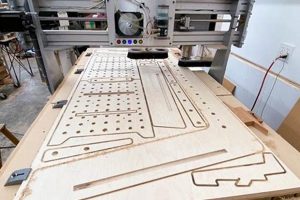
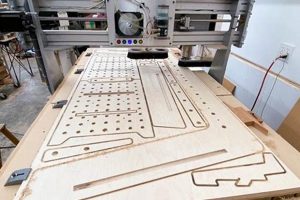
Equipment utilizing computer numerical control in the creation of wooden objects represents a significant advancement in manufacturing. These automated systems enable precise cutting, shaping, and carving of wood based on pre-programmed designs. An example includes the creation of intricate furniture components or detailed architectural moldings.
The adoption of these systems offers numerous advantages, including increased efficiency, reduced material waste, and the ability to produce complex designs with consistency. Historically, woodworking relied heavily on manual skills and traditional tools, resulting in longer production times and potential variations in quality. The introduction of computer-controlled machinery has revolutionized the industry, allowing for mass production of customized products while maintaining a high level of accuracy.
The following sections will delve into specific types of this technology, their applications, and the factors to consider when selecting the appropriate system for different woodworking projects. Subsequent topics will also address programming considerations, maintenance requirements, and the future trends shaping this dynamic field.
Essential Considerations for Implementing Computer Numerical Control in Woodworking
The successful integration of automated systems into woodworking operations requires careful planning and a thorough understanding of the technology’s capabilities and limitations. The following are critical aspects to consider when utilizing these systems.
Tip 1: Material Selection: Wood density and grain orientation significantly impact cutting performance. Understanding these properties is crucial for optimizing machine settings and preventing material defects. Hardwoods, for example, may require slower feed rates and specialized cutting tools compared to softwoods.
Tip 2: Toolpath Optimization: Efficient toolpaths minimize cutting time and improve surface finish. Strategies such as climb milling and conventional milling should be considered based on the specific material and desired outcome. Software simulations can assist in identifying and correcting potential toolpath issues before execution.
Tip 3: Machine Calibration: Regular calibration is essential for maintaining accuracy and preventing errors. This includes verifying spindle alignment, axis orthogonality, and table flatness. Calibration procedures should adhere to manufacturer specifications and be performed by qualified personnel.
Tip 4: Dust Extraction: Woodworking generates substantial amounts of dust, which can negatively impact machine performance and operator health. An effective dust extraction system is vital for maintaining a clean working environment and preventing damage to sensitive components. Consider both source capture and ambient air filtration.
Tip 5: Software Proficiency: Mastery of the software used to generate G-code is crucial for creating complex designs and optimizing cutting parameters. Invest in comprehensive training and ongoing professional development to maximize the potential of the equipment. Consider software with simulation capabilities for verifying designs before machining.
Tip 6: Workholding Strategies: Secure workholding is essential for preventing movement and ensuring accurate machining. Vacuum clamping, mechanical fixturing, and specialized jigs should be considered based on the size and shape of the workpiece. Ensure that the workholding method does not interfere with the cutting tool’s path.
These considerations, when implemented effectively, will lead to increased efficiency, improved product quality, and a safer working environment. By addressing these key aspects, woodworkers can leverage the full potential of this technology.
The subsequent sections will further examine specific applications and future trends in the utilization of automated systems for woodworking operations.
1. Precision Wood Carving

Precision wood carving, enabled by computer numerical control, represents a paradigm shift from traditional hand carving methods. The integration of automated systems allows for the consistent and accurate reproduction of complex designs that would be time-prohibitive or impossible to achieve manually. These systems utilize programmed toolpaths to guide cutting tools with extreme precision, often measured in microns, resulting in intricate details and smooth surface finishes. A direct effect of employing these machines is the ability to manufacture identical, high-quality carved components in large quantities, a key benefit for furniture manufacturers and architectural millwork providers.
The importance of precision carving as a component lies in its capacity to elevate the aesthetic and functional value of woodworking projects. From ornate furniture ornamentation to detailed relief carvings for doors and panels, the technology empowers woodworkers to create bespoke pieces that meet exacting specifications. Real-world examples include the production of custom guitar necks with precisely carved profiles, the replication of historical architectural elements for restoration projects, and the creation of intricate signage and decorative art. The practical significance of understanding this connection extends to optimizing machine settings, selecting appropriate cutting tools, and ensuring proper material handling to achieve desired outcomes.
In summary, precision wood carving is a direct consequence of the technological advancements in computer numerical control. The capacity to create complex, repeatable designs with a high degree of accuracy presents significant advantages for efficiency and creative expression. However, challenges remain in mastering the software, optimizing toolpaths, and managing material variations. Continuing advancements in both hardware and software promise even greater precision and design possibilities, further solidifying the role of automated systems in the future of woodworking.
2. Automated Wood Shaping

Automated wood shaping, a cornerstone of modern woodworking, is inextricably linked to computer numerical control. This process leverages automated systems to transform raw wood into intricate and precise forms, surpassing the limitations of manual techniques. The implications extend beyond simple replication, enabling innovative designs and streamlined production workflows.
- Complex Geometry Creation
Automated systems facilitate the creation of complex geometries that would be difficult or impossible to achieve manually. This includes intricate curves, compound angles, and three-dimensional forms. Examples range from the fabrication of ergonomically designed furniture components to the production of custom architectural moldings. The ability to realize these designs translates to increased design flexibility and product differentiation.
- High-Volume Production
Automated wood shaping allows for high-volume production of identical components. This is particularly valuable for manufacturers producing furniture, cabinetry, or other standardized wood products. The consistency and repeatability of automated systems ensure that each component meets stringent quality standards, reducing the risk of defects and minimizing waste. The efficiency gains translate directly into reduced production costs and faster turnaround times.
- Material Optimization
Sophisticated software allows for precise material optimization during the shaping process. This involves nesting parts efficiently on raw material sheets to minimize waste, as well as selecting optimal cutting paths to reduce machining time. Integrated systems can also analyze material properties to adjust machine parameters accordingly, ensuring optimal cutting performance and preventing damage to the workpiece. The reduction in material waste and energy consumption contributes to more sustainable manufacturing practices.
- Surface Finishing Integration
Some automated systems integrate surface finishing processes directly into the shaping cycle. This can include sanding, polishing, and even coating applications. By automating these processes, manufacturers can reduce the need for manual handling and improve the consistency and quality of the finished product. Integrated surface finishing also minimizes dust and debris accumulation, creating a cleaner and safer working environment.
These facets of automated wood shaping highlight the transformative impact of computer numerical control on the woodworking industry. The technology enables greater design freedom, increased production efficiency, improved material utilization, and enhanced product quality. Further advancements in machine capabilities and software integration promise to further revolutionize woodworking operations.
3. Material Compatibility

Material compatibility is a critical consideration when employing computer numerical control for woodworking. The success and efficiency of any woodworking project using this technology hinge on understanding the specific properties of the wood being used and selecting appropriate machine parameters and cutting tools accordingly.
- Wood Density and Hardness
Wood density and hardness directly impact the cutting force required and the rate at which the cutting tool can be advanced. Hardwoods such as maple or oak require slower feed rates and more robust tooling compared to softwoods like pine or cedar. Incorrectly calibrated machine settings can lead to tool breakage, material chipping, or excessive heat buildup, resulting in poor surface finish and reduced tool life. Selecting the correct tool geometry and cutting parameters is essential for optimizing performance and preventing damage to both the workpiece and the machine.
- Grain Orientation and Tear-Out
The direction of the wood grain influences the susceptibility to tear-out during the cutting process. Cutting against the grain can cause splintering and rough edges, especially in woods with interlocked grain patterns. Toolpath optimization and climb milling techniques can minimize tear-out by ensuring that the cutting tool exits the workpiece in a direction that supports the wood fibers. Understanding grain orientation is crucial for achieving clean, precise cuts and avoiding costly material waste.
- Moisture Content and Dimensional Stability
The moisture content of wood affects its dimensional stability and machinability. Wood that is too wet or too dry can warp, shrink, or swell during or after the cutting process, leading to inaccurate dimensions and compromised structural integrity. Wood should be properly acclimatized to the environment in which it will be used to ensure consistent moisture content and minimize dimensional changes. Adjusting machine settings to account for the wood’s moisture content can further improve cutting accuracy and prevent warping or cracking.
- Resin Content and Tool Clogging
Certain wood species, particularly softwoods like pine and fir, contain high levels of resin. This resin can accumulate on the cutting tool, leading to clogging and reduced cutting efficiency. Resin buildup can also increase friction and heat, accelerating tool wear and causing burning or discoloration of the wood. Using specialized cutting tools with non-stick coatings and implementing effective dust extraction systems can mitigate the effects of resin buildup and maintain optimal cutting performance.
These considerations collectively illustrate the integral link between material compatibility and the effective use of computer numerical control in woodworking. Understanding these properties and adapting machining strategies is crucial for achieving desired outcomes. Consideration of these aspects can contribute to extended tool lifespan, decreased material waste, and more precise cuts, ultimately yielding higher-quality end results.
4. Software Integration

Software integration is a foundational element in the effective operation of woodworking equipment utilizing computer numerical control. These machines require sophisticated software to translate design concepts into machine-executable instructions, commonly known as G-code. The seamless integration of Computer-Aided Design (CAD) and Computer-Aided Manufacturing (CAM) software platforms with the system is paramount. A lack of effective software integration can severely limit the machine’s capabilities, restricting design complexity, and reducing overall efficiency. For instance, incompatibility between the design software and the control system can lead to data translation errors, resulting in inaccurate cuts and material waste.
The importance of software integration extends beyond basic machine operation. Advanced features such as toolpath optimization, simulation, and collision detection are heavily reliant on the quality of the software and its ability to communicate effectively with the machine’s controller. Real-world examples include the use of nesting software to efficiently arrange part layouts on raw material sheets, minimizing waste and maximizing material utilization. Furthermore, simulation software allows users to virtually test toolpaths, identifying potential problems and preventing costly errors before actual machining begins. The selection of software must be based on its capacity to handle complex geometries, support various file formats, and provide a user-friendly interface for programming and machine control.
In conclusion, software integration is not merely an ancillary feature but a critical component that determines the overall effectiveness and efficiency of these machines. Challenges remain in ensuring compatibility between different software platforms and maintaining up-to-date software versions to support new machine features and functionalities. However, ongoing advancements in software technology continue to enhance the capabilities of woodworking equipment, enabling greater precision, design flexibility, and streamlined production workflows.
5. Efficiency Optimization

Efficiency optimization, in the context of woodworking involving computer numerical control, represents a systematic approach to maximizing productivity, minimizing waste, and reducing operational costs. The effective implementation of these strategies directly impacts profitability and competitiveness within the woodworking industry.
- Toolpath Generation and Optimization
Efficient toolpath generation is paramount to minimizing cutting time and material waste. Sophisticated CAM software utilizes algorithms to create optimized toolpaths that reduce unnecessary movements, minimize tool changes, and ensure efficient material removal. For example, nesting algorithms can arrange multiple parts on a single sheet of material to minimize scrap. Adaptive clearing strategies adjust cutting parameters based on the material being removed, optimizing feed rates and depths of cut. Proper toolpath optimization directly translates to reduced machining time and lower material costs.
- Material Handling and Workflow Automation
Efficient material handling and workflow automation streamline the production process, reducing manual labor and minimizing downtime. Automated loading and unloading systems can quickly transfer raw materials to the system and remove finished parts, minimizing operator intervention. Integrated conveyor systems can transport parts between different machining stations, further automating the production process. Implementing these strategies can significantly reduce cycle times and improve overall throughput.
- Machine Maintenance and Uptime
Regular machine maintenance and proactive troubleshooting are essential for maximizing machine uptime and preventing costly breakdowns. Scheduled maintenance procedures, such as lubrication, cleaning, and inspection, can identify potential problems before they escalate. Implementing a predictive maintenance program that utilizes sensor data to monitor machine performance can further improve uptime by identifying components that are nearing failure. Maximizing machine uptime directly translates to increased production capacity and reduced downtime costs.
- Process Monitoring and Data Analysis
Real-time process monitoring and data analysis provide valuable insights into machine performance and process efficiency. Sensor data from the equipment can be used to track parameters such as spindle load, feed rate, and vibration levels. Analyzing this data can identify bottlenecks in the production process, optimize machine settings, and detect potential problems early on. Integrated software platforms can provide real-time dashboards and reports, allowing operators and managers to track key performance indicators (KPIs) and make data-driven decisions to improve efficiency.
These facets of efficiency optimization, when implemented comprehensively, contribute significantly to the overall productivity and profitability of woodworking operations utilizing computer numerical control. The ongoing pursuit of improved efficiency through these means is essential for maintaining a competitive advantage in the increasingly demanding woodworking market.
Frequently Asked Questions
The following section addresses common inquiries and misconceptions regarding the application of computer numerical control (CNC) technology in woodworking.
Question 1: What level of technical expertise is required to operate woodworking machinery that utilizes computer numerical control?
Operating these machines necessitates a foundational understanding of CAD/CAM software, G-code programming, and basic machining principles. While pre-programmed designs simplify some tasks, proficiency in software operation and troubleshooting is crucial for complex projects and efficient machine utilization. Ongoing training and familiarity with machine-specific documentation are also recommended.
Question 2: What are the primary safety considerations when working with automated woodworking systems?
Safety protocols are paramount. This includes wearing appropriate personal protective equipment (PPE), such as eye and ear protection. Ensuring proper dust extraction to mitigate airborne particulate matter is essential for respiratory health. Regular machine inspections, adherence to lockout/tagout procedures during maintenance, and thorough operator training are also crucial to prevent accidents.
Question 3: How does the cost of woodworking machinery utilizing computer numerical control compare to traditional woodworking equipment?
The initial investment in automated systems is typically higher than traditional equipment. However, the increased efficiency, precision, and reduced material waste often result in a faster return on investment (ROI) over time. Cost-benefit analyses should consider factors such as production volume, design complexity, and labor savings.
Question 4: What types of wood are best suited for use with computer-controlled woodworking machinery?
Most wood species are compatible with these machines, but material properties such as density, hardness, and grain orientation influence optimal cutting parameters. Hardwoods generally require slower feed rates and specialized tooling compared to softwoods. Engineered wood products, such as plywood and MDF, also require specific machining techniques to prevent chipping or delamination.
Question 5: How does the precision of woodworking machinery utilizing computer numerical control compare to hand-crafted woodworking?
Automated systems offer significantly higher levels of precision and repeatability compared to hand-crafted woodworking. These machines can achieve tolerances measured in microns, enabling the creation of complex designs with consistent accuracy. While hand-crafting may offer a unique aesthetic appeal, it is inherently subject to human error and variations in skill level.
Question 6: What maintenance is required to keep woodworking machinery utilizing computer numerical control operating at peak performance?
Regular maintenance is crucial. This includes lubricating moving parts, cleaning dust and debris, inspecting cutting tools, and calibrating machine axes. Adherence to the manufacturer’s recommended maintenance schedule and prompt addressing of any operational issues are essential for maximizing machine lifespan and maintaining consistent performance.
These FAQs provide a foundation for understanding the application of computer numerical control in woodworking. Further research and consultation with industry experts are recommended for specific project requirements.
The following section will discuss common applications of automated woodworking systems across different industries.
Conclusion
This exploration of computer numerical control in woodworking underscores its transformative impact on the industry. The transition from traditional methods to automated systems necessitates a comprehensive understanding of material properties, software integration, and machine maintenance. Factors such as toolpath optimization, safety protocols, and efficiency considerations are pivotal for successful implementation and operation.
Continued advancements in this technology promise increased precision, expanded design possibilities, and streamlined production workflows. It is incumbent upon woodworkers and manufacturers to embrace these innovations and adapt their practices to fully leverage the potential of computer-controlled woodworking. Careful consideration of the factors outlined herein will enable the realization of high-quality, efficiently produced, and precisely crafted wooden products, ensuring a sustainable and competitive future for the field.