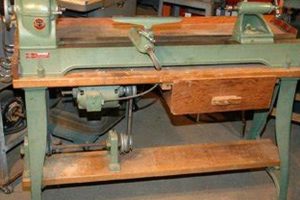
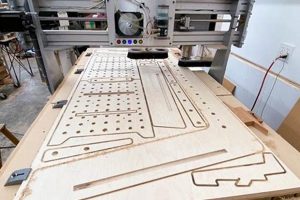
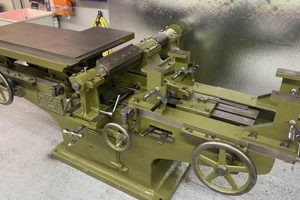
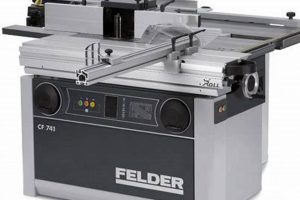
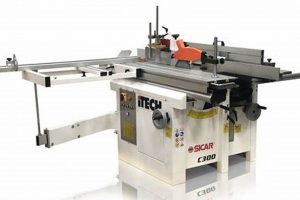
Woodworking equipment of this type offers a range of functionalities, typically including sawing, planing, jointing, and potentially other operations like shaping or sanding. These multi-function machines are designed for workshops with limited space, consolidating several individual tools into a single unit. An example of such a setup might include a combination saw and jointer, allowing a craftsman to perform multiple steps on a single piece of lumber without moving it between different stations.
The significance of such tools lies in their ability to enhance efficiency and precision in woodworking projects. By combining multiple functions, they reduce setup time and potential errors associated with moving workpieces. Historically, these machines represent an evolution from individual, hand-powered tools to integrated, power-driven systems, reflecting a focus on productivity and accuracy. They are valuable assets for both hobbyists and professional woodworkers seeking to optimize their workspace and workflow.
The following sections will delve into the specific features, types, and applications of these versatile pieces of equipment. It will also examine factors to consider when selecting and maintaining these tools to ensure optimal performance and longevity. This will involve discussing aspects such as motor power, table dimensions, safety features, and maintenance procedures.
Essential Usage Guidance
The following recommendations aim to maximize the effectiveness and lifespan of combination woodworking equipment. Adherence to these principles promotes safe and accurate operation.
Tip 1: Prioritize Safety Protocol. Strict adherence to the manufacturer’s safety guidelines is paramount. Utilize appropriate personal protective equipment, including eye protection, hearing protection, and dust masks, at all times during operation. Ensure all safety guards are correctly installed and functioning.
Tip 2: Verify Calibration Before Operation. Before commencing any woodworking task, verify the accuracy of all settings, including fence alignment, blade squareness, and depth of cut. Misalignment can lead to inaccurate cuts and potentially dangerous situations. Employ precision measuring tools to guarantee precision.
Tip 3: Implement a Regular Maintenance Schedule. Consistent maintenance is critical for optimal performance and longevity. This includes regular cleaning to remove sawdust and debris, lubrication of moving parts, and inspection of belts, blades, and bearings. Refer to the manufacturer’s manual for specific maintenance intervals.
Tip 4: Utilize Appropriate Feed Rates. Employ controlled and consistent feed rates during operation. Forcing material through the machine can overload the motor, damage the workpiece, and increase the risk of kickback. Adjust feed rates based on the type of wood and the complexity of the cut.
Tip 5: Optimize Dust Collection. Effective dust collection is essential for maintaining a clean and safe working environment. Connect the machine to a suitable dust collection system to remove airborne particles. This minimizes respiratory hazards and improves visibility during operation.
Tip 6: Select the Appropriate Cutting Tools. Employ blades and cutters specifically designed for the task at hand. Using incorrect or dull cutting tools can result in poor cut quality, increased effort, and potential damage to the equipment. Regularly inspect and replace cutting tools as needed.
These directives, when diligently applied, will facilitate safe, efficient, and precise woodworking operations. They extend the operational life of the equipment and ensure consistent results.
The subsequent discussion will outline common troubleshooting scenarios and provide guidance on resolving potential operational issues.
1. Precision

Precision is a cornerstone of quality woodworking, and its attainment is intrinsically linked to the capabilities of the machinery employed. Within the context of combination woodworking equipment, maintaining accuracy across multiple functions is paramount for achieving professional-grade results.
- Calibration Integrity
The accuracy of combination woodworking machines hinges on precise calibration across all operational modes. Saw tables must be perfectly square to the blade, fences must align parallel to the cutting path, and planing surfaces must be coplanar. Any deviation from these calibrations leads to cumulative errors during subsequent operations, compromising the final product. For example, a table saw with a marginally misaligned fence will produce angled cuts, which propagate through subsequent joining and assembly processes. Periodic calibration, verified with precision measuring tools, is, therefore, critical.
- Material Stability
Precision is not solely dependent on the machine; material stability also plays a crucial role. Wood is hygroscopic, meaning it absorbs and releases moisture, leading to dimensional changes. These changes, however minor, can significantly impact the accuracy of cuts and joints. Therefore, it is vital to acclimatize the wood to the workshop environment for a sufficient period before machining. Furthermore, during machining, consistent feed rates and blade sharpness are essential to prevent tear-out and other surface imperfections that undermine precision. A stable material foundation is as important as the machine’s inherent accuracy.
- Repeatability and Consistency
The hallmark of a precise woodworking machine is its ability to produce consistent results across multiple iterations. This is especially important for batch processing and repetitive tasks. A combination machine must maintain its calibration under sustained use. Factors like the rigidity of the frame, the quality of the bearings, and the precision of the lead screws all contribute to the machine’s repeatability. For example, producing multiple identical cabinet doors requires the machine to consistently cut boards to the same dimensions, a task demanding high repeatability.
- Mitigation of Vibration
Vibration is a primary enemy of precision in machining. Any vibration in the machine’s frame or cutting mechanism can translate into inaccuracies in the final product. Combination woodworking machines, due to their multiple functions and potentially larger size, are particularly susceptible to vibration. Robust construction, effective vibration damping materials, and stable mounting are vital for minimizing vibration. Additionally, properly balanced cutting tools and smooth motor operation contribute to reducing vibration and ensuring precise cuts.
The interplay between calibration, material stability, repeatability, and vibration mitigation directly influences the precision achievable with combination woodworking equipment. These factors must be carefully considered to leverage the full potential of these versatile machines and attain the levels of accuracy demanded by professional woodworking projects. The diligent application of best practices in these areas is key to maximizing the value derived from the machine.
2. Versatility

Versatility, in the context of woodworking machinery, refers to the ability of a single machine to perform multiple distinct operations. In the realm of combination woodworking equipment, this characteristic is paramount. The cause-and-effect relationship is evident: the need for compact and efficient workshops necessitates machines capable of fulfilling diverse functions, such as sawing, planing, jointing, and potentially shaping or sanding. Without this versatility, a workshop would require a larger footprint and a greater financial investment in individual, specialized tools. A real-life example is a small cabinet-making shop where space is limited; a combination machine allows the craftsman to perform all essential tasks without needing separate machines for each function. The practical significance is the enhancement of productivity and the reduction of overhead costs associated with space and equipment acquisition.
The degree of versatility offered by combination woodworking equipment directly affects its utility and economic value. A machine that can only perform two or three functions may be suitable for basic tasks, but it will lack the adaptability required for more complex projects. Conversely, a machine that incorporates a wider array of capabilities allows the craftsman to tackle a broader spectrum of woodworking tasks. This versatility translates into greater design freedom and the ability to respond to varied customer demands. For instance, a single machine might be used to mill lumber, cut joinery, and shape decorative profiles, all within a confined workspace. Furthermore, the integration of digital controls and interchangeable tooling systems further expands the potential applications of these machines, making them even more adaptable to evolving project requirements.
In conclusion, versatility is not merely a desirable attribute but a core defining characteristic of combination woodworking equipment. Its presence allows for greater efficiency, adaptability, and cost-effectiveness in woodworking operations. While challenges exist in balancing versatility with precision and ease of use, the benefits of a multi-functional machine generally outweigh the compromises. Understanding the practical significance of this attribute is essential for selecting the appropriate equipment and maximizing its value within the context of a woodworking enterprise.
3. Durability

Durability, when considering combination woodworking equipment, transcends mere longevity; it encompasses the capacity to consistently deliver accurate and reliable performance under sustained operational demands. The inherent structure of these machines and the materials used in their construction directly influence their long-term viability and overall return on investment.
- Frame Rigidity and Material Composition
The foundation of any durable combination woodworking machine is a robust frame, typically constructed from cast iron or heavy-gauge steel. Cast iron, favored for its vibration dampening properties and resistance to deformation, provides a stable platform for precision operations. Steel frames, while lighter, must be of sufficient thickness and properly reinforced to withstand the stresses imposed by various machining processes. Insufficient frame rigidity can lead to misalignment, reduced accuracy, and ultimately, premature failure of critical components. An example is the warping of a thin steel table saw frame under heavy use, leading to inconsistent cuts. Proper material selection and frame design are, therefore, paramount.
- Component Quality and Wear Resistance
The durability of individual components, such as bearings, motors, and cutting tools, significantly impacts the overall lifespan of the machine. High-quality bearings minimize friction and wear, ensuring smooth and consistent operation of moving parts. Motors must be adequately sized and thermally protected to withstand prolonged use without overheating or experiencing premature failure. Cutting tools, particularly blades and knives, should be constructed from hardened steel alloys to maintain sharpness and resist wear under demanding conditions. An instance would be the rapid dulling of low-grade planer knives, necessitating frequent replacement and disrupting workflow. Superior component quality translates directly into enhanced durability and reduced maintenance costs.
- Surface Treatments and Corrosion Resistance
The working surfaces of combination woodworking machines are exposed to sawdust, moisture, and other contaminants that can accelerate corrosion and wear. Protective coatings, such as powder coating or specialized paints, are essential for preventing rust and maintaining the integrity of critical surfaces. Tables, fences, and other components that experience frequent contact with workpieces should be treated to resist abrasion and prevent damage. A typical example is the rusting of an unprotected cast iron table saw top, leading to increased friction and potential staining of wood. Effective surface treatments are, therefore, critical for preserving the machine’s appearance and functionality over time.
- Maintenance and Serviceability
Even the most durable combination woodworking machine requires regular maintenance to ensure optimal performance and longevity. Routine cleaning, lubrication, and inspection of critical components are essential for preventing premature wear and identifying potential problems before they escalate. Ease of access to internal components for maintenance and repair is also a crucial factor in the machine’s long-term viability. A well-designed machine will allow for straightforward replacement of worn parts and adjustments to maintain accuracy. An example is a machine with easily accessible grease fittings for bearings, simplifying the lubrication process. Serviceability is, therefore, a key aspect of overall durability.
The interplay of frame rigidity, component quality, surface treatments, and maintenance considerations collectively determines the durability of combination woodworking equipment. Machines built to exacting standards, utilizing robust materials and incorporating thoughtful design features, will provide years of reliable service and represent a sound investment for both professional and hobbyist woodworkers.
4. Safety Features
The integration of safety features within combination woodworking equipment, encompassing machines that consolidate multiple functionalities into a single unit, is not merely an addendum but a crucial design imperative. The inherent complexity of these machines, involving multiple high-speed cutting operations within a confined workspace, elevates the risk of accidents. A direct causal relationship exists between the presence of comprehensive safety mechanisms and the reduction of potential injuries. For instance, a blade guard on a combination saw/jointer effectively prevents accidental contact with the rotating blade, directly mitigating the risk of lacerations. The importance of these features stems from their proactive role in safeguarding the operator.
Specific examples of critical safety features include emergency stop mechanisms, which allow for immediate cessation of machine operation in the event of a malfunction or hazardous situation; interlocks, which prevent the machine from operating unless all safety guards are properly in place; and anti-kickback devices, which minimize the risk of the workpiece being forcefully ejected during sawing operations. Furthermore, effective dust collection systems contribute to operator safety by reducing airborne particulate matter, thereby minimizing respiratory hazards. The practical application of these features is evident in a professional woodworking shop, where adherence to safety protocols, including the proper use of safety equipment, is paramount to maintaining a safe working environment and preventing workplace injuries. The absence of such features increases the probability of accidents, potentially resulting in severe physical harm and financial losses.
In summary, the implementation of robust safety features within combination woodworking machinery is essential for protecting operators and fostering a safe working environment. These features, ranging from physical guards to electronic interlocks, serve as proactive measures to mitigate the inherent risks associated with high-speed cutting operations. While challenges may exist in balancing safety with operational efficiency, the long-term benefits of injury prevention and reduced liability far outweigh any perceived drawbacks. Understanding the practical significance of these features is crucial for making informed purchasing decisions and promoting safe work practices within the woodworking industry.
5. Space Efficiency

Space efficiency, in the context of combination woodworking machines, is a critical consideration, particularly for hobbyists and small-scale professional workshops where square footage is at a premium. The inherent design of these machines, consolidating multiple operations into a single unit, directly addresses the challenges posed by limited workspace.
- Reduced Footprint
The primary advantage of combination machines lies in their reduced footprint compared to individual, specialized tools. A single unit that integrates sawing, jointing, planing, and potentially other functions occupies significantly less floor space than separate machines performing the same tasks. This allows for a more organized and navigable workspace, reducing clutter and improving workflow. For example, a small cabinet shop may opt for a combination machine to perform all necessary milling operations within a confined area, freeing up space for assembly and finishing.
- Optimized Workflow
Space efficiency extends beyond mere physical dimensions; it also encompasses workflow optimization. By minimizing the need to move workpieces between different machines, combination tools streamline the production process and reduce wasted motion. This is particularly beneficial in workshops where space is constrained and maneuvering large pieces of lumber is challenging. A craftsman working on a detailed woodworking project may appreciate the ability to transition seamlessly from sawing to jointing without having to reconfigure the workspace.
- Vertical Integration
Some combination woodworking machines incorporate vertical integration strategies to further enhance space efficiency. These designs may feature stacked or folding components that can be deployed as needed and stowed away when not in use. This allows for maximum utilization of available space and accommodates a wider range of operations within a compact footprint. An example of this is a machine with a folding outfeed table for planing operations, which can be retracted to conserve space when not in use.
- Storage Considerations
The space efficiency of combination machines also extends to storage considerations. By reducing the number of individual tools required, these machines simplify the task of storing blades, cutters, and other accessories. A single cabinet or shelf can often accommodate the tooling for a combination machine, whereas multiple storage units may be needed for separate tools. This contributes to a more organized and efficient workshop environment, freeing up space for other essential activities.
In conclusion, space efficiency is a defining characteristic of combination woodworking machines, directly impacting the layout, workflow, and storage capacity of a workshop. By consolidating multiple functions into a single unit, these machines enable woodworkers to maximize the utilization of available space and optimize their production processes. The benefits of space efficiency extend beyond mere convenience, contributing to a more productive, organized, and safe working environment.
Frequently Asked Questions
The following section addresses common inquiries regarding combination woodworking equipment. These questions are designed to provide clarity and inform decision-making.
Question 1: What is the expected lifespan of combination woodworking machinery?
The lifespan of combination woodworking machines is contingent upon several factors, including the quality of construction materials, frequency of use, and adherence to recommended maintenance schedules. Machines constructed from robust materials, such as cast iron and high-grade steel, and subjected to routine maintenance can reasonably be expected to provide decades of reliable service. Conversely, machines of lesser quality or those subjected to neglect may exhibit premature wear and require more frequent repairs or replacement.
Question 2: What are the primary safety considerations when operating combination woodworking equipment?
Safety is paramount when operating any woodworking machinery, and combination machines are no exception. Key safety considerations include the use of appropriate personal protective equipment, such as eye and ear protection, as well as adherence to all manufacturer-specified safety guidelines. It is imperative to ensure that all safety guards are properly installed and functioning correctly before commencing any operation. Furthermore, operators must be thoroughly familiar with the machine’s controls and emergency stop mechanisms.
Question 3: How does the accuracy of combination woodworking machines compare to that of individual, specialized tools?
The accuracy of combination woodworking machines can approach that of individual, specialized tools, provided that the machine is properly calibrated and maintained. However, it is important to recognize that achieving the highest levels of precision may require more diligent setup and adjustment compared to dedicated machines. The rigidity of the frame and the quality of the cutting tools are also critical factors influencing accuracy.
Question 4: What types of maintenance are required for combination woodworking equipment?
Regular maintenance is essential for preserving the performance and longevity of combination woodworking machines. Recommended maintenance tasks include routine cleaning to remove sawdust and debris, lubrication of moving parts, inspection of belts and pulleys, and sharpening or replacement of cutting tools. It is also advisable to periodically check and adjust the machine’s calibration to ensure accurate operation.
Question 5: What are the key factors to consider when selecting a combination woodworking machine?
Selecting the appropriate combination woodworking machine requires careful consideration of several factors, including the size and type of projects to be undertaken, the available workspace, and the budget. It is important to assess the machine’s capabilities, construction quality, safety features, and ease of use. Furthermore, consider the availability of replacement parts and service support.
Question 6: Are combination woodworking machines suitable for professional woodworking applications?
Combination woodworking machines can be suitable for professional woodworking applications, particularly in situations where space is limited or portability is required. However, it is important to select a machine that is robust enough to withstand the demands of professional use and capable of delivering the required levels of accuracy and performance. Some professional woodworkers may prefer to utilize individual, specialized tools for certain tasks, depending on the specific requirements of their work.
In summary, understanding the nuances of these machines is paramount. Through diligent research and thoughtful consideration, one can ensure that the selected equipment aligns with their specific requirements and capabilities.
The subsequent discussion will delve into case studies illustrating the application of these machines in various woodworking scenarios.
Conclusion
This exploration has illuminated key facets of the versatile equipment, emphasizing precision, durability, safety, and space efficiency. From the rigorous calibration essential for accurate cuts to the importance of robust safety mechanisms, each element contributes to the effective and responsible utilization of these tools. The consolidation of multiple woodworking functions into a single unit represents a strategic advantage for workshops of varying scales.
The informed application of these insights will enable both professional and amateur woodworkers to maximize the value and lifespan of such machines. Continued adherence to safety protocols and proactive maintenance practices remain paramount. The future of woodworking may see further advancements in combination machine technology, driving increased efficiency and expanding the creative possibilities within the craft.