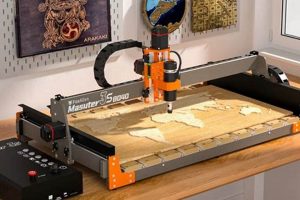
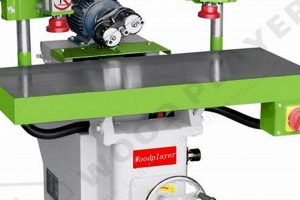
The application of computer numerical control (CNC) technology in woodworking represents a significant advancement in fabrication processes. It involves utilizing programmed instructions to guide cutting tools, shaping materials with precision and efficiency. This methodology enables the creation of intricate designs and repetitive components with a high degree of accuracy, surpassing the capabilities of traditional manual techniques. An example includes carving complex decorative panels or producing identical furniture parts in large quantities.
The adoption of this technology offers several advantages to woodworking professionals and hobbyists alike. It allows for increased production speed, reduced material waste, and improved consistency in product quality. Historically, intricate woodworking required extensive manual labor and specialized skills. The integration of CNC machines democratizes access to complex designs, enabling a broader range of individuals to produce sophisticated woodworking projects.
Understanding the fundamentals of this technology, including machine operation, software proficiency, and material selection, is crucial for successful implementation. The subsequent sections will delve into essential aspects, covering topics such as machine setup, design software utilization, cutting tool selection, and safety protocols.
Practical Guidance
The following offers succinct advice for individuals involved in operating computer numerical control (CNC) equipment in woodworking applications. These pointers emphasize optimal practices, aiming to improve project outcomes and enhance operational efficiency.
Tip 1: Secure Workpiece Clamping: Ensure the workpiece is firmly affixed to the CNC bed. Improper clamping can lead to material shifting during cutting, resulting in inaccuracies and potential tool damage. Use appropriate clamps and fixtures designed for the specific material and machining operation.
Tip 2: Implement Toolpath Simulation: Prior to executing the CNC program, simulate the toolpath using the CAM software. This allows for the identification of potential collisions, inefficient cuts, or areas where the toolpath may require optimization. Addressing these issues preemptively saves time and resources.
Tip 3: Employ Appropriate Cutting Tools: Select cutting tools based on the wood species, desired finish quality, and complexity of the cut. Consider factors such as tool geometry, material composition, and coating. Using the incorrect tool can lead to poor surface finish, excessive tool wear, or material damage.
Tip 4: Optimize Cutting Parameters: Adjust feed rates and spindle speeds according to the material being machined and the tool being used. Consult tooling manufacturer recommendations and perform test cuts to determine optimal parameters. Balancing speed and precision is crucial for achieving desired results.
Tip 5: Incorporate Multiple Passes for Deep Cuts: When executing deep cuts, implement multiple passes with incremental depth adjustments. This technique reduces stress on the cutting tool and improves the surface finish. Avoid attempting to remove excessive material in a single pass.
Tip 6: Regularly Inspect and Maintain Equipment: Conduct routine inspections and maintenance of the CNC machine. This includes lubricating moving parts, cleaning the machine bed, and checking for any signs of wear or damage. Consistent maintenance prolongs the machine’s lifespan and ensures reliable operation.
Tip 7: Prioritize Dust Collection: Woodworking generates substantial amounts of dust, which can negatively impact air quality and machine performance. Implement an effective dust collection system to minimize dust accumulation and maintain a clean working environment. This protects both the operator’s health and the CNC machine’s functionality.
Adhering to these suggestions enhances process control, minimizes errors, and facilitates superior outcomes in CNC woodworking projects. The application of these techniques fosters efficient workflows and superior quality craftsmanship.
The subsequent stages focus on advanced practices and troubleshooting within the realm of computer-controlled woodworking.
1. Design Software Proficiency

Design software proficiency is an indispensable component in effectively employing computer numerical control (CNC) machines for woodworking applications. It is the foundational element that bridges the conceptual design and the physical realization of wood products. Without adept use of design software, the potential of CNC machining remains largely untapped.
- Geometric Modeling and Creation
Proficiency in design software enables the creation of precise two-dimensional (2D) and three-dimensional (3D) models. These models serve as the digital blueprint for the CNC machine to follow. Accuracy in geometric representation is critical, as any errors in the design translate directly into inaccuracies in the finished wood product. For example, CAD software allows the creation of intricate joinery details that would be exceedingly difficult, if not impossible, to achieve manually.
- Toolpath Generation and Simulation
Design software facilitates the generation of toolpaths, which dictate the precise movements of the cutting tool. Optimizing toolpaths minimizes material waste, reduces machining time, and enhances surface finish. Simulation capabilities within the software allow users to preview the machining process, identifying potential collisions or inefficiencies before actual material removal. This proactive approach prevents costly errors and ensures a smooth workflow. For instance, CAM software enables the creation of efficient pocketing strategies for removing material within a defined area.
- File Format Compatibility and Export
Design software proficiency includes the ability to export designs in formats compatible with the CNC machine’s control system. G-code, a numerical control programming language, is commonly used to instruct the machine’s movements. Understanding the nuances of different file formats and their implications for machine performance is essential. Proper formatting ensures seamless communication between the design and the machine. Examples include correctly setting units (millimeters or inches) and defining coordinate systems.
- Design Optimization and Iteration
Design software allows for rapid prototyping and iteration. Modifications can be made quickly and easily, enabling designers to experiment with different shapes, sizes, and joinery techniques. This iterative process optimizes designs for both aesthetic appeal and manufacturability. The software also provides tools for analyzing structural integrity and material usage, contributing to efficient and sustainable woodworking practices. Consider how parametric modeling allows for easy adjustments to dimensions while maintaining design intent.
In essence, design software proficiency empowers woodworkers to translate their creative visions into tangible realities. This skill set is not merely about creating designs; it is about optimizing the entire fabrication process, from initial concept to final product. The mastery of these software tools is the key to unlocking the full potential of CNC machining in the field of woodworking.
2. Machine Setup Precision
Machine setup precision is a foundational element in the successful utilization of computer numerical control (CNC) equipment for woodworking. It directly influences the accuracy, repeatability, and overall quality of the final product. Improper setup can lead to dimensional inaccuracies, material waste, and potential damage to the machine or cutting tools. Therefore, meticulous attention to detail during machine setup is paramount for effective CNC woodworking.
- Workpiece Alignment and Securing
The precise alignment and secure clamping of the workpiece are crucial. Any misalignment, even a fraction of a millimeter, can propagate errors throughout the machining process. Securing the workpiece prevents movement during cutting, which could lead to inaccurate cuts or tool breakage. Vacuum clamping, mechanical clamps, or specialized fixtures may be employed, depending on the material and geometry of the workpiece. For instance, machining a mortise and tenon joint requires precise alignment to ensure proper fit and structural integrity.
- Origin Point Calibration
Accurate calibration of the origin point, also known as the work coordinate system, is essential for relating the digital model to the physical workpiece. The origin point serves as the reference from which all toolpaths are calculated. Errors in origin point calibration result in the part being machined in the wrong location or orientation. Laser alignment tools and digital probes can aid in precise origin point determination. Incorrect origin point setup can cause the CNC to carve a design off-center on the wood piece, ruining the project.
- Tool Measurement and Offsetting
Precise tool measurement and offsetting are critical for accurate machining. The CNC machine must know the exact dimensions of each cutting tool to compensate for its geometry during toolpath execution. Tool length offsets and diameter offsets are common parameters that must be accurately measured and input into the machine’s control system. Calibrated tool presetting devices and digital tool probes are used to obtain these measurements. Without proper tool measurement, the CNC may cut too deep or too shallow into the wood.
- Machine Axis Calibration
Ensuring the machine’s axes are properly calibrated is important for maintaining accuracy over the entire work envelope. Axis calibration involves verifying the accuracy of the machine’s linear and rotary movements. Calibration procedures may involve using precision test indicators and laser trackers to measure deviations and compensate for errors. Periodic axis calibration is essential to account for wear and tear on machine components. Axis Calibration will ensure the machine move precisely and accordingly on the wood.
These facets of machine setup precision collectively contribute to successful outcomes in CNC woodworking. Accurate workpiece alignment, origin point calibration, tool measurement, and axis calibration minimize errors and maximize the potential of CNC technology. When these elements are correctly addressed, the benefits of this technology can be successfully harnessed for precise and complex woodworking.
3. Material Selection Expertise

Material selection expertise forms an indispensable element within the framework of effectively employing computer numerical control (CNC) machinery for woodworking. The choice of material directly influences achievable precision, cutting tool longevity, and overall project success. Improper material selection can lead to substandard finishes, increased tool wear, or even machine damage. Consequently, a thorough understanding of wood properties and their interaction with CNC machining parameters is critical.
Wood density, grain orientation, and moisture content significantly impact cutting tool performance. For instance, machining hardwoods like maple or oak requires higher spindle speeds and feed rates compared to softwoods such as pine or cedar. Ignoring these distinctions can result in tear-out, splintering, or excessive heat buildup, leading to premature tool failure. Furthermore, the presence of knots, voids, or other imperfections in the wood can disrupt the cutting process, causing dimensional inaccuracies or requiring additional machining passes. An example would be the use of a specific router bit designed for hardwoods versus softwoods, showcasing the need to match the tools to the material for optimal results.
Material selection also dictates the appropriate clamping methods and cutting strategies. Softer woods may require more delicate clamping to prevent crushing, while denser materials necessitate more robust fixturing to withstand higher cutting forces. Similarly, climb milling may be preferable for certain wood species to minimize tear-out, while conventional milling may be more suitable for others. In summary, proficient material selection expertise ensures optimal machine performance, minimizes material waste, and enhances the quality of finished woodworking projects. Ignoring this crucial factor introduces unnecessary risks and compromises the potential of CNC technology.
4. Cutting Tool Selection

Cutting tool selection is intrinsically linked to the successful operation of computer numerical control (CNC) machines in woodworking. The choice of cutting tool directly influences the precision, efficiency, and surface finish of the machined product. Incorrect selection leads to suboptimal performance, increased tool wear, material damage, or even machine malfunction. It represents a critical component when addressing the overall subject of employing CNC equipment within woodworking practices. The tool’s geometry dictates the ability to create specific features, while its material composition determines its suitability for various wood species. For example, using a dull or improperly shaped tool for cutting a complex mortise and tenon joint can result in inaccurate dimensions and a poor fit, whereas a sharp, appropriate tool will yield a clean and precise joint.
The practical implications of informed cutting tool selection extend beyond mere functionality. It affects project economics by reducing material waste and minimizing the need for post-machining cleanup or rework. A well-chosen tool operating within its optimal parameters contributes to faster machining times and reduced energy consumption, thus enhancing overall efficiency. Moreover, the selection process necessitates considering the cutting tool’s material, coating, and geometry to match the wood species, desired surface finish, and complexity of the machining operation. An example here is selecting carbide-tipped bits for dense hardwoods like maple, and high-speed steel (HSS) bits for softwoods like pine. The correct tool extends operational lifespan and project economics.
In summary, cutting tool selection is not merely a secondary consideration but a fundamental aspect of CNC woodworking. The selection process depends on the material, the machinery, and the product goals. The challenge lies in understanding the intricate relationship between tool characteristics, material properties, and machining parameters to achieve desired results. Ultimately, proficiency in cutting tool selection unlocks the full potential of CNC technology in woodworking, enabling the creation of intricate and high-quality products.
5. Toolpath Optimization

Toolpath optimization is an integral component of efficient computer numerical control (CNC) woodworking. It involves the strategic planning and arrangement of cutting tool movements to maximize material removal rates, minimize machining time, and enhance the quality of the finished product. Effective toolpath optimization is not merely a matter of machine operation; it represents a fundamental aspect of achieving precision and productivity in CNC woodworking.
- Minimizing Non-Cutting Movements
Reducing the distance the cutting tool travels without engaging the material directly translates to faster machining times. Optimized toolpaths minimize rapid traverses, retracts, and repositioning movements. Strategic planning of the cutting sequence helps reduce these non-cutting actions. For example, arranging cuts in a continuous path, rather than jumping between disparate locations, can significantly improve efficiency. In “how to use a cnc machine for woodworking,” this facet directly reduces cycle time and lowers energy consumption, leading to higher throughput.
- Controlling Material Removal Rate
Optimized toolpaths manage the volume of material removed per unit of time, preventing excessive tool wear and ensuring consistent cutting forces. Gradual depth of cut adjustments and strategic feed rate control contribute to a stable machining process. Using adaptive clearing strategies allows the machine to adjust the toolpath based on the geometry and material characteristics. This approach enhances cutting efficiency and prevents tool overload, which is essential to “how to use a cnc machine for woodworking” without equipment damage or project failures.
- Enhancing Surface Finish Quality
The arrangement of toolpaths directly impacts the surface finish of the machined part. Optimized toolpaths minimize abrupt changes in direction and maintain consistent cutting parameters, reducing the likelihood of tool marks or surface imperfections. Employing finishing passes with shallower depths of cut and higher feed rates can improve surface smoothness. Selecting appropriate cutting strategies, such as climb milling versus conventional milling, further refines surface quality. Smooth, consistent surface finishes achieved through optimal toolpaths directly benefit the aesthetics and functionality of woodworking projects.
- Reducing Tool Wear and Stress
Well-planned toolpaths distribute the cutting load evenly across the cutting tool’s edges, reducing localized stress and minimizing wear. Avoiding sudden changes in cutting direction and implementing smooth entry and exit strategies prolongs tool life. Selecting appropriate cutting parameters, such as spindle speed and feed rate, further optimizes tool performance. Maximizing tool lifespan through optimized toolpaths lowers operating costs and improves the long-term economics of CNC woodworking.
These facets collectively demonstrate the profound impact of toolpath optimization on “how to use a cnc machine for woodworking.” By minimizing non-cutting movements, controlling material removal rates, enhancing surface finish quality, and reducing tool wear, optimized toolpaths enhance efficiency, improve product quality, and lower operating costs. These elements represent essential considerations for individuals involved in CNC woodworking, contributing to the successful and sustainable utilization of this technology. Implementing optimal parameters and creating accurate toolpaths contribute significantly to the longevity of both the machinery and the products manufactured using them.
6. Operational Safety Protocols

The implementation of rigorous operational safety protocols is not merely a procedural formality in woodworking, but a fundamental requirement for the safe and effective employment of computer numerical control (CNC) machinery. The inherent power and precision of these machines present potential hazards that necessitate strict adherence to established safety guidelines. Therefore, understanding and implementing these protocols is paramount when addressing “how to use a cnc machine for woodworking”.
- Emergency Stop Procedures
The immediate accessibility and proper functioning of emergency stop mechanisms are critical. Operators must be thoroughly trained on the location and operation of these controls, which can halt the machine’s operation in the event of a malfunction or imminent danger. Regular testing of emergency stop functionality is essential to ensure its effectiveness. Improper training or delayed response can result in significant injury or equipment damage. For instance, if a workpiece becomes dislodged during machining, an immediate emergency stop can prevent the tool from causing further damage or injury.
- Personal Protective Equipment (PPE) Usage
The consistent and correct use of appropriate personal protective equipment is non-negotiable. This includes, but is not limited to, safety glasses, hearing protection, and dust masks. Safety glasses protect against flying debris, hearing protection mitigates the risk of noise-induced hearing loss, and dust masks prevent the inhalation of harmful wood dust particles. Failure to utilize PPE increases the risk of injury and long-term health problems. An operator neglecting to wear safety glasses while changing cutting tools risks eye injury from flying metal fragments.
- Machine Guarding and Interlocks
Proper machine guarding and interlock systems are designed to prevent accidental contact with moving parts. Guards should be securely in place during operation, and interlocks should disable the machine if a guard is removed or compromised. Tampering with or disabling machine guards significantly increases the risk of injury. An example includes machine enclosures preventing any contact with moving parts. Regular inspection and maintenance of guarding systems are necessary to ensure their continued effectiveness.
- Lockout/Tagout Procedures
Lockout/tagout procedures are essential during maintenance or repair operations to prevent accidental energization of the machine. These procedures involve isolating the machine from its power source and attaching a lock and tag to indicate that it is undergoing maintenance and should not be operated. Neglecting lockout/tagout procedures can result in severe electrical shock or mechanical injury. Specifically, before changing a dull bit on a wood router, a lockout/tagout procedure assures electricity won’t run to the machine during the bit change.
The described facets of operational safety protocols, when diligently implemented, significantly mitigate the risks associated with “how to use a cnc machine for woodworking”. The adherence to these guidelines is not merely a matter of compliance but a commitment to ensuring a safe and productive working environment. Failure to implement these procedures effectively compromises both the well-being of operators and the integrity of the machining process, and is therefore not an option.
7. Maintenance and Calibration
The longevity, accuracy, and operational efficiency of computer numerical control (CNC) machinery in woodworking are inextricably linked to rigorous maintenance and calibration protocols. Ignoring these essential practices diminishes the machine’s capabilities, increases the likelihood of errors, and ultimately compromises the quality of the finished product. Therefore, the execution of these processes constitutes a critical component within any framework describing “how to use a cnc machine for woodworking”. The causal relationship is direct: neglect of maintenance and calibration invariably leads to degraded machine performance, while consistent application ensures sustained precision.
Practical significance is demonstrated through several examples. Spindle runout, caused by bearing wear or contamination, directly affects cutting tool accuracy and surface finish. Regular spindle maintenance, including bearing lubrication and replacement, prevents this issue. Similarly, axis backlash, arising from wear in lead screws or ball screws, results in positioning errors. Axis calibration procedures, employing precision measurement tools, compensate for this backlash. For example, uncalibrated axes may prevent the CNC from accurately milling a precisely dimensioned dovetail joint, causing joinery issues. Regular inspection and replacement of worn components, such as belts, bearings, and guide rails, prevent catastrophic failures and ensure consistent machine performance. The adherence to these procedures guarantees reliability in material removal, consistent products and increased machine lifespans.
In conclusion, consistent maintenance and calibration represent indispensable elements when addressing “how to use a cnc machine for woodworking”. These practices directly influence the machine’s performance, accuracy, and lifespan. While challenges exist in implementing these protocols, particularly in demanding production environments, their consistent application is essential for maximizing the return on investment and producing high-quality woodworking products. Regular maintenance minimizes downtime and extends the operational lifespan of CNC equipment, while calibration ensures the consistent production of dimensionally accurate components, crucial for precision woodworking.
Frequently Asked Questions
The following addresses common inquiries regarding computer numerical control (CNC) machine operation in woodworking applications. These answers offer insight into key considerations and best practices.
Question 1: What are the primary safety considerations when operating a CNC machine for woodworking?
Primary safety considerations include the consistent use of personal protective equipment (PPE), proper machine guarding, adherence to lockout/tagout procedures during maintenance, and comprehensive training on emergency stop mechanisms. Ignoring these measures significantly elevates the risk of injury.
Question 2: How frequently should a CNC machine used for woodworking be calibrated?
Calibration frequency depends on machine usage and environmental conditions. A minimum of semi-annual calibration is recommended, with more frequent calibration for machines subjected to heavy use or significant temperature variations. Calibration ensures consistent accuracy and prevents dimensional errors.
Question 3: What type of design software is most suitable for CNC woodworking applications?
Suitable design software typically includes CAD/CAM packages capable of generating G-code. Specific software choices depend on the complexity of the designs and the user’s familiarity with different platforms. Compatibility with the CNC machine’s control system is a crucial factor.
Question 4: How does wood species selection impact CNC machining parameters?
Wood species significantly influences machining parameters such as spindle speed, feed rate, and depth of cut. Hardwoods generally require lower feed rates and higher spindle speeds compared to softwoods. Proper parameter selection minimizes tool wear and ensures a clean surface finish.
Question 5: What are the most common causes of dimensional inaccuracies in CNC woodworking projects?
Common causes of dimensional inaccuracies include improper machine calibration, backlash in the machine axes, incorrect tool measurement, and workpiece misalignment. Addressing these issues through meticulous setup and maintenance is essential.
Question 6: How important is dust collection in a CNC woodworking environment?
Effective dust collection is paramount for both operator health and machine performance. Wood dust can pose respiratory hazards and interfere with machine operation. Implementing a robust dust collection system is crucial for maintaining a safe and efficient working environment.
This segment provides fundamental insights into crucial aspects of CNC woodworking, highlighting the importance of safety, maintenance, design, and material considerations.
The discussion now turns to more advanced techniques and emerging trends in the field.
Conclusion
This exploration of “how to use a cnc machine for woodworking” has underscored the multifaceted nature of this advanced fabrication technique. Precision in design software, meticulous machine setup, informed material selection, appropriate cutting tool selection, efficient toolpath optimization, stringent operational safety protocols, and consistent maintenance and calibration represent critical elements for success. Proficiency in each of these areas directly impacts the quality, efficiency, and safety of woodworking projects executed via CNC technology.
Continued diligence in mastering these techniques is essential. A sustained commitment to best practices not only enhances individual woodworking endeavors but also contributes to the broader advancement of CNC technology within the woodworking industry. The pursuit of knowledge and refinement of skills will unlock even greater potential for innovation and precision in the realm of computer-controlled woodworking.