



Construction of a robust and functional workstation designed for woodworking activities involves careful planning and execution. This dedicated surface provides stability and support during various woodworking processes, such as cutting, shaping, and assembly. The creation of such a surface often includes features like vises, dog holes, and storage solutions to enhance efficiency and precision during woodworking tasks.
A well-designed construction platform of this type is essential for achieving quality results in woodworking. It offers a stable base, reducing vibrations and improving accuracy. Historically, artisans have relied on bespoke stations tailored to their specific needs, improving workflow and ergonomics. The integration of storage and clamping mechanisms allows for a more organized and safer work environment.
The subsequent sections will delve into the specific materials, techniques, and design considerations involved in the successful creation of a woodworking foundation. Furthermore, the analysis will include variations in design that accommodate different skill levels and project requirements, addressing the core factors to be addressed in building this project.
Essential Considerations for Workstation Construction
The following guidelines present pivotal considerations for constructing a reliable woodworking platform. Adhering to these recommendations will enhance the functionality and longevity of the finished workstation.
Tip 1: Material Selection: Opt for hardwoods such as maple or beech for the top, providing superior durability and resistance to wear. Softwoods can be used for the base structure, balancing cost and strength.
Tip 2: Dimensions and Ergonomics: Tailor the height to the user’s stature to minimize strain during prolonged use. A typical height ranges from 34 to 38 inches. The length and width should accommodate the size of projects commonly undertaken.
Tip 3: Joint Construction: Employ robust joinery techniques, such as mortise-and-tenon or dovetail joints, to ensure structural integrity. These joints provide superior strength and resistance to racking.
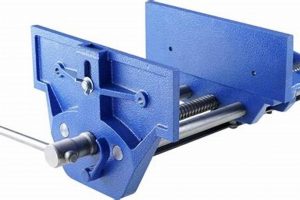
Tip 4: Vise Selection and Placement: Integrate at least one vise for secure clamping. Consider both face and tail vises, strategically positioned to maximize versatility. Vise hardware should be of high quality to withstand frequent use.
Tip 5: Dog Holes and Accessories: Incorporate a grid of dog holes across the surface to accommodate bench dogs and other workholding accessories. Ensure accurate alignment and consistent spacing for optimal functionality.
Tip 6: Surface Finish: Apply a durable finish, such as boiled linseed oil or a water-based polyurethane, to protect the surface from moisture and wear. Avoid finishes that create a slippery surface.
Tip 7: Base Stability: Design a robust base with sufficient weight and bracing to prevent movement during use. Consider adding adjustable feet to level the workbench on uneven floors.
A carefully constructed woodworking platform, incorporating these guidelines, will provide a stable and efficient workspace for years to come. Attention to detail and the use of quality materials are essential for a successful outcome.
The subsequent sections will explore advanced techniques and customization options that can further enhance the capabilities of this fundamental woodworking tool.
1. Planning the Design

The design phase is paramount to successful workstation construction. Ill-defined plans can result in a structure that fails to meet user needs, is structurally unsound, or is inefficient in its utilization of space. A well-considered design ensures the final construction aligns with specific project requirements and spatial limitations. For instance, a furniture maker will necessitate a longer benchtop than a model builder, and the design must account for this variation. Similarly, incorporating integrated storage solutions within the design reduces clutter and enhances workspace organization.
Detailed design specifications should encompass dimensions, material selection, and joint construction methods. Accurate dimensioning prevents errors during construction, minimizing material waste and ensuring proper fitment. Material choices, driven by durability and cost considerations, are integral to structural integrity. Selection of robust joint construction methods is fundamental to resisting racking and ensuring longevity. Consider the inclusion of features such as dog holes and vise placement during the initial design phase, as these features directly impact functionality and user experience. Blueprints, whether hand-drawn or computer-generated, provide a tangible roadmap for the construction process.
Neglecting the design phase results in a compromised final product. The lack of proper planning contributes to increased construction time, higher material costs due to errors, and a workstation that fails to effectively support woodworking activities. Investment in thorough planning upfront is essential for a durable, functional, and efficient woodworking foundation. This dedication to design provides a positive return on investment by reducing errors, optimizing functionality, and extending the workstations usable lifespan.
2. Material Considerations

The selection of appropriate materials is paramount to the successful construction and long-term performance of a woodworking foundation. Material choices directly impact the structure’s stability, durability, and overall functionality within the woodworking environment.
- Benchtop Hardness and Stability
The benchtop material bears the brunt of woodworking activities, necessitating high hardness and dimensional stability. Hardwoods, such as maple, beech, or birch, offer superior resistance to dents and wear compared to softwoods like pine. Dimensional stability, the ability to resist changes in shape due to moisture fluctuations, is crucial for maintaining a flat and reliable work surface. Warping or cupping of the benchtop undermines precision and complicates woodworking operations. The selection of kiln-dried hardwoods, acclimated to the workshop environment prior to construction, minimizes these risks.
- Base Frame Strength and Rigidity
The base frame provides the structural support for the entire workstation, demanding materials with high strength and rigidity. While hardwoods are suitable, cost-effective softwoods, such as Douglas fir, can be utilized if properly braced and joined. Frame materials must resist deflection under load to prevent rocking or instability during woodworking tasks. Adequate bracing and substantial joinery contribute to overall frame rigidity. The selection of appropriately sized lumber, based on anticipated load-bearing requirements, ensures the stability of the structure.
- Vise Jaw Material and Durability
The vise jaws, which secure workpieces during woodworking operations, require materials that are both durable and gentle on the wood. Hardwoods are commonly employed for vise jaws, providing adequate clamping force without marring the surface of the workpiece. Soft jaw liners, often made of leather or cork, can be added to further protect delicate materials. The selection of appropriate vise hardware, including sturdy screws and handles, ensures reliable clamping action and long-term durability.
- Joinery Material Compatibility
The materials used for joinery, such as glue and fasteners, must be compatible with the primary construction materials. Wood glues, such as polyvinyl acetate (PVA) or epoxy, provide strong and durable bonds between wooden components. The selection of appropriate glue types depends on the wood species, joint configuration, and environmental conditions. Mechanical fasteners, such as screws or bolts, can supplement glue joints for added strength. The compatibility of fasteners with the wood species is crucial to prevent corrosion or wood damage.
The intersection of these material considerations is crucial to building a woodworking bench that will stand the test of time. The wrong choice for any of these aspects can easily result in decreased efficiency, dangerous work conditions, or a need to quickly replace elements of the bench.
3. Joinery Techniques

The structural integrity of a woodworking foundation is inextricably linked to the joinery techniques employed during its construction. Sound joinery is not merely a cosmetic element, but rather the essential framework that ensures the bench withstands the rigors of woodworking tasks. Inadequate joinery leads to instability, premature wear, and ultimately, a compromised workstation. The selection and execution of appropriate joinery methods directly dictate the bench’s ability to resist racking, support heavy loads, and maintain dimensional stability over time. For instance, a bench constructed with simple butt joints, relying solely on fasteners, will rapidly degrade under stress, whereas a bench utilizing mortise-and-tenon or dovetail joints will offer superior strength and longevity.
Different joinery techniques offer varying degrees of strength and complexity, making their selection a crucial decision point in the construction process. The mortise-and-tenon joint, a traditional and robust method, involves fitting a projecting tenon into a corresponding mortise, providing exceptional resistance to shear forces. Dovetail joints, characterized by their interlocking shape, offer unparalleled tensile strength, particularly in resisting pull-apart forces. Lap joints, where two pieces of wood overlap and are fastened together, provide a simpler alternative for less critical connections. The choice of technique should reflect the specific demands placed on each joint within the workstation, considering factors such as load bearing, stress concentration, and aesthetic preferences. For example, the leg-to-apron joints, which bear significant weight, benefit from the superior strength of mortise-and-tenon joints, while drawer construction might utilize the clean aesthetics of dovetail joints.
The proficient execution of chosen joinery techniques is as important as the selection itself. Precise cutting, accurate fitting, and proper adhesive application are essential for maximizing joint strength. Gaps or misalignments weaken the joint and compromise its ability to withstand stress. The use of appropriate clamping pressure during glue-up ensures optimal adhesion between surfaces. Ultimately, mastery of joinery is a prerequisite for building a woodworking foundation that is not only functional but also durable and reliable. The implementation of these concepts is not just about building a bench, but about crafting a tool that supports the woodworking practice for years to come.
4. Workholding Solutions

Effective workholding is an indispensable component of a functional woodworking platform. Securely clamping and positioning workpieces during operations such as sawing, planing, and joinery is essential for accuracy, safety, and efficiency. The integration of appropriate workholding solutions directly influences the quality of the final product and the overall woodworking experience. For instance, attempting to hand-plane a workpiece without proper clamping can result in movement, inaccurate cuts, and potential injury. Conversely, a stable workholding system allows for controlled and precise material removal, leading to superior results.
A wide array of workholding solutions can be incorporated into a woodworking workstation. Vises, both face and tail, provide robust clamping force for larger workpieces. Bench dogs, used in conjunction with dog holes strategically placed across the benchtop, offer versatile positioning options for various shapes and sizes. Specialized clamps, such as holdfasts and cam clamps, provide rapid and secure clamping for specific tasks. The choice of workholding methods depends on the types of projects undertaken, the scale of the workbench, and the individual woodworker’s preferences. A well-equipped bench integrates a variety of solutions, providing flexibility and adaptability for different woodworking challenges. The design phase of the bench should incorporate these workholding considerations, determining the placement of vises, the pattern of dog holes, and the provision for other clamping accessories.
The implementation of appropriate workholding on the making of woodworking benches is crucial for realizing the full potential of a woodworking workstation. By facilitating secure and stable positioning of workpieces, these solutions enhance accuracy, safety, and efficiency. Consequently, a well-equipped workstation becomes a valuable asset, enabling woodworkers to execute projects with precision and confidence. Neglecting workholding considerations can lead to compromised results, increased risks, and a diminished woodworking experience. Therefore, the integration of effective workholding solutions is an indispensable investment in the functionality and usability of a woodworking foundation.
5. Stability and Level
The stability and levelness of a woodworking foundation are critical determinants of its overall functionality and safety. An unstable or unlevel surface introduces inaccuracies into woodworking operations, compromising the precision of cuts, joinery, and assembly. These deficiencies can lead to compounded errors, resulting in structurally unsound or aesthetically flawed projects. Furthermore, an unstable workstation poses a safety hazard, increasing the risk of accidents due to shifting workpieces or unintended movement of the bench itself. Therefore, stability and level are not merely desirable attributes, but essential prerequisites for a reliable woodworking environment.
The inherent connection between stability, levelness, and the function of a woodworking support structure is evident in various scenarios. For example, attempting to plane a long board on an unlevel surface results in uneven material removal, hindering the creation of a flat and true surface. Similarly, cutting dovetails on an unstable bench can lead to misaligned joints and a weakened structure. In both cases, the lack of a stable and level platform directly impedes the intended woodworking process, yielding substandard results. The construction of a robust and level base frame, coupled with appropriate leveling mechanisms, mitigates these issues, providing a solid foundation for precise and safe woodworking operations. This might involve incorporating adjustable feet to compensate for uneven floors or utilizing shims to achieve a perfectly level surface.
In summary, the stability and levelness of a woodworking platform directly impact the accuracy, safety, and efficiency of woodworking tasks. Neglecting these aspects results in compromised results and increased risk. Therefore, meticulous attention to these factors during the construction phase is paramount. This involves careful consideration of base frame design, leveling mechanisms, and overall structural integrity. The creation of a stable and level woodworking foundation represents a fundamental investment in the quality and safety of woodworking endeavors, enabling craftsmen to execute projects with precision and confidence.
Frequently Asked Questions About Workstation Construction
The following addresses common inquiries regarding the design, construction, and utilization of woodworking platforms. These answers aim to provide clear and concise information for individuals seeking to build or improve their own workspaces.
Question 1: What is the optimal height for a woodworking foundation?
The optimal height is determined by the user’s stature. A general guideline is to position the benchtop at a height that allows the user to work comfortably without stooping or hunching. A common method is to measure from the floor to the user’s wrist when the arm is hanging relaxed at their side. This measurement serves as a starting point, with adjustments made to accommodate individual preferences.
Question 2: What type of wood is most suitable for the benchtop?
Hardwoods, such as maple, beech, or birch, are generally considered optimal due to their durability and resistance to wear. These species provide a stable and robust work surface. Softwoods can be used, but are more prone to dents and damage.
Question 3: How important is the stability of the base frame?
The stability of the base frame is paramount. An unstable base compromises the accuracy and safety of woodworking operations. Adequate bracing, robust joinery, and a solid foundation are essential for preventing movement and ensuring a level work surface.
Question 4: What is the purpose of dog holes?
Dog holes are strategically placed openings on the benchtop that accommodate bench dogs, which are used to secure workpieces during various woodworking tasks. They provide versatile clamping options and are essential for efficient and precise workholding.
Question 5: How should the benchtop be finished?
The benchtop should be finished with a durable and protective coating that resists moisture and wear. Boiled linseed oil or a water-based polyurethane are common choices. The finish should be applied evenly and allowed to dry completely before use. Avoid finishes that create a slippery surface.
Question 6: Are vises essential components of a woodworking foundation?
Vises are highly recommended as they provide secure clamping for a wide range of woodworking tasks. Face vises and tail vises offer different clamping capabilities and should be selected based on the user’s specific needs. The quality of the vise hardware is crucial for reliable and long-lasting performance.
In summary, the careful consideration of these factors height, material selection, stability, workholding, finish, and clamping contributes significantly to the construction of a functional and durable woodworking platform.
The following section will explore common mistakes encountered during workstation construction and strategies for avoiding them.
Conclusion
This exploration has outlined the critical factors involved in crafting a functional and durable woodworking platform. From initial design considerations to material selection, joinery techniques, workholding solutions, and ensuring stability, each element contributes to the overall utility and longevity of the structure. Successfully constructing a workstation demands a thorough understanding of these principles and meticulous attention to detail throughout the building process.
Mastering the art of making woodworking bench marks a pivotal step in woodworking skill. As the central hub of the craft, its impact extends far beyond mere utility, shaping the craftsman’s efficiency, safety, and enjoyment of the art. Therefore, aspiring woodworkers should view the crafting of their workstation not just as a project, but as an essential investment in their craft and workspace.

![Best Woodworking Tool Bench [Guide] | Build Stronger | Step-by-Step Guides, Tools & Inspiration to Build Beautiful Wooden Decor on a Budget](https://woodfromhome.com/wp-content/uploads/2026/04/th-85-300x200.jpg "Best Woodworking Tool Bench [Guide] | Build Stronger Step-by-Step Guides, Tools & Inspiration to Build Beautiful Wooden Decor on a Budget")