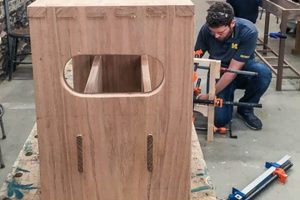
Entry-level projects within the craft offer a practical introduction to fundamental techniques and tool usage. These introductory ventures provide a manageable scope for individuals new to the field, fostering confidence and skill development. For example, constructing a simple birdhouse or a basic wooden box introduces concepts such as measuring, cutting, joining, and finishing.
Embarking on such activities yields several advantages. It cultivates problem-solving abilities, enhances fine motor skills, and provides a tangible sense of accomplishment. Historically, the creation of functional and decorative objects from timber has been a fundamental skill, passed down through generations. Engaging with this tradition connects individuals to a rich heritage of craftsmanship and resourcefulness.
The following sections will explore specific projects suitable for novices, detailing the necessary materials, tools, and step-by-step instructions to facilitate successful project completion and a positive initiation into the art of timber construction.
Essential Guidance for Novice Woodworkers
The pursuit of woodworking demands careful planning and execution, particularly for those with limited experience. Adhering to the subsequent recommendations can significantly improve project outcomes and ensure a safer working environment.
Tip 1: Prioritize Safety. Protective eyewear and hearing protection are non-negotiable when operating power tools. Ensure a well-ventilated workspace to mitigate the risks associated with sawdust inhalation and finishing product fumes.
Tip 2: Master Fundamental Techniques. Focus on achieving accurate measurements and precise cuts. Consistent practice with basic hand tools, such as saws and chisels, will build a solid foundation for more complex projects.
Tip 3: Select Appropriate Materials. Begin with softwood species like pine or poplar, which are more forgiving and easier to work with than hardwoods. Avoid using warped or knot-ridden timber, as it can compromise the structural integrity of the finished piece.
Tip 4: Employ Proper Joinery Methods. Start with simple joinery techniques like butt joints or lap joints, reinforced with screws or nails. These methods are less demanding than intricate joinery and provide sufficient strength for many starter projects.
Tip 5: Utilize Clamps Effectively. Clamps are essential for securing workpieces during gluing and assembly. Employ a variety of clamps to ensure uniform pressure and prevent shifting.
Tip 6: Sand Methodically. Proper sanding is crucial for achieving a smooth and professional finish. Begin with coarse-grit sandpaper and gradually progress to finer grits, sanding with the grain of the wood.
Tip 7: Apply Finishes with Care. Choose a suitable finish based on the intended use of the project. Apply finishes in thin, even coats, allowing ample drying time between coats.
By conscientiously following these guidelines, newcomers can minimize errors, enhance their skills, and cultivate a rewarding experience in the craft.
The subsequent sections will delve into specific project ideas tailored to the skills acquired through the application of these essential recommendations.
1. Simple Project Selection

The correlation between introductory woodworking projects and their inherent simplicity is paramount for novice engagement and skill development. Selecting manageable projects directly influences the learning curve and the likelihood of sustained interest.
- Reduced Complexity Equals Enhanced Learning
Projects with minimal components and straightforward assembly processes allow beginners to concentrate on fundamental techniques. Constructing a basic birdhouse, for example, focuses attention on accurate measuring, sawing, and fastening without the added burden of intricate design elements. This focused approach facilitates faster comprehension and skill acquisition.
- Minimizing Material Waste
Simple designs typically require fewer materials and produce less waste. A small cutting board, for instance, utilizes minimal timber compared to a complex piece of furniture. This efficiency is particularly beneficial for beginners who may be prone to errors, reducing the financial impact of mistakes and promoting a more sustainable approach to woodworking.
- Improved Project Completion Rates
The time commitment associated with simplified projects is significantly less, enhancing the probability of completion. A small wooden box can be finished in a single session, providing immediate gratification and reinforcing motivation. Conversely, complex undertakings can lead to frustration and abandonment, particularly for individuals with limited time or experience.
- Foundation for Advanced Skills
Mastering basic joinery techniques on elementary projects lays a solid groundwork for more advanced woodworking skills. Successfully executing a simple butt joint on a small frame paves the way for tackling more intricate joinery methods like mortise and tenon or dovetails. Each completed project contributes to a growing repertoire of skills and confidence.
In essence, the careful selection of undemanding projects is not merely a matter of convenience but a strategic approach to maximizing learning efficiency, minimizing resource consumption, and fostering long-term engagement within the sphere of woodworking.
2. Basic Tool Proficiency

The correlation between elementary tool competence and successful engagement in entry-level woodworking is undeniable. Mastery of foundational tools directly affects project quality, safety, and the development of more advanced skills. Inadequate proficiency increases the likelihood of errors, material waste, and potential injury. For example, an inability to maintain a straight cut with a hand saw will inevitably lead to misaligned joints and structural weaknesses in even the simplest box construction. The inverse also holds true: demonstrable competence with tools like measuring tapes, squares, and chisels leads to more accurate and aesthetically pleasing results.
The acquisition of tool skills is iterative. Beginning with rudimentary projects offers a controlled environment for refining techniques. Constructing a basic workbench, for instance, necessitates repeated use of various hand tools, providing ample opportunity to hone precision and dexterity. Moreover, understanding the limitations and capabilities of each tool is crucial for project planning. Knowing the maximum cutting depth of a circular saw, for example, prevents the selection of materials that exceed the tool’s capacity, thereby avoiding potential damage to both the tool and the workpiece. This understanding also promotes informed decision-making when choosing appropriate joinery methods. A beginner might initially opt for simpler joinery, like butt joints secured with screws, as they gain competence with saws and drills, and then graduate to more complex and stronger joints like dados or rabbets as they become confident in their ability to cut these joints accurately.
In summary, tool proficiency serves as the bedrock upon which woodworking skills are built. It fosters accuracy, safety, and informed decision-making. Neglecting tool fundamentals can lead to frustration and substandard results, while prioritizing their mastery paves the way for ongoing growth and enjoyment in woodworking. Beginner projects designed to reinforce these fundamental skills are therefore essential for nurturing both the craft and the craftsperson.
3. Wood Material Familiarity

The successful execution of introductory woodworking projects relies heavily on an understanding of various wood types and their properties. Selecting the appropriate material is critical to project durability, ease of construction, and overall aesthetic appeal. An informed decision minimizes potential challenges and promotes a more rewarding woodworking experience.
- Wood Hardness and Workability
Wood hardness significantly impacts the ease of cutting, shaping, and finishing. Softwoods like pine and fir are generally easier to work with due to their lower density, making them ideal for beginners. These species readily accept nails and screws, and can be shaped with minimal effort. Conversely, hardwoods like oak and maple require more force to cut and shape, necessitating sharper tools and greater physical exertion. Initiating projects with softer timber reduces the risk of tool damage and physical strain, thus enhancing the learning process.
- Grain Pattern and Aesthetic Considerations
The grain pattern of wood contributes significantly to the visual appeal of a finished project. Straight-grained wood, such as poplar or basswood, is predictable and easy to work with, providing a uniform surface for painting or staining. More complex grain patterns, like those found in oak or cherry, can add character and visual interest, but may also present challenges in finishing due to variations in density and absorption. Beginners should consider the grain pattern when selecting wood, opting for simpler patterns that are more forgiving and easier to finish evenly.
- Wood Stability and Moisture Content
Wood is hygroscopic, meaning it absorbs and releases moisture from the surrounding environment. Fluctuations in moisture content can cause wood to warp, crack, or shrink, compromising the structural integrity of a project. Understanding wood stability is critical for preventing these issues. Kiln-dried lumber is generally more stable than green or air-dried lumber, making it a preferred choice for woodworking projects. Proper acclimation of wood to the workshop environment before construction is also essential for minimizing moisture-related problems.
- Cost and Availability
The cost and availability of different wood species vary considerably. Exotic hardwoods, such as mahogany or ebony, are typically more expensive and difficult to source than domestic softwoods. Beginners should consider the cost and availability of wood when selecting materials for their projects, opting for readily available and affordable options like pine or poplar. This allows for experimentation and practice without incurring significant financial risk.
In summation, wood material familiarity constitutes a foundational element for anyone venturing into woodworking. Awareness of factors like hardness, grain patterns, stability, cost, and availability enables novices to select appropriate wood for their skill level, leading to more satisfying outcomes and the continued development of proficiency in the craft.
4. Safety Protocol Adherence

The integration of stringent safety protocols is paramount when considering elementary woodworking projects. Inherent risks associated with woodworking machinery and hand tools necessitate a proactive approach to hazard mitigation. Insufficient adherence to safety guidelines directly correlates with an elevated incidence of injuries, ranging from minor cuts and abrasions to severe lacerations and potential limb trauma. For example, neglecting to wear appropriate eye protection while operating a lathe can result in wood particles or debris causing significant ocular damage. Similarly, failure to utilize dust collection systems while sanding or sawing exposes individuals to respirable wood dust, a known carcinogen. Thus, the selection and execution of beginner woodworking projects must intrinsically prioritize safety education and the consistent application of recommended safeguards.
Furthermore, the instructional framework for novice woodworking should incorporate comprehensive demonstrations of safe tool operation, proper personal protective equipment (PPE) usage, and established emergency procedures. Project instructions should clearly delineate potential hazards and provide step-by-step guidance on mitigating those risks. For instance, when constructing a simple wooden box, instructions should emphasize the importance of clamping the workpiece securely before drilling or sawing to prevent uncontrolled movement and potential tool slippage. Similarly, guidance should be provided on the appropriate selection and maintenance of cutting tools, ensuring they are sharp and properly adjusted to minimize the risk of kickback or binding. The implementation of these safety measures is not merely an ancillary concern but a fundamental element of responsible woodworking practice.
In conclusion, a comprehensive understanding and unwavering commitment to safety protocols are indispensable prerequisites for engaging in woodworking, particularly for beginners. Neglecting these precautions can result in preventable injuries and long-term health consequences. Educational resources and project designs tailored for novices must explicitly incorporate and reinforce safe work practices, ensuring that skill development is inextricably linked to a culture of safety. Only through this integrated approach can the potential benefits of woodworking be realized without compromising the well-being of the craftsperson.
5. Accessible Skill Development

The success of introductory woodworking relies on the principle of accessible skill development, directly impacting novice engagement and sustained learning. Initial projects must align with the current capabilities of the beginner, gradually introducing new techniques and knowledge. Failure to prioritize accessibility can lead to frustration, diminished confidence, and ultimately, abandonment of the craft. The correlation between readily achievable milestones and continuous skill acquisition is undeniable. For example, a project requiring complex joinery beyond the beginner’s scope, such as intricate dovetails, may present an insurmountable challenge. Conversely, a simple shelf construction project, focusing on accurate measurement, straight cuts, and basic fastening, allows for the development of fundamental skills in a manageable and rewarding context.
Practical significance is evident in structured woodworking courses designed for beginners. These programs often start with basic hand tool exercises, such as planing a board or sharpening a chisel, before progressing to small-scale projects. This phased approach enables learners to develop a foundational understanding of tool usage and material properties. Furthermore, the provision of clear, concise instructions and readily available support is crucial for fostering accessibility. Online tutorials, workshops, and mentorship opportunities can provide valuable guidance and encouragement, especially when encountering challenges. The incorporation of adaptive learning techniques, which tailor the difficulty and complexity of projects based on individual progress, can also enhance accessibility and ensure a personalized learning experience.
In summary, accessible skill development is a crucial component of effective woodworking programs for beginners. By emphasizing gradual progression, providing clear instruction, and offering ongoing support, novices can acquire the fundamental skills needed to confidently pursue more advanced projects. Challenges may arise in adapting instruction to diverse learning styles and ensuring access to necessary resources. However, prioritizing accessibility ultimately fosters a more inclusive and rewarding woodworking experience, contributing to the long-term growth and vitality of the craft.
Frequently Asked Questions Regarding Introductory Woodworking
This section addresses common inquiries and misconceptions concerning initial ventures into the craft. Clarity on these matters aids in establishing realistic expectations and fosters a more productive learning experience.
Question 1: What constitutes a suitable age for beginning woodworking?
Woodworking aptitude is not solely dependent on chronological age. The primary determinants are cognitive development, manual dexterity, and the ability to comprehend and adhere to safety guidelines. Supervised participation is recommended for younger individuals, with projects tailored to their capabilities.
Question 2: Is specialized workshop space a prerequisite for commencing with these endeavors?
Dedicated workshop environments are advantageous but not strictly necessary. Initial projects can be undertaken in a garage, shed, or even a well-ventilated outdoor area. The crucial elements are adequate space for maneuverability and adherence to dust control measures.
Question 3: Must one invest in expensive power tools to begin?
The notion that substantial power tool investment is mandatory for introductory woodworking is a misconception. Many fundamental tasks can be accomplished using hand tools. Power tools, while increasing efficiency, are not essential at the outset. A gradual acquisition approach is recommended.
Question 4: What are the most common errors encountered by those new to woodworking?
Frequently observed mistakes include inaccurate measurements, imprecise cuts, inadequate clamping during gluing, and premature application of finishes. Diligence in measurement and technique, coupled with patience, can mitigate these errors.
Question 5: How crucial is formal woodworking training for these projects?
Formal training is beneficial but not obligatory. Numerous resources, including books, online tutorials, and community workshops, provide sufficient guidance for basic woodworking endeavors. Self-directed learning is a viable option, provided due attention is paid to safety and technique.
Question 6: What is the projected timeframe for mastering basic woodworking skills?
The timeframe for achieving proficiency varies according to individual aptitude, dedication, and frequency of practice. Consistent engagement over several months typically yields demonstrable competence in fundamental techniques and tool usage.
The key takeaways emphasize the importance of safety, realistic expectations, and a gradual approach to skill development. Addressing these questions provides a clearer understanding of the initial stages of woodworking.
The subsequent section will provide resources for further exploration and advancement within the craft.
Conclusion
The preceding exploration of novice woodworking ventures has underscored essential facets crucial for successful engagement. Emphasis was placed on project simplification, basic tool proficiency, wood material familiarity, unwavering safety protocol adherence, and the prioritization of accessible skill development. Each element contributes significantly to the initial experience, shaping both the immediate outcomes and long-term trajectory of the aspiring woodworker.
The information presented serves as a foundation for further exploration and practical application. By embracing a structured approach to learning and diligently applying the principles outlined, individuals can embark on a rewarding journey into the craft, fostering creativity, resourcefulness, and the enduring satisfaction of tangible accomplishment. Continued dedication to skill refinement and responsible practice will undoubtedly yield increasingly complex and fulfilling projects.