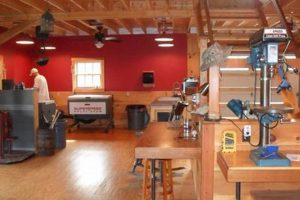
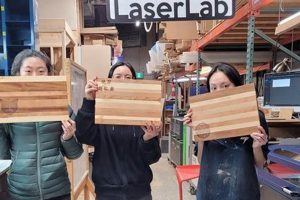
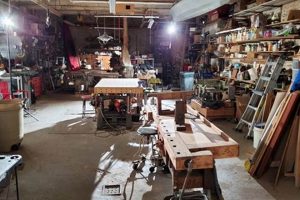
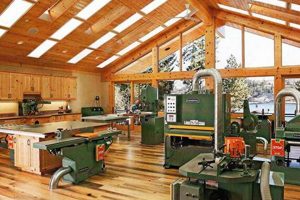
A communal facility equipped with woodworking tools and machinery provides access to individuals who may not possess their own equipment or workspace. These spaces offer a venue for hobbyists, artisans, and small-scale entrepreneurs to pursue woodworking projects, often on a membership or fee-for-service basis. Examples include workshops located within community centers, maker spaces, or dedicated woodworking businesses where individuals can rent time on equipment like saws, lathes, and planers.
The existence of shared woodworking environments democratizes access to the craft, enabling participation regardless of economic status or available personal space. Historically, these spaces have fostered communities of practice, allowing for the sharing of knowledge, techniques, and collaborative projects. The benefits extend to supporting small business development, promoting sustainable resource use through shared equipment, and providing educational opportunities in woodworking skills and safety.
The following sections will detail the operational aspects of such a facility, including membership models, safety protocols, equipment maintenance, and the diverse range of projects commonly undertaken within the workshop environment. Additionally, the article will explore the role these spaces play in community development and fostering creative expression.
The following advice aims to assist individuals in maximizing their experience and ensuring safety and efficiency when operating within a communal woodworking environment.
Tip 1: Prioritize Safety Training. A thorough understanding of equipment operation and safety protocols is paramount. Complete all required training sessions offered by the facility before commencing any project. This minimizes the risk of accidents and ensures a safe working environment for all users.
Tip 2: Familiarize Yourself with Equipment. Before initiating any task, carefully review the operating manual and inspect the equipment to be used. Understanding the functionality and limitations of each tool ensures accurate and safe execution.
Tip 3: Respect Shared Resources. These facilities operate on the principle of shared access. Maintain cleanliness around the work area, promptly return tools to their designated locations, and adhere to any time limitations imposed on equipment usage. This ensures fair access for all members.
Tip 4: Plan Projects Thoroughly. Detailed project planning, including material selection, cutting lists, and assembly strategies, minimizes material waste and optimizes workflow within the shared workspace. Consider utilizing project planning software or consulting with experienced members.
Tip 5: Practice Proper Dust Collection. Woodworking generates significant amounts of dust, which poses health risks. Utilize the provided dust collection systems diligently and wear appropriate respiratory protection, such as a dust mask or respirator. This ensures a clean and healthy environment.
Tip 6: Communicate with Other Users. Maintain clear communication with fellow members regarding shared equipment usage, workspace availability, and potential hazards. Cooperative communication contributes to a positive and productive atmosphere.
Tip 7: Consider Material Storage Options. If the facility offers material storage, carefully evaluate the costs and benefits. Proper storage protects materials from damage and minimizes clutter within the shared workspace.
Adherence to these guidelines will enhance the woodworking experience, promote a safe environment, and ensure the equitable use of resources. Consistent application of these principles contributes to the long-term sustainability of these valuable community assets.
The final section of this article will address best practices in sustainable woodworking and the environmental considerations relevant to shared workshop spaces.
1. Accessibility

The viability of a woodworking shop available to the public is inextricably linked to its accessibility. This extends beyond mere physical access and encompasses financial, educational, and operational facets. A shop positioned within a community, yet priced beyond the means of many residents, fails to fulfill its potential as a public resource. Similarly, a facility lacking clear operating procedures or introductory training programs restricts participation, disproportionately affecting novice woodworkers or those unfamiliar with advanced machinery. The cause-and-effect relationship is evident: limited accessibility directly translates to reduced community engagement and diminished utilization of the workshop’s resources.
Accessibility’s importance is underscored by examples of successful communal woodworking spaces. Consider workshops that offer tiered membership options, incorporating subsidized rates for low-income individuals or students. Other successful strategies include collaborative partnerships with local schools or community centers to provide free introductory workshops. Furthermore, clear and readily available documentation, coupled with multilingual support, removes barriers for individuals with diverse linguistic backgrounds. These initiatives foster a broader user base and contribute to the workshop’s sustainability. One example is the “XYZ Maker Space” that partners with a local high school to bring woodworking programs to students at no cost. Also, It offers financial support for low-income individuals. The shop also provides all documentation in english and spanish.
Understanding the practical significance of accessibility is paramount for stakeholders. Facility administrators must actively seek and address barriers to participation, employing targeted outreach strategies and adaptive operational models. Failure to prioritize accessibility can result in underutilization of resources, limited community impact, and ultimately, compromised financial stability. By embedding accessibility as a core operational principle, a woodworking shop transforms from a mere collection of tools into a vibrant community hub, fostering skill development, creative expression, and economic empowerment.
2. Equipment Safety

Equipment safety is a paramount concern within a woodworking facility accessible to the public. The inherent risks associated with power tools and machinery necessitate rigorous protocols and comprehensive training to minimize the potential for injury. The absence of stringent safety measures can lead to accidents, legal liabilities, and a compromised reputation for the facility.
- Mandatory Safety Training
Comprehensive instruction on the safe operation of each tool is crucial. Training programs must cover potential hazards, proper techniques, and emergency procedures. Certification should be required before members are permitted to operate equipment independently. For example, new members at “Community Woodworkers Collective” are required to complete a four-hour safety course before using any power tools. The implications of neglecting this facet are increased accident rates and potential legal ramifications.
- Personal Protective Equipment (PPE) Enforcement
The mandatory use of appropriate PPE, including safety glasses, hearing protection, and dust masks, is essential. Regular inspections and strict enforcement of PPE requirements are necessary to mitigate exposure to hazards. Consider the implementation of a “no PPE, no operation” policy. In some facilities, specialized equipment like respirators for finishing tasks are also mandatory. Failure to enforce PPE standards directly increases the risk of injury and long-term health problems among users.
- Regular Equipment Maintenance and Inspection
Consistent maintenance and inspection schedules are critical to ensure equipment is functioning safely and correctly. This includes blade sharpness, guard functionality, and the integrity of electrical components. Documented maintenance logs should be maintained for each piece of equipment. For instance, “Neighborhood Woodshop” performs weekly safety checks on all machinery and schedules professional maintenance quarterly. Neglecting routine maintenance can lead to equipment malfunctions and subsequent accidents.
- Emergency Procedures and First Aid
Clearly defined emergency procedures, including readily accessible first aid kits and trained personnel, are vital. Response protocols for injuries, equipment malfunctions, and fire hazards must be established and regularly reviewed. Posting emergency contact information and evacuation routes prominently is also necessary. The absence of well-defined emergency protocols can result in delayed response times and increased severity of injuries in the event of an accident.
These facets of equipment safety collectively contribute to a secure and productive environment within a shared woodworking facility. Prioritizing safety is not merely a legal obligation but a moral imperative. Facilities that demonstrably prioritize safety foster a culture of responsibility, attracting and retaining members while minimizing the risk of accidents and associated liabilities. Effective implementation requires ongoing commitment and continuous improvement of safety protocols.
3. Community Building

A shared woodworking environment inherently fosters community engagement. The physical space serves as a locus for individuals with a common interest in woodworking to converge, interact, and collaborate. The cause-and-effect relationship is straightforward: the facility provides the physical infrastructure, while the shared passion for woodworking provides the social impetus for community formation. The absence of such community-building opportunities limits the potential of a woodworking shop, reducing it to a mere collection of tools rather than a vibrant social hub.
The importance of community building as a component of a woodworking shop is underscored by its ability to facilitate knowledge sharing, skill development, and project collaboration. Experienced woodworkers often mentor novices, transferring valuable skills and techniques. Collaborative projects enable members to pool their resources and expertise, achieving outcomes that would be impossible for individuals working in isolation. Consider, for example, the “Artisan’s Guild Workshop,” where members collectively design and build furniture for local charities. This collaborative approach not only benefits the community but also strengthens the bonds between the members themselves. In some cases, they help each other improve woodworking skills, which can potentially cause them to be professional craftsman.
The practical significance of understanding this connection lies in the ability to cultivate a thriving community within the woodworking shop. Facility administrators can actively promote community building through organized events, workshops, and shared project initiatives. Creating a welcoming and inclusive environment encourages participation and fosters a sense of belonging. While challenges such as personality conflicts or differing skill levels may arise, proactive community management can mitigate these issues and ensure a positive experience for all members. Ultimately, a well-cultivated community not only enhances the woodworking experience but also contributes to the long-term sustainability and success of the facility, linking directly to the broader themes of accessibility and resource utilization.
4. Material Sourcing

Material sourcing is inextricably linked to the operational viability and environmental responsibility of a public woodworking facility. The selection of materials directly impacts project costs, the quality of finished products, and the ecological footprint of the workshop. Inadequate or unsustainable sourcing practices can lead to financial instability, compromised project integrity, and negative environmental consequences, undermining the facility’s long-term sustainability.
The importance of responsible material sourcing as a component of a shared woodworking shop is multifaceted. Consider the cost implications: bulk purchasing of lumber and hardware can significantly reduce expenses for members, but requires careful planning and vendor selection. Environmentally, sourcing locally harvested and sustainably certified lumber minimizes transportation costs and supports responsible forest management. For example, “Eco Woodworkers Collective” partners with a local sawmill that practices selective harvesting, ensuring a consistent supply of responsibly sourced materials for its members. Furthermore, facilities can reduce waste and promote resource conservation by establishing partnerships with construction sites or furniture manufacturers to acquire reclaimed or repurposed wood. The effect is a lower carbon footprint.
Understanding the practical significance of material sourcing empowers facility administrators to make informed decisions that benefit both the members and the environment. Implementing a material management system that tracks inventory, monitors consumption, and promotes efficient usage can reduce waste and minimize unnecessary purchases. Conducting regular workshops on sustainable woodworking practices educates members about responsible material selection and finishing techniques. The challenges inherent in sourcing ethical and environmentally friendly materials often involve higher initial costs and increased administrative effort. However, the long-term benefits, including enhanced reputation, increased member satisfaction, and a reduced environmental impact, far outweigh the short-term costs, contributing to the overall success and sustainability of the public woodworking facility.
5. Skill Development

The provision of opportunities for skill development is a fundamental purpose and significant benefit offered by a woodworking shop accessible to the public. These facilities act as learning environments, fostering the acquisition and refinement of woodworking skills across a spectrum of experience levels. The availability of tools and equipment, combined with structured training programs and informal peer-to-peer learning, creates an ecosystem conducive to continuous skill enhancement. A direct cause-and-effect relationship exists: the presence of a well-equipped and supportive shop environment leads to increased skill proficiency among its users. The absence of skill development programs diminishes the value proposition of the facility, potentially limiting its appeal and long-term viability.
The importance of skill development as an integral component of a woodworking shop is evidenced by various successful models. Consider “The Woodworkers’ Learning Center,” which offers tiered courses ranging from introductory woodworking to advanced furniture making. Members benefit from structured curricula, expert instruction, and access to specialized equipment, resulting in demonstrably improved woodworking capabilities. Similarly, “Community Creations Workshop” fosters informal learning through mentorship programs pairing experienced woodworkers with novices. This approach facilitates knowledge transfer and promotes a collaborative learning environment. Another real-world example is the presence of specialized classes, offered by several public woodworking shop, that focuses on techniques, like woodturning.
Understanding the practical significance of this connection is crucial for facility administrators seeking to maximize the impact of their operations. Prioritizing skill development through the provision of diverse learning opportunities, coupled with accessible equipment and knowledgeable support staff, fosters a thriving community of woodworkers. While challenges may include the cost of training programs and the need for qualified instructors, the long-term benefits of a skilled and engaged membership outweigh the initial investment. Ultimately, a woodworking shop that prioritizes skill development contributes to the growth of individual craftsmanship, the preservation of woodworking traditions, and the overall enrichment of the community it serves, also, improving the economy of community by promoting craftsmanship.
Frequently Asked Questions Regarding Public Woodworking Shops
The following addresses common inquiries regarding public woodworking shops, providing factual information to clarify operational aspects and dispel potential misconceptions.
Question 1: What constitutes a “public woodworking shop?”
The term refers to a shared workspace equipped with woodworking tools and machinery, accessible to members of the public on a membership or fee-for-service basis. These spaces typically offer access to equipment that individuals may not own, such as industrial-grade saws, planers, and lathes.
Question 2: What are the primary benefits of utilizing a public woodworking shop?
The benefits include access to expensive equipment without the capital investment, a community of fellow woodworkers for collaboration and knowledge sharing, and a dedicated workspace that may be unavailable at home. Additionally, many facilities offer training courses and safety certifications.
Question 3: What safety measures are typically in place at a public woodworking shop?
Standard safety measures include mandatory safety training, required use of personal protective equipment (PPE), regular equipment maintenance and inspection, and clearly defined emergency procedures. Strict adherence to these protocols is essential for mitigating risks.
Question 4: How are membership fees typically structured?
Membership fees vary depending on the facility and the level of access provided. Common models include monthly or annual memberships with unlimited access, pre-paid hourly rates, or project-based fees. Some facilities offer tiered membership options with varying levels of equipment access and storage space.
Question 5: Is prior woodworking experience required to use a public woodworking shop?
Prior experience is not always required, as many facilities offer introductory courses and safety training for beginners. However, some level of familiarity with basic woodworking tools and techniques is often recommended.
Question 6: What are the environmental considerations associated with public woodworking shops?
Environmental considerations include responsible material sourcing, waste management, and dust collection. Facilities committed to sustainability often prioritize the use of sustainably harvested lumber, proper disposal of wood scraps, and the implementation of effective dust collection systems to minimize air pollution.
These frequently asked questions provide a foundational understanding of public woodworking shops, addressing key operational aspects and potential benefits. Further research and facility-specific inquiries are recommended for those seeking more detailed information.
The following section will examine the role of public woodworking shops in fostering economic development within local communities.
Conclusion
This exploration of the public woodworking shop concept has outlined its multifaceted role. The analysis encompassed accessibility, safety, community building, responsible material sourcing, and skill development all essential to a successful and sustainable operation. A well-managed and appropriately resourced facility contributes significantly to the local community, offering opportunities for creative expression, skill acquisition, and potential economic empowerment.
The future viability of the public woodworking shop model hinges on continued commitment to these core principles. Investing in safety protocols, fostering community engagement, and embracing sustainable practices are critical for ensuring the long-term success and positive impact of these valuable resources. The continued support and strategic development of these spaces will be instrumental in nurturing a vibrant woodworking culture and contributing to the broader creative economy. The public woodworking shop serves as more than just a collection of tools; it represents an investment in individuals, communities, and the enduring tradition of craftsmanship.