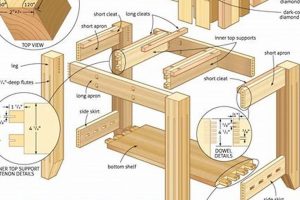
Creating manageable items from wood offers an accessible entry point into the craft. These undertakings, characterized by their limited size and scope, typically require fewer resources, less time, and a smaller workspace compared to larger-scale woodworking endeavors. Examples encompass items such as cutting boards, small boxes, and simple decorative pieces.
The appeal of these projects lies in their ability to provide a tangible sense of accomplishment in a relatively short timeframe. The skills acquired through their construction serve as a foundation for tackling more complex designs and techniques. Historically, these types of woodworking exercises have been employed as training tools and a means of creative expression for both novice and experienced woodworkers.
The subsequent sections will delve into specific examples, exploring various designs, skill levels, and material considerations, providing a foundation for selecting a suitable undertaking and embarking on a fulfilling woodworking journey.
Essential Guidance for Compact Woodworking Endeavors
The following guidance addresses critical factors to consider when undertaking diminutive woodworking tasks, ensuring optimal outcomes and efficient resource utilization.
Tip 1: Prioritize Design Simplicity: Opt for designs with clean lines and minimal complexity. Intricate joinery or elaborate embellishments can quickly overwhelm projects of limited scale, increasing difficulty and potential for error.
Tip 2: Select Appropriate Materials: Wood selection is crucial. Hardwoods such as maple or cherry offer durability and visual appeal for items intended for frequent use. Softwoods, such as pine, are more easily worked and suitable for practice pieces or decorative objects.
Tip 3: Accurately Measure and Cut: Precision is paramount in small-scale woodworking. Imperfect cuts or misaligned components become readily apparent. Employ accurate measuring tools and take deliberate, controlled cuts.
Tip 4: Master Fundamental Joinery Techniques: While complex joinery may be avoided, proficiency in basic techniques such as butt joints, rabbet joints, and dowel joints is essential for constructing robust and aesthetically pleasing items.
Tip 5: Employ Effective Clamping Strategies: Securely clamping workpieces during glue-up is critical for achieving strong and accurate joints. Utilize a variety of clamps and clamping aids to ensure even pressure distribution.
Tip 6: Apply Appropriate Finishes: The finish enhances both the appearance and durability of the completed item. Select a finish that complements the wood species and intended use, ensuring proper application and curing.
Tip 7: Maintain Sharp Tools: Sharp tools are fundamental to safe and efficient woodworking. Dull tools require more force, increasing the risk of accidents and producing inferior results. Regularly sharpen and maintain cutting edges.
Adherence to these guidelines will increase the likelihood of successful completion, yielding satisfying results and fostering further development of woodworking skills.
The subsequent section will offer specific project ideas, building upon the foundational principles outlined above.
1. Manageability

Manageability, within the context of diminutive woodworking tasks, directly correlates with the likelihood of successful completion and the acquisition of foundational skills. Selecting projects that align with one’s current abilities prevents discouragement and fosters a positive learning experience.
- Complexity of Design
Intricate designs, characterized by numerous components, complex joinery, or challenging shaping requirements, demand a higher level of woodworking proficiency. Overly complex designs can quickly overwhelm novice woodworkers, leading to frustration and potentially abandoned projects. Simpler designs, conversely, provide a more accessible entry point, allowing for the mastery of fundamental techniques without unnecessary complications.
- Number of Steps Involved
Projects with a reduced number of distinct steps are inherently more manageable. Fewer steps minimize the opportunity for errors and streamline the construction process, allowing for a more efficient and focused approach. This is particularly relevant for beginners who may lack the experience to effectively manage multi-stage projects.
- Specialized Tool Requirements
Projects that necessitate specialized or uncommon woodworking tools can present a barrier to entry. Access to such tools may be limited, and the skills required to operate them safely and effectively may be beyond the capabilities of novice woodworkers. Projects that can be completed with a basic set of hand tools or common power tools are generally more manageable.
- Precision Demands
Certain projects require a high degree of precision in measurements and execution. Intricate joinery or tight tolerances can amplify the impact of even minor errors, leading to structural weakness or aesthetic imperfections. Projects that are more forgiving of slight variations are generally more manageable, particularly for those still developing their woodworking skills.
The selection of undertakings that prioritize manageability is crucial for fostering a sense of accomplishment and building confidence in woodworking abilities. By starting with simpler, more accessible projects, individuals can gradually develop their skills and progress to more complex designs as their experience grows. Prioritizing manageability is a key element in the successful navigation of compact woodworking ventures.
2. Material Cost

Material cost represents a significant consideration within the context of selecting appropriate compact woodworking undertakings. The financial investment associated with materials directly impacts the accessibility and feasibility of a given project, particularly for individuals with budgetary constraints or those new to the craft.
- Wood Species Selection
The choice of wood species exerts a substantial influence on material costs. Exotic hardwoods, possessing exceptional grain patterns or inherent durability, command a premium price compared to readily available softwoods like pine or fir. Projects utilizing smaller quantities of more expensive woods, or those employing cost-effective alternatives, mitigate the financial burden.
- Project Dimensions and Material Volume
The overall dimensions of a woodworking project directly correlate with the volume of material required. Diminutive projects, by definition, necessitate smaller quantities of lumber, hardware, and finishing supplies, resulting in reduced material expenses. Optimizing designs to minimize material waste further contributes to cost containment.
- Sourcing and Purchasing Strategies
Material costs can be influenced by sourcing strategies. Purchasing lumber from local sawmills or smaller lumberyards may offer more competitive pricing compared to large retail chains. Salvaged or reclaimed wood, when appropriate, provides a sustainable and often economical alternative to purchasing new materials. Careful comparison shopping and bulk purchasing, where feasible, can also yield cost savings.
- Hardware and Finishing Supplies
Beyond lumber, material costs encompass hardware (screws, nails, hinges, etc.) and finishing supplies (stains, sealants, topcoats). Selecting cost-effective hardware options and employing efficient finishing techniques can contribute to overall cost reduction. Consider using readily available, economical finishes for practice projects.
The judicious management of material costs enhances the appeal and practicality of compact woodworking endeavors. By carefully considering wood species selection, project dimensions, sourcing strategies, and hardware/finishing supply choices, individuals can minimize financial investment while maximizing the potential for creative expression and skill development. Selecting appropriate materials is imperative to ensure the financial viability of undertaking modest woodworking ventures.
3. Skill Level

Competency in woodworking directly dictates the suitability of a particular undertaking. Projects should align with an individual’s current abilities to ensure a positive experience and facilitate skill progression. Misalignment between project complexity and skill level can lead to frustration and unsuccessful outcomes.
- Novice Skill Level
Projects for novices should emphasize fundamental techniques such as measuring, cutting straight lines, sanding, and basic assembly. Simple projects like coasters, small picture frames, or basic birdhouses offer opportunities to practice these skills without requiring advanced joinery or specialized tools. Success at this level builds confidence and encourages further exploration.
- Intermediate Skill Level
Individuals with intermediate skills can tackle projects involving more complex joinery, such as rabbets, dados, or simple mortise and tenon joints. Small boxes with fitted lids, cutting boards with inlaid patterns, or small shelves with decorative elements are suitable options. These projects challenge existing skills while introducing new techniques.
- Advanced Skill Level
Woodworkers with advanced skills can undertake projects that incorporate intricate joinery, advanced shaping techniques, and complex designs. Items such as small cabinets with dovetailed drawers, sculpted wooden bowls, or intricate wooden puzzles provide opportunities to showcase mastery of the craft. Projects at this level often require specialized tools and a thorough understanding of woodworking principles.
- Tool Proficiency
Skill level extends beyond design complexity to encompass proficiency with various woodworking tools. A novice may struggle with a project requiring extensive use of a router or a hand plane, while an experienced woodworker can efficiently execute intricate cuts and shapes. Choosing undertakings that utilize familiar tools increases the likelihood of a successful outcome.
Appropriate matching of project to skill level is essential for successful woodworking. Novices should begin with simple projects to develop foundational skills, while experienced woodworkers can pursue more challenging designs to expand their expertise. The progressive nature of woodworking allows for continuous learning and skill development, fostering a rewarding and fulfilling craft.
4. Time Investment

Time investment represents a critical factor in evaluating the suitability of undertakings, particularly within the scope of compact woodworking endeavors. The duration required to complete a project significantly influences its appeal, especially for individuals with limited availability or those seeking immediate gratification. The correlation between reduced time commitment and successful completion fosters motivation and encourages continued engagement with the craft. Conversely, projects demanding excessive time can lead to frustration and project abandonment.
A cutting board, for instance, often constitutes an optimal starter task due to its relatively short construction time. The process typically involves selecting and preparing the wood, cutting it to size, gluing the pieces together, sanding the surface, and applying a finish. This can usually be accomplished within a few hours, offering a tangible result within a reasonable timeframe. In contrast, a small cabinet, even with simple joinery, requires considerably more time due to the increased number of components, the need for precise fitting, and the complexities of finishing multiple surfaces. The efficient allocation of time directly impacts the perceived value and accessibility of these tasks.
Ultimately, time investment must be weighed against individual schedules and desired outcomes. Projects that can be completed in a manageable timeframe are more likely to be successfully finished, providing a sense of accomplishment and encouraging the pursuit of more challenging woodworking endeavors. Strategic selection based on time commitment fosters both skill development and sustained interest in the craft.
5. Tool Requirements

The selection of appropriate woodworking undertakings is inextricably linked to the requisite tooling. Access to, and proficiency with, the necessary tools directly impacts project feasibility and outcome quality. Substantial capital investment in specialized equipment can serve as a barrier to entry, making projects requiring minimal or common tools more appealing, particularly for beginners. Conversely, limiting tool investment may restrict the range of projects that can be effectively undertaken. The correlation between tool availability and project selection is therefore a fundamental consideration.
Consider the construction of a basic cutting board. This project can be executed with a relatively limited toolset: a saw (hand saw or circular saw), a measuring tape, a square, sandpaper, wood glue, and clamps. The low tool barrier makes it accessible to a wide range of individuals, regardless of prior experience or financial resources. In contrast, crafting a small dovetailed box demands a more extensive toolkit, including chisels, a dovetail saw, and potentially a router. The added complexity and tool requirements render this project less suitable for novice woodworkers or those with limited equipment.
The prudent evaluation of tool requirements is paramount in determining the suitability of undertakings. Projects requiring common hand tools or readily accessible power tools offer a more accessible and cost-effective entry point into the craft. Conversely, undertaking tasks necessitating specialized or expensive equipment necessitates careful consideration of financial investment and skill acquisition. Aligning projects with existing tool inventory optimizes resource utilization and enhances the likelihood of successful completion.
6. Practical Use

The inherent utility of a completed woodworking piece significantly elevates its value and contributes to its classification as one of the “best small woodworking projects.” When the end result serves a functional purpose, the undertaking gains a dimension beyond mere craftsmanship. It transforms into a tangible asset within the user’s environment. This characteristic fosters a stronger sense of accomplishment and satisfaction, driving continued engagement with the craft. Examples include cutting boards for food preparation, coasters for surface protection, or small boxes for storage purposes. Each of these serves a clear and defined role, thereby increasing the intrinsic value of the effort expended.
The determination of practical application extends beyond mere functional capability to encompass aspects of design and material selection. A well-designed cutting board, for instance, not only provides a durable surface for cutting but also incorporates features that enhance its usability, such as non-slip feet or juice grooves. Similarly, the selection of appropriate wood species, such as maple or cherry, impacts the longevity and hygiene of the finished item. Thus, the consideration of practical use necessitates a holistic approach that integrates functional design with informed material choices.
In summary, the degree to which a woodworking piece serves a practical function directly influences its perceived value and its designation as a worthwhile endeavor. Prioritizing projects with clear utility maximizes the return on time and resources invested, while fostering a deeper appreciation for the craft. Overcoming the challenge of identifying projects that are both manageable and functionally relevant enhances the overall experience and reinforces the broader appeal of small-scale woodworking.
Frequently Asked Questions
The following section addresses common inquiries related to engaging in modest-scale woodworking, providing clarity on key considerations and potential challenges.
Question 1: What constitutes a “small” woodworking undertaking?
The classification hinges primarily on size, complexity, and time commitment. Projects characterized by limited dimensions, manageable design, and a relatively short construction period are generally considered small.
Question 2: Are specialized tools necessary for completing minimal undertakings?
The tooling requirements are contingent upon the specific project. Many basic undertakings can be completed with a limited set of hand tools or common power tools. However, more intricate designs may necessitate specialized equipment.
Question 3: Which wood species are most appropriate for beginners?
Softwoods, such as pine, are often recommended for novice woodworkers due to their workability and affordability. Hardwoods, such as maple or cherry, offer superior durability and aesthetic qualities but may be more challenging to work with.
Question 4: How important is precision in compact woodworking endeavors?
Precision is paramount, especially in projects with tight tolerances or intricate joinery. Even minor errors can become readily apparent in small-scale woodworking, impacting the overall quality and structural integrity of the finished item.
Question 5: What are common mistakes to avoid?
Common mistakes include inaccurate measurements, improper joinery, insufficient clamping pressure, and inadequate surface preparation. Careful attention to detail and adherence to best practices can minimize these errors.
Question 6: How does one maintain woodworking tools?
Regular maintenance is essential for ensuring optimal tool performance and longevity. This includes sharpening cutting edges, cleaning tools after use, and storing them in a dry environment to prevent rust and corrosion.
Understanding these fundamental questions contributes to a more informed and successful approach to compact woodworking. The knowledge gained serves as a foundation for developing skills and undertaking increasingly complex projects.
The ensuing section will provide conclusive remarks, consolidating essential details, and underscoring the significance of compact woodworking.
Best Small Woodworking Projects
The preceding discussion has elucidated the key considerations for identifying optimal diminutive woodworking ventures. Factors such as manageability, material cost, skill level alignment, time investment, tool requirements, and practical use were examined. Strategic evaluation of these elements facilitates the selection of undertakings that promote skill development and minimize the risk of frustration.
Effective navigation of the described considerations is critical for sustained engagement with the craft. The pursuit of manageable, cost-effective, and functionally relevant projects will cultivate both competence and a lasting appreciation for the art of woodworking. Continued exploration and application of acquired knowledge is encouraged.