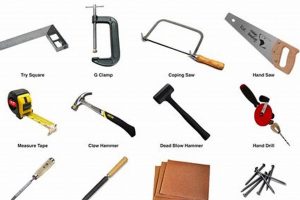
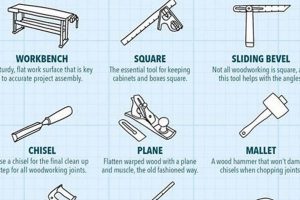
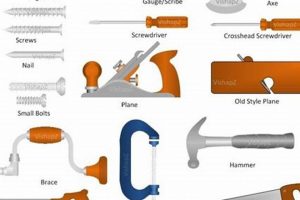
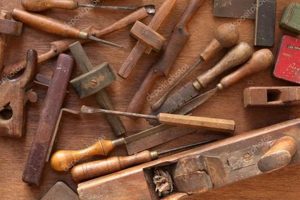
Devices manipulated by hand, rather than powered by electricity or other external sources, are employed in shaping, cutting, joining, and finishing wood. These implements encompass a diverse range, from saws and chisels to planes and measuring instruments, each designed for specific applications within the woodworking process. For example, a hand saw facilitates precise cuts through lumber, while a chisel allows for the removal of small wood portions to create intricate details.
Proficiency with these manual instruments offers several advantages, including enhanced control over the material, reduced noise pollution, and increased portability compared to their motorized counterparts. Historically, these devices were the primary means of woodworking, and mastering their use connects practitioners to a rich tradition of craftsmanship. Furthermore, reliance on manual techniques fosters a deeper understanding of wood properties and grain direction, ultimately leading to improved accuracy and refined results.
The subsequent sections will delve into specific categories of instruments, detailing their functions, proper usage techniques, and maintenance requirements. Examination of cutting tools, shaping tools, joining tools, and finishing tools will provide a comprehensive overview of the instrumental landscape of woodworking.
Tips for Optimal Utilization of Woodworking Hand Tools
Achieving superior results in woodworking necessitates a thorough understanding of the tools and adherence to sound practices. The following tips are intended to enhance both the efficiency and quality of workmanship.
Tip 1: Sharpening is Paramount: Regular honing of blades is crucial for efficient cutting and prevents tear-out. A dull blade requires more force, increasing the risk of error and material damage. A honing steel or sharpening stone should be employed to maintain a keen edge.
Tip 2: Understand Grain Direction: Cutting with the grain minimizes splitting and chipping. Observe the wood’s grain pattern before making any cuts, and adjust the tool’s angle accordingly. This principle applies particularly to planing and chiseling.
Tip 3: Secure Workpiece Firmly: Movement during operation can lead to inaccuracies and potential injury. Utilize clamps, vises, or other work-holding devices to ensure stability. A stable workpiece is essential for precise cuts and joinery.
Tip 4: Apply Appropriate Pressure: Overexertion can damage both the tool and the wood. Let the tool do the work by applying consistent, controlled pressure. Excessive force can result in premature wear and tear on the tool.
Tip 5: Use Proper Stance and Grip: Maintain a balanced stance and a secure grip to maximize control and minimize fatigue. Correct posture reduces strain and enhances precision during prolonged use.
Tip 6: Clean and Maintain Regularly: Remove sawdust and debris after each use to prevent corrosion and ensure smooth operation. Apply oil to metal parts to inhibit rust and maintain functionality.
Tip 7: Select the Right Tool for the Task: Using a tool for a purpose for which it was not designed can lead to damage or subpar results. Consult reference materials and experienced woodworkers to determine the most appropriate instrument for each specific application.
These practices promote accuracy, safety, and longevity in woodworking endeavors. Consistent application of these principles will cultivate expertise and enhance the overall quality of finished projects.
The subsequent section will provide conclusion.
1. Precision

The attainment of accuracy constitutes a fundamental element in woodworking, directly influenced by the selection and proper utilization of manual instruments. The degree of exactness achievable with such devices determines the quality and structural integrity of the resulting product. Cause and effect are evident: imprecise measurements or cuts inevitably lead to misaligned joinery, structural weakness, and aesthetic deficiencies. This is why understanding the direct corelation between “Precision” and “woodwork hand tools and their uses” is important.
The importance of precision manifests in various stages of woodworking. For example, crafting a mortise and tenon joint requires accurately sized and aligned components to ensure a strong and durable connection. The use of a marking gauge to scribe consistent lines, combined with the careful application of a chisel, allows for the creation of a tight-fitting joint. Similarly, in furniture making, precise measurements are crucial for achieving the correct proportions and ensuring structural stability. A discrepancy of even a fraction of an inch can compromise the overall design and functionality.
In summary, precision is not merely a desirable attribute, but rather a prerequisite for successful woodworking. The careful selection, meticulous application, and diligent maintenance of manual instruments are essential for achieving the level of accuracy required for high-quality craftsmanship. Addressing challenges related to precision often involves refining technique, improving tool maintenance practices, and developing a heightened awareness of material properties.
2. Versatility

The multifaceted nature of manual woodworking instruments contributes significantly to the adaptability of woodworking processes. These tools, designed for a range of operations, allow skilled craftspeople to undertake diverse projects with a relatively limited set of equipment. The cause is the inherent design of some hand tools that allows modifications or changes of applications, while the effect is their wide range use.
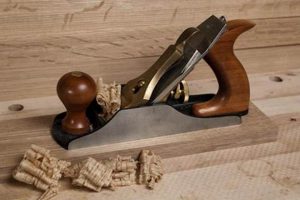
Versatility, in the context of “woodwork hand tools and their uses”, is exemplified by the hand plane. While primarily designed for flattening and smoothing wood surfaces, it can also be adapted for shaping edges, creating rabbets, or even forming curved profiles with specialized blades. Similarly, a spokeshave, initially intended for shaping chair spindles, proves equally effective in sculpting curved surfaces on musical instruments or boat components. The drawknife, another versatile tool, finds application in rough shaping, bark removal, and creating decorative chamfers. Another is wood carving tools, especially chisel it can be used on a variety of woods to create a variety of designs.
Understanding the versatility inherent in hand tools expands the capabilities of the woodworker, enabling them to perform a wider range of tasks with fewer specialized instruments. This adaptability is particularly valuable in situations where access to power tools is limited or when working on intricate projects that demand fine control. Recognizing and exploiting this quality increases efficiency and fosters creative problem-solving within the craft. However, it is important to remember that the versatility of any specific tool has its limit, while over-utilizing it, there is a risk to the tool and the users.
3. Material Compatibility

The selection of appropriate woodworking hand tools necessitates a thorough understanding of the material properties of the wood being worked. Material compatibility directly influences tool performance, cutting efficiency, and the overall quality of the finished product.
- Hardness and Edge Retention
Hardwood species, such as maple or oak, require tools with superior edge retention compared to softer woods like pine or cedar. Using inadequate tools on hardwoods can result in rapid dulling, requiring frequent sharpening and increasing the risk of tear-out. Conversely, overly aggressive tools on softwoods may cause excessive material removal and a loss of precision.
- Grain Structure and Cutting Direction
The grain orientation significantly impacts the way wood responds to cutting forces. Interlocked or figured grain patterns can pose challenges, demanding specialized tools or techniques to prevent splintering or uneven surfaces. Understanding grain direction is critical when using planes, chisels, and saws to ensure a clean and controlled cut.
- Resin Content and Tool Maintenance
Certain wood species, particularly those high in resin content, can cause tools to gum up and become difficult to use. Regular cleaning and lubrication are essential to maintain optimal performance. Failure to remove resin buildup can lead to increased friction, reduced cutting efficiency, and potential damage to the tool.
- Moisture Content and Dimensional Stability
Wood’s moisture content affects its hardness and stability, influencing the choice of tool and technique. Working with excessively wet or dry wood can lead to warping, cracking, or poor joint fit. Allowing wood to acclimatize to the working environment is crucial for achieving accurate and stable results.
These factors highlight the integral role of material compatibility in the selection and application of woodworking hand tools. Matching the tool to the material, considering its inherent properties, is paramount for achieving optimal results and preserving the longevity of both the tool and the workpiece.
4. Maintenance

Consistent upkeep of manual woodworking implements is essential for sustained performance and longevity. Neglecting maintenance protocols compromises tool functionality, increases the risk of operational hazards, and ultimately diminishes the quality of finished work.
- Edge Sharpening and Honing
Maintaining sharp cutting edges on chisels, planes, and saws is paramount for efficient material removal and clean cuts. Dull edges require increased force, leading to inaccuracies, tear-out, and user fatigue. Regular sharpening using stones, strops, or specialized jigs restores and refines the cutting edge, optimizing performance. This routine also extends the life of the tool by preventing unnecessary wear and tear.
- Rust Prevention and Corrosion Control
The metallic components of woodworking tools are susceptible to corrosion, particularly in humid environments. Regular cleaning and application of protective coatings, such as oil or wax, prevent rust formation. Removing surface rust with abrasive pads or specialized solutions restores the tool’s finish and preserves its functionality. This is especially important for tools stored for extended periods.
- Handle Care and Repair
Wooden handles provide a critical interface between the user and the tool. Inspecting handles for cracks, splits, or looseness is essential for safety and control. Repairing damaged handles or replacing them with properly fitted alternatives ensures a secure and comfortable grip. Oiling or waxing wooden handles prevents drying and cracking, prolonging their lifespan.
- Joint Lubrication and Adjustment
Tools with moving parts, such as hand drills or adjustable planes, require regular lubrication to ensure smooth operation and prevent excessive wear. Applying oil or grease to pivot points and threads reduces friction and maintains accuracy. Periodic adjustments, as specified by the manufacturer, optimize performance and prevent mechanical failure.
These facets of tool maintenance collectively contribute to the reliability and effectiveness of manual woodworking instruments. A proactive approach to upkeep ensures that tools remain in optimal condition, fostering precision, safety, and efficiency in woodworking endeavors. Ignoring these practices will lead to accelerated tool degradation and compromised results.
5. Safety Protocols

Adherence to defined safety protocols is an indispensable element within the domain of manual woodworking. The operational characteristics of these instruments, often involving sharp edges and manual exertion, necessitate a comprehensive understanding and rigorous application of safety measures. The absence of stringent safety practices directly correlates with an elevated risk of injury, ranging from minor cuts and abrasions to more severe lacerations or musculoskeletal trauma. The effective use of “woodwork hand tools and their uses” is thus inherently linked to a conscientious approach to safety.
The importance of these protocols is underscored by real-world scenarios. For instance, the improper handling of a chisel can result in deep lacerations, while the unsafe use of a hand saw may lead to cuts and abrasions. Furthermore, failure to secure workpieces adequately can cause slippage and uncontrolled tool movement, increasing the likelihood of injury. The use of personal protective equipment (PPE), such as safety glasses to shield against flying debris and gloves to enhance grip and protect against splinters, represents a crucial component of responsible tool operation. The correct handling and storage of sharp implements when they are “woodwork hand tools and their uses” are not in immediate use are an instrumental aspect of a safe woodworking environment.
In summation, the integration of robust safety protocols is not merely an ancillary consideration within the practice of manual woodworking; it is a foundational element that dictates the well-being of the practitioner and the integrity of the work environment. Understanding and rigorously implementing these protocols mitigates the inherent risks associated with these instruments, promoting a safe and productive woodworking experience. Neglecting safety invites potential harm, while prioritizing it fosters a culture of responsibility and precision within the craft. This is an important element of “woodwork hand tools and their uses”.
6. Historical Significance

The historical trajectory of manual woodworking instruments intricately intertwines with the evolution of civilization itself. These implements, predating mechanized processes by millennia, served as indispensable tools for constructing dwellings, crafting furniture, and creating essential objects for daily life. The study of their development provides insights into technological advancements, resource utilization, and the cultural values of past societies. The cause for many modern tools derived and innovated from older tools which effect current application.
Consider, for example, the Egyptian adze, a precursor to the modern plane. Its sophisticated design allowed for the shaping of timber used in constructing monumental structures, reflecting both the engineering prowess and hierarchical social organization of the civilization. Similarly, the Roman saw, characterized by its toothed blade and robust frame, facilitated large-scale construction projects throughout the empire, influencing architectural styles and trade networks. Medieval Europe witnessed the refinement of axes and chisels, essential for shipbuilding and the intricate woodworking found in cathedrals and castles. The historical importance of “woodwork hand tools and their uses” is evident in the artifacts recovered from archaeological sites and the detailed depictions in historical documents.
Understanding the historical context of manual woodworking instruments offers practical benefits for contemporary practitioners. It fosters appreciation for the ingenuity of past craftspeople, informs the selection of appropriate tools for specific tasks, and encourages the adaptation of traditional techniques to modern applications. Challenges associated with replicating historical woodworking methods include sourcing authentic materials and mastering techniques passed down through generations. However, the insights gained from historical study enhance both the skill and artistry of modern woodworking, bridging the gap between tradition and innovation. The historical understanding increases respect to “woodwork hand tools and their uses”.
7. Ergonomics
The discipline of ergonomics, concerned with optimizing the interaction between humans and their work environment, is particularly relevant to the practice of manual woodworking. The design and application of implements can significantly impact the physical strain experienced by the user. Proper ergonomic considerations are essential to minimize fatigue, prevent musculoskeletal disorders, and enhance overall productivity when working with manual instruments.
- Handle Design and Grip
The shape, size, and material of tool handles influence grip strength and wrist posture. Handles that are too small or too large can lead to discomfort and strain, while those with non-slip surfaces enhance control and reduce the risk of slippage. Angled handles can also minimize wrist deviation, particularly when performing repetitive tasks. For example, a plane with a properly contoured handle reduces hand fatigue during prolonged use.
- Tool Weight and Balance
The weight distribution and overall mass of a tool affect the amount of force required for operation. Imbalanced or excessively heavy tools can contribute to muscle strain and joint discomfort. Lightweight tools, or those with optimized weight distribution, reduce the workload and improve maneuverability. A well-balanced chisel, for example, requires less effort to control and reduces the risk of overshooting the target.
- Body Posture and Workstation Setup
Maintaining proper posture and organizing the workstation to minimize reaching and bending are crucial for preventing back pain and other musculoskeletal issues. Adjusting the height of the workbench to a comfortable level and positioning frequently used tools within easy reach reduces unnecessary strain. Utilizing a footrest can also improve posture and circulation during prolonged periods of standing.
- Repetitive Motion and Vibration Dampening
Repetitive tasks, such as sawing or planing, can lead to cumulative trauma disorders if performed without adequate breaks and proper technique. Vibration from tools can also contribute to hand-arm vibration syndrome. Incorporating rest periods, varying tasks, and using tools with vibration-dampening features can mitigate these risks. Examples include saws with ergonomic handles and vibration-absorbing materials.
Integrating ergonomic principles into the design, selection, and application of manual woodworking tools is essential for promoting user well-being and optimizing performance. By addressing factors such as handle design, tool weight, body posture, and repetitive motion, practitioners can minimize the risk of injury, enhance comfort, and improve the quality of their craftsmanship. The long-term benefits of ergonomic practices extend beyond individual well-being, contributing to increased productivity and a more sustainable approach to woodworking.
Frequently Asked Questions Regarding Woodworking Hand Tools and Their Uses
The following section addresses common inquiries concerning manual woodworking instruments, providing clarification on their application, maintenance, and related considerations.
Question 1: What constitutes the essential complement of instruments for a novice woodworker?
A foundational set typically encompasses a crosscut saw, a rip saw, a smoothing plane, a set of chisels, a marking gauge, a combination square, and a sharpening apparatus. This assortment allows for basic cutting, shaping, and joining operations.
Question 2: How frequently should woodworking hand tools be sharpened?
Sharpening frequency depends on the type of wood being worked, the tool’s usage intensity, and the quality of the steel. A general guideline dictates honing after each use and sharpening when the cutting edge exhibits signs of dulling, such as increased resistance or tear-out.
Question 3: What precautions should be observed when operating manual woodworking implements?
Safety protocols mandate the use of personal protective equipment, including safety glasses and gloves. Workpieces must be securely clamped. Cutting should always proceed away from the body, and tools should be stored safely when not in use.
Question 4: What is the distinction between a rip saw and a crosscut saw?
A rip saw is designed to cut along the grain of the wood, while a crosscut saw is engineered to cut across the grain. The teeth of a rip saw are typically larger and chisel-shaped, whereas crosscut saw teeth are smaller and knife-like.
Question 5: What are the advantages of manual woodworking instruments compared to power tools?
Manual tools offer enhanced control, reduced noise pollution, increased portability, and a deeper connection to the material. They are also well-suited for intricate work and situations where power access is limited.
Question 6: How does one maintain wooden handles on woodworking instruments?
Wooden handles should be inspected regularly for cracks or looseness. Cleaning with a damp cloth and occasional application of linseed oil or beeswax helps prevent drying and cracking.
The information presented herein serves as a concise guide to commonly encountered inquiries regarding manual woodworking implements.
The subsequent section will provide a conclusion to this article.
Woodwork Hand Tools and Their Uses
The preceding discourse has elucidated the multifaceted nature of manual woodworking instruments, underscoring their historical significance, operational characteristics, maintenance requirements, and safety protocols. The analysis encompassed diverse aspects, from precision cutting and material compatibility to ergonomic considerations and the preservation of sharp edges. A comprehensive understanding of these elements constitutes a prerequisite for proficient craftsmanship and the production of high-quality woodwork.
As technology advances, the enduring value of mastering these implements remains undiminished. Continued exploration, practice, and refinement of technique are essential for perpetuating the traditions of woodworking and fostering a deeper appreciation for the intrinsic properties of wood. The responsible and informed application of these instruments ensures their continued relevance in a world increasingly dominated by automated processes, safeguarding the legacy of skilled manual labor and artistry for future generations.