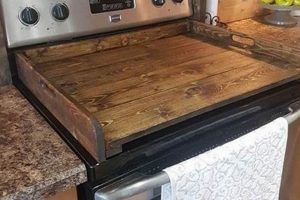
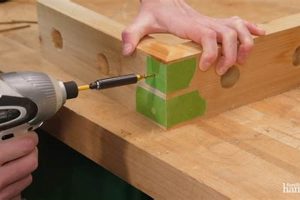
Essential implements designed for crafting smaller-scale items from wood encompass a range of instruments. These instruments facilitate tasks such as shaping, joining, and finishing wooden components. Examples include hand saws for precise cuts, chisels for detailed carving, and sanding blocks for surface preparation.
The availability of appropriate implements for smaller-scale woodworking significantly enhances project efficiency and precision. Historically, artisans relied on scaled-down versions of larger tools, adapted to the specific needs of intricate work. The adoption of these tools fosters creativity and allows for the production of finely detailed and functional wooden objects, contributing to both aesthetic and practical value.
The subsequent sections will delve into specific categories of implements, discussing their application, maintenance, and selection criteria for successful execution of projects. We will explore hand tools, power tools, measuring and marking devices, and finishing supplies required for detailed craftsmanship.
Essential Guidance
The following recommendations aim to optimize the selection and utilization of implements for woodworking endeavors on a reduced scale. These guidelines promote precision, safety, and efficient project completion.
Tip 1: Prioritize Sharpness: Consistently maintain cutting edges. Dull blades require increased force, elevating the risk of slippage and damage to the workpiece. Sharpening stones and honing compounds are essential for preserving tool performance.
Tip 2: Implement Secure Workholding: A stable platform is paramount. Vises, clamps, and bench dogs prevent movement during cutting, shaping, and assembly, contributing to accurate results and minimizing potential injury.
Tip 3: Select Appropriate Scale: Ensure implements are proportional to the project size. Overly large implements can be unwieldy and lead to imprecision, while undersized implements may lack the necessary power and control.
Tip 4: Emphasize Measurement Accuracy: Precise dimensions are critical. Utilize high-quality measuring tapes, squares, and marking gauges to transfer dimensions accurately and ensure components fit together seamlessly.
Tip 5: Practice Controlled Material Removal: Woodworking is often a subtractive process. Take incremental cuts, particularly when using power tools, to prevent tear-out and maintain control over the final shape.
Tip 6: Employ Proper Safety Measures: Eye protection, hearing protection, and dust masks are non-negotiable. Woodworking generates debris and noise that can pose health risks. Adherence to safety protocols is paramount.
Tip 7: Understand Wood Grain Direction: Cutting against the grain can cause splintering. Analyze the wood grain direction before each cut to ensure a clean and controlled result.
Tip 8: Test Finishes on Scrap Material: Before applying finishes to the completed project, experiment on scrap wood of the same species to determine the desired color and application technique. This prevents irreversible errors on the final piece.
Adherence to these guidelines will enhance project outcomes, minimize errors, and promote a safe and efficient woodworking experience.
The subsequent section will summarize these tips and provide a concise checklist for future project planning.
1. Precision

In the context of woodworking on a reduced scale, precision is paramount. The inherent dimensions of such projects necessitate exacting measurements and accurate execution. A lack of precision translates directly into visible flaws, compromised structural integrity, and diminished aesthetic appeal. The implements used are, therefore, crucial determinants of project success or failure. For example, a small jewelry box requires precisely cut corners for a seamless closure, whereas a miniature chair demands accurate leg lengths to ensure stability. Errors, even fractional, become amplified in these smaller contexts, rendering the final product substandard.
The choice of implements directly dictates the level of achievable precision. A high-quality marking gauge facilitates the consistent and accurate transfer of dimensions, while a sharp chisel, when properly controlled, allows for the creation of intricate details with minimal deviation. Furthermore, understanding how different types of wood react to varying implements is essential. Denser hardwoods necessitate sharper, more robust implements to prevent splintering and maintain clean cuts, while softer woods may require gentler techniques and finer blades to avoid crushing the grain. Misaligned cuts can ruin the whole product.
In summation, precision is not merely a desirable attribute, but a fundamental requirement for quality woodworking at a reduced scale. The implements selected, their condition, and the techniques employed are all interconnected variables that dictate the final outcome. Overlooking any aspect of this relationship inevitably compromises the final product, highlighting the practical significance of understanding and prioritizing precision in small woodworking endeavors.
2. Ergonomics

The consideration of ergonomics is of significant importance in the selection and utilization of implements for woodworking projects on a reduced scale. The often intricate and time-consuming nature of such projects necessitates implements that minimize strain and maximize comfort, enabling sustained focus and precision.
- Handle Design and Grip
The design of a tool’s handle directly impacts the user’s comfort and control. A well-designed handle conforms to the natural contours of the hand, distributing pressure evenly and reducing the risk of blisters or carpal tunnel syndrome. For instance, smaller chisels and carving knives should feature handles crafted from materials like hardwood or dense polymers, shaped to fit comfortably in the palm. Conversely, poorly designed handles may cause fatigue and hinder accuracy.
- Weight and Balance
The weight and balance of an implement influence its maneuverability and the force required for operation. An overly heavy implement can lead to premature fatigue, while an improperly balanced one may require excessive force to maintain control. Consider, for example, a small block plane. It should be weighted appropriately to maintain contact with the wood surface without requiring undue downward pressure from the user. Optimal weight distribution enhances control and reduces user strain.
- Tool Size and Proportionality
The overall size of the implement must be proportional to the scale of the project and the user’s hand size. An overly large tool can be unwieldy and difficult to control, while an undersized one may lack the necessary leverage and power. For example, a small marking gauge should be sized appropriately for marking fine lines on delicate wood pieces, avoiding any undue pressure that could damage the material. Proper sizing ensures efficiency and reduces the risk of errors.
- Force Requirements and Leverage
The amount of force required to operate an implement is a crucial ergonomic consideration. Implements requiring excessive force can quickly lead to fatigue and increase the risk of injury. Optimal leverage and mechanical advantage reduce the force needed to accomplish a task. A small hand saw with a well-designed handle and appropriate tooth geometry, for example, should require minimal force to cut through wood cleanly and efficiently.
These ergonomic considerations, when properly addressed, contribute significantly to the overall woodworking experience. The selection of implements with appropriate handle design, weight distribution, size proportionality, and force requirements translates directly into improved comfort, increased accuracy, and reduced risk of injury, ultimately leading to higher-quality project outcomes.
3. Durability

The durability of implements used in smaller-scale woodworking directly correlates with their lifespan, performance consistency, and overall value. Selecting durable implements minimizes replacement costs, ensures reliable operation during intricate tasks, and contributes to project quality over time.
- Material Composition and Longevity
The materials from which implements are constructed are a primary determinant of their durability. High-carbon steel blades, for example, retain sharpness longer and resist deformation compared to lower-quality alloys. Similarly, handles made from hardwoods such as rosewood or ebony offer greater resistance to cracking and wear than those made from softer woods or plastics. Implementing high quality materials significantly reduces the need for frequent repairs or replacements, representing a long-term cost saving.
- Construction Techniques and Resilience
The method of construction influences the implement’s ability to withstand stress and repeated use. Tools forged from a single piece of steel, for example, are generally more durable than those assembled from multiple components. Securely fastened handles and precisely machined components contribute to overall structural integrity, minimizing the likelihood of breakage or loosening under pressure. High build quality minimizes the probability of failure during critical operations.
- Resistance to Environmental Factors
Exposure to moisture, temperature fluctuations, and corrosive substances can degrade implements over time. Rust-resistant coatings, sealed bearings, and corrosion-resistant materials protect against environmental damage, extending the lifespan of implements and preserving their functionality. Protecting tools from environmental factors is imperative for maintaining performance and preventing premature failure.
- Maintenance and Care Practices
Regular maintenance practices, such as sharpening blades, lubricating moving parts, and storing implements properly, contribute significantly to their durability. Neglecting maintenance can accelerate wear and tear, leading to premature failure. Conversely, diligent care ensures implements remain in optimal condition, maximizing their performance and longevity. Proper maintenance contributes to consistent performance and reduced operational costs.
The long-term implications of selecting and maintaining durable implements extend beyond cost savings. Reliable, well-maintained implements contribute to a safer and more efficient woodworking experience, enabling the consistent production of high-quality projects and fostering a greater sense of craftsmanship.
4. Versatility

The characteristic of versatility, when applied to implements utilized in woodworking on a small scale, denotes the capacity of a single instrument to perform multiple distinct functions. This aptitude is particularly relevant due to the limited workspace and budgetary constraints often associated with this type of woodworking, where a single implement must fulfill several roles.
- Multipurpose Hand Planes
Certain hand planes are designed to accommodate a variety of blades, enabling them to function as smoothing planes, block planes, or even scrub planes depending on the blade installed. This adaptability reduces the need for multiple specialized planes, conserving both space and financial resources. The ability to switch between blade types provides increased functionality, streamlining the woodworking process.
- Combination Squares
Combination squares integrate multiple functions into a single tool. They serve as squares for marking right angles, depth gauges for measuring mortise depth, and levels for ensuring surfaces are plumb or level. This amalgamation of features renders the combination square an indispensable implement, especially in confined workspaces where individual measuring devices would be impractical.
- Multi-Bit Screwdrivers and Nut Drivers
Multi-bit screwdrivers and nut drivers incorporate a range of interchangeable bits, accommodating a wide variety of screw and nut sizes and types. This eliminates the necessity for numerous individual screwdrivers and nut drivers, reducing clutter and ensuring compatibility with diverse fastening hardware commonly used in small woodworking projects. The compact design and adaptability of these implements makes them invaluable for various assembly tasks.
- Rotary Tools with Interchangeable Attachments
Rotary tools, equipped with interchangeable attachments, possess the capability to perform a diverse array of tasks, including cutting, sanding, carving, and polishing. This adaptability allows a single power tool to replace several specialized instruments, saving space and providing flexibility. The versatility of rotary tools makes them well-suited for intricate work and detailed finishing on smaller woodworking pieces.
The aforementioned examples illustrate the benefits associated with versatile implements. The capacity of a single instrument to perform multiple functions enhances efficiency, reduces storage requirements, and optimizes resource utilization, rendering such implements particularly valuable in the context of woodworking on a small scale. This focus on adaptability allows woodworkers to accomplish a wide range of tasks with a minimal set of implements, maximizing their potential within limited environments.
5. Safety

The safe operation of implements for woodworking projects, irrespective of scale, is of paramount importance. Smaller projects, while seemingly less hazardous than larger ones, nonetheless present inherent risks associated with sharp cutting edges, rotating machinery, and the potential for projectile debris. Adherence to established safety protocols is crucial to mitigate these risks and prevent injury.
- Personal Protective Equipment (PPE)
The use of appropriate PPE is fundamental to preventing injuries during woodworking activities. Safety glasses or face shields protect the eyes from flying wood chips and dust, while hearing protection safeguards against noise-induced hearing loss from power tools. Dust masks or respirators prevent the inhalation of fine wood particles, which can cause respiratory irritation or long-term health problems. Gloves can reduce the risk of cuts and splinters. The consistent and correct application of PPE is a primary line of defense against potential hazards.
- Safe Workholding Techniques
Securely holding the workpiece is essential for maintaining control during cutting, shaping, and assembly operations. Vises, clamps, and bench dogs prevent the workpiece from shifting or rotating, reducing the risk of slippage and potential injury. Inadequate workholding can lead to sudden movements, causing the implement to slip and potentially injure the operator. Proper workholding techniques are particularly important when using power tools or performing intricate cuts.
- Tool Maintenance and Condition
The condition of the implements directly impacts their safety. Dull blades require increased force, increasing the risk of slippage and potential injury. Loose handles or damaged components can compromise control and lead to unexpected tool failure. Regular inspection and maintenance, including sharpening blades, tightening fasteners, and replacing worn parts, are crucial for ensuring the safe operation of implements. Proper maintenance minimizes the risk of accidents caused by tool malfunction.
- Awareness of Tool Operation and Hazards
A thorough understanding of each implement’s operating principles and associated hazards is essential for preventing accidents. This includes knowing the tool’s limitations, proper operating techniques, and potential kickback or binding scenarios. Reading and understanding the manufacturer’s instructions is crucial before using any implement. Lack of awareness can lead to misuse, resulting in injuries or damage to the workpiece. Informed operation mitigates risk and promotes safe woodworking practices.
The integration of these safety considerations into all aspects of smaller-scale woodworking practices promotes a safer and more productive environment. While seemingly minor in isolation, these precautions collectively contribute to a significant reduction in the risk of injury, ensuring the long-term well-being of the woodworker.
Frequently Asked Questions
The subsequent queries address common concerns and provide clarity regarding the selection and utilization of implements in woodworking on a smaller scale.
Question 1: What constitutes an appropriate initial investment for a basic set of implements for small woodworking projects?
The financial outlay varies significantly based on the quality and quantity of implements acquired. A basic set, including essential hand tools and measuring devices, can range from $100 to $300. Prioritizing quality over quantity in initial acquisitions is advisable, as higher-quality implements offer improved performance and longevity.
Question 2: What are the essential differences between Japanese pull saws and Western push saws, and which is more suitable for small woodworking?
Japanese pull saws cut on the pull stroke, resulting in finer, cleaner cuts with less effort, particularly in hardwoods. Western push saws cut on the push stroke, requiring more force and potentially leading to tear-out. Japanese pull saws are often preferred for intricate work and precise cuts in smaller projects.
Question 3: How frequently should cutting edges on hand planes and chisels be sharpened to maintain optimal performance?
Sharpening frequency depends on the type of wood being worked and the frequency of use. Generally, cutting edges should be honed before each project and sharpened as needed, typically every few hours of use. A dull blade increases the risk of errors and requires excessive force.
Question 4: What safety precautions are most critical when using rotary tools for detailed carving and shaping?
Eye protection is paramount to guard against flying debris. Controlled movements and light pressure are essential to prevent bit slippage. Securely clamping the workpiece is crucial for stability. Respiratory protection is recommended to prevent the inhalation of fine particles. Always disconnect the power source when changing bits.
Question 5: What is the recommended method for storing implements to prevent rust and maintain optimal condition?
Implements should be stored in a dry environment to prevent rust. Applying a thin coat of oil to metal surfaces offers protection. Storing implements in a tool chest or cabinet protects them from dust and physical damage. Organizing implements in a manner that prevents contact between cutting edges and other surfaces is also advisable.
Question 6: How does the selection of wood species impact the choice of implements required for a specific project?
Harder wood species, such as maple or oak, necessitate implements with sharper and more durable cutting edges. Softer woods, such as pine or basswood, may require gentler cutting techniques to avoid crushing the grain. The density and grain structure of the wood influence the selection of blades, chisels, and sanding abrasives required for the project.
These answers provide a foundational understanding of implement selection and utilization in the context of woodworking. A thorough comprehension of these principles is essential for project success and safe woodworking practices.
The subsequent section will delve into specific project types and the corresponding implements best suited for their execution.
Conclusion
This exploration of tools for small woodworking projects has underscored the critical role of appropriate selection, maintenance, and safe operation. From understanding material properties to prioritizing precision and ergonomics, each factor significantly impacts project quality and user well-being. The versatility and durability of selected tools are essential for efficiency and longevity in woodworking endeavors.
Mastery of these implements represents a pathway to refined craftsmanship and creative expression. Continued dedication to skill development and a commitment to safety will empower woodworkers to transform raw materials into objects of enduring value. The pursuit of knowledge and best practices remains fundamental to the advancement of this craft.