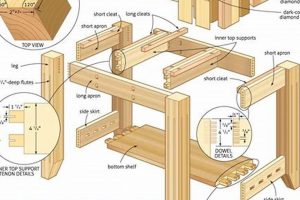
The creation of basic items from wood, designed to be achievable by young individuals, constitutes a valuable learning activity. Examples encompass birdhouses, small boxes, and simple toys constructed with minimal complexity and a focus on safety.
This pursuit offers several advantages, fostering fine motor skills, problem-solving capabilities, and an understanding of spatial reasoning. Historically, woodworking has served as a fundamental skill, passed down through generations, enabling self-sufficiency and creative expression.
The subsequent sections will explore specific project ideas, essential tools and materials, and crucial safety considerations for successfully engaging children in this constructive and rewarding endeavor.
Guidance for Introductory Woodcraft Endeavors
The following recommendations aim to facilitate the successful execution of introductory woodcraft activities, ensuring a safe and enriching experience.
Tip 1: Prioritize Safety. Protective eyewear and dust masks are essential for all participants, irrespective of project simplicity. Sharp tools necessitate vigilant supervision and instruction.
Tip 2: Begin with Softwoods. Pine or basswood are more pliable and easier to manipulate than hardwoods, making them suitable for novices. These materials reduce the force required for cutting and shaping.
Tip 3: Employ Pre-Cut Components. Utilizing pre-cut wood pieces simplifies the process, allowing the focus to shift towards assembly and finishing techniques. This reduces the risk of errors during the initial stages.
Tip 4: Opt for Hand Tools. Hand tools, such as small saws and sanding blocks, offer greater control and reduce the potential for accidents associated with power tools. Their use promotes a deliberate and mindful approach.
Tip 5: Maintain a Clean Workspace. A designated, uncluttered area minimizes distractions and potential hazards. Regular removal of sawdust and scraps ensures a safe and organized environment.
Tip 6: Start with Basic Designs. Simple geometric shapes and straightforward assembly processes contribute to project manageability and foster a sense of accomplishment. Gradual progression to more complex designs is recommended.
Tip 7: Emphasize Proper Finishing. Applying a non-toxic sealant or paint enhances the finished product’s appearance and protects the wood from moisture and wear. Proper ventilation is crucial during the finishing process.
Adherence to these guidelines promotes a secure and rewarding introductory experience with woodcraft. Emphasis on safety and simplification enhances the likelihood of successful project completion.
The subsequent section will address specific project designs suitable for early learners, detailing material requirements and construction steps.
1. Safety precautions

Adherence to rigorous safety measures constitutes an indispensable element of woodworking activities aimed at younger participants. The inherent risks associated with tools and materials necessitate the implementation of preventative protocols to mitigate potential harm. Failure to enforce appropriate safety precautions can lead to injuries, ranging from minor cuts and abrasions to more severe incidents involving eye damage or lacerations. For example, unsupervised use of a saw, even a small hand saw, can result in significant injury if proper cutting techniques are not observed. The consistent application of these precautions is not merely a recommendation but a fundamental requirement for responsible engagement in basic woodworking.
The practical application of safety precautions extends beyond the mere provision of protective equipment. It encompasses comprehensive instruction on the correct handling of tools, the establishment of a designated workspace free from hazards, and consistent supervision throughout the project’s duration. For instance, the use of safety glasses protects against flying debris, while a dust mask prevents the inhalation of wood particles. Similarly, clear communication regarding the sharpness of tools and the importance of keeping hands clear of cutting edges reinforces safe practices. Real-world examples, such as woodworking classes designed for children, emphasize safety as the initial and ongoing focus, integrating it into every stage of the learning process.
In conclusion, integrating safety precautions into elementary woodcraft is not only a matter of protecting physical well-being but also a critical factor in fostering a positive and sustainable learning environment. Prioritizing safety fosters a responsible and mindful approach, setting the foundation for a lasting appreciation for woodworking while minimizing the risk of injury. Recognizing this interconnectedness ensures that woodcraft remains a constructive and enjoyable activity for children.
2. Age-appropriate designs

Age-appropriate designs constitute a critical element within the realm of elementary woodcraft activities. The selection of designs that align with a child’s developmental stage directly impacts project success, skill acquisition, and sustained engagement. Designs that are overly complex can lead to frustration, diminished confidence, and potential safety hazards, whereas designs that are too simplistic may fail to stimulate interest or challenge the child’s capabilities. The effect of age-appropriate design selection is demonstrably evident in projects where children successfully complete a task, leading to a tangible sense of accomplishment and a desire to pursue further woodworking endeavors. Examples include simple birdhouses for younger children with pre-cut pieces, or small wooden toy cars for older children with basic sanding and finishing skills.
The practical application of this understanding lies in the careful consideration of a child’s fine motor skills, cognitive abilities, and attention span when selecting project blueprints. Designs requiring intricate cuts or complex assembly processes are better suited for older children with more developed skills. Younger children benefit from designs emphasizing basic shapes, straightforward assembly, and minimal tool usage. A simple example of age-appropriate adaptation is modifying a birdhouse plan to use larger, easier-to-handle pieces of wood for younger children or incorporating pre-drilled holes to simplify assembly. Educational institutions and woodworking workshops often incorporate a progressive curriculum, introducing more complex projects as children demonstrate mastery of fundamental skills.
In summary, age-appropriate design selection is integral to fostering a positive and effective woodcraft learning experience. By aligning project complexity with a child’s developmental stage, it is possible to enhance skill development, promote a sense of accomplishment, and mitigate safety risks. Recognizing the importance of this alignment, and implementing strategies to ensure that designs are tailored to specific age groups, allows for the creation of enriching and rewarding woodworking opportunities for children.
3. Essential hand tools
The selection and utilization of appropriate hand tools are fundamental to the successful execution of uncomplicated woodcraft endeavors designed for young participants. These tools facilitate the shaping, joining, and finishing of wood components while minimizing the risks associated with power machinery.
- Hand Saw Selection and Technique
A small-toothed hand saw, specifically designed for fine cuts, enables precise shaping of wood components. The proper technique involves securing the material firmly and using controlled, steady strokes to prevent splintering. For instance, a back saw with a miter box allows for accurate angle cuts when constructing a simple box frame.
- The Role of the Hand Drill
A hand drill or brace, equipped with various drill bits, facilitates the creation of pilot holes for screws and the boring of larger openings. Its manual operation fosters an understanding of force application and material resistance. A practical example includes drilling holes for attaching the roof of a birdhouse.
- Chisels for Shaping and Refining
Small chisels, when used with a mallet, permit the precise removal of wood for shaping edges or creating joints. Their controlled operation minimizes the risk of over-cutting. An example would be refining the edges of a wooden toy to remove sharp corners.
- The Importance of Sanding Blocks
Sanding blocks, paired with varying grits of sandpaper, smooth surfaces and prepare wood for finishing. Proper sanding technique involves following the grain to avoid scratches. This is particularly useful when preparing a surface for painting or varnishing a completed project.
The effective and safe utilization of these hand tools empowers young artisans to create simple wooden artifacts. Mastery of these tools lays a foundation for more advanced woodworking projects while fostering essential skills in dexterity and problem-solving. The deliberate selection of these instruments ensures that the focus remains on craftsmanship and safety.
4. Softwood selection

The choice of softwood is a pivotal consideration in the context of uncomplicated woodcraft activities designed for young individuals. The inherent properties of softwoods, relative to hardwoods, directly influence ease of manipulation, safety, and the ultimate success of beginner-level woodworking projects. The selection of an inappropriate wood type can hinder progress and increase the risk of accidents.
- Workability and Ease of Shaping
Softwoods, characterized by their lower density and less complex grain structure, exhibit superior workability compared to hardwoods. This translates to reduced force requirements during cutting, shaping, and fastening processes, enabling younger children to manage tools with greater ease and precision. For example, pine or basswood can be sawn and sanded with minimal effort, whereas hardwoods like oak or maple demand significantly more strength and control, potentially leading to fatigue and errors.
- Reduced Splintering and Enhanced Safety
The inherent grain structure of softwoods contributes to a lower propensity for splintering during manipulation. This characteristic directly enhances the safety of woodcraft activities, minimizing the risk of painful splinters. The use of cedar or redwood, known for their straight grain, further reduces the likelihood of splintering compared to more knotty or irregular softwoods. This is particularly important for younger children with less developed fine motor skills and coordination.
- Affordability and Accessibility
Softwoods are generally more economical and readily available than hardwoods, making them a practical choice for introductory woodworking projects. The lower cost allows for experimentation and reduces the impact of errors during the learning process. For instance, a bulk purchase of pine boards provides ample material for practicing cuts and assembly techniques without incurring significant expense. The accessibility of softwoods from local lumberyards or hardware stores further simplifies project planning and execution.
- Acceptance of Finishes and Decorative Treatments
Softwoods typically exhibit excellent receptivity to paints, stains, and other decorative finishes. This allows children to personalize their creations and explore various artistic techniques. The open grain structure of pine readily absorbs pigments, resulting in vibrant colors and durable coatings. Furthermore, softwoods can be easily carved or embossed to add intricate details, enhancing the aesthetic appeal of the finished project.
In summary, the judicious selection of appropriate softwoods directly contributes to the success and safety of simple woodcraft projects for young individuals. By prioritizing workability, safety, affordability, and finish receptivity, educators and parents can create a supportive learning environment that fosters skill development and creative expression. The deliberate consideration of these factors underscores the importance of material selection in promoting a positive and enriching woodworking experience for children.
5. Finishing techniques

The application of finishing techniques represents a crucial phase in the construction of elementary woodcraft projects, contributing significantly to the durability, aesthetics, and safety of the completed item. Proper finishing enhances the overall quality of the project and promotes a sense of accomplishment in young artisans.
- Protective Sealants and Wood Preservation
The application of non-toxic sealants serves to protect the wood from moisture absorption, minimizing warping, cracking, and fungal growth. This is particularly relevant for projects intended for outdoor use or frequent handling. Examples include applying polyurethane varnish to a birdhouse or sealing a wooden toy with beeswax. Proper sealing extends the lifespan of the project and reduces the risk of deterioration.
- Enhancing Aesthetic Appeal Through Painting and Staining
Painting and staining techniques allow for the personalization and enhancement of the wood’s natural beauty. Non-toxic paints and stains offer a wide range of color options, enabling children to express their creativity. Staining can highlight the grain pattern of the wood, while painting provides a uniform color finish. For instance, a simple wooden box can be transformed into a personalized storage container through the application of vibrant paints or a wood stain.
- Achieving Smooth Surfaces Through Sanding and Polishing
Sanding and polishing are essential for creating smooth, tactile surfaces that are safe and aesthetically pleasing. Proper sanding removes rough edges and splinters, preventing potential injuries. Polishing enhances the wood’s luster and creates a smooth, professional-looking finish. Examples include sanding a wooden toy car to eliminate sharp edges or polishing a small wooden plaque to bring out its natural shine.
- Applying Decorative Embellishments
Decorative embellishments, such as wood burning, carving, or the application of decorative hardware, can add unique character and detail to woodcraft projects. These techniques require careful supervision and the use of appropriate tools. For example, a simple wooden frame can be adorned with wood-burned designs or decorative knobs can be added to a small wooden drawer. These embellishments enhance the visual appeal and create a sense of ownership in the young creator.
The careful selection and application of appropriate finishing techniques transform basic woodcraft projects into durable, aesthetically pleasing, and safe creations. Mastery of these techniques provides young artisans with valuable skills and fosters a lasting appreciation for the craft of woodworking.
Frequently Asked Questions Regarding Elementary Woodcrafting
The subsequent questions and answers address common concerns and misconceptions regarding the introduction of basic woodworking to young individuals.
Question 1: What is the minimum age at which children can engage in woodcraft activities?
The appropriate age varies depending on the child’s maturity, fine motor skills, and the complexity of the project. Generally, supervised woodworking activities can commence around age seven, with simple projects and close adult guidance. Older children may undertake more challenging tasks as their skills develop.
Question 2: What are the essential safety precautions to implement?
Safety glasses, dust masks, and adherence to strict tool handling protocols are paramount. Supervision by a knowledgeable adult is crucial at all times. A designated workspace, free from distractions and hazards, further minimizes risks.
Question 3: What types of wood are most suitable for beginner projects?
Softwoods, such as pine or basswood, are recommended due to their pliability and ease of manipulation. These materials require less force to cut and shape, reducing fatigue and potential for errors.
Question 4: What are the basic hand tools required for simple woodworking?
A small hand saw, a hand drill with various drill bits, small chisels, a mallet, and sanding blocks with varying grits of sandpaper constitute the essential toolset for introductory projects.
Question 5: What are the appropriate types of finishes to apply to children’s woodworking projects?
Non-toxic sealants, paints, and stains are recommended to ensure the safety of the finished product. Water-based finishes are generally preferred due to their low odor and ease of cleanup.
Question 6: How can the engagement and interest of children in woodworking be sustained?
Offering a variety of projects, allowing for creative personalization, and providing positive reinforcement can foster a lasting interest. Gradually increasing the complexity of projects as skills develop maintains a sense of challenge and accomplishment.
The preceding answers provide foundational guidance for initiating young individuals into the craft of woodworking. Emphasis on safety, age-appropriate projects, and proper tool usage enhances the learning experience and minimizes potential risks.
The subsequent section will explore available resources for further learning and project ideas.
Simple Woodworking Projects for Kids
This exploration has outlined essential aspects of simple woodworking projects for kids, emphasizing safety, age-appropriate design, tool selection, material considerations, and finishing techniques. The objective has been to provide a framework for educators and parents to facilitate engaging and educational experiences.
The successful implementation of these projects hinges on a commitment to structured learning and safety protocols. Fostering skill development and creativity within a secure environment remains paramount, contributing to a lifelong appreciation for craftsmanship. Further investigation into advanced techniques and designs will build upon this foundation.