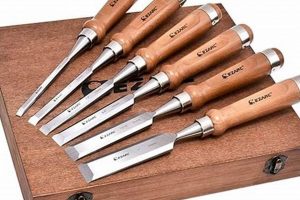
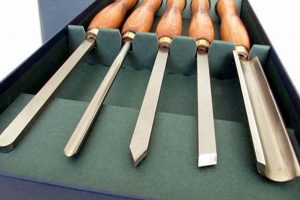
Implements historically employed in shaping wood represent a tangible connection to past craftsmanship. These instruments, often hand-forged and meticulously designed, allowed artisans to create intricate structures and functional objects from raw materials. Examples include hand planes, saws, chisels, and measuring devices, each serving a specific purpose in the woodworking process.
The value of these items extends beyond their functionality. They provide insight into historical manufacturing techniques, societal values, and the evolution of design. Furthermore, the enduring quality of many examples speaks to the skill and dedication of the craftspeople who produced and used them. Studying these artifacts offers a unique perspective on the development of human ingenuity and its application to everyday life.
The following sections will explore the different categories of these historical implements, detailing their specific uses, identifying notable manufacturers, and discussing methods for their proper care and preservation. The aim is to provide a thorough understanding of these important links to our shared heritage.
Tips for Collectors of Historic Woodworking Implements
The acquisition and preservation of historic woodworking implements necessitates a thoughtful and informed approach. The following guidelines provide essential information for both novice and experienced collectors.
Tip 1: Research Before Acquisition: Prior to purchasing any implement, conduct thorough research. Identify the manufacturer, intended use, and approximate date of production. Reference guides, historical catalogs, and online resources can provide invaluable information.
Tip 2: Assess Condition Carefully: Evaluate the physical state of the implement. Look for signs of rust, damage, or previous repairs. Original condition significantly impacts value and historical integrity.
Tip 3: Understand Rarity and Scarcity: Certain manufacturers and models are more scarce than others. Understand the relative rarity of a particular implement to avoid overpayment and to identify potentially valuable additions to a collection.
Tip 4: Prioritize Proper Storage: Store implements in a dry, climate-controlled environment. Fluctuations in temperature and humidity can accelerate corrosion and degrade wooden components. Use protective coatings and storage containers as needed.
Tip 5: Document the Collection: Maintain a detailed inventory of all implements. Include photographs, descriptions, provenance information, and purchase details. This documentation is crucial for insurance purposes and for future research.
Tip 6: Implement Conservation with Care: If conservation is required, engage the services of a trained professional. Improper cleaning or restoration can damage the implement and diminish its historical value.
Tip 7: Focus on Specialization: Collecting by specialization enhances expertise and maximizes the potential to assemble a world-class collection. Focusing on a specific manufacturer, type of tool, or historical period may provide greater depth and value.
These guidelines emphasize the importance of knowledge, diligence, and responsible stewardship in the pursuit of collecting these historic artifacts. By following these principles, collectors can ensure the long-term preservation and appreciation of these objects.
The following sections will delve deeper into the specific techniques for identifying, preserving, and showcasing historic woodworking implements, thereby providing a more thorough and informed collector’s guide.
1. Rarity and Value

The intrinsic worth of historical implements used in shaping wood is inextricably linked to their relative scarcity. This interplay significantly impacts collection practices, investment strategies, and the overall preservation of these artifacts. Understanding the nuances of rarity and its influence on valuation is crucial for both seasoned collectors and novice enthusiasts.
- Manufacturer Scarcity
Tools produced by lesser-known or short-lived manufacturers often command higher prices simply due to their limited availability. A hand plane crafted by a small, regional workshop in the 19th century may be significantly more valuable than a comparable plane from a major manufacturer due to its limited production run. Identifying these rarer manufacturers requires diligent research and familiarity with historical records.
- Model Variations and Prototypes
Within a given manufacturer’s product line, specific model variations or prototype designs can be exceptionally rare. These items may represent experimental designs, limited production runs, or adaptations for specific trades or industries. Discovering such variations often involves detailed examination of markings, features, and construction techniques to differentiate them from more common models.
- Condition and Completeness
The condition of an item profoundly affects its value, and completeness is equally crucial. A pristine, fully intact hand tool, retaining all original components, is naturally more valuable than a damaged or incomplete example. Restored tools can be valued lower than originals. Furthermore, the presence of original packaging, instructions, or documentation can dramatically increase the value and historical significance.
- Historical Significance
Tools with a documented history or association with a notable individual, event, or location can command premium prices. Provenance, the documented history of ownership, adds a layer of significance that elevates the tool beyond its inherent functionality. Tools used in the construction of a landmark building or owned by a renowned craftsman are examples of items with enhanced historical value.
The interplay of these factorsmanufacturer scarcity, model variations, condition, and historical significancecollectively determines the value of historic woodworking implements. Understanding these principles allows for informed collecting practices and contributes to the preservation of these tangible connections to the past. Careful assessment of each tool is key, as these factors highlight the true value and history of this area of woodworking and collecting.
2. Manufacturer Identification

The ability to accurately identify the manufacturer of antique woodworking tools is paramount to assessing their historical significance, determining their value, and understanding their place within the broader context of industrial and craft history. Manufacturer identification serves as a critical first step in researching a tool’s origin, production methods, and intended use. The presence and style of manufacturer’s marks, typically stamps, engravings, or cast-in logos, provide direct evidence linking a tool to a specific company or individual. For example, the “Stanley Rule & Level Co.” mark on a hand plane immediately establishes its origin with a company renowned for its innovative designs and mass production techniques. Conversely, a tool bearing the mark of a smaller, regional maker may suggest a more limited production run and potentially higher value due to scarcity. These marks provide vital clues to a tool’s history.
Further analysis of manufacturer identification involves cross-referencing marks with historical catalogs, trade directories, and specialized research publications. These resources often provide detailed information about the periods during which specific marks were used, the range of products manufactured, and any significant changes in company ownership or branding. For instance, the gradual evolution of the Stanley logo over time allows for a more precise dating of their tools. Beyond the primary manufacturer, identifying sub-contractors or component suppliers, if possible, adds another layer of historical context. The practical application of this knowledge enables collectors and historians to distinguish between genuine artifacts and reproductions, as well as to understand the competitive landscape of the woodworking tool industry during different eras.
Accurate manufacturer identification, while essential, is not without its challenges. Marks can be worn, incomplete, or deliberately faked. Forgers can deceive many. Furthermore, the prevalence of unmarked tools, particularly those produced by smaller workshops or individual craftsmen, necessitates reliance on stylistic analysis, material composition, and construction techniques to determine origin. Despite these difficulties, mastering the art of manufacturer identification remains a cornerstone of understanding and appreciating the history of antique woodworking tools, ensuring their preservation and proper recognition within the broader tapestry of industrial and craft heritage.
3. Material Composition

The enduring functionality and historical significance of implements used in woodworking are directly attributable to their constituent materials. The choice of materials reflects not only the technological capabilities of a given era but also the intended application and desired longevity of the tool. A comprehensive understanding of material composition is thus essential for accurately dating, authenticating, and preserving these artifacts. The cause-and-effect relationship is clear: appropriate material selection resulted in durable, effective tools, while inferior choices led to premature failure and obsolescence. The importance of material composition as a component of antique woodworking tools cannot be overstated; it dictates the tool’s performance, resistance to wear, and susceptibility to environmental degradation. For example, the use of high-carbon steel in saw blades, developed during the Industrial Revolution, enabled finer cuts and longer blade life compared to earlier iron-based saws. Similarly, the selection of dense hardwoods like beech or rosewood for plane bodies provided dimensional stability and resistance to warping, crucial for maintaining accuracy over time.
Further analysis reveals the practical implications of material composition in the preservation of these implements. Understanding the specific alloys and wood species employed informs the appropriate cleaning, conservation, and storage methods. For instance, the presence of brass components necessitates gentle cleaning agents to avoid corrosion, while wooden elements may require specialized oils or waxes to prevent drying and cracking. Knowing the properties of materials, such as the susceptibility of certain iron alloys to rust, allows for proactive measures to mitigate deterioration. The selection of specific coatings and storage conditions becomes crucial in preventing irreversible damage and ensuring the long-term survival of these historical artifacts. Improper treatment, stemming from a lack of understanding of the materials, can inadvertently accelerate decay and diminish their historical value.
In summary, the composition of materials is a pivotal factor in determining the quality, durability, and historical value of antique woodworking tools. From the selection of specific metals for cutting edges to the choice of hardwoods for handles and bodies, each material contributes to the tool’s overall performance and longevity. A thorough understanding of these materials and their properties is essential for proper identification, authentication, and preservation, ensuring that these tangible links to past craftsmanship endure for future generations. The ongoing challenge lies in balancing preservation efforts with the need to maintain the tools’ original integrity, often requiring specialized expertise and careful consideration of the long-term implications of any intervention.
4. Function and Application

The correlation between function, application, and antique woodworking tools is one of direct necessity. A tool’s design and construction were dictated by its intended use; therefore, understanding the function clarifies the tool’s application. A scrub plane, with its heavily curved blade, demonstrates this principle. Its function was to rapidly remove material from rough timber, preparing it for further refinement. This specialized application explains the tool’s distinct form and differentiates it from other planes designed for smoothing or shaping. The practical significance of this understanding allows for accurate identification, contextualization within historical woodworking practices, and appropriate conservation methods. Without knowledge of a tool’s function, assessing its purpose and importance is impossible. The effectiveness of a tool in fulfilling its function determined its value and longevity, further emphasizing the critical role of function and application.
Further analysis reveals the evolution of function and application alongside advancements in woodworking techniques. Early hand saws, for instance, were designed primarily for ripping timber along the grain. As woodworking became more sophisticated, specialized saws emerged for crosscutting, dovetailing, and other intricate tasks. These new applications drove innovations in saw tooth geometry, blade thickness, and handle design. Similarly, the development of complex molding planes allowed for the creation of elaborate decorative profiles, expanding the possibilities of woodworking and leading to the proliferation of specialized plane designs. Examining the tool’s physical characteristics in relation to the intended application offers insight into the skills and techniques employed by craftspeople of the past.
In conclusion, a tool’s function and application are intrinsic to its identity and historical context. Understanding this relationship is essential for anyone seeking to appreciate, collect, or study antique woodworking tools. By examining the tool’s design, construction, and intended use, one can gain a deeper understanding of the technological advancements and cultural practices that shaped the woodworking trades throughout history. The challenge lies in accurately interpreting the clues embedded within the tool itself, drawing upon historical records, trade publications, and the collective knowledge of woodworking traditions. Preservation efforts must consider function, ensuring the tool is preserved in a manner consistent with its original purpose.
5. Preservation Techniques

The long-term survival of antique woodworking tools relies on adherence to established preservation techniques. These methods mitigate the detrimental effects of environmental factors, material degradation, and improper handling, ensuring that these artifacts remain accessible for study and appreciation by future generations. Employing appropriate preservation strategies is therefore paramount.
- Environmental Control
Maintaining stable environmental conditions is fundamental. Fluctuations in temperature and humidity accelerate corrosion of metallic components and promote warping or cracking of wooden parts. Storing tools in a climate-controlled environment, ideally with a relative humidity between 40% and 60% and a stable temperature, minimizes these risks. Regular monitoring and adjustment of environmental controls are essential.
- Surface Cleaning and Treatment
Careful surface cleaning removes accumulated dirt, dust, and corrosion products. Gentle methods, such as soft brushes, microfiber cloths, and specialized cleaning solutions designed for metals and wood, are preferred. Abrasive cleaners can damage original finishes and markings. Following cleaning, application of protective coatings, such as waxes or oils, helps to prevent further deterioration by creating a barrier against moisture and contaminants. It is crucial to select products compatible with the specific materials of the tool.
- Corrosion Inhibition
Metallic components are susceptible to corrosion, particularly in humid environments. Applying corrosion inhibitors, such as vapor phase inhibitors (VPIs) or desiccants, helps to protect against rust and oxidation. VPIs release compounds that neutralize corrosive agents, while desiccants absorb moisture from the surrounding air. Regular inspection and replacement of these inhibitors are necessary to maintain their effectiveness.
- Proper Storage and Handling
Appropriate storage and handling practices minimize physical damage. Tools should be stored individually, ideally in custom-fitted cases or padded compartments, to prevent abrasion and impact. When handling tools, wear gloves to avoid transferring oils and acids from skin, which can contribute to corrosion. Lift tools carefully, supporting their weight to prevent stress on joints and components. Avoid dropping or bumping tools against hard surfaces.
The implementation of these preservation techniques is not merely a matter of maintenance but a commitment to safeguarding cultural heritage. Each tool represents a tangible link to the past, and conscientious preservation ensures that these artifacts continue to inform and inspire future generations of craftspeople, historians, and collectors. The combination of environmental control, surface treatment, corrosion prevention, and safe handling contributes to long-term preservation, allowing antique woodworking tools to persist as valuable historical resources.
Frequently Asked Questions About Antique Woodworking Tools
The following addresses common inquiries regarding implements used in woodworking from prior historical periods. It aims to provide accurate and concise information for collectors, researchers, and anyone interested in these historical artifacts.
Question 1: How can the age of a woodworking hand plane be determined?
The age of a hand plane may be estimated through several indicators. These include the manufacturer’s mark, patent dates stamped on the tool, the type of materials used in its construction, and the overall design characteristics. Researching manufacturer histories and patent records can provide valuable clues.
Question 2: What is the best method for removing rust from an antique saw blade?
Rust removal requires a delicate approach to avoid damaging the underlying metal. Gentle methods, such as soaking the blade in a rust-dissolving solution followed by light scrubbing with a brass brush, are recommended. Abrasive methods should be avoided.
Question 3: How should wooden handles on antique chisels be properly preserved?
Wooden handles should be treated with a suitable wood preservative or oil to prevent drying and cracking. Regular application of linseed oil or beeswax helps to maintain the wood’s moisture content and protect it from environmental damage. Avoid exposure to extreme temperatures or humidity.
Question 4: What factors influence the value of antique woodworking tools?
Several factors influence value, including rarity, condition, manufacturer, historical significance, and provenance. Tools produced by lesser-known manufacturers or those with documented historical use typically command higher prices. Tools in original condition are generally more valuable than those that have been heavily restored.
Question 5: Where can authentic antique woodworking tools be reliably purchased?
Authentic tools can be found at antique auctions, specialized tool shows, reputable online dealers, and estate sales. Thorough research and careful inspection are essential to ensure authenticity and avoid reproductions or fakes.
Question 6: What is the significance of “maker’s marks” on antique woodworking tools?
Maker’s marks serve as vital indicators of origin and authenticity. These marks, typically stamps or engravings, identify the manufacturer and can provide valuable information about the tool’s production period. Researching maker’s marks is crucial for accurate identification and valuation.
This FAQ provides a foundational understanding of implements used to shape wood in the past. Collectors and enthusiasts can use this knowledge as a starting point for more in-depth research.
The subsequent sections will explore specific types of implements, providing detailed information on their history, use, and preservation.
Antique Woodworking Tools
This exploration has illuminated key facets of implements historically employed in the shaping of wood. It has addressed the importance of manufacturer identification, material composition analysis, functional understanding, and the implementation of appropriate preservation techniques. The inherent value, both tangible and intangible, residing within these tools has been emphasized throughout, highlighting their significance as historical artifacts.
Continued study and responsible stewardship of antique woodworking tools are essential to ensure the preservation of our collective craft heritage. Their enduring presence serves as a potent reminder of human ingenuity and the enduring legacy of skilled craftsmanship. Further research and documentation efforts are paramount to enhancing appreciation and ensuring their continued survival for generations to come.