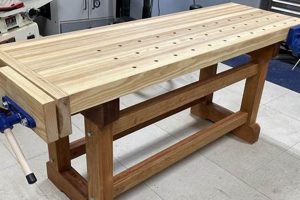
![Build A Roman Woodworking Bench [DIY Guide]](data:image/svg+xml;base64,PHN2ZyB4bWxucz0iaHR0cDovL3d3dy53My5vcmcvMjAwMC9zdmciIHdpZHRoPSI0NzQiIGhlaWdodD0iMTAyIiB2aWV3Qm94PSIwIDAgNDc0IDEwMiI+PHJlY3Qgd2lkdGg9IjEwMCUiIGhlaWdodD0iMTAwJSIgc3R5bGU9ImZpbGw6I2NmZDRkYjtmaWxsLW9wYWNpdHk6IDAuMTsiLz48L3N2Zz4= "Build A Roman Woodworking Bench [DIY Guide] Step-by-Step Guides, Tools & Inspiration to Build Beautiful Wooden Decor on a Budget")
A robust and functional work surface used in ancient Rome for carpentry and related crafts facilitated the construction of furniture, buildings, and other wooden objects. These fixtures provided a stable platform for artisans to perform tasks such as sawing, planing, and joinery, critical for a society reliant on timber for many aspects of daily life. Evidence suggests variations in design likely existed, tailored to specific tasks and available materials.
The utility of these work platforms extended beyond mere convenience. They improved accuracy and efficiency, contributing to the quality and speed of production. Their presence indicates a level of specialization and organization within Roman workshops. The historical context reveals a sophisticated understanding of woodworking principles and the importance placed on skilled craftsmanship within the Roman economy and social structure.
The subsequent sections will explore the potential construction techniques, common features, and the tools typically used in conjunction with these historical workspaces. Furthermore, an analysis of archaeological evidence and surviving literary references will provide a more detailed understanding of their role in Roman society and the development of woodworking technology.
Tips for Constructing a Durable and Functional Workstation
The creation of an effective woodworking station requires careful consideration of design, materials, and intended use. The following tips provide guidance on constructing a long-lasting and productive workspace.
Tip 1: Select Appropriate Timber: Choose hardwoods such as oak or ash for the main structure due to their inherent strength and resistance to wear. Softwoods, like pine, may be suitable for less critical components, but consider their limitations in load-bearing applications.
Tip 2: Prioritize Stability: A stable platform is paramount. Employ robust leg construction techniques, such as mortise and tenon joints, to minimize movement during use. Consider incorporating stretchers to further enhance rigidity.
Tip 3: Implement a Secure Work Holding System: Integrate vises and clamps effectively. A face vise is essential for securing wider pieces, while a tail vise provides versatility for end-grain work. Ensure these components are securely attached to the work surface.
Tip 4: Consider Work Surface Height: Establish an ergonomic work surface height appropriate for the user’s stature. A height that promotes a comfortable posture will reduce fatigue and improve precision during extended periods of work.
Tip 5: Incorporate Tool Storage: Integrate designated storage for frequently used tools to maintain an organized workspace. This can include drawers, shelves, or racks, which enhance efficiency and reduce the risk of misplacing essential implements.
Tip 6: Surface Treatment and Protection: Apply a protective finish, such as oil or wax, to the work surface to prevent moisture damage and facilitate cleaning. Regular maintenance will extend the lifespan of the workstation.
Tip 7: Ensure Adequate Lighting: Proper illumination is critical for accurate work. Consider both ambient and task lighting to eliminate shadows and provide clear visibility of the workpiece.
By adhering to these principles, a robust and effective woodworking station can be created, providing a stable and organized platform for a wide range of woodworking tasks. This will result in improved accuracy, increased efficiency, and a safer working environment.
The subsequent sections will delve into the historical context of these principles, exploring how ancient Roman woodworkers addressed similar challenges and adapted their techniques to available resources.
1. Stability

A stable work surface constituted a fundamental requirement for precise and efficient woodworking in ancient Rome. The inherent nature of tasks such as sawing, planing, and joinery demanded a rigid platform to prevent movement and vibration, thereby ensuring accuracy in execution. An unstable bench would invariably lead to imprecise cuts, misaligned joinery, and ultimately, a compromised final product. The physical act of applying force with tools required a counteracting stability provided by the bench itself. This stability was not merely a matter of convenience; it directly impacted the quality and structural integrity of the finished wooden item, be it a piece of furniture, a structural component of a building, or a smaller crafted object.
Evidence from archaeological sites suggests Roman woodworkers employed various techniques to achieve this stability. The use of heavy, dense wood species for the bench’s construction provided inherent mass and resistance to movement. Mortise and tenon joints, a hallmark of Roman carpentry, were likely utilized to securely connect the legs to the bench top and to integrate supporting stretchers, further reinforcing the structure. The sheer size and weight of some recovered bench fragments indicate a deliberate effort to create a solid, immovable foundation. Moreover, illustrations from Roman frescoes depicting workshops suggest the presence of bracing or anchoring systems to further secure the bench to the floor or walls, providing additional resistance against movement caused by the force applied during woodworking operations.
In summary, stability was not merely a desirable attribute of the Roman woodworking station; it was an indispensable characteristic that directly influenced the quality and efficiency of woodworking tasks. The integration of robust construction techniques, careful material selection, and potentially, anchoring systems, highlights the Roman understanding of this critical relationship. The absence of stability would have fundamentally undermined the entire woodworking process, making it impractical and unreliable. Thus, stability represents a key insight into the design considerations and practical demands of woodworking in ancient Rome.
2. Material choices
The selection of appropriate materials was paramount in the construction of durable and functional woodworking stations in ancient Rome. Available resources, coupled with a practical understanding of wood properties, dictated the longevity and effectiveness of these essential workshop fixtures.
- Availability and Regional Variation
The Roman Empire encompassed a vast geographical area with diverse climates and ecosystems. Consequently, the types of timber available to woodworkers varied significantly across different regions. While oak might have been readily accessible in northern provinces, woodworkers in southern regions might have relied more heavily on species like olive or cypress. The proximity to forests and established trade routes influenced the cost and accessibility of various timbers, impacting the material choices made for station construction.
- Hardwoods vs. Softwoods
Roman woodworkers likely recognized the inherent differences in strength and durability between hardwood and softwood species. Hardwoods, such as oak, ash, and beech, were characterized by their density and resistance to wear, making them suitable for components subjected to heavy use or stress, such as the benchtop and legs. Softwoods, such as pine and fir, were lighter and easier to work but less durable, potentially used for less critical components like shelves or drawers, or in regions where hardwoods were scarce or expensive.
- Durability and Resistance to Decay
Given the potentially humid or damp conditions within Roman workshops, the selection of timbers resistant to decay and insect infestation was crucial for ensuring the long-term functionality of the station. Species like cypress and cedar, known for their natural oils and resistance to rot, might have been preferred for components exposed to moisture or prone to decay. Proper seasoning and treatment of the timber, if practiced, would have further enhanced its durability.
- Workability and Tool Compatibility
The ease with which a particular timber could be worked with available tools also influenced material choices. Denser hardwoods, while durable, required sharper tools and greater effort to shape and join. Softer woods, while less durable, offered greater ease of workability. The skill of the woodworker and the availability of appropriate tools likely played a role in determining which timbers were most commonly employed.
The interplay between material availability, the inherent properties of different wood species, and the practical considerations of durability, workability, and tool compatibility shaped the material choices made by Roman woodworkers in the construction of their essential work stations. These choices reflected a nuanced understanding of the available resources and the demands of their craft, contributing to the development of robust and functional workshops across the Roman Empire.
3. Work holding

The capability to securely restrain a workpiece constitutes an indispensable aspect of any functional woodworking environment. For the artisan employing a Roman woodworking station, effective work-holding methods directly influenced precision, safety, and the overall quality of the finished product. The absence of reliable restraint mechanisms would render accurate sawing, planing, and carving exceedingly difficult, if not impossible. Evidence suggests that Roman woodworkers employed a variety of strategies, adapted to available materials and the specific demands of the task, to address this fundamental requirement. These methods likely involved a combination of physical devices and ingenuity, reflecting a pragmatic approach to problem-solving within the constraints of their technological milieu.
Potential work-holding solutions likely involved simple but effective mechanisms. Wooden pegs or wedges driven into holes on the station’s surface could secure smaller pieces. Larger components might have been held in place by rudimentary clamps fashioned from wood and rope, leveraging pressure to maintain stability. The use of existing architectural features, such as walls or posts, may have been integrated into the work-holding strategy for exceptionally large or unwieldy objects. While sophisticated vises as we know them today were unlikely, the underlying principle of applying controlled force to stabilize the workpiece was certainly understood and implemented through the tools and techniques available. Depictions in frescoes and archaeological findings offer indirect, yet suggestive, clues to the types of implements and strategies utilized.
In conclusion, the ability to securely restrain a workpiece was a critical enabler of Roman woodworking practices. Though the specific mechanisms employed may have differed from modern tools, the underlying need for stability and control remained paramount. This pragmatic approach to work holding, adapting available resources and ingenuity to overcome the challenges of the craft, highlights the resourcefulness and skill of Roman artisans. Understanding this relationship allows for a more comprehensive appreciation of the technical demands and solutions within the historical context of Roman woodworking.
4. Ergonomics

The principles of ergonomics, though not explicitly codified as such in ancient Rome, were implicitly addressed in the design and utilization of woodworking stations. While modern ergonomics focuses on scientifically optimizing human interaction with tools and environments, Roman artisans likely relied on practical experience and observation to mitigate physical strain and improve efficiency in their craft. Considerations of posture, reach, and force application would have influenced station design and working methods, even without formalized ergonomic knowledge.
- Bench Height and Posture
The height of the woodworking station directly impacted the woodworker’s posture during tasks. A bench that was too low would necessitate excessive bending, leading to back strain, while a bench that was too high would cause shoulder and arm fatigue. Roman artisans likely adjusted bench height based on individual stature and the nature of the work performed, aiming for a comfortable and sustainable working posture. Evidence suggests that some benches may have been adjustable or utilized in conjunction with platforms to accommodate variations in height.
- Tool Placement and Reach
The proximity and accessibility of tools were crucial for minimizing unnecessary movement and reducing fatigue. Roman workshops likely incorporated storage solutions, such as shelves or racks, to keep frequently used tools within easy reach. The layout of the workspace would have been optimized to minimize the distance the woodworker had to travel to retrieve tools, reducing physical strain and improving workflow.
- Work Holding and Force Exertion
Securely holding the workpiece was essential for minimizing the force required to perform woodworking tasks. Effective work-holding mechanisms, such as wedges or clamps, reduced the need for the woodworker to exert excessive force to stabilize the material, thereby preventing muscle strain and improving accuracy. The design of these mechanisms likely took into account the biomechanics of the human body, optimizing the application of force to achieve the desired results.
- Repetitive Motion and Task Variety
Prolonged engagement in repetitive motions could lead to musculoskeletal disorders. Roman woodworkers may have mitigated this risk by varying their tasks and incorporating breaks into their workday. Furthermore, the design of the tools themselves, while often simple, may have reflected an understanding of the biomechanics of human movement, minimizing strain and optimizing efficiency. The variety of woodworking tasks within a typical Roman workshop would have naturally provided some degree of task rotation.
Though the Romans lacked the formal science of ergonomics, their practical experience and inherent understanding of human limitations likely informed the design and utilization of their woodworking stations. Considerations of posture, reach, force application, and task variety would have implicitly influenced their working methods, contributing to a more sustainable and efficient woodworking environment. The surviving evidence, while limited, suggests a pragmatic approach to mitigating physical strain and optimizing the interaction between the woodworker and their tools.
5. Tool access
Efficient tool access was a critical component of effective woodworking practices within ancient Roman workshops. The configuration of the work station and the surrounding environment directly influenced the ease with which tools could be retrieved, utilized, and stored. This, in turn, impacted the speed, precision, and safety of woodworking operations. A well-organized Roman woodworking station, therefore, would have incorporated elements designed to optimize tool access, minimizing wasted motion and maximizing productivity. The absence of convenient tool storage and retrieval would have invariably resulted in decreased efficiency, increased fatigue, and a higher risk of accidents.
Evidence suggests that Roman woodworkers likely employed a variety of strategies to facilitate tool access. These may have included purpose-built tool racks attached to the station itself, or shelves and containers located within close proximity. Frescoes depicting Roman workshops often show tools hanging on walls or arranged on surfaces, indicating a conscious effort to organize and display implements for easy retrieval. The specific tools most frequently used would have been positioned in the most accessible locations, while less common tools could be stored further away. The integration of these organizational methods into the overall design of the work station demonstrates a sophisticated understanding of workflow optimization.
In conclusion, the importance of tool access in the context of the Roman woodworking station cannot be overstated. Efficient tool storage and retrieval directly contributed to increased productivity, improved safety, and reduced physical strain. The organizational strategies employed by Roman woodworkers, as evidenced by archaeological finds and artistic depictions, underscore their awareness of the critical link between tool accessibility and successful woodworking outcomes. This understanding provides valuable insights into the practical considerations that shaped the design and utilization of work stations in ancient Rome.
6. Durability
Durability represents a paramount consideration in the construction and functionality of the Roman woodworking bench. The inherent demands of carpentry required a stable and long-lasting work platform capable of withstanding sustained use and environmental factors. Understanding the factors contributing to the longevity of these benches provides insights into Roman woodworking practices and material science.
- Material Selection and Resistance to Decay
The selection of durable timber species was crucial for ensuring the longevity of the bench. Hardwoods such as oak and beech, known for their density and resistance to wear and decay, were likely favored for critical structural components like the legs and top. The prevalence of insect infestation and rot in certain climates necessitated the use of naturally resistant woods or preservative treatments, if available, to extend the lifespan of the fixture. The selection process directly impacted the bench’s ability to endure prolonged use and adverse environmental conditions.
- Joint Construction and Structural Integrity
The manner in which the various components of the bench were joined significantly impacted its overall durability. Mortise and tenon joints, a hallmark of Roman carpentry, provided robust and interlocking connections capable of withstanding stress and strain. The careful execution of these joints, ensuring a tight and secure fit, prevented the bench from becoming wobbly or unstable over time. The integrity of the joinery directly contributed to the bench’s ability to withstand the forces applied during woodworking operations.
- Surface Treatment and Protection against the Elements
The application of surface treatments, such as oil or wax, may have been employed to protect the bench from moisture damage and abrasion. These treatments would have created a barrier against water penetration, preventing rot and warping. Regular maintenance, involving the reapplication of these protective coatings, would have further extended the bench’s lifespan. The extent to which these treatments were utilized reflects an understanding of preventative maintenance and the preservation of valuable tools.
- Design and Adaptation to Task Requirements
The overall design of the bench, and its adaptation to the specific tasks performed, influenced its durability. A bench designed to withstand heavy use, with reinforced legs and a thick, solid top, would have been more resilient than a lighter, less robust structure. The incorporation of features such as tool storage or integrated work-holding mechanisms, while enhancing functionality, could also impact the bench’s structural integrity if not properly designed and executed. The design choices made reflected a balance between functionality, material availability, and the desired lifespan of the fixture.
The durability of the Roman woodworking bench, therefore, was not simply a matter of chance but the result of deliberate choices in material selection, joint construction, surface treatment, and overall design. These factors, working in concert, determined the bench’s ability to withstand the rigors of daily use and environmental exposure, ensuring its continued functionality within the Roman workshop.
Frequently Asked Questions
This section addresses common inquiries regarding the Roman woodworking bench, offering insights into its construction, function, and historical context.
Question 1: What primary factors influenced the design of the Roman woodworking bench?
The design was primarily influenced by available materials, prevalent woodworking techniques, and the ergonomic needs of the artisan. Stability, work-holding capabilities, and tool accessibility were also key considerations.
Question 2: What materials were commonly used in the construction of these benches?
Hardwoods such as oak, beech, and ash were frequently employed for their strength and durability. Regional variations in timber availability often dictated specific material choices.
Question 3: How did Roman woodworkers secure workpieces to the bench?
Evidence suggests the use of wedges, pegs, and rudimentary clamps to hold materials in place. Sophisticated vises, as known today, were likely absent. The implementation of creative solutions adapted to the available resources was key.
Question 4: Did ergonomic considerations play a role in the bench’s design?
While formal ergonomic principles were not established at the time, practical experience likely influenced design choices. Bench height and tool placement would have been adjusted to minimize strain and maximize efficiency.
Question 5: How can archaeological evidence contribute to a better understanding of the Roman woodworking bench?
Recovered fragments, tool marks on surviving timbers, and depictions in frescoes offer valuable insights into the bench’s construction, usage, and integration within Roman workshops. Analysis of this evidence provides a tangible connection to historical practices.
Question 6: What significance does the woodworking bench hold in understanding Roman craftsmanship?
The presence and design of the bench reflect a level of specialization and organization within Roman workshops. It underscores the importance placed on skilled craftsmanship and its contribution to the Roman economy and society.
In essence, the Roman woodworking bench stands as a testament to the ingenuity and skill of ancient artisans, revealing a deep understanding of materials, techniques, and the demands of their craft.
The succeeding section delves into the application of the Roman bench principles in modern woodworking settings.
Roman Woodworking Bench
This exploration has illuminated the Roman woodworking bench, revealing its significance as a crucial element of ancient craftsmanship. Key points include the prioritization of stability, the pragmatic selection of locally sourced materials, the innovative work-holding solutions, and the implicit consideration of ergonomic principles. Archaeological evidence and historical context underscore the importance of this fixture in enabling skilled artisans to contribute to the Roman economy and society.
The enduring legacy of the Roman woodworking bench serves as a reminder of the enduring value of practical knowledge, resourcefulness, and a dedication to quality craftsmanship. Further research and reconstructions can continue to provide valuable insights into the techniques and tools employed by Roman artisans, enriching our understanding of woodworking history and inspiring contemporary practices.

![Top-Rated Best Portable Woodworking Bench [2024 Guide] | Step-by-Step Guides, Tools & Inspiration to Build Beautiful Wooden Decor on a Budget](https://woodfromhome.com/wp-content/uploads/2026/05/th-181-300x200.jpg "Top-Rated Best Portable Woodworking Bench [2024 Guide] Step-by-Step Guides, Tools & Inspiration to Build Beautiful Wooden Decor on a Budget")