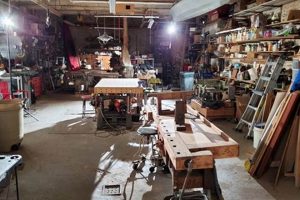
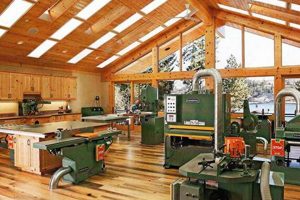
Electrical system implementation within a woodworking environment involves the installation of circuits, outlets, and safety mechanisms designed to power tools and equipment. A typical example includes setting up dedicated 220V circuits for machinery like table saws and planers, alongside 110V outlets for smaller power tools and lighting.
Adequate and safe electrical infrastructure is crucial for efficient workflow, preventing overloads, and minimizing fire hazards. Historically, inadequate electrical systems have led to significant losses in woodworking businesses due to equipment damage, downtime, and safety incidents. Modern electrical codes and practices significantly reduce these risks.
The subsequent discussion will address crucial considerations when designing and implementing such electrical systems, including load calculations, circuit design, grounding techniques, and adherence to relevant electrical codes.
Essential Considerations for Electrical System Implementation
The following provides key considerations for planning and executing an electrical setup within a woodworking environment. These tips prioritize safety, efficiency, and compliance with electrical regulations.
Tip 1: Conduct a Comprehensive Load Calculation: Determine the total amperage required by all tools and equipment that may operate simultaneously. Account for startup amperage, which is often higher than running amperage, especially for motor-driven tools. This calculation informs the required service panel capacity and circuit breaker sizes.
Tip 2: Design Dedicated Circuits for High-Demand Equipment: Allocate separate circuits for machinery with significant power requirements, such as table saws, jointers, and dust collectors. This prevents overloading circuits and tripping breakers, which can disrupt workflow and potentially damage equipment.
Tip 3: Implement Proper Grounding: Ensure all outlets, equipment, and the service panel are properly grounded according to local electrical codes. Grounding provides a path for fault current, minimizing the risk of electrical shock and preventing equipment damage.
Tip 4: Utilize Ground Fault Circuit Interrupters (GFCIs): Install GFCIs on all outlets within the shop, particularly those near water sources or in damp locations. GFCIs detect ground faults and quickly interrupt the circuit, significantly reducing the risk of electrical shock.
Tip 5: Select Appropriate Wire Gauge: Choose wire gauge based on the amperage of the circuit and the distance from the service panel to the outlet. Undersized wire can overheat, leading to insulation damage and potentially causing a fire. Consult electrical code tables for guidance.
Tip 6: Install Adequate Lighting: Provide sufficient and well-distributed lighting throughout the shop to ensure visibility and safety. Consider a combination of ambient and task lighting, and use energy-efficient LED fixtures to reduce energy consumption.
Tip 7: Label Circuits Clearly: Label each circuit breaker in the service panel with a clear description of the circuits it controls. This simplifies troubleshooting and maintenance and prevents accidental disconnections.
Key takeaways include prioritizing safety through proper grounding and GFCI implementation, ensuring adequate power supply with load calculations and dedicated circuits, and maintaining a well-organized and clearly labeled electrical system.
The subsequent sections will delve into specific code requirements and best practices, providing detailed guidance for a safe and efficient electrical installation.
1. Circuit Load

Circuit load is a fundamental factor in electrical system design for a woodworking shop. Accurately calculating and managing circuit load is critical to prevent overloads, ensure equipment operates safely and efficiently, and minimize the risk of electrical fires. Proper consideration of circuit load during the design phase is essential for the long-term functionality and safety of the shop’s electrical infrastructure.
- Calculating Total Amperage Requirements
The first step involves determining the amperage draw of all tools and equipment that may operate simultaneously. Each tool’s nameplate provides its rated amperage. Add these values, accounting for the higher startup amperage of motor-driven tools, to determine the total load. This calculated load dictates the required capacity of circuits and the service panel. Example: A 15-amp table saw, a 10-amp dust collector, and a 5-amp light used concurrently require a circuit capable of handling at least 30 amps plus any additional safety margin.
- Dedicated Circuits for High-Demand Tools
Machinery with substantial power requirements, such as table saws, planers, and jointers, should be on dedicated circuits. This prevents overloading general-purpose circuits and tripping breakers when these tools are in use. Example: A 3HP table saw often requires a dedicated 20-amp or 30-amp 240V circuit, depending on the manufacturer’s specifications. Combining it with other tools on a shared circuit is inadvisable.
- Impact on Wire Gauge Selection
Circuit load directly impacts the selection of appropriate wire gauge. Undersized wires can overheat when carrying excessive current, potentially causing insulation damage and fire hazards. Electrical codes specify minimum wire gauges based on circuit amperage and conductor material. Example: A 20-amp circuit typically requires 12 AWG copper wire, while a 30-amp circuit may require 10 AWG copper wire, depending on factors like insulation type and installation method.
- Managing Voltage Drop
Excessive circuit load can lead to voltage drop, particularly on longer circuits. Voltage drop reduces equipment efficiency and can damage motors over time. To minimize voltage drop, use larger wire gauges or divide the load across multiple circuits. Example: If a woodworking shop is located a significant distance from the service panel, a larger gauge wire is necessary to minimize voltage drop at the outlets.
These facets of circuit load are inextricably linked to the broader process of wiring a woodworking shop. Failure to accurately assess and manage circuit load can result in frequent power interruptions, equipment malfunctions, and increased risk of electrical fires. Therefore, a thorough understanding of circuit load principles is a prerequisite for safe and efficient electrical system design and installation.
2. Grounding

Grounding is a critical safety component of any electrical system, and it is especially crucial in a woodworking shop due to the presence of conductive materials, dust, and often, damp environments. The purpose of grounding is to provide a low-resistance path for fault current to return to the source, allowing overcurrent protection devices (circuit breakers or fuses) to quickly interrupt the circuit in the event of a fault. Without proper grounding, a fault current can energize the metal casings of power tools and equipment, creating a potentially lethal shock hazard. For example, if a wire inside a metal-encased table saw were to come loose and contact the casing, an ungrounded tool would make the saw’s housing live, presenting a severe risk to anyone touching it. Conversely, a properly grounded saw directs the fault current, tripping the breaker and de-energizing the tool.
Effective grounding in a woodworking shop requires several elements. First, a grounding electrode system, typically consisting of one or more ground rods driven into the earth, must be installed. This system provides the reference point for the electrical system. Second, a grounding conductor must connect the equipment grounding busbar in the main service panel to the grounding electrode system. Third, each electrical circuit in the shop must include an equipment grounding conductor (usually a green or bare wire) that connects the metal enclosures of outlets and equipment back to the grounding busbar in the service panel. Regular inspection of grounding connections is vital. Corrosion or loose connections can compromise the integrity of the grounding system. For example, sawdust accumulating around grounding points, especially in damp conditions, can accelerate corrosion, increasing resistance and potentially negating the protection it offers.
In summary, grounding is not merely an add-on but an integral part of a safely wired woodworking shop. It provides a vital layer of protection against electrical shock and equipment damage. However, challenges can arise due to environmental factors within the shop, such as dust and moisture, which necessitate regular inspections and maintenance. Grounding is directly related to electrical code requirements and compliance, ensuring that the shop’s electrical system adheres to established safety standards.
3. Code Compliance

Adherence to electrical codes constitutes a non-negotiable aspect of electrical installations within woodworking environments. Electrical codes, such as the National Electrical Code (NEC) in the United States, establish minimum safety standards for electrical installations. Failure to comply with these codes can result in unsafe conditions, equipment damage, and legal liabilities. Code compliance dictates numerous elements of a woodworking shop’s electrical system, from wire sizing and overcurrent protection to grounding and wiring methods. For example, the NEC specifies requirements for the installation of ground-fault circuit interrupters (GFCIs) in damp or wet locations, which are often found in woodworking shops. Non-compliance exposes individuals to increased risk of electrical shock and potential fines from regulatory authorities.
The NEC also addresses specific wiring methods permitted in different locations within a woodworking shop. For example, it may dictate the use of metal conduit or armored cable to protect wiring from physical damage in areas where tools and equipment are frequently moved. Correct wiring methods ensure long-term reliability and prevent accidental damage to electrical conductors. Moreover, electrical codes frequently mandate inspections of electrical systems by qualified professionals. These inspections verify that the installation meets code requirements and identify any potential safety hazards. A documented inspection provides assurance that the shop’s electrical system is safe and compliant. For example, a woodworking shop that modifies its electrical system to accommodate new machinery must have the changes inspected to ensure they comply with current codes.
In summary, code compliance is not merely a bureaucratic requirement but an essential investment in the safety and longevity of a woodworking shop’s electrical system. Neglecting code compliance can have severe consequences, ranging from minor inconveniences to life-threatening hazards. Understanding and adhering to relevant electrical codes is thus paramount for any individual involved in planning, installing, or maintaining electrical systems in woodworking shops. By prioritizing code compliance, a woodworking shop can create a safe and efficient working environment, protect its employees and equipment, and avoid costly fines and legal repercussions.
4. Outlet Placement

Strategic outlet placement is crucial in electrical system design for woodworking shops, impacting workflow efficiency, safety, and overall functionality. Thoughtful consideration of outlet locations during electrical system planning minimizes the need for extension cords, reduces tripping hazards, and ensures convenient access to power for tools and equipment.
- Accessibility and Tool Proximity
Outlets should be positioned within easy reach of frequently used tools and equipment. Consider the typical operating locations of machinery like table saws, planers, and sanders. Avoiding the need for long extension cords reduces voltage drop and tripping hazards. For example, placing outlets on both sides of a workbench allows for flexible tool setup without cord clutter.
- Spatial Planning and Future Expansion
Outlet placement should account for existing layouts and potential future expansion. Anticipate the addition of new tools or reconfigurations of the workspace. Installing extra outlets during the initial wiring phase is often more cost-effective than retrofitting later. Consider the potential for mobile work stations requiring power access in different areas of the shop.
- Dedicated Circuits and Outlet Types
Outlet placement should correspond with the electrical demands of connected equipment. High-demand tools should be connected to dedicated circuits with appropriate outlet types (e.g., 220V outlets for larger machinery). Outlets should be clearly labeled to indicate the circuit they serve. For example, dedicating a 20-amp circuit to a specific area with multiple outlets ensures sufficient power for simultaneously operating tools.
- Safety Considerations and GFCI Protection
Outlets should be placed away from potential hazards like water sources and flammable materials. Ground Fault Circuit Interrupters (GFCIs) should be installed on all outlets in damp locations or areas where water exposure is possible. The positioning of outlets relative to dust collection systems also merits consideration to minimize dust accumulation around electrical connections.
In summary, outlet placement is a fundamental aspect of wiring a woodworking shop. Strategic planning optimizes workflow, enhances safety, and facilitates future expansion. Addressing accessibility, spatial considerations, circuit requirements, and safety factors leads to a more efficient and functional workspace.
5. Voltage Needs

The assessment and fulfillment of specific voltage requirements are fundamental to the design and implementation of electrical systems within woodworking shops. Mismatched voltage levels can result in equipment malfunction, damage, or create hazardous conditions, underscoring the importance of precise planning and execution.
- Identification of Equipment Voltage Requirements
Each piece of equipment within a woodworking shop possesses distinct voltage needs. These requirements are typically indicated on the equipment’s nameplate, specifying the necessary voltage (e.g., 120V or 240V) and phase (single-phase or three-phase). Failure to supply the correct voltage can result in inefficient operation, premature equipment failure, or, in some cases, irreversible damage. For instance, connecting a 240V machine to a 120V supply will likely prevent it from operating effectively, potentially damaging the motor. Conversely, supplying 240V to a 120V device will almost certainly result in immediate failure and potential safety hazards.
- Circuit Design and Voltage Distribution
The electrical system must be designed to provide appropriate voltage levels to different areas and equipment within the shop. This involves creating separate circuits for 120V and 240V equipment, ensuring that each outlet supplies the correct voltage. In larger shops, a three-phase power distribution system may be necessary to accommodate heavy-duty machinery. Correct circuit design is crucial not only for proper equipment operation but also for preventing overloads and minimizing voltage drop, which can negatively affect equipment performance.
- Transformer Applications
In some instances, transformers may be required to step down or step up voltage levels to match the requirements of specific equipment. This is particularly relevant in situations where equipment operates on a voltage different from the standard supply voltage available in the shop. For example, a woodworking shop using imported machinery may require a step-down transformer to convert the local voltage (e.g., 240V) to the voltage required by the equipment (e.g., 208V). Proper transformer selection and installation are critical to ensure safe and efficient voltage conversion.
- Voltage Drop Considerations
Voltage drop refers to the decrease in voltage along a conductor due to its resistance. Excessive voltage drop can negatively affect the performance of woodworking equipment, particularly motors, which may experience reduced torque and overheating. To minimize voltage drop, it is essential to select appropriate wire gauges and minimize circuit lengths. Calculations to determine voltage drop are crucial when planning wiring runs, especially for high-demand equipment located far from the service panel.
These facets of voltage needs are inextricably linked to the successful “wiring of a woodworking shop.” Proper identification, distribution, and management of voltage are essential to ensure safe, efficient, and reliable operation of all electrical equipment. The consequences of neglecting these considerations can range from minor inconveniences to catastrophic equipment failures and potential safety hazards, reinforcing the importance of careful planning and execution.
6. Lighting Design

Effective lighting design is an indispensable component of wiring a woodworking shop. The connection between the two is causal: adequate wiring infrastructure enables the implementation of a well-designed lighting scheme, directly impacting safety, productivity, and the quality of finished work. Insufficient or improperly installed wiring restricts lighting options, potentially leading to poorly lit work areas and increased risk of accidents. For example, relying solely on a single overhead light fixture due to wiring limitations can create shadows that obscure tool paths, increasing the likelihood of miscuts or injuries. A comprehensive wiring plan, conversely, allows for strategically placed task lighting, minimizing shadows and enhancing visibility.
A thoughtfully designed lighting system integrates various lighting types. Ambient lighting provides overall illumination, while task lighting focuses on specific work areas. Accent lighting highlights details or features. Wiring considerations for each type differ. Ambient lighting might require fewer circuits but higher wattage fixtures, while task lighting demands localized power outlets and adjustable fixtures. Consider a scenario where a woodworker is staining a complex molding. Insufficient task lighting results in uneven stain application and missed imperfections. With adequately wired task lighting, adjustable to different angles and intensities, the woodworker can achieve consistent results. Integrating dust collection considerations into the wiring and lighting design further enhances safety and visibility, minimizing the accumulation of dust that can both obscure light and pose a fire hazard.
In conclusion, lighting design is not a mere afterthought but an integral part of wiring a woodworking shop. The electrical system should be conceived to support a flexible and adaptable lighting scheme. Challenges arise in balancing cost constraints with the need for adequate illumination. However, the long-term benefits of a well-lit workspace improved safety, increased efficiency, and enhanced quality of workmanship outweigh the initial investment. Failing to integrate lighting design considerations into the wiring plan results in a compromised and potentially hazardous working environment.
7. Safety Devices

The integration of safety devices is an indispensable facet of electrical system implementation in a woodworking shop. Electrical system designs must incorporate these devices to mitigate potential hazards associated with woodworking machinery and processes. The connection between wiring and safety devices is fundamentally causal: the wiring infrastructure provides the necessary framework for supporting and enabling the operation of safety mechanisms, such as Ground Fault Circuit Interrupters (GFCIs), Arc Fault Circuit Interrupters (AFCIs), and surge protectors. The absence of properly installed and maintained safety devices significantly elevates the risk of electrical shock, fire, and equipment damage. For instance, the presence of fine wood dust, a highly combustible material, necessitates the implementation of AFCIs to prevent arc faults, which can easily ignite airborne particles. In older shops without such protection, even a minor wiring fault can quickly escalate into a major fire.
The practical application of safety devices extends beyond mere installation. Regular testing and maintenance protocols must be established to ensure continued effectiveness. GFCIs, for example, require periodic testing to verify their functionality. Similarly, surge protectors degrade over time, requiring replacement after absorbing multiple surges. The wiring system must also be designed to accommodate the specific requirements of each safety device. GFCIs require proper grounding to function correctly, while AFCIs require appropriate circuit breaker compatibility. Improper wiring can negate the protective capabilities of these devices, rendering them ineffective. A woodworking shop utilizing a dust collection system may also require surge protection on the motor control circuits to prevent damage from voltage spikes caused by motor starts and stops.
In summary, the effective implementation of safety devices is not an optional add-on but an integral component of wiring a woodworking shop. The wiring system provides the foundation for these devices to operate, and their presence significantly reduces the risks associated with electrical hazards. Challenges lie in ensuring proper installation, adherence to code requirements, and ongoing maintenance. Prioritizing safety device integration ultimately fosters a safer working environment and protects both personnel and equipment, linking directly to the long-term viability and success of the woodworking operation.
Frequently Asked Questions
This section addresses common inquiries regarding the electrical wiring of woodworking shops, providing clarity on essential aspects and best practices.
Question 1: What is the minimum electrical service size recommended for a typical woodworking shop?
The appropriate electrical service size depends on the total power requirements of the shop’s equipment. A comprehensive load calculation, accounting for both running and starting amperage of all tools, should be performed. Most small to medium-sized woodworking shops require at least a 100-amp service, while larger shops with heavier machinery may necessitate a 200-amp or greater service.
Question 2: Are Ground Fault Circuit Interrupters (GFCIs) required in a woodworking shop?
Yes, GFCIs are generally required by electrical codes in areas of a woodworking shop where moisture is present or where equipment is likely to be used in damp conditions. This includes areas near sinks, exterior doors, and concrete floors. GFCIs protect against electrical shock by detecting ground faults and interrupting the circuit.
Question 3: What is the best wiring method for a woodworking shop environment?
Metal conduit (rigid or EMT) is often recommended for woodworking shops due to its durability and ability to protect wiring from physical damage and dust accumulation. Armored cable (MC cable) is another acceptable option. Non-metallic sheathed cable (Romex) may be permitted in some areas, but it is generally less durable and provides less protection against physical damage.
Question 4: How often should the electrical system in a woodworking shop be inspected?
Electrical systems in commercial woodworking shops should be inspected regularly by a qualified electrician. The frequency of inspections depends on the shop’s size, usage, and local regulations. A minimum of once every three years is recommended, but more frequent inspections may be necessary in high-use environments.
Question 5: What wire gauge should be used for outlets powering woodworking equipment?
The appropriate wire gauge depends on the amperage of the circuit and the distance from the service panel. For a typical 20-amp circuit, 12 AWG copper wire is generally sufficient. For a 30-amp circuit, 10 AWG copper wire is recommended. Consult electrical code tables to determine the appropriate wire gauge for specific applications, considering voltage drop over longer distances.
Question 6: Are Arc Fault Circuit Interrupters (AFCIs) necessary in a woodworking shop?
The necessity of AFCIs depends on local electrical codes. However, given the presence of combustible wood dust, installing AFCIs is highly recommended. These devices detect arc faults, which are a common cause of electrical fires, and interrupt the circuit, reducing the risk of fire ignition.
These FAQs provide a concise overview of critical considerations for wiring a woodworking shop. Prioritizing safety and code compliance during electrical system design and installation is paramount.
The subsequent section will provide a glossary of terms related to wiring and electrical systems, facilitating a better understanding of the technical language used in this domain.
Conclusion
The preceding discussion has explored critical facets of wiring a woodworking shop, emphasizing safety, efficiency, and regulatory compliance. Key points have encompassed load calculation, grounding techniques, code adherence, optimal outlet placement, voltage considerations, effective lighting design, and the integration of appropriate safety devices. A thorough understanding of these elements is essential for minimizing risks and maximizing productivity.
Competent electrical system implementation constitutes a significant investment in a woodworking shop’s long-term viability. Continued adherence to evolving electrical codes and best practices remains paramount. The future safety and efficiency of the workshop are inextricably linked to a well-planned and expertly executed electrical infrastructure.