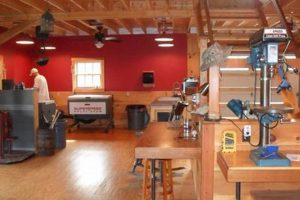
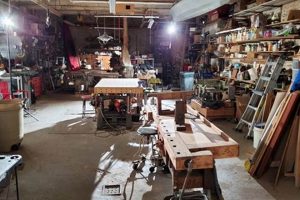
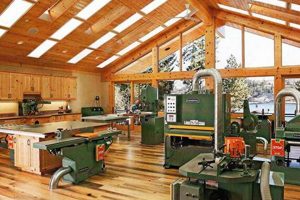
A small, detached structure dedicated to the craft of shaping wood is a common feature in many residential areas. This outbuilding provides a dedicated space, separate from the main dwelling, where projects involving sawing, planing, joining, and finishing can be undertaken. It offers a contained environment designed to minimize disruption to the household while facilitating woodworking activities.
The advantage of such a setup lies in its isolation, allowing for the safe use of power tools and the containment of sawdust and noise. Historically, these structures have served as vital spaces for artisans and hobbyists alike, enabling the creation of furniture, decorative items, and structural components. Their presence represents a commitment to woodworking as a serious endeavor, providing a focused and organized work area.
The following sections will address key considerations in establishing and maintaining a functional and effective workspace for this purpose, including aspects of design, tool selection, safety protocols, and environmental control.
Essential Considerations for a Woodworking Shed
Establishing an effective woodworking area within a detached structure requires careful planning. Optimizing the space for both functionality and safety is paramount for successful project execution.
Tip 1: Foundation Integrity. Ensure the structure’s foundation is level and stable. An uneven foundation can lead to misaligned machinery and potential structural issues. Prioritize a solid, level base to support heavy equipment and prevent warping.
Tip 2: Power Supply Adequacy. Woodworking machinery often requires significant electrical power. Overload existing circuits. Installing dedicated circuits with appropriate amperage ratings is essential to avoid tripping breakers and potential hazards.
Tip 3: Dust Collection System. Sawdust accumulation poses health and fire risks. Implementing a dedicated dust collection system, including a collector and ductwork to machinery, is crucial for maintaining a clean and safe work environment.
Tip 4: Adequate Lighting Design. Sufficient illumination is critical for precision work and safety. Employ a combination of ambient and task lighting. Consider LED fixtures for energy efficiency and consistent light output.
Tip 5: Climate Control Implementation. Wood is highly susceptible to changes in humidity and temperature. Implementing a climate control system, such as a dehumidifier or air conditioner, can help maintain consistent moisture levels and prevent warping or cracking of wood.
Tip 6: Tool Storage Organization. Optimize the workspace by implementing dedicated tool storage solutions. Wall-mounted racks, cabinets, and pegboards can help keep tools organized, accessible, and prevent potential hazards. Prioritize a logical layout based on tool usage frequency.
Tip 7: Safety Equipment Accessibility. Ensure that all safety equipment, including eye protection, hearing protection, and respirators, are readily available and used consistently. A designated first-aid kit should also be accessible and stocked with appropriate supplies.
Tip 8: Secure Ventilation Strategy. Implement a robust ventilation system, especially when working with finishes or stains. Proper ventilation removes harmful fumes and ensures a safe and healthy work environment. Cross-ventilation and exhaust fans are valuable considerations.
By addressing these key considerations, an individual can create a functional, safe, and productive woodworking environment in a detached structure. Careful planning contributes to quality craftsmanship and overall woodworking enjoyment.
The subsequent discussion will cover specific aspects of optimizing workflow within the established area.
1. Structural Integrity

The robustness of a detached woodworking structure is foundational to its utility and safety. Compromised structural integrity can lead to inaccuracies in woodworking projects, potential equipment damage, and hazardous working conditions. Therefore, a meticulous approach to structural design and maintenance is essential.
- Foundation Stability
A level and stable foundation is paramount. Uneven settling can cause walls to shift, doors and windows to bind, and machinery to become misaligned. Concrete slabs, pier and beam systems, or properly constructed gravel pads serve as suitable foundations, depending on soil conditions and local building codes. Neglecting foundation stability can manifest as out-of-square projects and increased tool wear due to improper calibration.
- Wall and Roof Framing
Wall and roof framing must be designed to withstand anticipated loads, including snow, wind, and the weight of roofing materials. Proper stud spacing, rafter size, and sheathing thickness are critical considerations. Improperly framed structures are prone to sagging roofs, bowing walls, and eventual collapse under extreme weather conditions. Using pressure-treated lumber for ground contact components, like sill plates, is crucial for longevity.
- Floor Load Capacity
Woodworking machinery and lumber storage can place significant stress on the floor. Adequate joist size, spacing, and subfloor thickness are essential to prevent sagging or deflection. Calculating the anticipated maximum load per square foot is necessary to ensure structural integrity. Reinforcing existing floors may be required when introducing heavy equipment, such as planers or jointers.
- Resistance to Environmental Factors
The structure must be resistant to environmental factors such as moisture, pests, and temperature fluctuations. Proper ventilation, vapor barriers, and pest control measures are crucial for preventing rot, insect infestations, and material degradation. Using weather-resistant siding and roofing materials prolongs the structure’s lifespan and minimizes maintenance requirements.
The interrelationship between these structural elements directly affects the usability and longevity of the detached woodworking area. A well-engineered and maintained structure not only ensures safety but also contributes to the precision and efficiency of woodworking endeavors. Therefore, prioritizing structural integrity is a prerequisite for establishing a productive and lasting woodworking space.
2. Tool Organization

Efficient tool organization is integral to the functionality and safety of any detached woodworking structure. A systematic approach to storage and accessibility directly impacts workflow, minimizes wasted time, and reduces the risk of accidents within the workspace.
- Categorization and Zoning
Grouping tools based on function or project phase allows for logical arrangement within the space. Designating specific zones for cutting, assembly, and finishing streamlines workflow and minimizes unnecessary movement. For example, saws, blades, and measuring devices should be located near the primary cutting area, while sanding blocks, sandpaper, and finishing products should be situated in a separate zone to prevent dust contamination of finished surfaces.
- Vertical Storage Solutions
Maximizing vertical space through the use of wall-mounted racks, pegboards, and cabinets is critical in compact structures. This approach frees up valuable floor space, reduces clutter, and provides immediate visual access to frequently used tools. Shadow boards, where the outline of each tool is marked, facilitate quick identification and ensure that tools are returned to their designated locations. Utilizing height for storing large items improves overall space management.
- Mobile Tool Carts and Cabinets
Portable tool carts and cabinets offer flexibility and convenience, allowing for tools to be moved to the point of use. These units are particularly beneficial for larger projects that require working in multiple locations within the workspace. Locking casters ensure stability during use, and drawers or compartments provide secure storage for hand tools, fasteners, and accessories. Mobile solutions are also useful for adapting the layout of the workshop based on the specific demands of a project.
- Inventory Management and Labeling
Implementing a system for tracking tool inventory and labeling storage locations enhances organization and reduces the time spent searching for misplaced items. A simple numbering system, coupled with corresponding labels on shelves, drawers, and bins, provides a clear and consistent method for identifying tool locations. Regular inventory checks help to maintain order and ensure that tools are properly stored and maintained. Proper labeling is especially helpful when multiple people are using the area.
By adopting these principles, individuals can create a highly organized and efficient woodworking environment. The optimized layout improves productivity, reduces the potential for accidents, and enhances the overall enjoyment of woodworking within the confines of the detached structure.
3. Power Distribution

Adequate and safe electrical power distribution is a critical component within a detached woodworking structure. The nature of woodworking, involving machinery with substantial power requirements, necessitates a carefully planned and executed electrical system. Insufficient or improperly installed power distribution poses significant safety risks and limitations on workshop functionality.
- Service Panel Capacity
The service panel serves as the central hub for distributing electrical power throughout the structure. Its amperage rating must be sufficient to handle the simultaneous operation of all woodworking machinery and lighting, plus a safety margin. Overloading the service panel can result in tripped breakers, power outages, and potential fire hazards. The calculated load should account for both existing and future power needs, considering potential equipment upgrades or additions. Subpanels can be utilized to isolate power distribution.
- Dedicated Circuits
Each high-power woodworking machine (e.g., table saw, planer, jointer) should have its own dedicated circuit with an appropriate amperage rating. This prevents overloading individual circuits and ensures consistent power delivery to each machine. Dedicated circuits should also be equipped with appropriately sized wiring to handle the amperage load without overheating. The use of Ground Fault Circuit Interrupters (GFCIs) on circuits serving wet or damp areas (e.g., near sinks or exterior doors) is essential for electrical safety.
- Wiring and Outlets
The wiring within the structure must be properly sized and installed according to electrical codes. The use of appropriate gauge wire is crucial for preventing voltage drops and overheating. Outlets should be strategically placed throughout the workshop to provide convenient access to power without the need for extension cords, which can pose tripping hazards. All wiring and outlets must be grounded to ensure electrical safety.
- Safety Measures and Compliance
Strict adherence to local electrical codes is mandatory for all wiring and electrical installations. Regular inspections by a qualified electrician are recommended to ensure the continued safety and compliance of the electrical system. Surge protectors should be used to protect sensitive electronic equipment from power surges. Emergency shut-off switches should be installed at easily accessible locations to quickly cut power to the entire workshop in case of an emergency.
The effective power distribution design within a detached woodworking structure directly impacts both safety and productivity. A properly planned and installed electrical system provides reliable power for all woodworking activities, minimizing the risk of electrical hazards and ensuring efficient workflow.
4. Dust Management

Effective dust management is an indispensable aspect of operating a detached woodworking structure. The creation of airborne particulate matter is inherent in woodworking processes, posing significant risks to both health and equipment. Implementation of robust dust control measures is therefore essential for maintaining a safe and productive environment.
- Source Capture Systems
Source capture systems involve collecting dust directly at the point of generation, such as at the blade of a saw or the head of a sander. These systems typically employ dust hoods connected to a vacuum or dust collector via flexible ductwork. Examples include attaching a dust port to a miter saw or using a downdraft table for sanding operations. The effectiveness of source capture significantly reduces the amount of airborne dust released into the workspace, thereby mitigating health risks and minimizing the need for extensive air filtration.
- Ambient Air Filtration
Even with effective source capture, some fine dust particles will inevitably escape into the surrounding air. Ambient air filtration systems are designed to remove these particles from the air. These systems typically consist of a fan and a filter, often a HEPA filter, that captures dust as air circulates through the unit. Placement of the air filtration system is critical for optimal performance, with strategic positioning ensuring comprehensive coverage of the workshop. The continuous operation of an ambient air filtration system is vital for maintaining air quality, particularly during extended woodworking sessions.
- Personal Protective Equipment (PPE)
While engineering controls such as source capture and air filtration are primary strategies, personal protective equipment (PPE) serves as an essential supplementary measure. Respirators, specifically those rated N95 or higher, provide protection against inhaling fine dust particles. Eye protection, such as goggles or face shields, prevents dust from entering the eyes. The consistent and proper use of PPE minimizes the risk of respiratory and ocular irritation, particularly during tasks that generate significant amounts of dust, even when engineering controls are in place.
- Regular Cleaning Practices
Even with the implementation of dust collection and filtration systems, regular cleaning is necessary to remove accumulated dust from surfaces within the detached woodworking structure. Vacuuming floors, workbenches, and machinery, rather than sweeping, prevents dust from becoming airborne. Damp wiping surfaces further reduces dust accumulation. Routine cleaning minimizes the risk of dust explosions, improves visibility, and contributes to a cleaner, healthier work environment. Scheduled cleaning protocols should be established to ensure consistent adherence to these practices.
The integrated application of source capture systems, ambient air filtration, personal protective equipment, and regular cleaning practices constitutes a comprehensive dust management strategy within a detached woodworking structure. This multi-faceted approach minimizes the health risks associated with dust exposure and ensures a safer and more productive woodworking experience.
5. Environmental Control

Maintaining a stable and controlled environment within a detached woodworking structure is crucial for both the quality of the woodworking projects and the longevity of the materials used. Fluctuations in temperature and humidity can significantly affect wood stability, glue adhesion, and the performance of finishing products. Therefore, implementing effective environmental control measures is an investment in both craftsmanship and resource preservation.
- Temperature Regulation
Consistent temperature control minimizes expansion and contraction of wood, which can lead to warping, cracking, and joint failure. Maintaining a stable temperature prevents finishes from drying unevenly, ensuring optimal adhesion and appearance. In cooler climates, heating systems like space heaters or radiant floor heating can maintain consistent warmth. In warmer regions, air conditioning units help prevent excessive heat build-up, protecting materials and providing a comfortable work environment. The specific temperature range will vary depending on the species of wood and the types of finishes being used, but generally a stable temperature between 65F and 75F is recommended.
- Humidity Management
Humidity levels significantly influence wood moisture content. High humidity can cause wood to swell, while low humidity can lead to shrinkage. This fluctuation can result in loose joints, warped panels, and cracked finishes. Dehumidifiers are used to lower humidity levels in damp environments, while humidifiers are used to increase humidity in dry environments. Monitoring humidity levels with a hygrometer is essential for making informed decisions about humidity control. Maintaining a relative humidity level between 35% and 55% is generally recommended for most woodworking applications.
- Ventilation Strategies
Proper ventilation is critical for removing fumes from finishes, adhesives, and cleaning solvents, protecting the health of the woodworker. Ventilation systems also contribute to temperature and humidity control by circulating air and preventing the build-up of moisture. Cross-ventilation, using windows and doors, can be effective in milder climates. However, powered exhaust fans are necessary for removing concentrated fumes and dust, particularly when working with volatile organic compounds (VOCs). Adequate ventilation also helps to prevent the formation of mold and mildew, which can damage wood and pose health risks.
- Insulation Implementation
Insulation plays a critical role in maintaining a stable environment by reducing heat transfer between the interior and exterior of the structure. Properly insulated walls, ceilings, and floors minimize temperature fluctuations, reduce energy consumption, and improve the effectiveness of heating and cooling systems. Various insulation materials, such as fiberglass, cellulose, and foam, can be used, each with its own R-value and installation requirements. Effective insulation also helps to prevent condensation, which can lead to moisture damage and mold growth.
These environmental control measures are interconnected and mutually reinforcing. Effective insulation reduces the load on heating and cooling systems, making temperature and humidity control more efficient. Proper ventilation removes moisture, reducing the need for dehumidification. By implementing a comprehensive environmental control strategy, woodworkers can ensure the longevity of their materials, the quality of their projects, and their own well-being within the dedicated woodworking space.
Frequently Asked Questions
The following addresses common inquiries regarding the establishment and operation of a detached woodworking space, providing guidance on key considerations for both novice and experienced woodworkers.
Question 1: What are the minimum spatial requirements for a functional woodworking area within a detached structure?
The optimal dimensions depend on the scale of projects undertaken. However, a minimum of 12′ x 16′ is generally recommended to accommodate essential machinery, a workbench, and lumber storage. Smaller spaces severely restrict workflow and maneuverability.
Question 2: What is the most cost-effective method for insulating a woodworking building?
Fiberglass insulation is often the most economical option for insulating walls and ceilings. However, spray foam insulation provides superior air sealing and R-value, which may justify the higher upfront cost in the long run. Consider long-term energy savings and climate conditions when making the decision.
Question 3: How should one address noise pollution emanating from a detached woodworking building, particularly in residential areas?
Implement noise reduction strategies such as insulating walls with soundproofing materials, using sound-dampening mats under machinery, and installing solid-core doors and windows. Operating noisy machinery during reasonable hours further minimizes disturbances to neighbors.
Question 4: Is it necessary to obtain permits for constructing a woodworking building on residential property?
Local building codes and zoning regulations vary significantly. Contacting the local building department is essential to determine permit requirements for construction, electrical, and plumbing work. Failure to obtain necessary permits can result in fines and legal complications.
Question 5: What are the primary safety considerations for operating woodworking machinery within a detached building?
Adherence to standard safety protocols is paramount. Wear appropriate personal protective equipment, including eye and ear protection. Ensure all machinery is properly guarded and maintained. Familiarize oneself with the operating instructions for each machine and never operate equipment while fatigued or under the influence of substances.
Question 6: What are the best practices for storing lumber within a detached woodworking building to prevent warping and damage?
Store lumber horizontally on a flat, stable surface, using stickers (spacers) to allow for air circulation. Control temperature and humidity levels within the building to prevent excessive moisture absorption or drying. Avoid direct sunlight exposure, which can cause uneven drying and warping.
In summary, establishing a functional and safe detached woodworking space requires careful planning, adherence to safety regulations, and ongoing maintenance.
The following section provides resources and further reading on specific aspects of woodworking.
Conclusion
The preceding exploration has detailed the multifaceted considerations involved in creating a functional and safe woodworking area within a detached structure. From foundational integrity and power distribution to dust management and environmental control, each element contributes to the overall efficiency and longevity of the workspace. Tool organization and safety protocols are also paramount for a conducive and secure environment.
Effective implementation of these principles allows for optimized craftsmanship and resource preservation. Further research and adherence to best practices will maximize the utility and enjoyment derived from any shed woodworking shop. Continued diligence in maintenance and adaptation to evolving needs ensures a sustainable and rewarding woodworking experience.