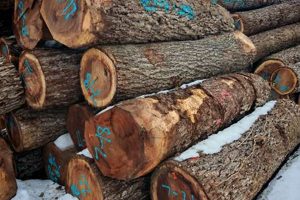
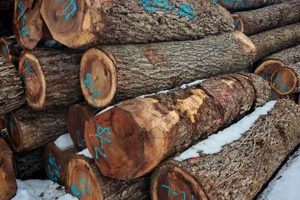
The practice of shaping and constructing items from timber that retains a high moisture content presents unique challenges and opportunities. This approach differs significantly from working with seasoned or kiln-dried lumber, demanding specialized techniques and an understanding of how the material behaves as it dries. For example, crafting a chair using freshly cut branches necessitates accounting for shrinkage and potential distortion during the drying process.
Employing unseasoned timber offers advantages in terms of workability and flexibility, allowing for intricate curves and joinery that might be difficult or impossible with dry wood. Historically, shipbuilders and wheelwrights frequently utilized this method to create robust and long-lasting structures. Furthermore, sourcing green lumber can be more sustainable and cost-effective than relying solely on processed materials.
The following sections will delve into specific considerations for selecting appropriate species, mastering relevant techniques, and mitigating potential problems associated with moisture content during fabrication.
Key Considerations for Working with Unseasoned Timber
Successfully shaping and assembling items from high-moisture-content wood requires a strategic approach. Attention to detail and an understanding of wood properties are crucial.
Tip 1: Species Selection: Choosing the appropriate species is paramount. Woods known for dimensional stability, such as certain varieties of oak or walnut, are preferred. Avoid species prone to excessive warping or cracking during drying.
Tip 2: Drying Considerations: Allow sufficient time for gradual drying. Controlled air-drying is superior to forced methods. Stacking the wood with spacers promotes uniform airflow and minimizes uneven shrinkage.
Tip 3: Joint Design: Employ joinery techniques that accommodate movement. Mortise and tenon joints, when properly executed, can allow for some shrinkage without compromising structural integrity. Dovetail joints may be less suitable due to their rigidity.
Tip 4: Moisture Monitoring: Utilize a moisture meter to track the wood’s drying progress. Understanding the moisture content at various stages allows for informed decisions regarding joint assembly and finishing.
Tip 5: Tool Selection and Maintenance: Sharp tools are essential. High-moisture wood can dull cutting edges quickly. Frequent sharpening or the use of specialized tools designed for green wood are advisable.
Tip 6: Anticipate Movement: Designs must incorporate expected shrinkage. Over-constraining the wood can lead to splitting or joint failure. Allow for expansion and contraction in the overall design.
Tip 7: Preventative Treatments: Applying end-grain sealers reduces rapid moisture loss from the ends of boards, minimizing checks and splits. This is especially important during the initial drying phase.
By carefully considering these factors, practitioners can successfully harness the benefits of using unseasoned wood, creating durable and aesthetically pleasing objects. Patience and meticulous execution are key to mitigating the challenges inherent in working with this material.
The concluding section will address finishing techniques and long-term maintenance considerations for projects constructed with unseasoned lumber.
1. Moisture Content

Moisture content represents the proportion of water within a wood sample, expressed as a percentage of its oven-dry weight. In woodworking with unseasoned lumber, this factor dictates nearly every aspect of the process, from initial cutting to long-term stability. High moisture content affects wood’s density, workability, and structural integrity. For example, freshly felled timber often exhibits moisture content exceeding 50%, rendering it pliable for shaping but also highly susceptible to shrinkage, warping, and fungal decay if not properly managed.
The direct consequence of ignoring moisture content during woodworking leads to predictable failures. As wood dries, it shrinks unevenly, causing internal stresses that manifest as cracks, splits, and distorted shapes. This phenomenon is particularly acute in complex joinery. A mortise and tenon joint, perfectly fitted while the wood is wet, can become loose and structurally unsound as the surrounding timber loses moisture. Furthermore, elevated moisture content inhibits the effective adhesion of many wood finishes and adhesives, compromising the long-term durability of the finished piece. Accurate measurement and controlled drying techniques are essential to mitigate these risks.
In summary, moisture content is not merely a characteristic of unseasoned wood, but rather the central determinant of success in working with it. Understanding its dynamic behavior, employing appropriate drying methods, and designing joinery that accommodates dimensional changes are crucial. Failure to do so inevitably results in compromised structural integrity and aesthetic deficiencies. The ability to accurately assess and skillfully manage moisture content transforms a potential liability into a unique advantage, enabling the creation of robust and enduring wooden objects.
2. Wood Species

The selection of an appropriate wood species exerts a profound influence on the outcome of projects involving unseasoned lumber. Different species exhibit varying degrees of dimensional stability, shrinkage rates, resistance to decay, and workability, directly impacting the success and longevity of the final product.
- Dimensional Stability
Certain species, such as white oak and Spanish cedar, possess inherently lower shrinkage rates compared to others like maple or poplar. This characteristic is crucial in mitigating warping and cracking as the wood dries. Utilizing species with greater dimensional stability reduces the risk of structural failure and maintains aesthetic integrity in finished pieces. For example, white oak’s tight grain and resistance to water absorption make it a superior choice for outdoor applications where exposure to moisture is unavoidable.
- Natural Durability and Decay Resistance
The inherent resistance of some species to decay organisms is another vital consideration. Redwood, cedar, and black locust contain natural compounds that inhibit fungal growth and insect infestation, making them well-suited for projects where the wood remains in contact with the ground or is exposed to humid environments. Utilizing less durable species without appropriate preservative treatments will inevitably lead to premature degradation, compromising the structural integrity and lifespan of the finished item.
- Workability of Green Wood
Species vary significantly in their ease of working while green. Softer woods, such as pine or basswood, are easier to carve, shape, and bend when unseasoned, making them suitable for projects involving intricate curves or complex joinery. Conversely, denser hardwoods like oak or hickory require more force and specialized tools to manipulate in their green state. The choice of species must align with the intended design and the available tooling capabilities.
- Grain Structure and Appearance
The aesthetic qualities of different species are enhanced or diminished by working with green wood. The unique grain patterns and coloration of woods like walnut or cherry are accentuated by the moisture content, providing a richer visual experience. However, the potential for staining or discoloration due to fungal growth is also heightened. Careful drying and finishing techniques are essential to preserve the natural beauty of the wood while mitigating potential drawbacks.
In conclusion, the choice of wood species represents a foundational decision in woodworking with unseasoned lumber. By carefully considering factors such as dimensional stability, decay resistance, workability, and aesthetic properties, practitioners can maximize the benefits of utilizing green wood while minimizing the risks associated with its inherent instability.
3. Joint Design
Joint design is a critical element in woodworking, particularly when employing unseasoned lumber. The high moisture content of green wood dictates that joinery must accommodate significant dimensional changes as the material dries. Failure to account for this shrinkage leads directly to joint failure, compromising the structural integrity of the finished piece. Traditional joinery techniques, often employed with seasoned lumber, may prove inadequate when working with unseasoned material. For instance, tightly fitted dovetail joints, while strong in dry wood, can generate excessive stress as the wood shrinks, resulting in splitting or cracking. The selection of appropriate joint designs, therefore, is paramount to the success of any project using green wood.
Examples of suitable joint designs include mortise and tenon joints with floating tenons, which allow for movement without compromising the joint’s strength. The floating tenon, being slightly shorter than the mortise depth, permits the surrounding wood to shrink without placing undue stress on the tenon itself. Similarly, lap joints and bridle joints offer increased surface area for adhesive bonding, compensating for the potential weakening effects of shrinkage. In boatbuilding, for example, traditional clinker or lapstrake construction utilizes overlapping planks joined with rivets or fasteners. This method allows for the expansion and contraction of the wood due to changes in moisture content, maintaining the vessel’s watertight integrity. Furthermore, incorporating gaps or reveals into the design can visually mask the effects of shrinkage, preserving the aesthetic appearance of the finished piece.
In summary, joint design in woodworking with unseasoned lumber necessitates a departure from conventional approaches. Understanding the unique properties of green wood and its propensity for dimensional change is crucial. Selecting joinery methods that accommodate this movement, such as mortise and tenon with floating tenons or lap joints, is essential for ensuring structural integrity. While the challenges of working with unseasoned wood are considerable, appropriate joint design serves as a foundational element in creating durable and aesthetically pleasing pieces. Ignoring this critical aspect inevitably leads to failure.
4. Drying Rate

The drying rate is a primary factor governing success in woodworking with high-moisture-content lumber. The speed at which unseasoned wood loses moisture directly influences its structural integrity and final form. Rapid and uncontrolled drying precipitates uneven shrinkage, leading to internal stresses that manifest as checks (surface cracks), splits, and warping. Conversely, excessively slow drying can foster fungal growth and decay, compromising the wood’s strength and durability. Therefore, managing the drying rate is critical for preventing these defects and ensuring the longevity of the finished product. The ideal drying rate varies depending on species, thickness, and ambient environmental conditions.
Practical applications of controlled drying are evident in various woodworking disciplines. For instance, in green wood furniture making, artisans often utilize specialized drying sheds with regulated airflow to promote gradual moisture loss. Turners working with green bowls will frequently rough-turn the piece and then allow it to slowly dry over several months before the final shaping, minimizing distortion as the wood shrinks. Instrument makers air-dry tonewoods for extended periods, sometimes years, to achieve optimal acoustic properties and stability. These examples underscore the importance of carefully monitoring and controlling the drying rate throughout the woodworking process. In construction, failure to properly dry framing lumber before enclosure can lead to significant structural problems as the wood continues to shrink and potentially mold. Air drying for approximately one year per inch of thickness is a standard guideline to ensure that wood reaches an equilibrium moisture content.
In conclusion, the drying rate occupies a pivotal position in the context of woodworking with unseasoned material. Its management requires a balance between preventing rapid moisture loss and avoiding fungal degradation. Understanding the specific properties of different wood species and adapting drying techniques accordingly are essential skills. The challenges inherent in controlling the drying rate necessitate meticulous attention and a deep understanding of wood science, yet mastering these skills unlocks the potential to create durable and aesthetically pleasing wooden objects from a sustainable resource.
5. Tooling

The utilization of appropriate tooling is paramount in woodworking with unseasoned lumber. The elevated moisture content of green wood presents distinct challenges compared to working with seasoned material. Cutting, shaping, and joining wet wood demands tools specifically designed or adapted to handle the unique properties of the material. Inadequate or ill-suited tools result in inefficient work, compromised accuracy, and increased risk of damage to both the workpiece and the tools themselves. For example, attempting to use a standard smoothing plane on wet wood often leads to clogging and tearing of the fibers, rather than a smooth, clean surface. The selection and maintenance of specialized tools are therefore integral to successful woodworking with green timber.
Specialized tools for green woodworking often feature steeper cutting angles and larger chip clearances to efficiently remove the damp, fibrous material. Drawknives, spokeshaves, and froes are commonly employed for shaping curved components, splitting timber, and removing bark. These tools allow for precise control and minimize the risk of tear-out, a common problem when working with wet wood. Furthermore, edge retention is crucial. High-moisture wood dulls cutting edges quickly, necessitating frequent sharpening or the use of tools manufactured from high-carbon steel. For example, traditional timber framers rely on heavy mortise axes and slicks to create precise joinery in green oak. These tools, meticulously sharpened, enable the creation of robust and enduring structures. Similarly, bowl turners often utilize gouges with specific grinds optimized for cutting wet wood, preventing the tool from digging in or chattering.
In conclusion, the selection and maintenance of appropriate tooling are indispensable for successful woodworking with unseasoned timber. Specialized tools, designed to address the unique challenges presented by high-moisture content, enhance efficiency, accuracy, and safety. Frequent sharpening, proper maintenance, and a thorough understanding of tool geometry are crucial for achieving optimal results. While the demands on tooling are greater than when working with seasoned lumber, the ability to effectively shape and join green wood offers distinct advantages in terms of workability, sustainability, and the creation of unique and characterful pieces. A thorough understanding of the interplay between tooling and material properties is essential for anyone venturing into the realm of green woodworking.
Frequently Asked Questions
The following questions address common inquiries and misconceptions regarding the use of high-moisture-content wood in woodworking.
Question 1: What are the primary advantages of employing unseasoned lumber?
Freshly cut wood offers enhanced workability, especially for shaping curves and intricate joinery. Sourcing green timber can also be more sustainable and cost-effective than relying solely on kiln-dried materials.
Question 2: What species are best suited for woodworking with wet wood?
Species known for dimensional stability, such as white oak, walnut, and Spanish cedar, are generally preferred. These exhibit lower shrinkage rates and are less prone to warping and cracking.
Question 3: How should unseasoned lumber be dried to minimize defects?
Controlled air-drying is the most effective method. Stacking the wood with spacers to promote uniform airflow minimizes uneven shrinkage. End-grain sealers can reduce checking and splitting.
Question 4: Which joint designs are most appropriate for green woodworking?
Joinery that accommodates movement is crucial. Mortise and tenon joints with floating tenons, lap joints, and bridle joints allow for shrinkage without compromising structural integrity. Dovetail joints may be less suitable due to their rigidity.
Question 5: How does moisture content impact the application of finishes and adhesives?
Elevated moisture content can inhibit the effective adhesion of many wood finishes and adhesives, compromising long-term durability. It is essential to allow the wood to dry sufficiently before applying these treatments.
Question 6: What are the potential long-term risks associated with using unseasoned lumber?
Without proper drying and design considerations, unseasoned lumber is susceptible to warping, cracking, fungal decay, and insect infestation. Careful species selection, drying techniques, and preventative treatments are essential to mitigate these risks.
Working with unseasoned lumber presents unique challenges and opportunities. By understanding the properties of green wood and employing appropriate techniques, practitioners can create durable and aesthetically pleasing objects.
The following section will address case studies of successful applications of woodworking with unseasoned lumber.
Conclusion
This exploration of woodworking with wet wood reveals a complex interplay of material properties, technique, and environmental control. Success hinges upon understanding species characteristics, mastering appropriate joint designs, and diligently managing the drying process. Tooling selection and preventative measures against decay further contribute to the longevity and stability of finished works.
Consideration of these factors ensures that woodworking with wet wood yields durable and aesthetically pleasing results. Continued research and practical application are necessary to refine these methodologies and unlock the full potential of this traditional practice for sustainable building and craftsmanship.